
Joe Rogan Says People BETRAYED By Iran War | Timcast IRL #1466 W/ John Rocker & Leonarda Jonie
YouTube · CDQOcRNzxgA
Quick Read
Summary
Takeaways
- ❖Joe Rogan suggests public feels 'betrayed' by the Iran war, citing a lack of public vote or clear rationale.
- ❖Lindsey Graham's 'I stand with Israel all the way' comment sparks controversy, equating isolationists with anti-Semites.
- ❖The US-Iran conflict is framed around Iran's threats to the Strait of Hormuz and its support for Houthi rebels, crucial for global oil and gas trade.
- ❖The 'real risk' of Iran's nuclear program is leverage against the 'liberal economic order,' not necessarily immediate nuclear attack.
- ❖CNN faced criticism for downplaying an ISIS-inspired bombing in NYC, framing terrorists as 'teenagers from Pennsylvania.'
- ❖The host posits that US involvement in Ukraine was driven by a desire for a gas pipeline to Europe, challenging Russia's energy monopoly.
- ❖The concept of 'high trust societies' is discussed, where people leave valuables unattended, with race cited as a component of this trust.
- ❖A theory suggests global elites are preparing for a pole shift or Carrington event by promoting green energy and building underground bases.
Insights
1Public Betrayal and Discontent with Iran War
Joe Rogan's widely circulated opinion highlights a public sentiment of betrayal regarding the Iran war, primarily because citizens did not vote for it and perceive a lack of clear justification. This suggests a disconnect between public will and foreign policy decisions.
Joe Rogan states, 'people feel betrayed by this war with Iran because we did not vote for this.' Polling shows many people are deeply concerned. (, )
2Geopolitical Drivers of US-Iran Conflict
The US involvement with Iran is fundamentally linked to maintaining the petro-dollar system and controlling strategic global trade routes. Iran's threats to the Strait of Hormuz (a choke point for 20% of global oil/gas) and its support for Houthi rebels disrupting Red Sea trade are key motivators for US intervention.
The host explains, '20% of the world's natural gas and oil flows to the straight of Hormuz and Iran keeps threatening to bomb it.' The US deal is 'you use US dollars to buy oil, we police the seas.' (, )
3Israel's Role in US Middle East Policy
A guest argues that a significant portion of US involvement in the Middle East is on behalf of Israel, which functions as a US military base near the Suez Canal. This relationship, including financial aid and anti-BDS laws, suggests a deep entanglement of US and Israeli interests.
Leonarda Jonie states, 'I think the majority of our involvement in the Middle East is on behalf of Israel.' Tim Pool adds, 'Israel is effectively our military base there' for control of the Suez Canal. (, )
4Media Bias and Narrative Control
The discussion highlights instances of perceived media bias, such as CNN's downplaying of an ISIS-inspired bombing, and suggests that media narratives are often shaped by political agendas or special interest groups, rather than objective reporting.
CNN's deleted post described Islamic terrorists who threw nail bombs as 'teenagers from Pennsylvania' on 'what could have been a beautiful day.' (, )
5Elite Preparedness for Global Catastrophe
A theory is presented that powerful elites are aware of an impending natural disaster, such as a pole shift or Carrington event, and are secretly preparing for it. This preparation includes promoting 'green energy' (solar/wind) for post-disaster reconstruction and building underground bases.
The host speculates, 'If we were going to get a Carrington event that fried our electrical grid, a solar storm or an axle axle shift, you would want to have ready to go alternate forms of energy that could be easily deployed.' ()
Bottom Line
The end of the petro-dollar contract with Saudi Arabia (a few years prior to the podcast) was a direct precursor to the current Middle Eastern war, indicating a fundamental economic shift driving conflict.
This suggests that current geopolitical conflicts are not isolated events but are deeply rooted in the US's efforts to maintain its economic hegemony, particularly the dollar's status as the global reserve currency.
Understanding this underlying economic driver allows for better prediction of future conflicts and investment in alternative economic systems or hard assets (like gold/silver, as suggested by a sponsor) that are not tied to the petro-dollar.
The weakening of Earth's magnetosphere and the shifting North Pole are not just scientific curiosities but are seen by some as indicators of an impending catastrophic pole shift, for which global elites are secretly preparing.
If true, this implies that public narratives around climate change and green energy might be a cover for preparing infrastructure for a planetary-scale disaster, rather than solely for environmental protection.
This perspective encourages critical examination of 'green' initiatives and suggests a need for individual preparedness strategies that account for potential grid collapse and societal breakdown, beyond typical disaster planning.
Quotes
"people feel betrayed by this war with Iran because we did not vote for this."
"I don't stand with you, I stand with Israel all the way."
"The issue with nuclear energy isn't about Iran getting a nuclear bomb for the most part. It's about them getting access to clean, efficient, high energy return on energy investment sources."
"I think the majority of our involvement in the Middle East is on behalf of Israel."
Q&A
Recent Questions
Related Episodes

🚨 THEY F*CKED AROUND FOR THE LAST TIME 😭😭😭
"This episode unleashes a torrent of highly opinionated commentary on the US-Iran deal, Israel's role, and a scathing critique of 'leftist' policies and immigration, particularly highlighting the UK grooming gang report as evidence of Western societal decay."
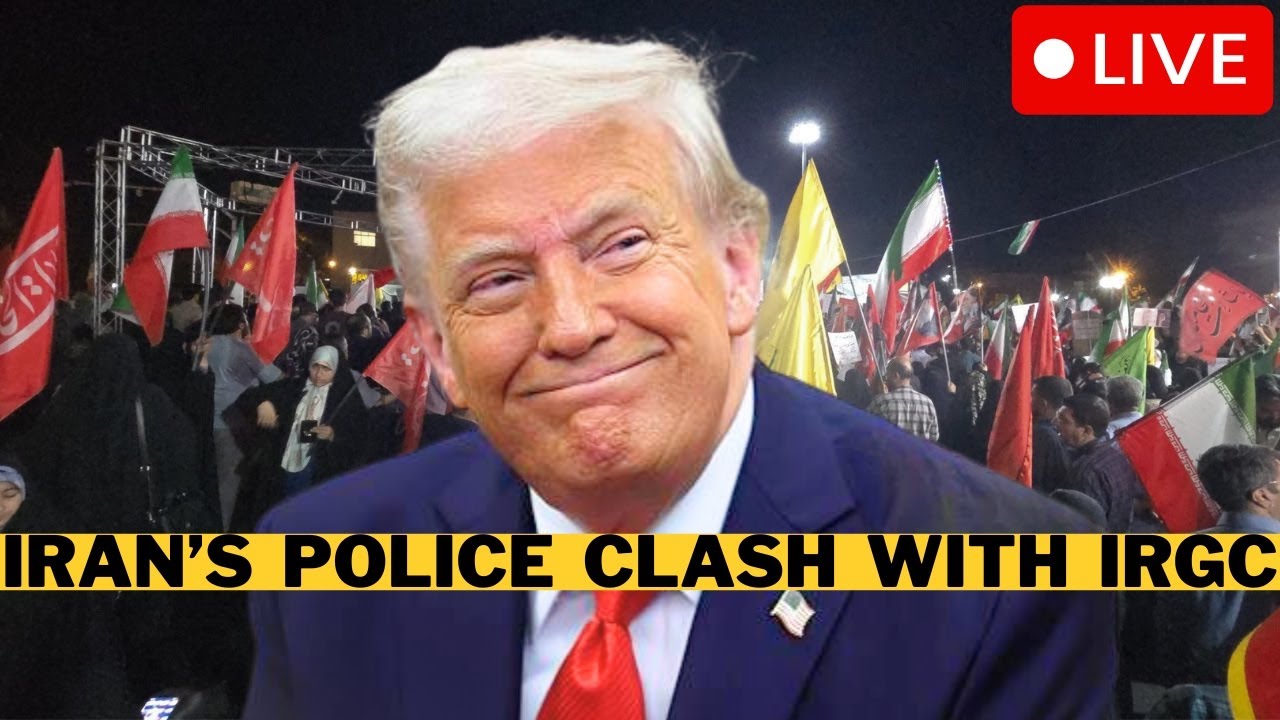
BREAKING: Protests ERUPT In Iran Over IRGC Surrendering To Trump - Infighting Clashes In Tehran
"Iran is experiencing severe internal infighting and protests as hardline IRGC elements clash with government figures over a perceived 'surrender' to the US, while mainstream Western media misrepresents the situation."
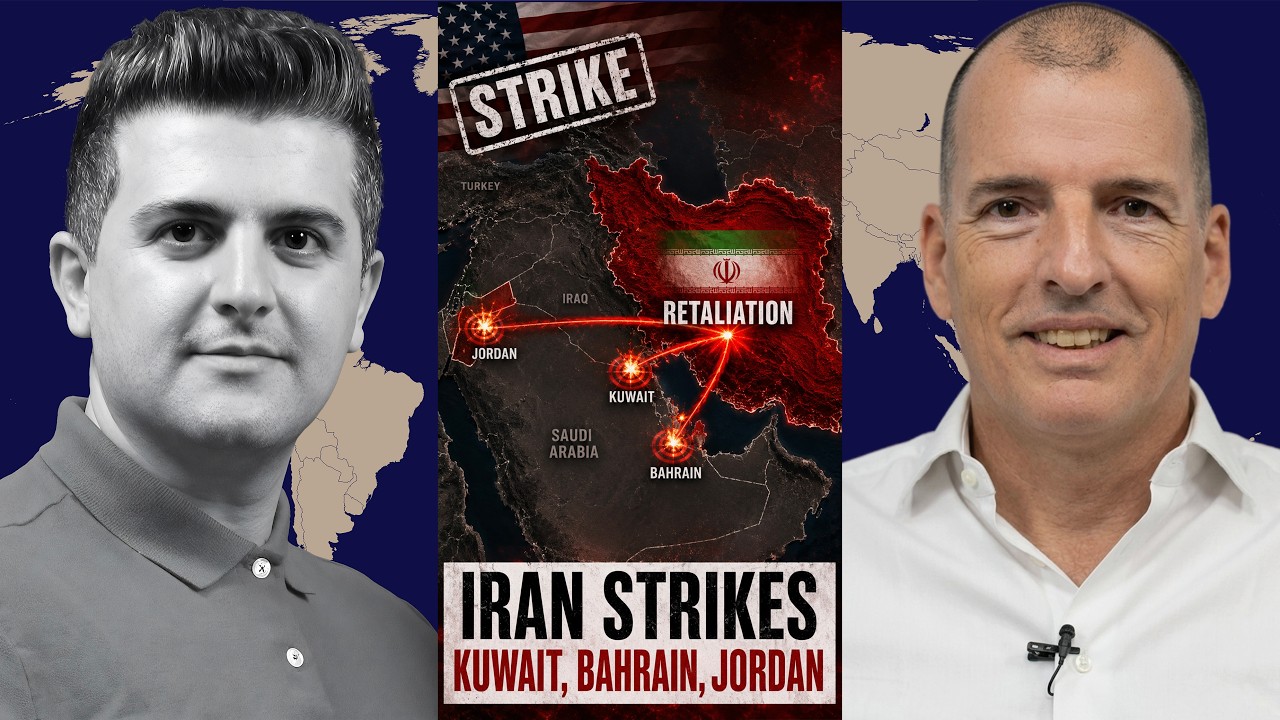
Alex Krainer: US STRIKES Iran – Iran RETALIATES Against Kuwait, Bahrain & Jordan!
"Amidst escalating US-Iran conflict and Iranian retaliation against regional US allies, this episode argues that US foreign policy is deeply controlled by an 'Anglo-Zionist conspiracy' led by the Rothschild banking dynasty, prioritizing Israeli interests over American ones."

LIVE: Trump HIDES FROM PUBLIC as US SOLDIER KILLED!!! 6/2/2026
"The host exposes alleged government cover-ups regarding military casualties, Trump's unexplained public absence, and questionable political appointments, arguing these reflect a 'regime of loser babies' and a failing foreign policy."