A Stupid and Insane Foreign Intervention
YouTube · CDloZ0FEUfs
Quick Read
Summary
Takeaways
- ❖The US intervention in Venezuela to depose Maduro was a 'stupid and insane' operation, driven by Trump's ego and lacking a coherent plan.
- ❖Maduro's regime is awful, but the US action does not help the Venezuelan people or US interests in any clear way.
- ❖The intervention is seen as an example of US greed and willfulness, potentially leading to bad outcomes for Venezuela, the region, and US foreign policy.
- ❖Comparing it to the 1989 Panama invasion, the Venezuela operation lacks the strategic context, international support, and post-intervention plan that characterized the earlier event.
- ❖Trump's rhetoric suggests further interventions in countries like Colombia and Greenland, raising serious concerns about future instability and conflicts.
- ❖The incident highlights the dangers of political leaders making foreign policy decisions based on personal grievances or conspiracy theories, such as Trump's belief that Venezuela was involved in 'stealing' the 2020 election.
- ❖Democrats are urged to take a firm, unified stance against such interventions, as any perceived weakness could embolden Trump to pursue further reckless actions.
Insights
1Venezuela Intervention: An 'Insane' and Ego-Driven Act
The hosts characterize the US intervention in Venezuela as 'insane' and 'stupid,' driven by Donald Trump's ego and narcissistic reasons, rather than a clear strategy to help the Venezuelan people or serve US interests. They argue that the operation lacked a post-intervention plan and was likely motivated by Trump's desire for a Nobel Peace Prize or control over Venezuelan oil.
Tim Miller states, 'What we're doing is insane. It doesn't do anything to help the Venezuelan people or our interests in any clear way. Like this is all a big ego megalomaniacal plot for Donald Trump.' Bill Kristol adds that Trump 'turned something that could have been... okay... into something that very hard to see how this doesn't end badly.'
2Lack of Strategic Planning and Oil Market Misconceptions
The intervention is criticized for its absence of a strategic plan for Venezuela's future, including abandoning the democratically elected opposition leaders. The hosts also dismiss the idea that Venezuelan oil would significantly impact global markets or US interests, calling Trump's focus on it 'wildly overstated' and economically trivial.
Bill Kristol notes, 'The first thing we do is throw overboard the democratically elected leaders... The whole oil thing is so wildly overstated. I don't even know how Trump got himself convinced of this.' Tim Miller adds, 'You're going to go to Venezuela when there is an uncertain political situation... Why would you do that when you can just go to Midland?'
3Comparison to the Panama Invasion (1989)
The hosts contrast the Venezuela intervention with the 1989 US invasion of Panama to depose Noriega. Panama had a clearer strategic context (Panama Canal, drug trafficking indictment, American soldier's death), significant troop deployment, and a plan for democratic transition, which worked out. Venezuela lacks these elements, making it a poor precedent.
Bill Kristol details the Panama invasion: 'Noriega was not head of state but he was head of the military there. He was under indictment for very direct involvement in drug trafficking... an American soldier was... killed... we sent in 27,000 troops... They had elections. They had a democratic system in Tan which I think is going still to this day.' He concludes, 'it's a very different situation and it worked out okay and is not a good precedent for going into a country of 30 million.'
4Broader 'Monroe Doctrine' Threats and Regional Backlash
Trump's rhetoric extends beyond Venezuela, with threats against Colombia and a reiterated desire for Greenland. The hosts predict that such bullying tactics will backfire, strengthening anti-US sentiment and left-wing governments in the region, potentially pushing countries towards rivals like China.
Tim Miller quotes Trump: 'Colombia is very sick, too... He's not going to be doing that very long. Then he's questioned, 'So, will there be an operation in the US and Colombia?' Trump says, 'Yeah, sounds good to me.' Bill Kristol states, 'you're strengthening the Mexican... Colombian leftwing presidents are being strengthened massively.'
5Connection to 2020 Election Conspiracy Theories
The hosts suggest that Trump's actions in Venezuela might be linked to his belief in conspiracy theories about the 2020 US election, specifically the false claim that Venezuelan-linked Dominion voting machines 'stole' the election.
Tim Miller plays a clip of Sydney Powell (Trump's lawyer in 2020) claiming Dominion voting machines 'was created to produce altered voting results in Venezuela for Hugo Chavez... and then shipped internationally to manipulate votes for purchase in other countries including this one.' Miller speculates, 'I do think that that this action does relate directly to his conspiracy theories about the 2020 election.'
6Dangers of AI Disinformation and Insider Trading
The intervention was immediately followed by a surge of AI-generated fake images and traditional disinformation on social media, making it difficult to discern reality. Additionally, suspicious insider trading on prediction markets occurred, with someone profiting significantly from betting on Maduro's deposition just hours before the event.
Tim Miller describes 'pictures of like Venezuelan grandmas crying with joy' and 'leftwing accounts that were showing people like rallying in the streets supporting Maduro. Like there's just a ton of fake stuff out there.' He also mentions, 'somebody did insider trading on this. They they put in 30 grand 24 hours before we went into Venezuela and they won 400,000 betting on Maduro being deposed.'
Bottom Line
The US intervention in Venezuela, framed as a 'Monroe Doctrine' action, could inadvertently strengthen anti-American sentiment and left-leaning political movements across Latin America, potentially pushing countries like Colombia and Mexico closer to geopolitical rivals such as China.
This could undermine long-term US influence and strategic alliances in its own hemisphere, creating new challenges for trade, security, and diplomatic relations.
For US policymakers, this presents an opportunity to re-evaluate engagement strategies in Latin America, focusing on diplomacy, economic partnership, and addressing root causes of instability rather than unilateral interventions, to counter potential anti-US alignment.
The immediate proliferation of AI-generated fake imagery and disinformation following the Venezuela intervention signals a new era of information warfare, where real-time events are instantly obscured by manufactured narratives, making public understanding and democratic discourse increasingly vulnerable.
This erosion of shared reality poses a significant threat to democratic processes and public trust, both domestically and internationally, as it becomes harder to distinguish truth from fiction in critical moments.
Technology companies and governments have an urgent opportunity to invest in advanced AI detection tools, promote media literacy, and develop rapid-response mechanisms to counter state-sponsored or politically motivated disinformation campaigns, safeguarding information integrity.
Key Concepts
The Monroe Doctrine (Trump's interpretation)
Trump's approach to the Western Hemisphere, as interpreted by the hosts, involves aggressive, unilateral interventions in Latin American countries, driven by perceived US interests (like oil or drug control) and personal ego, without traditional diplomatic or strategic planning. This contrasts with historical applications of the doctrine, which, while often interventionist, typically involved more structured foreign policy objectives.
Ineffective Bullying
The concept that while bullies can intimidate, an 'ineffectual, willful, vain, narcissistic bully who has an attention span of 10 minutes' (referring to Trump) will not achieve effective long-term results. Such bullying can lead to a backlash, strengthening opposition and pushing other nations into the arms of rivals like China or Russia, rather than securing desired outcomes.
The Second Day Problem
A foreign intervention's initial success (like snatching a leader) is often easier than managing the 'second day' – the complex, long-term challenges of establishing stability, governance, and achieving desired political outcomes. The hosts argue that the Venezuela intervention completely neglected this 'second day' planning.
Lessons
- Recognize that foreign policy decisions, especially interventions, are often complex and can be driven by a mix of stated objectives and unstated personal or political motivations.
- Critically evaluate official narratives surrounding international events, considering potential underlying agendas, lack of planning, and long-term consequences beyond immediate objectives.
- Support political leaders who advocate for coherent, strategically planned foreign policy with international cooperation, rather than impulsive, unilateral actions based on ego or short-term gains.
- Be aware of the increasing role of AI-generated disinformation and insider trading in major geopolitical events, and seek information from diverse, credible sources.
Notable Moments
Bill Kristol's initial reaction to Trump's Venezuela announcement and subsequent reappraisal.
Highlights the internal struggle of political observers to not 'overreact' to Trump's statements, but ultimately concluding that the initial alarm was justified due to the appalling nature and lack of plan.
Discussion of anonymous Democratic criticisms of their party's opposition to the Venezuela intervention.
Reveals internal divisions and anxieties within the Democratic party regarding how to respond to Trump's actions, with some fearing appearing 'weak' while others, like Seth Moulton, advocate for blunt opposition.
The hosts' concern about Trump's recent mentions of Colombia and Greenland.
Emphasizes the hosts' deep alarm that Trump's rhetoric about further interventions, even against NATO allies, should be taken seriously and not dismissed as mere bluster, indicating a potential for highly destabilizing future actions.
Quotes
"This is insane. What the hell are we doing? I mean, we got a lot of problems in America today. And invading, occupying, running Venezuela does not solve any of them."
"A different US president could have made a speech at 11:00 a.m. Saturday morning that would have led someone like me... to be okay at least hopeful and sort of somewhat optimistic that this would work out okay... Trump said at 11:00 a.m. and was really appalling."
"You're going to go to Venezuela when there is an uncertain political situation when who there are rebel groups in the hills outside Karacus and and you're going to go take this old equipment that has, you know, been been decaying for the last... Why would you do that when you can just go to Midland?"
"If you're in an ineffectual, willful, vain, it's a narcissistic bully who has an attention span of 10 minutes, that doesn't even work, right? It's not even effective bullying."
"I don't think it's crazy to think that like that contributed to this. I mean, obvious like there are all these other elements. Rubio, you know, has to gas him up on it. Uh, you know, he's mad that Machado didn't give him the peace prize. There's a report that that Maduro dancing was bothering him. But like, you know, it's just all this like deep megalomania stuff. But I I do think that that this action does relate directly to his conspiracy theories about the 2020 election."
Q&A
Recent Questions
Related Episodes
Robby Soave GOES OFF On ANNOYING Liberal Black Woman Making Emotional Trump Deranged Arguments!
"The host dissects a heated foreign policy debate, arguing that 'left-wing' emotionalism and 'Trump derangement' prevent a rational understanding of US sanction strategies against Cuba and Iran."
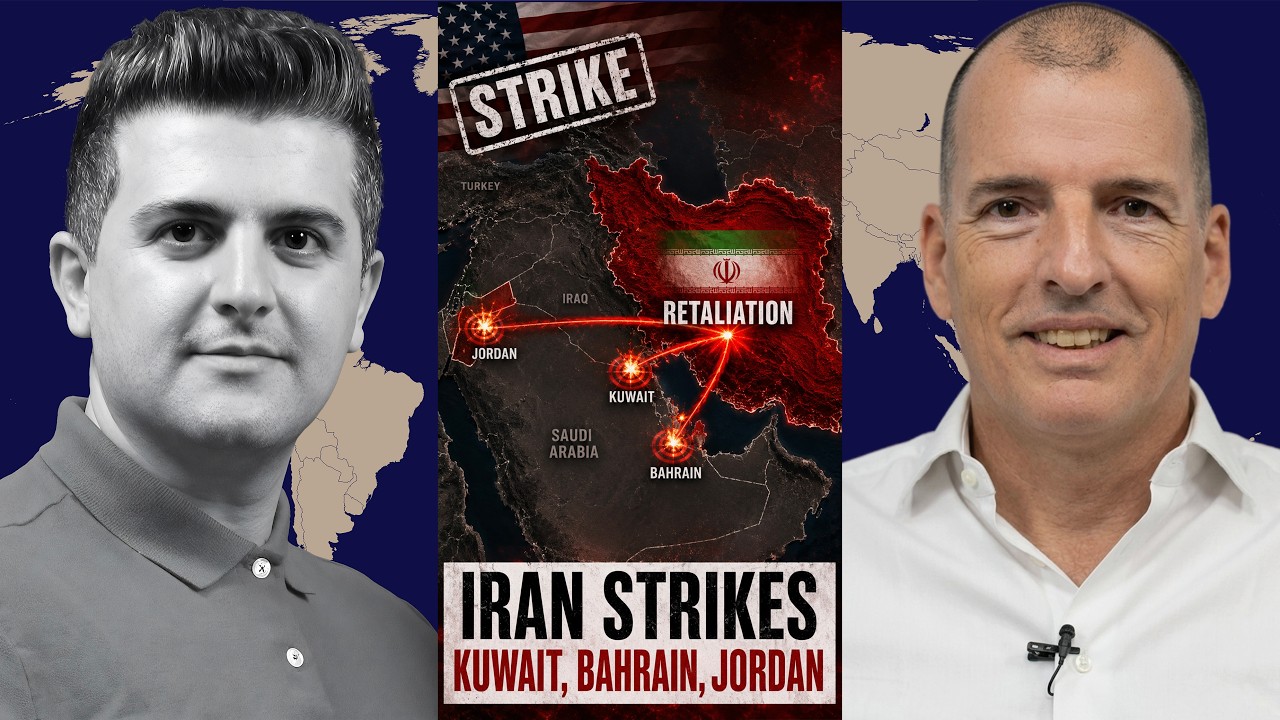
Alex Krainer: US STRIKES Iran – Iran RETALIATES Against Kuwait, Bahrain & Jordan!
"Amidst escalating US-Iran conflict and Iranian retaliation against regional US allies, this episode argues that US foreign policy is deeply controlled by an 'Anglo-Zionist conspiracy' led by the Rothschild banking dynasty, prioritizing Israeli interests over American ones."

LIVE: Trump HIDES FROM PUBLIC as US SOLDIER KILLED!!! 6/2/2026
"The host exposes alleged government cover-ups regarding military casualties, Trump's unexplained public absence, and questionable political appointments, arguing these reflect a 'regime of loser babies' and a failing foreign policy."

Trump Panics As Own Lawyers Turn Against Him Over War
"Donald Trump faces scrutiny from his own Justice Department over alleged insider trading in oil markets tied to Iran war announcements, highlighting broader issues of political corruption and economic destabilization for profit."