
Trump Vs Netanyahu; AI Brokenomics; USPS Union Contract Fight w/ Ed Zitron, Tyler Vasseur | MR Live
YouTube · CexffV5-JXk
Quick Read
Summary
Takeaways
- ❖Donald Trump expressed frustration with Israeli Prime Minister Netanyahu's military actions in Lebanon, suggesting Israel was being too aggressive and hindering a new Iran peace deal.
- ❖The SpaceX IPO, valued higher than Amazon, is a 'circular financing jerk-off session' bundling unprofitable ventures like X (Twitter) and Grok, with regulators waiving profitability requirements, potentially harming retail investors.
- ❖OpenAI lost $21 billion in 2025 and is projected to burn over $852 billion by 2030, with its collapse posing a systemic risk to major tech companies and pension funds invested in private credit.
- ❖The National Association of Letter Carriers (NALC) is negotiating against USPS proposals for a 4-day, 10-hour work week (a de facto pay cut for many) and AI-generated daily routes (leading to deskilling and increased management harassment).
Insights
1Trump's Unconventional Critique of Israeli Actions and Iran Deal
Donald Trump publicly expressed frustration with Benjamin Netanyahu's military response to minor drone incidents, calling it 'vicious' and 'too much.' He criticized Israel's prolonged engagement with Hezbollah in Lebanon, stating they 'should have been able to do the job faster' and that it casts a 'negative light on the big deal' with Iran. Trump also claimed credit for installing a new, US-friendly leader in Syria and suggested Syria could handle Hezbollah better than Israel, acknowledging Israel's civilian casualties in Lebanon.
Trump stated, 'I didn't like that he did an attack based on a… very minor little thing with some drones that were released. And he ends up doing a very… vicious… too much.' He added, 'I'm not happy with the way Israel has handled themselves with Lebanon and with Hezbollah. They should have been able to do the job faster.' He also claimed, 'the man that's running Syria now is a person that I put there' and suggested 'Israel to let Syria take care of Hezbollah.'
2SpaceX IPO: A 'Circular Financing Jerk-off Session' Driven by Regulatory Waivers
The SpaceX IPO, touted as the largest in history, is described as an 'exit liquidity' strategy by Elon Musk, stapling together several companies including the unprofitable X (formerly Twitter), the AI service Grok (losing billions), and the profitable Starlink and rocket company SpaceX. Regulators, including the Russell 1000 index, greenlit its inclusion and waived profitability requirements, despite SpaceX losing billions quarterly. This financial engineering aims to prop up Musk's other failing ventures, particularly Tesla, and risks retail investors' retirement funds.
Ed Zitron stated, 'SpaceX is actually several different companies stapled together. You've got X the everything app... It also loses tons of money and makes AI services under Grok... lost I think $4 billion last year or third or last quarter even.' He added, 'multiple indices like the Russell 1000... greenlit adding SpaceX... and also waved the profitability requirement because SpaceX loses billions of dollars a quarter.' He called it 'the big giant Elon Musk circular financing jerk-off session.'
3OpenAI's Staggering Losses and Systemic Risk to the Economy
OpenAI reportedly lost $21 billion in 2025, spending $34 billion to make $13 million, and is projected to burn over $852 billion by 2030. This massive unprofitability is driven by ever-increasing costs, particularly for constant AI model training and data centers. OpenAI's financial instability poses a significant systemic risk because it accounts for a substantial portion of projected revenues for major tech companies like Microsoft, Oracle, and Amazon, as well as the entire semiconductor industry (e.g., Nvidia, TSMC). Its collapse could trigger a broader market downturn, impacting private credit funds and, consequently, public pensions and insurance annuities that are heavily invested in AI data centers.
Ed Zitron revealed, 'last year OpenAI spent about $34 billion to make to make about $13 million... They lost about $21 billion.' He noted, 'They plan to burn over $852 billion by the end of 2030.' He explained, 'OpenAI is a load-bearing fail son. They account for a quarter of a trillion dollars of Microsoft's upcoming revenue. They account for $300 billion like I mentioned with Oracle, uh $138 billion of Amazon's revenue.' He warned that if OpenAI dies, 'the semiconductor rally dies. Everything every stock that's AI-related is still going to crash.'
4NALC Fights USPS Proposals for 4-Day Work Week and AI Routes
The National Association of Letter Carriers (NALC) is in contract negotiations with the USPS, opposing two key proposals: a 4-day, 10-hour work week and the implementation of AI-generated daily routes. The 4-day, 10-hour week is seen as a betrayal of the union's 8-hour day founding principle and a de facto pay cut for thousands of members who rely on overtime. AI-driven routes would eliminate stable routes, increase management harassment by setting unrealistic completion times, and deskill labor by removing worker autonomy and local knowledge, ultimately leading to poorer service and potential route cuts.
Tyler Vasser stated, 'The 4-day work week sounds good... What we're being currently proposed is a 4-day work week for 10 hours a day. This is bad for many reasons... There would be no overtime pay until after 10 hours.' He added, 'The AI proposal would be rather than having the same route every day... it would cut up a route out for you... it would increase harassment from management because they would be able to say AI said that you were going to be done in x amount of time and you went over.'
Bottom Line
The 'AI bubble' is not driven by genuine productivity gains or new innovation, but by a desperate search for growth in a saturated tech market, leading to massive capital expenditure on data centers that serve largely unprofitable AI companies.
This suggests that the current tech boom, particularly in AI, is unsustainable and lacks fundamental economic justification. It's a 'kayfabe' where market players pretend to believe in a future that isn't materializing, risking a significant market correction.
Savvy investors and policymakers should scrutinize AI investments for actual ROI rather than speculative growth. Opportunities exist in identifying and supporting genuinely innovative, profitable applications of technology outside the current AI hype cycle, or in shorting overvalued AI-dependent companies.
The shift from commercial paper to unregulated private credit after the 2008 financial crisis has created a new systemic risk, as these funds (backed by pensions and insurance annuities) are heavily investing in the volatile AI data center market.
This means that a potential collapse of the AI bubble could directly impact the retirement savings and insurance stability of millions of ordinary people, creating a 'too big to fail' scenario that the government is ill-equipped to handle for private companies.
Advocacy for increased regulation and transparency in the private credit market is critical. Individuals should review their pension and retirement fund allocations for exposure to private credit and AI-dependent investments. There's an opportunity for financial advisors specializing in risk-averse, transparent investment strategies.
Lessons
- Scrutinize claims of 'growth' in the tech sector, especially regarding AI, and demand evidence of actual profitability and productivity gains rather than relying on speculative valuations.
- Support public sector unions like the NALC in their fight against proposals that degrade working conditions (e.g., 4-day, 10-hour work weeks) and introduce unproven, potentially harmful technologies (e.g., AI-driven routes) without worker input.
- Advocate for stronger regulatory oversight of financial markets, particularly regarding IPOs that waive profitability requirements and the opaque private credit industry, to protect public pensions and retirement funds from speculative bubbles.
Quotes
"You can do too much also. But we have a very effective relationship. Without us, without the United States, there would be no Israel. Without me, there would be no Israel."
"OpenAI lost $21 billion in 2025. $21 billion, that's an insane amount of money. That this company is continually losing more money every year."
"The thing is this entire situation is symbolic. It's kayfabe. It's people pretending that they understand or people pretend cynical people pretending that this is the future, jumping around and play acting and saying, 'Ooh, AI is so scary. AI is so powerful.' But when you look at the underlying things that these models do and the actual outcomes, they're not there."
"If we were to set a standard of 10-hour work days, even if it was it was 4 days a week, that goes against what our union was founded on."
Q&A
Recent Questions
Related Episodes

Iran Deal Skepticism. Whoopi Vs Vance. Potomac Park Invasion. Racist Hurls Slurs At Black Boy.
"This episode dissects multiple instances of alleged anti-Black policies and racial injustice, from the Trump administration's legal challenges to reparations and the Iran deal, to police brutality and the erasure of Black history."
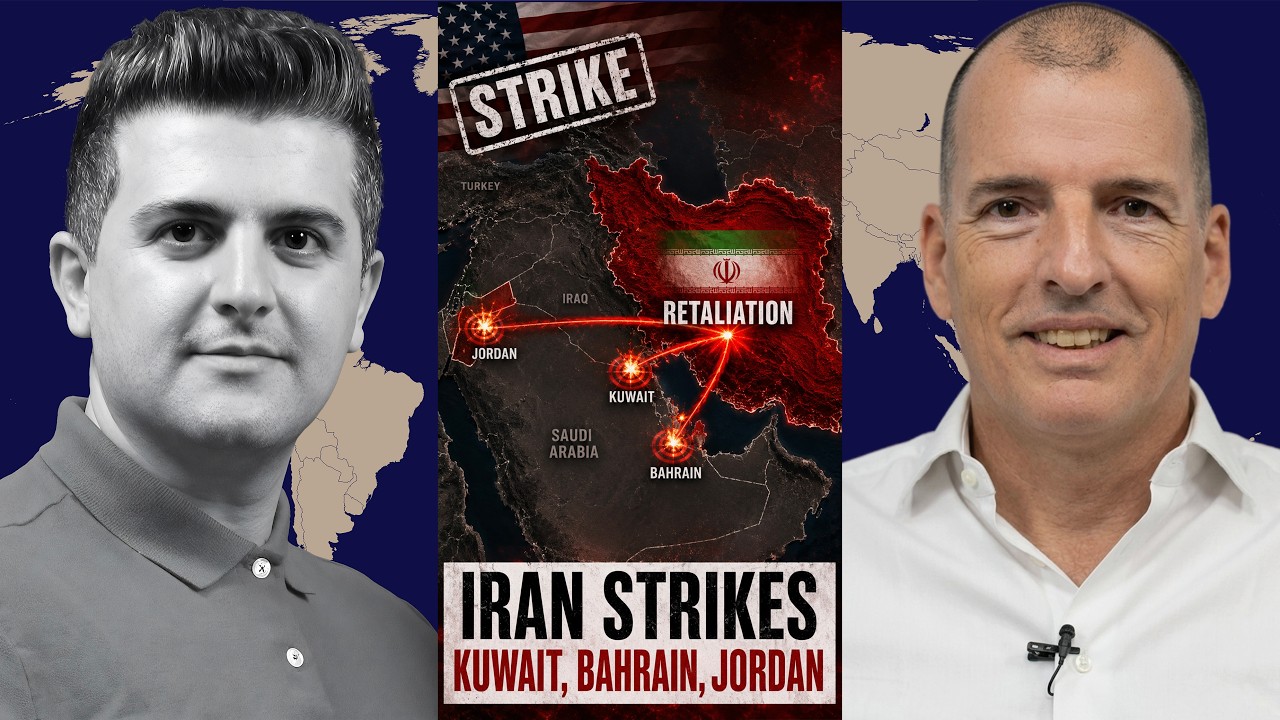
Alex Krainer: US STRIKES Iran – Iran RETALIATES Against Kuwait, Bahrain & Jordan!
"Amidst escalating US-Iran conflict and Iranian retaliation against regional US allies, this episode argues that US foreign policy is deeply controlled by an 'Anglo-Zionist conspiracy' led by the Rothschild banking dynasty, prioritizing Israeli interests over American ones."

LIVE: Trump HIDES FROM PUBLIC as US SOLDIER KILLED!!! 6/2/2026
"The host exposes alleged government cover-ups regarding military casualties, Trump's unexplained public absence, and questionable political appointments, arguing these reflect a 'regime of loser babies' and a failing foreign policy."

Trump Just ENDED JD Vance’s White House Dreams
"A New York Times article and internal White House dynamics reveal Donald Trump's deep dissatisfaction with J.D. Vance, potentially ending Vance's 2028 presidential ambitions and highlighting a broader struggle for control within the Republican Party."