Insurrection Act, Trump's Nobel Peace Prize, Clintons Subpoena + Sinema Scandal w/ Ann Coulter | PBD
YouTube · CkBa8y2mrT4
Quick Read
Summary
Takeaways
- ❖The invocation of the Insurrection Act in Minnesota is justified due to the state's failure to enforce federal immigration law and local authorities being overwhelmed, similar to historical events like the LA Riots.
- ❖Minnesota is embroiled in a massive $600 billion annual fraud scandal, which some hosts suggest the ICE protests are designed to distract from.
- ❖Kirsten Sinema faces a 'home wrecker' lawsuit alleging an affair with her bodyguard, MDMA use, and campaign fund misuse, sparking debate on political ethics.
- ❖Ann Coulter advocates for an 'America First' foreign policy, arguing against US intervention in Iran and prioritizing domestic issues.
- ❖The Iranian regime is brutally suppressing protests, with reports of IRGC forces executing injured protesters in hospitals, contradicting official denials.
- ❖Trump's cautious stance on supporting Reza Pahlavi as Iran's leader stems from Pahlavi's lack of on-the-ground military and popular support, highlighting the need for a strong, present leader in a revolution.
- ❖Media outlets displayed significant bias in their obituaries for Scott Adams (Dilbert cartoonist) and an ISIS leader, portraying Adams as 'disgraced' while the terrorist was called an 'austere religious scholar.'
- ❖Oprah Winfrey's claim that obesity causes overeating, rather than the reverse, and her promotion of GLP-1 drugs, is criticized as a 'lazy assessment' that deflects personal accountability.
- ❖A doctor's refusal to answer Josh Hawley's question 'Can men get pregnant?' in a congressional hearing is cited as an example of ideological adherence over scientific fact.
- ❖The Epstein inquiry continues to expose a lack of accountability for powerful individuals, with the Clintons refusing to comply with subpoenas, despite calls from figures like John Stewart.
- ❖Trump's 'Monroe Doctrine' approach to Venezuela, including engaging with opposition leaders and taking decisive action against the Maduro regime, is supported by hosts as beneficial for US interests and regional stability.
Insights
1Insurrection Act Justification in Minnesota
Ann Coulter and the hosts argue that President Trump is justified in invoking the Insurrection Act in Minnesota. They cite historical precedents like Eisenhower in Little Rock and JFK in Alabama, where federal troops were deployed against state governors' wishes to enforce federal law. Minnesota's governor is seen as violating federal immigration law by not supporting ICE, and local police are perceived as overwhelmed, mirroring conditions during the 1992 LA Riots where the Act was used.
Ann Coulter's historical comparisons, Tom's recollection of the LA Riots, Trump's Truth Social post threatening the Act, and the Minnesota governor's statement 'Minnesota is an island.'
2Minnesota Fraud Scandal as a Distraction
The hosts suggest that the highly publicized ICE protests in Minnesota are a deliberate distraction from a massive, systemic fraud scandal within the state. They claim that $600 billion annually, or 10% of government spending, disappears due to fraud, with Minnesota being a significant example. This fraud allegedly involves a 'loop' where funds are misused and then cycled back to political campaigns.
Scott Bessent's statement about $600 billion annual fraud, Cash Patel's assertion that protests are not organic, and the hosts' analysis of the 'fraud loop.'
3Media Bias in Obituaries and Reporting
The episode highlights stark media bias by comparing obituaries for different public figures. Scott Adams, the Dilbert cartoonist, was labeled 'disgraced' after his death due to controversial comments, while OJ Simpson's obituary was factual, and an ISIS leader was described as an 'austere religious scholar.' This is presented as evidence of a double standard where conservative-leaning figures are harshly judged, while others, even criminals, receive more neutral or even positive portrayals.
Headlines for Scott Adams ('disgraced Dilbert creator'), OJ Simpson ('dead at 76 from cancer'), and Abu al-Bakar al-Baghdadi ('austere religious scholar'); New York Times calling Qasem Soleimani a 'freedom fighter.'
4Oprah's Obesity Claims and Personal Accountability
Oprah Winfrey's assertion that 'obesity causes you to overeat' rather than overeating causing obesity, and her promotion of GLP-1 drugs, is heavily criticized. The hosts and guest view this as a 'lazy assessment' that deflects personal accountability for health choices. RFK Jr.'s tweet is cited, emphasizing that choices, not a 'mystical obesity gene,' are responsible for weight.
Oprah's commercial clip, RFK Jr.'s tweet, and the hosts' comparison to the 'genes load the gun, environment pulls the trigger' model for behavior.
5Ideological Obstruction of Scientific Truth
A clip of Senator Josh Hawley repeatedly asking a doctor 'Can men get pregnant?' and the doctor's refusal to give a direct 'yes' or 'no' answer is presented as evidence of ideological adherence overriding scientific fact. The hosts argue that this demonstrates a 'party of evil' that cannot differentiate basic biological realities, sacrificing truth for political correctness and 'worshipping at the altar of liberalism.'
Josh Hawley's interrogation of the doctor, the doctor's evasive responses, and the hosts' commentary on the 'logic of insanity.'
6Lack of Accountability in Epstein Inquiry
The episode expresses frustration over the lack of accountability for powerful figures implicated in the Jeffrey Epstein scandal, particularly the Clintons' refusal to comply with subpoenas. Despite John Stewart's call for compliance and evidence of Bill Clinton's numerous flights on Epstein's jet and White House visits, the hosts believe no legal consequences will materialize due to political influence and a perceived double standard in the justice system.
James Comer's statements on Epstein's White House visits and Bill Clinton's flights, John Stewart's 'abso-f***ing-lutely' comment on compliance, and the Clintons' refusal to testify.
7Venezuela Policy and US Intervention
Trump's engagement with Venezuelan opposition leader Maria Corina Machado and his 'Monroe Doctrine' approach to the Western Hemisphere are praised. The hosts and Ann Coulter support US intervention, including potentially 'installing puppets,' to counter communism/socialism and drug cartels, arguing it directly benefits American security and economic interests by destabilizing adversaries like China.
Trump's 'very good call with terrific Venezuelan president,' Maria Corina Machado presenting Trump with a Nobel Peace Prize, and Ann Coulter's advocacy for 'installing puppets' in Latin America.
Bottom Line
The political weaponization of social issues (e.g., gender identity, immigration) serves as a deliberate distraction from systemic failures and corruption, such as large-scale government fraud.
This strategy diverts public attention and resources away from addressing core governance problems, allowing corruption to persist and deepen while public discourse is consumed by polarizing cultural debates.
Investigative journalism and public advocacy that consistently link social controversies back to underlying issues of financial mismanagement and political accountability could expose these tactics and force a shift in focus.
The perceived weakness or lack of on-the-ground presence from exiled opposition leaders (e.g., Reza Pahlavi for Iran) significantly undermines their credibility and the potential for external support for regime change.
Without a strong, visible, and battle-tested leader, external powers are hesitant to commit substantial resources to support a revolution, as it increases the risk of failure and destabilization without a clear successor.
For future movements seeking international support, cultivating leadership that demonstrates genuine domestic backing and a willingness to lead from within the conflict zone is crucial for gaining trust and commitment from potential allies.
The 'hero-making machine' in media and politics often elevates figures based on narrative convenience rather than genuine merit or solutions, leading to a 'failure of leadership.'
This process perpetuates a cycle of weak, popularity-driven leaders who prioritize being 'liked' over being 'respected,' resulting in societal decay (e.g., rising crime, unaddressed issues) as real problems are ignored or mismanaged.
Promoting and supporting leaders who demonstrate courage, accountability, and a focus on long-term solutions, even if unpopular, can foster stronger governance and more resilient communities. This requires a discerning public and media willing to challenge superficial narratives.
Key Concepts
Pascal's Wager (Misapplied)
Discussed in the context of Scott Adams' deathbed conversion to Christianity, where he frames it as a 'risk-reward calculation.' The hosts and guest argue that true faith requires genuine belief, not merely a strategic choice based on potential outcomes, suggesting Adams' approach was a 'last-ditch effort' or 'insurance policy' rather than sincere conviction.
Monroe Doctrine (Modern Application)
Ann Coulter and the hosts advocate for a renewed focus on US influence and intervention in the Western Hemisphere (e.g., Venezuela, Cuba), arguing that instability or hostile ideologies in 'our neighborhood' directly impact American security and interests, contrasting it with less direct involvement in distant regions like Iran.
Meritocracy vs. Monarchy
The hosts critique the idea of hereditary leadership, particularly in the context of Reza Pahlavi's bid for leadership in Iran. They emphasize that while a father's legacy might provide proximity, it does not guarantee the necessary 'presence, power, [or] personality' to lead a revolution, drawing parallels to American figures whose children did not achieve similar success (e.g., Michael Jordan's son).
Laziness as a Habit of Thought
Scott Adams' philosophy that laziness is 'a habit of thinking about the effort instead of thinking about the outcome.' This model suggests that by focusing on the positive payoff rather than the immediate difficulty, individuals can overcome inertia and achieve goals, illustrated by parents having multiple children despite the pain of childbirth.
Lessons
- Critically evaluate media narratives, especially obituaries and political commentary, to identify underlying biases and double standards in reporting.
- Prioritize personal accountability in areas like health and finance, resisting narratives that externalize blame for individual choices or systemic issues.
- Demand accountability from powerful political figures, particularly when they refuse to comply with legal processes like subpoenas, to ensure equal application of the law.
Notable Moments
Discussion of the $600 billion annual fraud in government spending, with Minnesota as a case study, and the suggestion that ICE protests are a distraction.
This highlights a significant concern about government corruption and the potential for political manipulation to divert public attention from systemic financial issues.
The hosts and Ann Coulter reacting to the Kirsten Sinema scandal, including allegations of MDMA use and a 'home wrecker' lawsuit.
This illustrates the intersection of personal conduct, political ethics, and legal ramifications, sparking debate on public figures' private lives and accountability.
The emotional phone call from an Iranian mother to her daughter, describing the brutal crackdown by the regime, with surveillance and killings.
This humanizes the geopolitical conflict in Iran, providing a raw, emotional perspective on the suffering of ordinary citizens under an oppressive regime.
The contrasting media headlines for Scott Adams, OJ Simpson, and an ISIS leader, revealing stark biases in how different figures are portrayed post-mortem.
This serves as a powerful illustration of perceived media hypocrisy and the ideological filters through which news is often presented, influencing public perception.
Oprah Winfrey's controversial statement about obesity causing overeating and the subsequent critique by RFK Jr. and the hosts.
This moment reflects a broader societal debate on personal responsibility versus systemic or genetic factors in health, and the influence of celebrity endorsements on public health narratives.
Josh Hawley's repeated questioning of a doctor on whether 'men can get pregnant' and the doctor's refusal to answer directly.
This highlights the intense ideological divide in public discourse, where basic biological facts become contentious political battlegrounds, challenging the role of science in policy.
The discussion on the high number of abortions globally and in the US, particularly among African Americans, and the list of successful adopted individuals.
This brings a moral and societal dimension to the abortion debate, emphasizing the potential loss of human talent and the disproportionate impact on certain communities.
The incident in Minneapolis where Venezuelan migrants attacked an ICE agent with snow shovels, and another simultaneously stole weapons from a police car.
This illustrates the escalating challenges faced by law enforcement in certain areas, the perceived emboldening of illegal immigrants, and the breakdown of order, reinforcing arguments for stronger federal intervention.
Quotes
"Minnesota is violating federal law. Immigration law is federal. The Supreme Court has held this 1 million times."
"I'm not a believer, but I have to admit the risk-reward calculation for doing so looks so attractive to me. So, here I go. I accept Jesus Christ as my Lord and Savior."
"You don't overeat and become obese. Obesity causes you to overeat."
"Genetics loads the gun. Personality and psychology aims the gun. Experiences pull the trigger."
"I think it is extraordinary that we are here in a hearing about science and about women. And for the record, it's women who get pregnant, not men."
"Socialism or communism sounds good, but it's not good. So, if we want to implement this new Donro doctrine, let's keep communism and socialism, let's keep it as far into the Eastern Hemisphere as possible."
Q&A
Recent Questions
Related Episodes

🚨 THEY F*CKED AROUND FOR THE LAST TIME 😭😭😭
"This episode unleashes a torrent of highly opinionated commentary on the US-Iran deal, Israel's role, and a scathing critique of 'leftist' policies and immigration, particularly highlighting the UK grooming gang report as evidence of Western societal decay."

🚨 TOTAL F*CKING CHECKMATE 😂😂😂
"The host argues that Trump's 'ceasefire' with Iran was a calculated '5D chess' move to orchestrate a global energy market reshuffle, while simultaneously lambasting 'woke' domestic policies and the 'freefall' of anti-Trump conservative figures."
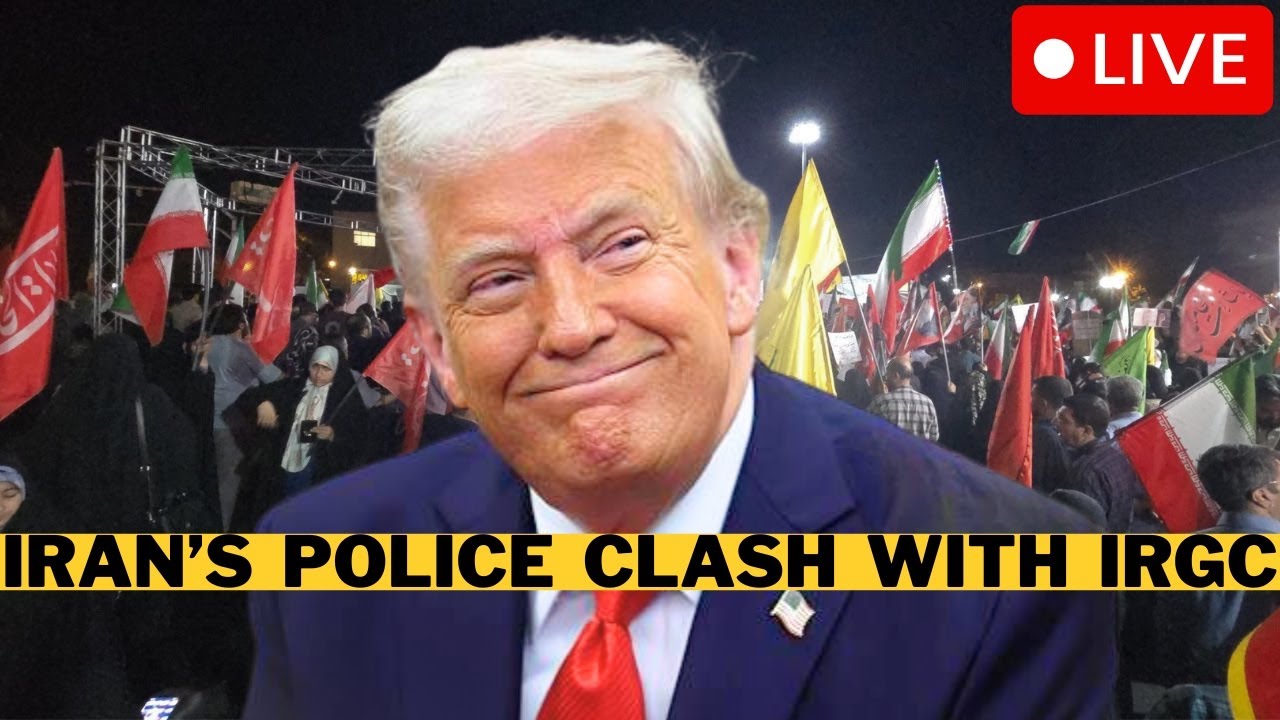
BREAKING: Protests ERUPT In Iran Over IRGC Surrendering To Trump - Infighting Clashes In Tehran
"Iran is experiencing severe internal infighting and protests as hardline IRGC elements clash with government figures over a perceived 'surrender' to the US, while mainstream Western media misrepresents the situation."
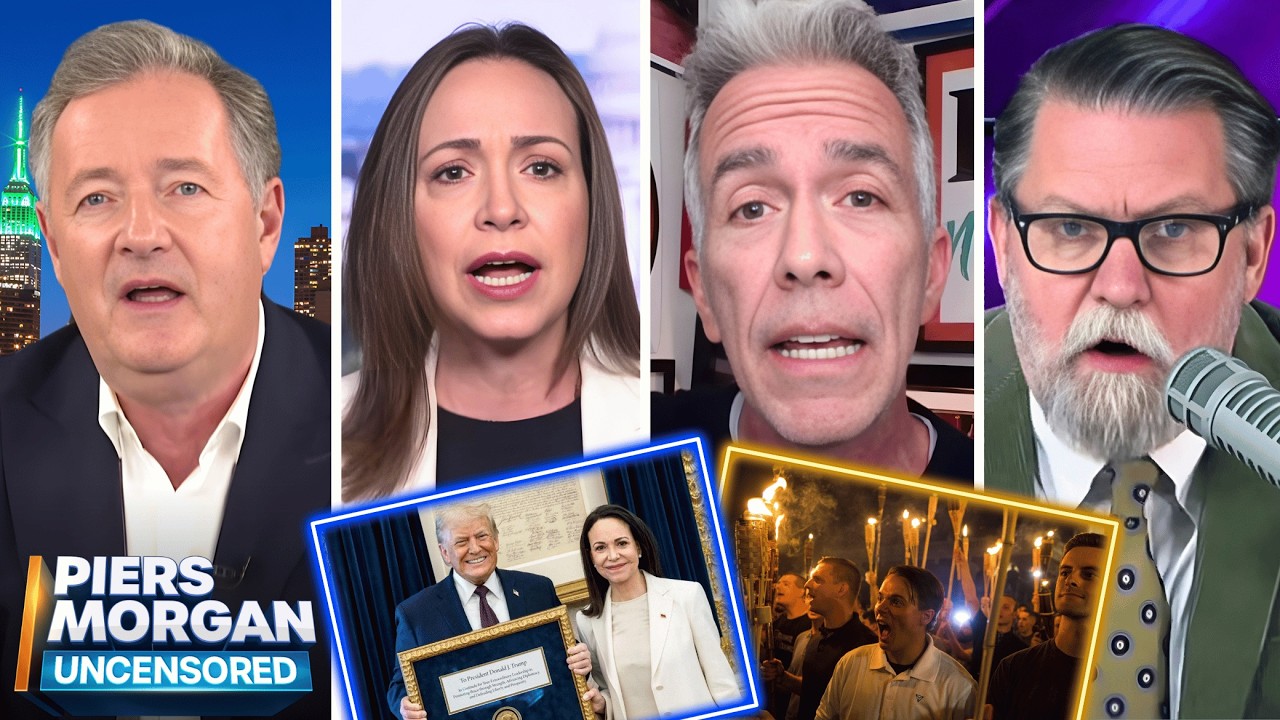
"Fighting Solves EVERYTHING!" Who's To Blame For Political Violence? + Maria Machado On Trump
"This episode dissects the escalating political violence in the US, with panelists fiercely debating the role of partisan rhetoric and media in radicalization, alongside an interview with Venezuelan opposition leader Maria Machado on US intervention and her country's future."