
Pepe Escobar: Iran Wipes Out Trump’s Attack – Russia & China’s Massive Move
YouTube · CyrrA-UkY8o
Quick Read
Summary
Takeaways
- ❖The Xi-Putin joint declaration is a foundational document for a multipolar world, emphasizing 'polycentrism' and rejecting 'block confrontation' and 'zero-sum game strategies.'
- ❖China and Russia are coordinating the integration of Eurasia and de facto leading the Global South.
- ❖The declaration calls for a new security architecture based on 'indivisibility of security,' a concept Russia proposed to the White House and NATO in 2021.
- ❖Iran, Pakistan, Russia, China, and North Korea are engaged in invisible negotiations for a new, comprehensive security system across Eurasia, with Saudi Arabia observing.
- ❖Iran is confident in its ability to absorb a first strike and deliver a devastating, layered second-phase retaliation, including missiles, drones, maritime disruption, and cyber operations.
- ❖China's long-term strategy includes integrating 70% of its economy with AI by 2030 and accelerating energy independence through Russian pipelines like Power of Siberia 2.
- ❖The failure of the Hormuz operation to control Iranian energy flow signals a major setback for the US strategy to dominate energy markets and contain China.
Insights
1Russia-China Joint Declaration Establishes Multipolarity
The joint declaration by Presidents Xi and Putin is described as 'immense' and the 'foundation stone' for changing international relations. It introduces the concept of 'polycentrism' (a Russian notion for multipolarity) and directly criticizes 'unilateralism and hegemonism,' 'law of the jungle,' 'block confrontation,' and 'zero-sum game strategies' (referencing NATO and US exceptionalism). It advocates for an 'updated balance, effective and sustainable global and regional security architecture' based on 'indivisibility of security.'
Pepe Escobar analyzes the joint declaration, quoting Xi's reference to the 'law of the jungle' and the declaration's call to reject 'block confrontation' and 'zero-sum game strategies.'
2Emerging Eurasian Security Quintet
A new, largely invisible, security negotiation track involves Iran, Pakistan, Russia, China, and North Korea. This quintet is discussing a new security system for Eurasia, including West Asia, with a key focus on missile potential as the main deterrent against external aggression. Saudi Arabia is observing this process and is expected to integrate once a new framework is established, leveraging its existing military pact with Pakistan.
Escobar states, 'Now we have Iran, Pakistan, Russia, and China and guess who? North Korea discussing together a new possible system of security for Eurasia as a whole, including West Asia.' He adds that 'the main deterrent against the follies of the empire of chaos and piracy across Eurasia is missile potential.'
3Iran's Strategic Deterrence Against First Strike
Iran's leadership is confident in its ability to absorb an initial military strike and still deliver a devastating second-phase response. This layered retaliation would include missiles, drones, maritime disruption, proxy activation, cyber operations, and attacks against energy and financial arteries across West Asia. This strategy aims to ensure that the 'retaliation cycle' determines the outcome of any conflict, not the initial attack.
Escobar quotes from his correspondence with high circles in Iran: 'They are now confident... that they can absorb an initial strike... and still deliver a devastating second phase response through layered retaliation.' He specifies the components of this retaliation and states, 'The opening act will not determine the outcome. The retaliation cycle will determine the outcome.'
4China's Accelerated Energy Independence and AI Integration
China is accelerating its energy security by fast-tracking the Power of Siberia 2 gas pipeline from Russia, aiming for inauguration by late 2027 instead of 2030. This move provides energy resilience against potential blockades like the Strait of Malacca. Domestically, China plans to integrate 70% of its economy with artificial intelligence by 2030, reflecting a rapid modernization drive and a focus on internal development, despite concerns about job displacement.
Escobar mentions, 'one of the conclusions was okay, we're going to speed up part of Siberia 2. It was supposed to go... be inaugurated by 2030 or so. No, they wanted to be inaugurated possibly next year by the end of 2027.' He also notes, 'In until 2030, the plan is to have 70% of the Chinese economy directly interconnected and linked to artificial intelligence.'
Bottom Line
The 'non-aggression pact' proposed by Saudi Arabia and GCC countries is likely to be integrated into a new Eurasian security architecture guaranteed by Pakistan (backed by Russia and China), rather than being a standalone Western-aligned initiative.
This suggests a significant shift in regional power dynamics, where traditional US security guarantees in the Persian Gulf are replaced by a Pakistan-led, China-Russia-backed framework, fundamentally altering alliances and influence.
Businesses and governments should prepare for a future where regional security in West Asia is managed by Eurasian powers, potentially leading to new trade routes, investment opportunities, and diplomatic channels that bypass Western influence.
The port of Gwadar in Pakistan is increasingly being utilized by Iran, effectively functioning as an Iranian port, despite its proximity to Iran's Chabahar port and previous perceptions of competition.
This development signifies deepening economic and strategic integration between Iran, Pakistan, and China within the China-Pakistan Economic Corridor (CPEC) and the broader New Silk Roads initiative. It creates redundant and resilient trade routes, reducing vulnerability to external naval blockades.
Logistics and shipping companies, as well as investors in infrastructure and trade, should monitor the growing importance of Gwadar and its role in connecting West Asia with China, potentially offering new transit hubs and supply chain efficiencies.
Lessons
- Monitor the joint declarations and strategic communications from Russia and China for signals of further shifts towards a multipolar global order and the specifics of their 'polycentrism' agenda.
- Evaluate geopolitical risks and opportunities in Eurasia by understanding the emerging security framework involving Iran, Pakistan, Russia, China, and North Korea, particularly their focus on missile deterrence and regional autonomy.
- Re-assess energy supply chain resilience and diversification strategies, considering China's accelerated development of Russian pipeline infrastructure and the diminishing impact of traditional maritime choke points.
Quotes
"The spiritual and moral system of any civilization cannot be considered exceptional or superior to others. All countries should advocate a view of civilizations based on equality, mutual exchange of experience, and dialogue."
"The new indispensable nation is China. And the new indispensable relationship is Russia and China. They are forging this new architecture of multipolarity."
"The opening act will not determine the outcome. The retaliation cycle will determine the outcome."
"The Americans are completely unaware that this is going on. Because this is a collaboration and practically invisible negotiation track which involves Eurasia players. It does not involve the US."
Q&A
Recent Questions
Related Episodes
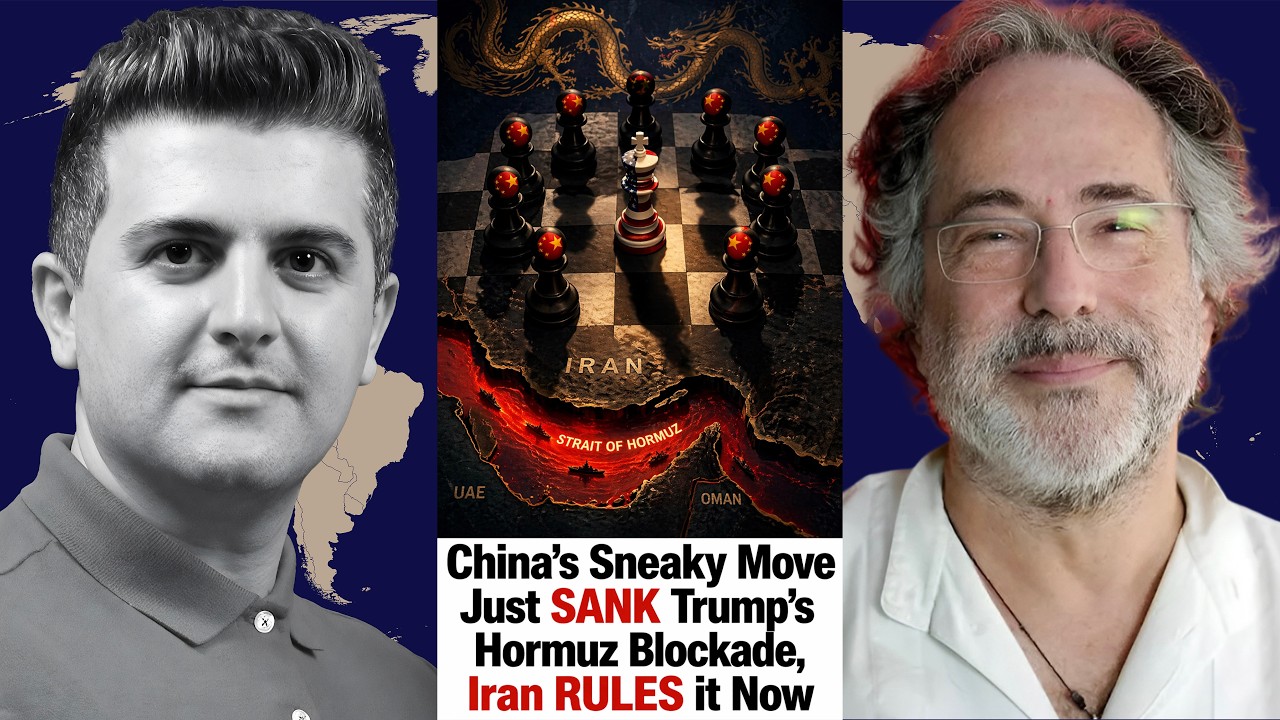
Pepe Escobar: “Total Failure”: Trump’s Blockade Just Backfired Disastrously
"Pepe Escobar argues that the US blockade against Iran, spearheaded by Donald Trump, has utterly failed and backfired, accelerating global economic chaos and challenging US geopolitical dominance."

BREAKING: Iran Threatens To END Talks; U.S. Vows Retaliation; Hezbollah Collapsing? | TBN Israel
"Iran is leveraging Hezbollah and the Strait of Hormuz to manipulate US negotiations, while Israel asserts its right to dismantle Hezbollah's eroding but still dangerous infrastructure in Lebanon, independent of international talks."

Iran Update: Israel’s Newest Bombing Campaign, the Oncoming War With China and How to Avoid It
"Colonel Wilerson reveals how the US and Israel are actively bombing China's strategic infrastructure in Iran, escalating a covert economic war that Beijing intends to win without direct military conflict by dismantling the dollar's global dominance."

Patrick Henningsen: Hezbollah JUST Fired Back at Israel - Iran Vows to “Crush” All Attacks
"Patrick Henningsen argues that the US and Israel initiated an illegal war against Iran, driven by Trump's incompetence and Israeli influence, leading to an inevitable escalation with severe global economic repercussions."