BREAKING: Iran READY FOR WAR; Russia NUCLEAR Drill Looms; IDF STRIKES Hezbollah | TBN
YouTube · DNVKQxxcTNE
Quick Read
Summary
Takeaways
- ❖Iran is actively reinforcing its ballistic missile capabilities and underground facilities during diplomatic pauses, suggesting a strategy of buying time rather than seeking genuine resolution.
- ❖The Strait of Hormuz has become a critical pressure point, with Iran attempting to control passage and collect fees, threatening global trade and energy security.
- ❖Russia and China are deepening their strategic partnership, using Middle Eastern instability and Western preoccupation to enhance their global influence and secure energy interests.
- ❖Israel is on high alert, conducting preemptive strikes against proxies like Hezbollah and Hamas, and preparing for a potential multi-front conflict involving Iran, Lebanon, and Gaza.
- ❖The US faces a dilemma: avoid a long war while preventing Iran from acquiring nuclear weapons and maintaining a credible military threat.
- ❖The Israeli public lives in a state of 'supernatural peace' amidst constant apprehension, demonstrating resilience despite the looming threat of war.
Insights
1Iran's Strategic Use of Ceasefire for Military Rebuilding
American military officials assess that Iran utilized a month-long ceasefire to adjust tactics, digging out ballistic sites buried in previous strikes, moving mobile launchers, and reinforcing underground facilities carved into granite mountains. This suggests Iran is not building from scratch but restoring and fortifying existing infrastructure, making it harder for future strikes to achieve permanent destruction.
American military officials believe that during the ceasefire, which lasted about a month, Iran used the time to adjust its tactics ahead of another possible confrontation with the United States. And right now, the crisis in the Persian Gulf is pushing Europe towards a step it did not want. American officials assess that Iran used the ceasefire to dig again through ballistic sites that were buried in strikes, moving mobile launchers and reinforce underground facilities carved into granite mountains.
2Weaponization of the Strait of Hormuz
Iran has established a new authority to collect passage fees in the Strait of Hormuz and has placed approximately 10 mines in the water, some of which could drift. This move is framed as an unprecedented change to global trade rules, asserting Iranian control and turning the strait into a diplomatic and military pressure point, rather than merely a maritime passage.
Iran established a new authority whose role is to collect passage fees in the straight of Homus. And by doing so, Iran is changing the rules of global trade in an unprecedented way... In the street of humus, according to an updated American intelligence assessment, around 10 mines have been identified...
3Russia-China Alignment Amidst Middle East Instability
Russian President Vladimir Putin and Chinese President Xi Jinping met to coordinate positions, recognizing that instability in the Persian Gulf strengthens Moscow's position as an energy supplier to Beijing. Russia's broad nuclear force drill simultaneously signals its superpower status and creates additional pressure on the West, diverting attention from Iran and Ukraine.
Russia and China are coordinating positions while the United States is trying to pressure Iran. While energy prices are sensitive and while the most important straight for the Gulf economy is under threat for China, this is not only a matter of ideology. It is energy. If hummus is dangerous... Russia becomes an even more important supplier for Beijing. At exactly this time, Russia opened a broad drill of its nuclear forces.
4Failed US-Israel Regime Change Attempt with Ahmedinad
Israel and the United States reportedly identified former Iranian President Mahmud Ahmedinad, known for his anti-Western stance, as a surprising candidate to lead Iran post-regime fall. An Israeli strike intended to free him from house arrest wounded him, causing him to lose confidence in the plan and aligning him with the Revolutionary Guards, leading to the plan's collapse.
Israel and the United States marked Mahmud Ahmedinad... as his surprising candidate to lead Iran after the fall of the regime. An Israeli strike intended to free him from house arrest, wounded him, and afterwards he already became a supporter of the revolutionary guards, and the plan to replace leadership quickly collapsed.
Bottom Line
Iran's potential shift to a 'shorter, denser, and more violent war' strategy, prioritizing immediate, high-cost barrages over prolonged conflict, aims to overwhelm opponents and influence decision-makers quickly.
This strategy implies a higher initial casualty and damage risk for Israel and Gulf states, demanding robust, immediate defensive and counter-offensive capabilities from the outset of any renewed conflict.
Understanding this potential shift allows for preemptive defensive preparations and strategic messaging to deter such an aggressive opening, potentially through demonstrating overwhelming retaliatory capacity.
The Gulf states face a dilemma: they fear war with Iran but also fear an Iran emerging from conflict with a 'feeling of victory,' which would lead to increased extortion.
This creates a complex diplomatic challenge for the US, which seeks a broader coalition against Iran. Gulf states are hesitant to openly participate in strikes, fearing becoming legitimate targets, yet desire a decisive defeat of Iran.
Develop tailored security assurances and intelligence-sharing frameworks that allow Gulf states to contribute to pressure on Iran without directly exposing themselves to immediate retaliation, potentially through covert support or advanced defensive systems.
Key Concepts
The Double Game
Both the United States and Iran are perceived to be playing a 'double game.' The US delays strikes for negotiations while maintaining military threat, and Iran uses negotiation periods to strengthen its military positions and assert control over strategic assets like the Strait of Hormuz.
Costly Influence
Iran's strategy is not to defeat superior forces like the American Air Force, but to make any intervention prohibitively costly from the outset. This involves dense barrages and striking key infrastructure to create doubt among decision-makers and deter prolonged engagement.
Regime Change Complexity
Regime change in Iran is not a simple 'button press.' The Iranian regime is a complex, multi-layered structure of military, security, economic, and ideological interests, making external dismantling extremely difficult without a strong internal force willing to take responsibility.
Lessons
- Recognize that diplomatic negotiations with Iran may be a tactic to buy time for military rebuilding, rather than a genuine pursuit of peace. Evaluate Iranian actions (like Strait of Hormuz control) over their stated intentions.
- Understand the interconnectedness of global conflicts: instability in the Middle East directly impacts global energy prices and strengthens the geopolitical leverage of non-Western powers like Russia and China.
- Support initiatives that bolster the resilience and preparedness of nations like Israel, which are on the front lines of these complex geopolitical struggles, recognizing their 'new normal' of living under constant threat.
Notable Moments
The host describes the 'bizarre situation' in Israel where daily life continues normally, including preparing for holidays, while simultaneously being on high alert for an imminent war with Iran, Lebanon, or Gaza.
This highlights the unique psychological and societal resilience of the Israeli people, who have adapted to a state of constant apprehension, viewing preparedness as a normal part of life rather than an emergency.
The host explains that Israel's ability to 'enjoy our lives and live in peace and rejoicing' despite looming threats is a direct act of defiance against the Iranian philosophy of sowing fear.
This frames everyday life and celebration in Israel as a form of resistance, demonstrating how psychological warfare is countered by societal resilience and a refusal to succumb to terror.
Quotes
"In Iran, they are saying either we win or we die."
"If a strike takes place on Iran, the retaliation will be landing right behind me on the slopes of Jerusalem or intercepted in the sky above me over this city. It is not something that we need to imagine. We've seen it happen time and time again."
"Iran can't be the first domino that opens a global nuclear arm race."
"Regime change in Iran is not a button you press."
Q&A
Recent Questions
Related Episodes

Patrick Henningsen: Hezbollah JUST Fired Back at Israel - Iran Vows to “Crush” All Attacks
"Patrick Henningsen argues that the US and Israel initiated an illegal war against Iran, driven by Trump's incompetence and Israeli influence, leading to an inevitable escalation with severe global economic repercussions."
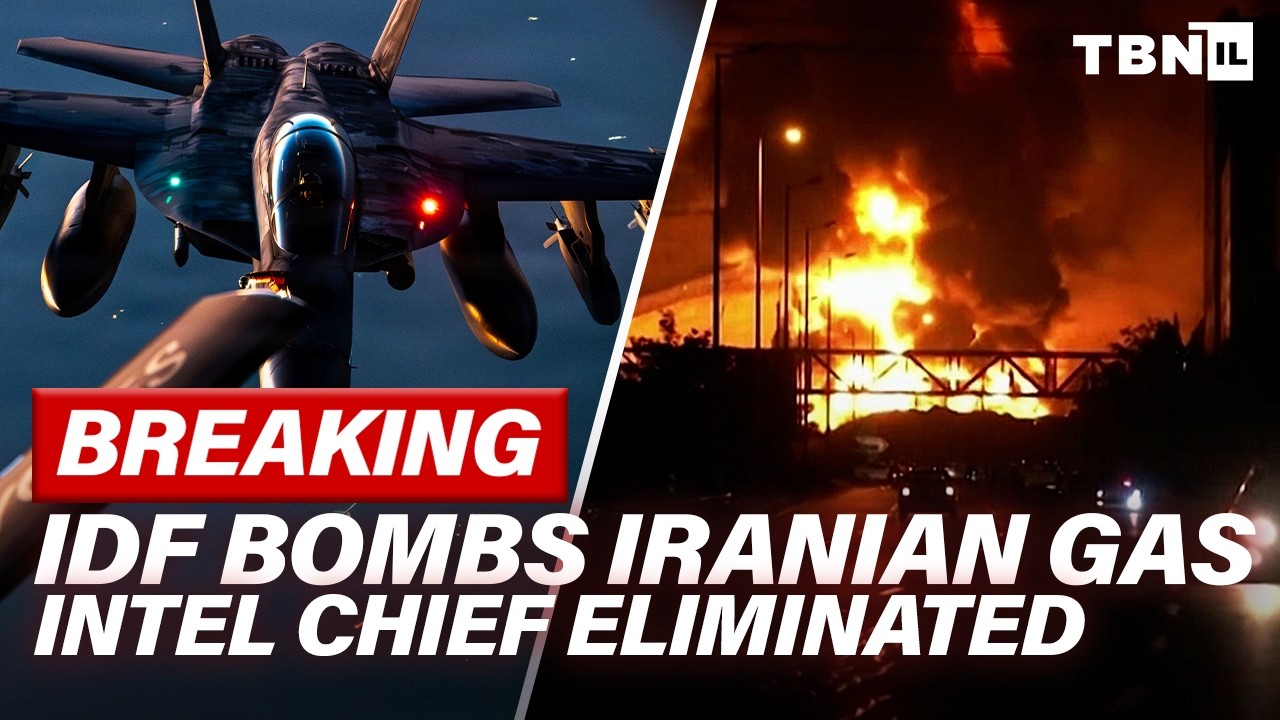
BREAKING: Israel BOMBS Major Iran Gas Site; Top Mullah ELIMINATED; Iran Vows VENGEACE | TBN Israel
"Israel and the United States have escalated their 'Roaring Lion War' against Iran, striking its largest gas facilities, eliminating key intelligence and military figures, and disrupting missile production, while Iran threatens a broader energy war in the Gulf."

BREAKING: Iran Threatens To END Talks; U.S. Vows Retaliation; Hezbollah Collapsing? | TBN Israel
"Iran is leveraging Hezbollah and the Strait of Hormuz to manipulate US negotiations, while Israel asserts its right to dismantle Hezbollah's eroding but still dangerous infrastructure in Lebanon, independent of international talks."
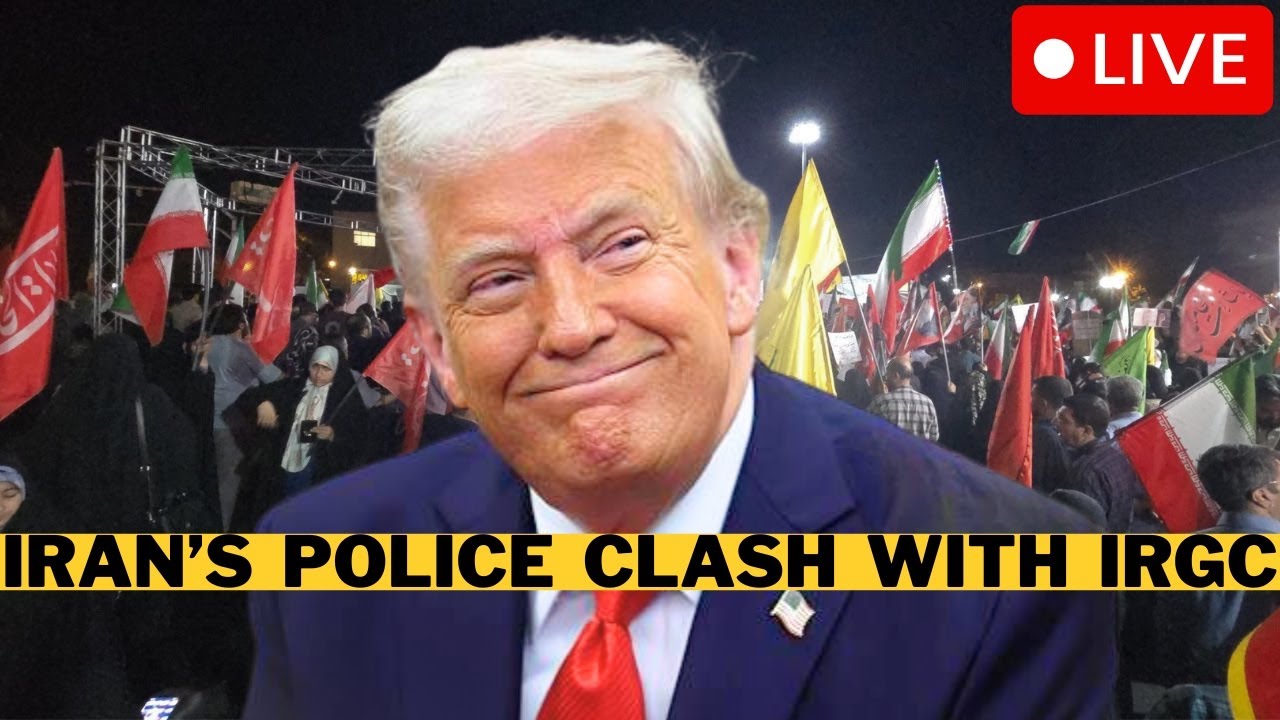
BREAKING: Protests ERUPT In Iran Over IRGC Surrendering To Trump - Infighting Clashes In Tehran
"Iran is experiencing severe internal infighting and protests as hardline IRGC elements clash with government figures over a perceived 'surrender' to the US, while mainstream Western media misrepresents the situation."