
Nancy Guthrie Mystery: Will They Ever Find Her... Or Catch the Person Who Took Her?
YouTube · DWKFxJkjUws
Quick Read
Summary
Takeaways
- ❖The Pima County Sheriff faces a recall campaign due to perceived mishandling of the Nancy Guthrie case and other issues.
- ❖The investigation is in a 'grind phase,' meticulously sifting through thousands of tips (many being 'noise') and awaiting DNA results.
- ❖Early decisions, such as calling off extensive searches and quickly returning the crime scene, were command-driven and widely questioned internally.
- ❖The case was initially assigned to a detective with only two years of homicide experience, a decision criticized as a significant misstep.
- ❖The Sheriff's public statements have been contradictory, undermining public trust and frustrating department members.
- ❖The department declined assistance from Navy search assets, despite the vast desert terrain where a body might be located.
- ❖Unknown male DNA found at the scene is a key piece of evidence, with hopes for investigative genetic genealogy breakthroughs.
Insights
1Internal Department Dissatisfaction and Leadership Issues
Many within the Pima County Sheriff's Department are unhappy with Sheriff Nanos's leadership, leading to a recall campaign. Department members criticize his public contradictions, perceived lack of seriousness regarding cases, and command-driven decisions that have potentially hindered the Nancy Guthrie investigation.
Sergeant Cross states, 'They're not happy with their sheriff. Lately, we've been hearing about a recall campaign that's a foot... This is coming from folks in the department who are just not happy about the way things are going.' () He also mentions the sheriff's contradictory statements undermining public trust ().
2The 'Grind Phase' of Investigation
The Nancy Guthrie case has entered a 'grind phase,' where investigators are sifting through thousands of tips, many of which are irrelevant theories or 'noise,' to find actionable intelligence. This process is time-consuming and requires careful examination of every lead, alongside waiting for critical forensic results like DNA.
Sergeant Cross explains, 'I call it the grind phase of any investigation... they're just grinding through the tips, combing through the evidence carefully, and then waiting on, of course, the DNA.' He estimates a 'fair amount' of the 40,000 tips are noise. (, , )
3Command-Driven Missteps in Initial Response
Critical early decisions in the investigation, such as scaling back search assets, quickly returning the crime scene, and assigning the case to an inexperienced detective, were made by command staff (the sheriff, a chief, and a captain), not by seasoned investigators. These decisions are widely questioned internally as potentially detrimental to the case.
Sergeant Cross states, 'all those decisions on how the investigation was made, how quickly the house was turned over, the search assets, those were completely command-driven.' () He confirms the case was 'originally assigned to someone with two years experience' in homicide ().
4Controversial Refusal of External Search Assistance
The Pima County Sheriff's Department reportedly rebuffed or ignored offers of assistance from the Navy, which could have provided valuable search assets for locating Nancy Guthrie in the vast desert terrain. This decision is seen as illogical by department members, especially given the challenges of finding a body in such an environment.
Sergeant Cross notes, 'it really was strange... I didn't see the harm in letting them [the Navy] check out east off maybe Readington or out west off Aver Valley.' He believes the sheriff 'likes to control things' and may have taken issue with self-deploying assets. (, )
5Significance of Unknown Male DNA and Investigative Genetic Genealogy
The investigation is heavily relying on an unknown male DNA sample found inside Nancy Guthrie's home. While the exact location of the DNA is undisclosed, its significance suggests it is crime-related. There is hope that advanced techniques like investigative genetic genealogy, similar to the Coberger case, can provide breakthroughs despite the sample being partial or mixed.
Sergeant Cross states, 'they're hanging a lot on it, it seems. So I imagine it must seem pretty related to this incident.' He mentions hearing about a Florida lab rushing technology for this case and the potential for investigative genetic genealogy. (, )
Bottom Line
The perpetrator likely scouted Nancy Guthrie's home prior to the incident, indicated by their familiarity with the dark neighborhood and use of a bite light to navigate steps.
This suggests a degree of premeditation and planning, rather than a random act, which can influence the investigative approach and target profiles.
Investigators should prioritize identifying individuals with prior knowledge of the area or a history of casing locations, potentially through historical surveillance or local intelligence.
The Pima County Sheriff's Department experienced a 'gutting' of experienced homicide detectives due to retirements and transfers, leaving a less seasoned unit to handle complex cases like Nancy Guthrie's.
This lack of institutional experience at the operational level, coupled with command-driven decisions, may have contributed to early missteps and a slower investigative pace.
Law enforcement agencies should implement robust knowledge transfer programs and mentorship for junior detectives, ensuring critical expertise is retained and accessible even amidst personnel changes.
Key Concepts
The Grind Phase
This refers to the prolonged, meticulous stage of a complex criminal investigation where initial leads have dried up, and investigators must painstakingly comb through vast amounts of information (e.g., thousands of tips, evidence) to find subtle connections or mistakes made by the perpetrator. It is characterized by slow progress and requires immense patience and detailed work.
Lessons
- For communities: Hold local law enforcement leadership accountable for transparent and consistent communication during high-profile investigations to maintain public trust.
- For investigators: Recognize the 'grind phase' as a critical, albeit slow, part of complex cases and ensure resources are allocated for meticulous review of all tips and evidence, no matter how minor.
- For law enforcement agencies: Prioritize retaining and leveraging experienced personnel in critical investigative units, and establish clear protocols for external assistance offers to avoid missed opportunities.
Notable Moments
Sergeant Cross describes the internal frustration within the department regarding the Sheriff's public statements and leadership.
This reveals a significant disconnect between command staff and rank-and-file officers, potentially impacting morale and the effectiveness of the investigation.
The revelation that the Nancy Guthrie case was initially assigned to a detective with only two years of homicide experience.
This highlights a critical misstep in resource allocation for a high-profile, complex case, suggesting a lack of appreciation for seasoned expertise at the outset.
The Pima County Sheriff's Department reportedly declined assistance from the Navy for search operations.
This decision is seen as baffling given the vast desert terrain and the potential for external resources to aid in locating Nancy Guthrie, raising questions about leadership's priorities.
Quotes
"I don't know if stalled is the way that we inside the department would view it. I think we just kind of I I call it the grind phase of any investigation."
"When you contradict yourself, it just undermines public trust in the agency. And people start wondering, okay, what about this investigation? Is it being handled appropriately?"
"All those decisions on how the investigation was made, how quickly the house was turned over, um the search assets, those were completely command-driven."
"The most senior homicide detective we had in the unit at that time had three years on homicide and the case was assigned to a two-year homicide guy."
Q&A
Recent Questions
Related Episodes

True-crime cases with recent developments | 48 Hours Full Episodes
"This episode reconstructs four complex true-crime cases, detailing the harrowing searches for missing persons, the challenges of prosecuting murders without bodies, and the enduring quest for justice in cold cases spanning decades."

GABRIELLE, 10, LAST SEEN NEAR MALL: WHERE’S GABBY?
"A 10-year-old girl, Gabrielle Terolong, has been missing since June 2025, with her mother, Pasha Davis, refusing to cooperate with authorities or the child's father, despite being incarcerated for child neglect and providing false information."
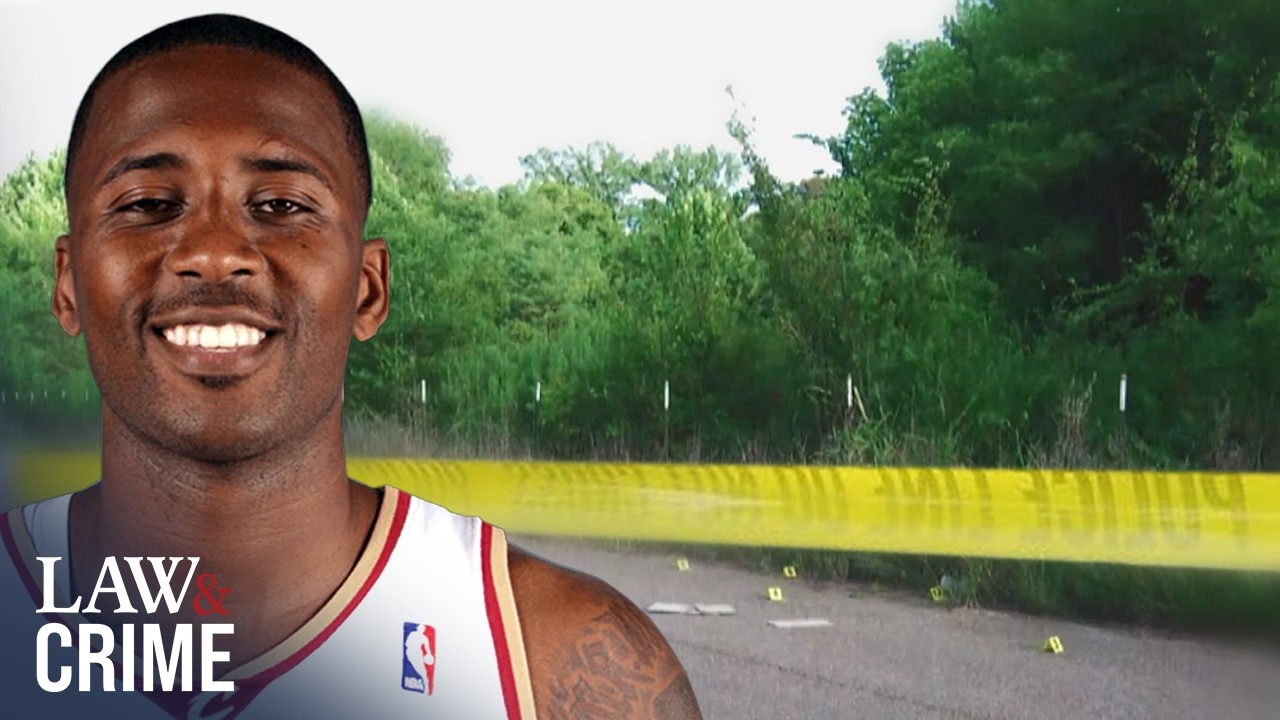
Killer Cases: NBA Star Lured to Execution In Rural Tennessee
"The decade-long cold case of NBA star Lorenzen Wright's murder was cracked through a persistent mother, a jailed informant, and a covert police operation that recovered the murder weapon from a lake and exposed a conspiracy driven by greed."

SAVANNAH GUTHRIE'S MOM MISSING: DAY 66
"On day 66 of Nancy Guthrie's disappearance, investigators grapple with two distinct sets of Bitcoin ransom notes, digital tracing challenges, and potential physical evidence like shoe coverings, as new, dubious claims emerge from a 'hyena' seeking payment for information."