
Nancy Guthrie Mystery Deepens: Mexican Authorities Fire Back | Nancy Guthrie Missing Day 19
YouTube · D_vw9qBgdkw
Quick Read
Summary
Takeaways
- ❖Mexican authorities in Sonora state deny receiving formal requests for collaboration from US or Mexican federal agencies regarding Nancy Guthrie's disappearance.
- ❖The border crossing into Mexico at Nogales is remarkably easy, with no ID or passport checks, contrasting sharply with US entry procedures.
- ❖Life-saving heart medication, crucial for Nancy Guthrie, is easily obtainable in Mexican pharmacies without a prescription or ID.
- ❖Pima County Sheriff's early statements (Day 2) declaring 'no active threat' and suspending air search assets are criticized as 'prematurely certain' and potentially indicative of a collapsed investigation into a single hypothesis.
- ❖The FBI has received over 20,000 tips, with approximately 400 personnel assigned to the case, yet gun store inquiries have yielded no leads on the suspect's weapon.
- ❖Investigators have only positively identified the suspect's Ozark backpack as being from Walmart, with other items like the balaclava and holster remaining untracked.
- ❖Law enforcement has not ruled out the possibility of an accomplice aiding the kidnapper seen on the doorbell camera.
- ❖A former FBI agent suggests focusing tip generation on 'who hasn't been seen' or 'who is acting strangely' since February 1st, rather than just identifying items.
Insights
1Conflicting International Cooperation Claims
The Attorney General of Sonora State, Mexico, issued a statement denying any formal requests for collaboration, assistance, or information exchange from US authorities or Mexican federal agencies regarding the Nancy Guthrie case. This directly contradicts earlier US reports suggesting cross-border cooperation. Later, an FBI communication to Sonora authorities stated they had no investigative leads suggesting Nancy Guthrie was in Mexico.
Sonoran Attorney General's statement (), NewsNation interview transcript (), Mexican Consulate in Phoenix statement ().
2Ease of Border Crossing into Mexico Complicates Investigation
A reporter's trip to Nogales, Mexico, demonstrated the extreme ease of entry into Mexico, requiring no passport or ID, contrasting sharply with the rigorous X-ray vehicle scanning and scrutiny for entry into the United States. This ease of access raises concerns about the potential for a kidnapper to transport a person across the border undetected into Mexico.
Reporter Brian Enton's experience crossing the Nogales border (), host's comparison to US border checks ().
3Availability of Critical Medication in Mexico
A key concern in the Nancy Guthrie case was her need for life-saving heart medication. Investigations revealed that many prescription medications, including some heart medicines, can be easily obtained in Mexican pharmacies without a prescription or ID, potentially enabling a kidnapper to acquire necessary drugs if Nancy was taken across the border.
Reporter Brian Enton's visit to a Mexican pharmacy () and conversation with a pharmacist ().
4Critique of Sheriff's Early Statements and Investigative Focus
On Day 2 of the investigation (February 2nd), Sheriff Chris Nanos stated there was 'no active threat' to the public and that air search assets would 'step aside' because it was viewed as a 'crime scene' rather than a 'search mission.' Threat management expert Spencer Corson critically analyzed these statements, calling them 'logically fragile' and 'prematurely certain,' arguing that suspending searches early in a viable rescue timeline indicates a shifted probability model, potentially towards homicide, and a risk of confirmation bias by collapsing the investigation into a single hypothesis.
Sheriff Nanos's press conference quotes (, ), Spencer Corson's analysis (-).
5Limited Identification of Suspect's Clothing and Equipment
Despite an FBI team dedicated to tracking clothing, the only item positively identified from the doorbell camera suspect is an Ozark backpack, confirmed to be sold exclusively at Walmart. The source of the gun, holster, and the three-hole balaclava remains unknown, with the balaclava noted as being only available online at Walmart in Tucson, making its purchase potentially trackable.
Sheriff's statement on Ozark backpack (), Fox News report on gun/holster (), host's analysis of balaclava (, ).
6Law Enforcement Not Ruling Out Accomplices
The Pima County Sheriff, Chris Nanos, informed the BBC that investigators have not ruled out the possibility of an accomplice aiding the suspected kidnapper seen on the doorbell camera. This is the first time this possibility has been officially acknowledged, addressing public speculation about the difficulty of a single individual abducting a 150lb woman.
CBS report on BBC interview with Sheriff Nanos ().
7New Strategy for Tip Generation
Former FBI supervisory special agent Jason Pac suggested a new approach for generating tips: instead of asking 'what have you seen,' the public should consider 'who haven't you seen' or 'whose behavior has changed' since February 1st. This method aims to identify individuals whose patterns of life were disrupted or who acted strangely around the time of the disappearance.
Jason Pac's statement on Fox ().
Bottom Line
The stark contrast in border security between entry into Mexico and entry into the US creates a significant vulnerability for individuals being taken south of the border, as demonstrated by a reporter's effortless crossing.
This ease of entry into Mexico could have been exploited by the perpetrator, potentially moving Nancy Guthrie across the border without detection, shifting the investigative focus and complicating international cooperation.
Law enforcement agencies need to rapidly integrate intelligence on border vulnerabilities into initial search parameters for missing persons cases near international borders, and establish pre-emptive, formalized cross-border communication protocols.
The host's observation that news coverage of the Nancy Guthrie case is diminishing, moving to later segments in broadcasts, directly correlates with a decrease in public tips and investigative resources.
Sustained media attention, despite its 'circus' perception, is a critical, often unacknowledged, driver for maintaining public engagement and tip flow in high-profile missing persons cases. Its decline can lead to cases going cold.
Advocacy groups for missing persons could leverage this insight to develop strategies for maintaining media interest beyond the initial surge, perhaps by providing regular, compelling updates or human-interest angles to keep the story in the public eye and resources allocated.
Key Concepts
Competing Hypothesis Model
This model suggests that all investigations should run on multiple, competing hypotheses until facts definitively prove one theory over others. Spencer Corson argues against collapsing an investigation into a single hypothesis too early, as this can lead to confirmation bias and missed leads, particularly in the initial critical hours of a case.
Confirmation Bias
The tendency to interpret new evidence as confirmation of one's existing beliefs or theories. In the context of the Nancy Guthrie case, Spencer Corson suggests that an early focus on a single hypothesis (e.g., a family member being involved) could have led investigators to overlook or downplay evidence that did not fit that initial theory, thereby hindering the broader search and threat assessment.
Lessons
- If you live near a border, understand the security differences for crossing in both directions, as this knowledge can be critical in emergency situations.
- When providing tips to law enforcement, consider not just what you've seen, but also who in your social or professional circles has exhibited unusual behavior or been unexpectedly absent around the time of a crime.
- Recognize that early official statements in high-stakes investigations, especially those ruling out threats or narrowing search parameters, should be critically evaluated, as they can be based on incomplete information or premature conclusions.
Notable Moments
The host's emotional and direct questioning of Sheriff Nanos's early statements, particularly his assertion of 'no active threat' and the decision to scale back air searches within 24 hours of the disappearance.
This moment highlights a perceived critical misstep in the initial phase of the investigation, suggesting that valuable time and resources may have been misdirected due to premature certainty, potentially impacting the outcome of the search for Nancy Guthrie.
The discussion about the media's role in keeping missing persons cases alive, noting that as news coverage wanes, so do public tips and investigative resources.
This provides a meta-commentary on the ecosystem of high-profile investigations, underscoring the often-criticized 'media circus' as a vital, albeit imperfect, mechanism for sustaining public and official attention on a case, directly impacting its chances of resolution.
Quotes
"This institution has not received any formal request for collaboration, assistance or information exchange from US authorities or from Mexican federal agencies regarding this case."
"No, I don't think there's an active threat... We don't have any indication that the public is in danger."
"Right now, we don't see this as a search mission as much as we see it as a crime scene."
"If there's a violent offender and no suspect in custody, risk cannot be ruled out categorically. It can only be qualified as low probability."
"The public should think about who haven't they seen in the past 18 days. Not what what have you seen, who haven't you seen?"
Q&A
Recent Questions
Related Episodes

Nancy Guthrie’s Kidnapping Nightmare Hits Shocking Wall
"Savannah Guthrie's family offers a $1 million reward for information on her mother's kidnapping, as DNA evidence faces processing challenges and law enforcement agencies show signs of internal friction."

New ransom note claims to know where Nancy Guthrie is — but is it real? Day 65 in the search
"A new ransom note surfaces on the day Savannah Guthrie returns to work, raising questions about its authenticity and the ongoing, politically fraught investigation into Nancy Guthrie's disappearance."

Video from inside Nancy Guthrie’s bedroom, latest on Annie’s impounded car -- day 39 on the scene
"This episode provides updates on the Nancy Guthrie disappearance, including a newly surfaced video of Nancy, the status of Annie Guthrie's impounded car, and an FBI agent's advice on protecting elderly loved ones, alongside a controversy surrounding the Pima County Sheriff's resume."
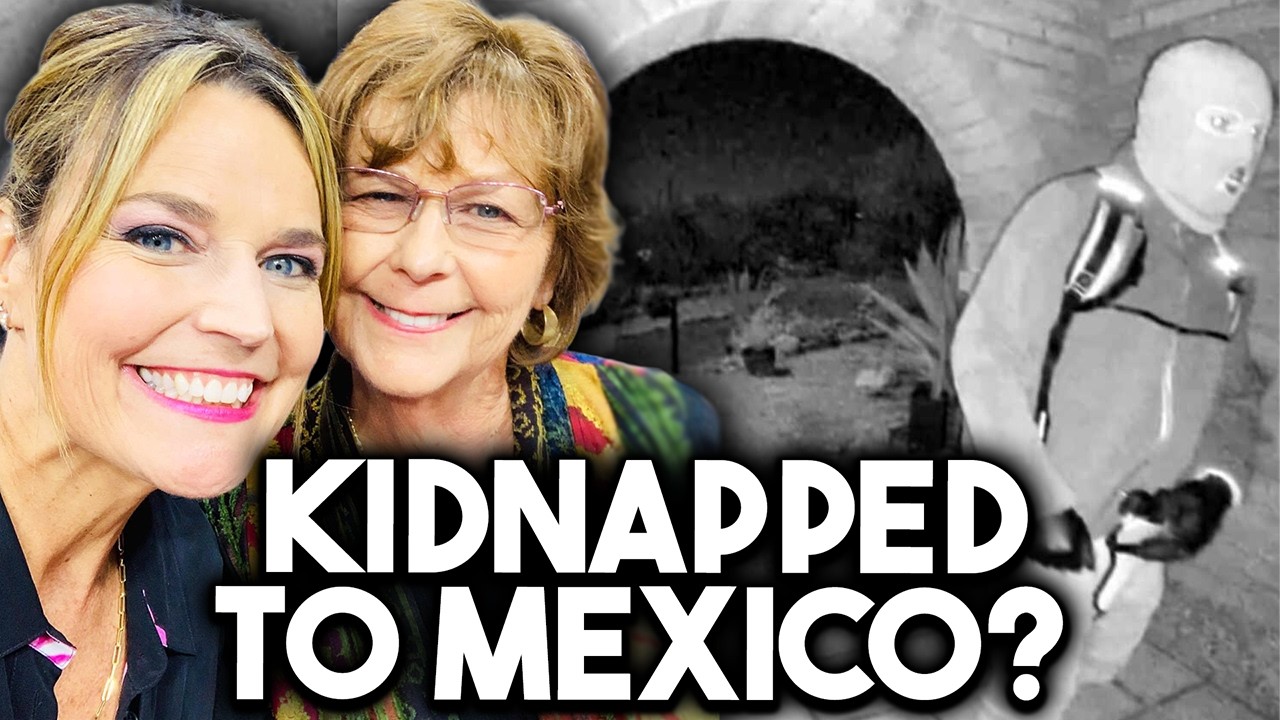
Nancy Guthrie Mystery: Kidnapped to Mexico? The Truth About Eerie Google Searches
"Federal authorities are now engaging with Mexican officials in the Nancy Guthrie kidnapping case, contradicting earlier statements from the local sheriff, while new investigative leads emerge from a gun holster purchase and Google search data is clarified."