Saagar SHREDS Trump Baby Accounts
YouTube · E-xwcp03Fho
Quick Read
Summary
Takeaways
- ❖Trump Accounts provide $1,000 from the government for newborn children, invested in low-cost index funds.
- ❖At age 18, children gain total control over the account, which could reach $50,000 or more with additional contributions.
- ❖Saagar Enjeti warns that 18-year-olds, often lacking financial literacy, are likely to misuse these funds, citing personal experience and historical patterns of inherited wealth mismanagement.
- ❖The program is criticized for exacerbating inequality, as wealthier families can contribute more, mirroring the regressive nature of 529 plans.
- ❖Opportunity costs are high; funds could be used for universal childcare or addressing structural costs like housing and education.
- ❖Concerns exist about potential cronyism and corruption, with companies currying favor by donating to these accounts and influencing investment choices.
- ❖The policy is framed as a libertarian approach, relying on market growth rather than addressing underlying cost structures or providing structured financial support.
Insights
1Lack of Parental Control and Financial Literacy for 18-Year-Olds
The core concern is that these accounts grant total control to the child at age 18. Saagar Enjeti argues that most 18-year-olds lack the maturity and financial literacy to responsibly manage potentially tens of thousands of dollars, often leading to impulsive spending despite tax penalties. He contrasts this with how wealthy families structure trusts with strict conditions until beneficiaries are more mature.
Saagar states, 'If you had given me $50,000 when I was age 18, I was an idiot. Okay? Literally an idiot. Well, with a very underdeveloped brain.' He notes, 'There's a reason why if you look at inherited wealth across the world and even the richest families in America today, they don't just give trust fund accounts to 18-year-olds.'
2Exacerbation of Inequality and Regressive Structure
The program, while providing an initial $1,000, allows additional contributions of up to $5,000 from parents and others. This structure means wealthier families, who can afford to contribute more, will see their children's accounts grow substantially larger, mirroring the regressive benefits of 529 plans. This widens the wealth gap rather than closing it.
Crystal Ball explains, 'It's predominantly going to benefit people who are at least middle or upper middle or wealthy. Same as with 529s... it could actually increase that level of inequality.'
3High Opportunity Cost and Failure to Address Root Causes
The significant cost of funding these accounts for all newborns could be allocated to more impactful universal programs. The hosts argue that simply providing investment accounts doesn't address the fundamental issues of rising costs in housing, education, and healthcare, which erode purchasing power regardless of investment gains.
Crystal Ball suggests, 'There are a lot of other things that you could do with that program. Something like, you know, universal child care that would have a more broad-based benefit.' Saagar adds, 'If you don't do anything about the general cost of living about housing about the actual like structural let's say educational inflation... you're still losing money in the long run.'
4Potential for Cronyism and Market Distortion
The program creates an avenue for companies to curry favor with the administration by donating to these accounts. There's also concern that the government's large-scale investment in index funds could distort market prices and potentially be gamed to benefit political allies.
Crystal Ball states, 'You already have a bunch of companies that have sidled up to the table... 'Hey, we love Mr. Trump. What a brilliant idea. You know, we're gonna donate some to these Trump accounts as well.'... you could imagine them gaming the system with that to prop up to be able to shovel government money to their friends and allies.'
Bottom Line
The Trump Accounts could function as a 'workaround' for wealthy individuals to fund Roth IRAs for their children without traditional employment requirements.
This highlights a potential unintended consequence where the program, designed to help all children, might be exploited by the affluent to maximize tax-advantaged savings, further benefiting those already privileged.
Financial advisors could market strategies to wealthy clients on how to leverage these accounts for long-term tax-advantaged wealth transfer, assuming the 18-year-old agrees to roll the funds into a Roth IRA.
Lessons
- If you have a newborn, take advantage of the initial $1,000 government contribution to the Trump Account, as it's 'free money'.
- Consider supplementing the Trump Account with a 529 plan for college savings, which offers more control over how funds are spent and when they are accessed.
- Educate children on financial literacy and responsible money management from a young age, especially if they will gain control of significant assets at 18.
Quotes
"Perhaps no provision of the Great Big Beautiful bill will prove more consequential than Trump accounts. Under this program, the US government will automatically create a tax-free investment account for every newborn American child."
"If you had given me $50,000 when I was age 18, I was an idiot. Okay? Literally an idiot. Well, with a very underdeveloped brain."
"If you care about something like, you know, reducing inequality... this is not going to do anything to solve that. In fact, because of the structure of it, it could actually increase that level of inequality."
"It assumes line goes up forever. And maybe it does. We've kind of gotten used to that. It means that you're putting your child's future in the hands of like the whims of the market and investing Americans even more in this, you know, rigged casino that is the stock market."
Q&A
Recent Questions
Related Episodes
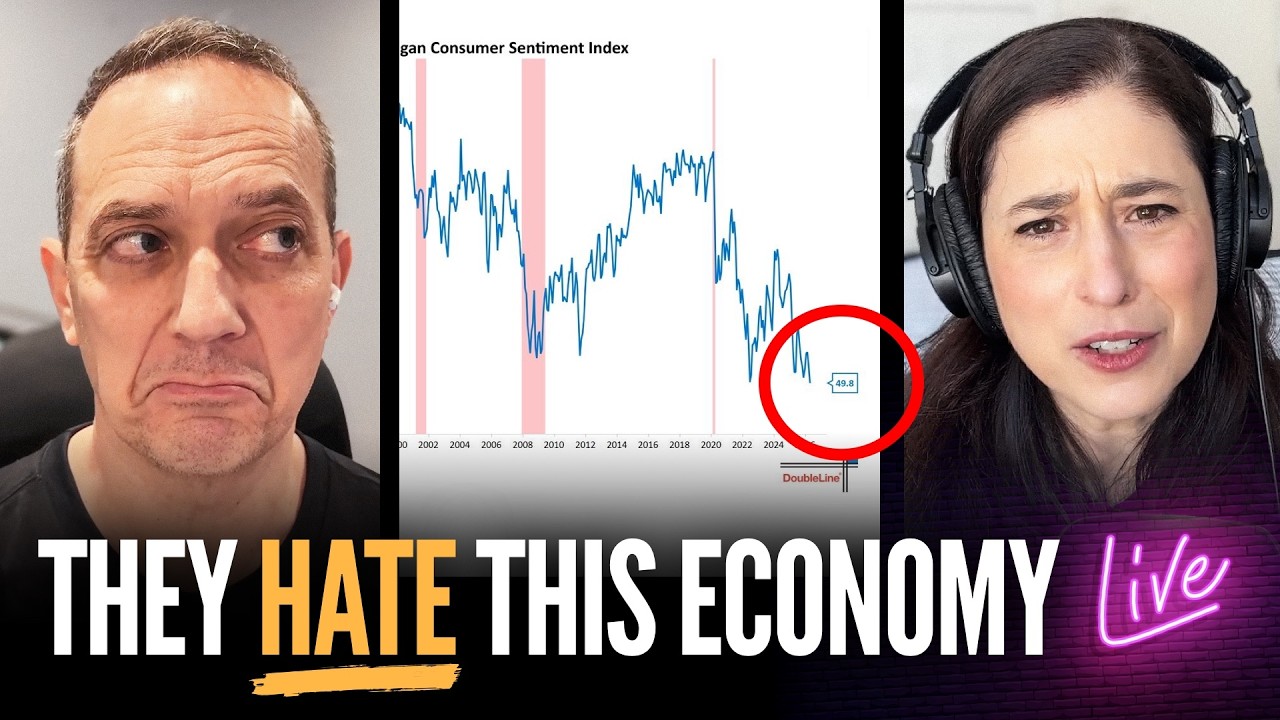
BREAKING: Worst Consumer Sentiment in History; DOJ Drops Criminal Probe of Chair Powell | Receipts
"This episode dissects the political weaponization of the Department of Justice against the Federal Reserve Chair and the partisan distortion of consumer confidence data, highlighting the erosion of independent institutions and free markets."

NYC Pride 2026 LIVE: Keith Edwards w/@glaad, @iamlorenp, @AustinProductions, @verydelta
"The Keith Edwards Show's live stream from NYC Pride 2026 blended vibrant celebration with urgent political commentary, emphasizing the ongoing fight for LGBTQ+ rights and the power of community."

Freedom to Discriminate: Realtors Conspired to Segregate Housing & Divide America |#RolandsBookClub
"This episode exposes how American realtors deliberately invented and institutionalized housing segregation, shaping federal policy and ultimately redefining the concept of 'freedom' to fuel a political ideology that continues to divide the nation."

Billionaire's WARNING: I'm SELLING. The Crash Is Already Here!
"Jeremy Grantham, a legendary investor who managed $165 billion, warns that the biggest investment bubble in history is about to burst, advising against US stocks and highlighting a looming fertility crisis driven by environmental toxins."