Nick Reiner demands his trust fund money — will he get it despite allegedly killing parents?
YouTube · E9RFS-IoL8U
Quick Read
Summary
Takeaways
- ❖Nick Reiner, accused of brutally killing his parents, Rob and Michelle Reiner, is demanding access to his inheritance from a family trust.
- ❖The trust was designed to disburse half the money when Nick turned 30 and the other half at 35; he claims he never received the first payment.
- ❖Reiner's attorney filed a petition asserting that trustees have denied him access to the funds needed for legal bills and other expenses while in custody.
- ❖Prominent defense attorney Alan Jackson initially represented Reiner but withdrew due to non-payment, despite Reiner's siblings verbally agreeing to pay.
- ❖Jackson has stated he is willing to return to the case if the trust money becomes available.
- ❖Legal expert Ambrosio Rodriguez notes this is a unique 'living trust' situation, distinct from typical probate cases where a killer might be barred from inheriting.
- ❖The legal argument is that the trust is an independent entity and its conditions for disbursement have been met, regardless of the murder accusation.
- ❖The case involves a moral conundrum: should someone accused of killing their benefactors still access their money?
- ❖Public defenders, while often under-resourced, are highly knowledgeable and experienced lawyers, especially for high-stature cases like murder.
- ❖The case has maintained an unusually high level of secrecy, with limited public details on the autopsy or reports, possibly due to the family's prominence and influence.
Insights
1Nick Reiner's Demand for Trust Funds for Legal Defense
Nick Reiner, accused of the brutal murders of his parents, is actively seeking access to his family trust funds. His attorney filed a petition stating that the trustees have denied him money he was entitled to receive upon turning 30. The primary purpose for these funds is to cover substantial legal bills, potentially allowing him to re-hire a high-profile private attorney like Alan Jackson, and for other needs while in custody.
New court documents show Nick Reiner wants his inheritance to pay legal bills and other items while in custody. He never received money from the trust when he turned 30. His defense lawyers claim the trustee has given 'a series of excuses and justifications.'
2The Legal Nuance of a Living Trust in a Murder Case
Legal expert Ambrosio Rodriguez clarifies that this situation is unique because it involves a living trust, not a typical probate case. The argument is that the funds were already 'given' to Nick Reiner through the trust structure, and the trust itself is a separate legal entity with specific disbursement requirements. The accusation of murder, while morally impactful, does not automatically negate the pre-existing conditions of the trust, making it a complex legal battle.
Ambrosio Rodriguez states, 'This is a situation where this was a living trust that was set up by the parents to give him money at certain stages in his life.' He adds, 'the trust is its own legal entity. And the requirements of the trust to this this you know, disburse the money to me have been met and there are no issues to stop me from getting it.'
3Alan Jackson's Withdrawal and Potential Return
High-profile defense attorney Alan Jackson initially represented Nick Reiner but withdrew from the case because he was not paid. Court filings indicate Reiner's siblings initially agreed to act as 'third-party payers' but later changed their minds. Jackson has publicly stated he is willing to represent Reiner again if the necessary funds become available, suggesting the financial aspect is the sole barrier.
KTLA reported Nick Reiner tried hiring Alan Jackson, but Jackson dropped the case because he could not be paid. The petition states Nick Reiner's siblings initially agreed to pay Jackson but then changed their mind. TMZ reported Jackson is willing to represent Reiner again if the money comes in.
4The 'White Glove Treatment' for Celebrity Cases
Ambrosio Rodriguez suggests that the Reiner murder case, involving a prominent family, has received an 'unusually high' level of secrecy. He speculates that informal channels or 'back channels' were used to request maximum privacy for the family, which the District Attorney's office appears to be honoring. This contrasts with many other cases where gory details are quickly released, highlighting a disparity in treatment based on influence and wealth.
Ambrosio Rodriguez states, 'I think the level of secrecy... is unusually high.' He adds, 'I have no doubt that... there has been some kind of informal channels or back channels asking for the maximum privacy for the family as possible. And I think that the DA's office has made a decision to honor their wishes.'
Bottom Line
The legal argument for Nick Reiner's access to his trust fund hinges on the distinction between a living trust and traditional inheritance laws, potentially allowing him to bypass the 'slayer rule' that typically prevents killers from inheriting from their victims.
This could set a precedent or at least highlight a loophole in how pre-established trusts are handled in criminal cases, potentially allowing accused individuals to fund their defense with assets derived from the alleged victims.
Estate planners and legal professionals could explore more robust mechanisms within living trusts to explicitly address scenarios involving beneficiaries accused of harming the trust's creators, ensuring the creators' ultimate intentions are preserved.
The 'white glove treatment' and unusual secrecy in the Reiner case, attributed to the family's prominence, reveal a two-tiered justice system where influence can significantly impact transparency and public access to information.
This erodes public trust in the impartiality of the justice system and can create a perception that wealth and connections can shield certain individuals from public scrutiny, even in severe criminal cases.
Advocacy groups and media could push for greater transparency in all criminal cases, regardless of the parties involved, to ensure equitable application of justice and prevent the appearance of preferential treatment.
Key Concepts
Living Trust vs. Probate
A living trust is a legal entity established during a person's lifetime to hold assets, with specific instructions for their distribution. Unlike probate, which deals with assets after death according to a will or state law, a living trust often bypasses the public probate process. In this case, the argument is that the trust's terms for disbursement to Nick Reiner were pre-established and should be honored, irrespective of the murder accusation, making it a distinct legal challenge from a traditional inheritance dispute.
Presumption of Innocence in Financial Disputes
The legal principle that an individual is considered innocent until proven guilty extends to financial matters. In the Reiner case, his defense argues that because he is only 'accused' and not 'convicted,' he is entitled to use his lawfully designated funds to mount a defense. This creates a tension between the legal right to resources for defense and the moral/public perception of someone accused of a heinous crime.
Lessons
- If establishing a family trust, consult with legal counsel to include explicit clauses addressing scenarios where a beneficiary is accused of harming the trust's creators, to prevent unintended access to funds.
- For individuals facing serious criminal charges, understand that while public defenders are highly capable, securing private counsel for complex cases, especially those with potential death penalty implications, often requires significant financial resources.
- Recognize that the legal process, particularly probate court, can be extremely slow; plan accordingly for potential delays in accessing or disputing funds.
Notable Moments
Nick Reiner's siblings initially agreed to pay Alan Jackson for his defense, but later changed their mind, leading to Jackson's withdrawal.
This reveals the immense emotional and ethical strain on family members caught between supporting a sibling accused of patricide and the moral implications of funding such a defense, ultimately impacting the quality of legal representation.
Ambrosio Rodriguez notes that probate court is 'very, very slow' and 'nothing moves fast in that world,' even slower than criminal court.
This highlights a critical procedural reality that can significantly delay access to funds, potentially prolonging an accused individual's ability to secure preferred legal counsel and impacting the timeline of their defense.
Quotes
"Like anyone accused of a crime, Nick is presumed innocent and he is entitled to mount his defense with the resources that are lawfully his own."
"If you're accused of killing your parents, are you still entitled to some of their money?"
"The gift was already given. This isn't money that's coming out from them now... It was already his. It's just the structure, the tax structure, and the way it's distributed is something that you have to be very wealthy in order to do."
"Just because you're being defended by a public defender does not mean you do not You're not getting a great defense."
Q&A
Recent Questions
Related Episodes
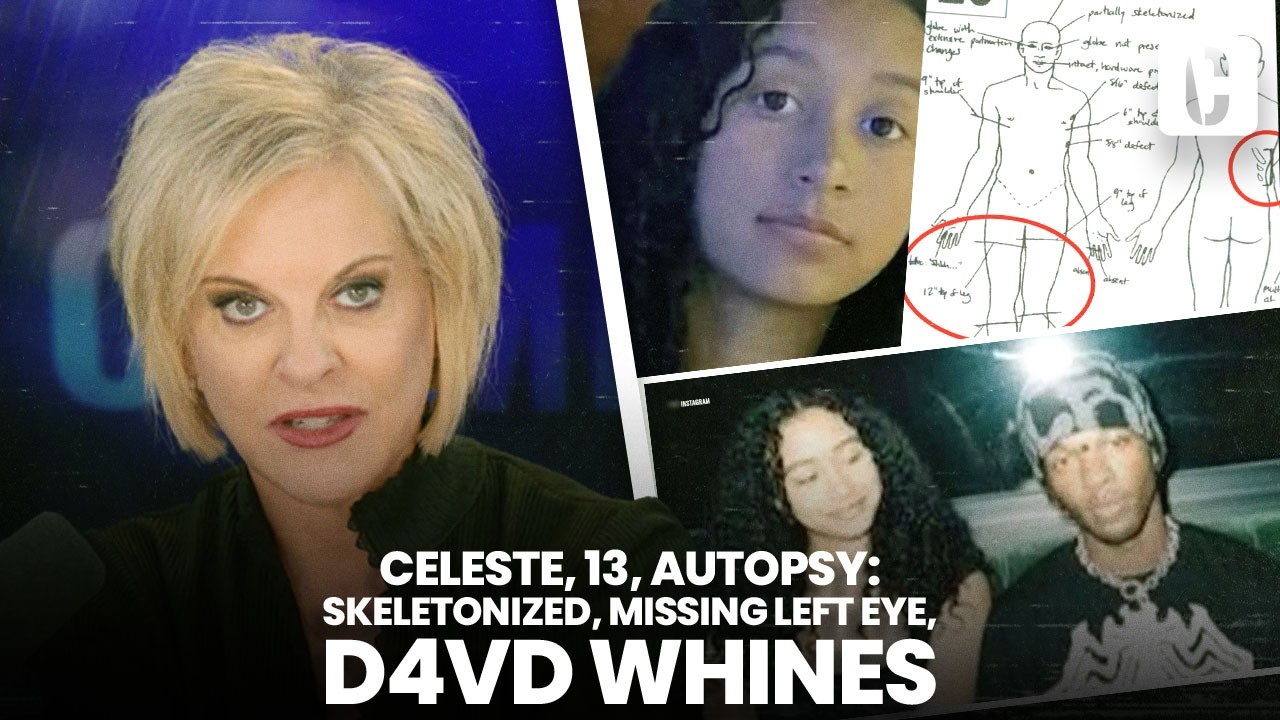
CELESTE, 13, AUTOPSY: SKELETONIZED, MISSING LEFT EYE, D4VD WHINES
"A 13-year-old girl, Celeste Rivas, was found partially skeletonized with a missing left eye, traces of meth and MDMA, and fatal stab wounds, while the accused musician David Anthony Burke (D4VD) complains about jail conditions."
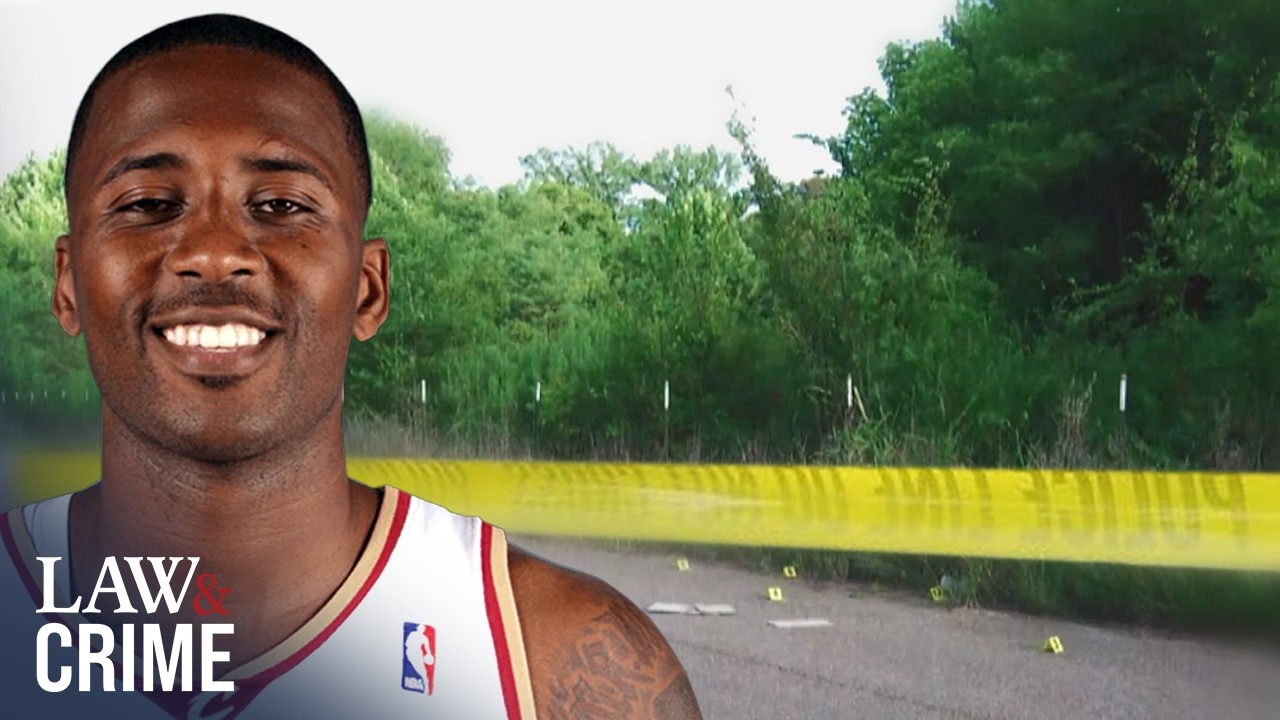
Killer Cases: NBA Star Lured to Execution In Rural Tennessee
"The decade-long cold case of NBA star Lorenzen Wright's murder was cracked through a persistent mother, a jailed informant, and a covert police operation that recovered the murder weapon from a lake and exposed a conspiracy driven by greed."

Sadhguru - Stop Letting Your Mind DESTROY You | SRS #315
"Sadhguru challenges conventional wisdom on 'being in the moment' and stress, arguing that mastering the mind requires understanding its sophisticated design and consciously directing one's internal chemistry for profound well-being."

TEEN'S DNA REVEALED IN ANNA KEPNER'S R*** KIT
"The investigation into Anna Keaptainner's death on a cruise ship reveals shocking DNA evidence, a previously unknown male minor, and critical questions about evidence handling and family dynamics."