
🚨 BREAKING: Multiple Explosions Across Iran - IRGC In Full Panic Mode
YouTube · EUNCXvoBxgY
Quick Read
Summary
Takeaways
- ❖Multiple, coordinated explosions targeted IRGC buildings and sites in at least six Iranian cities: Bandar Abbas, Ahvaz, Tabriz, Karaj, Tehran, and Qom.
- ❖The initial explosion in Bandar Abbas reportedly targeted the head of the IRGC Navy, who the regime claims survived an assassination attempt.
- ❖The IRGC dismissed the explosions as 'gas leaks,' a claim the host refutes by noting the lack of gas infrastructure at blast sites.
- ❖Saudi Arabia's policy towards Iran dramatically shifted from neutrality to open opposition against the IRGC, following a private briefing in Washington and a $9 billion US Patriot missile defense system sale.
- ❖Iran, China, and Russia conducted a symbolic two-day joint naval exercise in the Strait of Hormuz, which the host characterizes as Iran begging for protection from the US.
- ❖The US Central Command issued a strong warning to the IRGC Navy to avoid escalation in the Strait of Hormuz during the joint drills.
- ❖The IRGC deployed forces, including snipers, to the streets of Tehran and other cities, which the host interprets as a sign of panic and incompetence.
- ❖Israeli officials denied involvement in the Iranian explosions, despite widespread speculation.
- ❖The IDF simultaneously conducted strikes against Hamas commanders in Gaza and Hezbollah positions in Lebanon.
Insights
1Coordinated Explosions Target IRGC Across Iran
Multiple explosions occurred simultaneously in at least six Iranian cities: Bandar Abbas (the main port city), Ahvaz (southwestern), Tabriz (northwestern), Karaj (west of Tehran), Tehran (the capital), and Qom (a holy city). These attacks primarily targeted IRGC buildings and residential blocks housing IRGC personnel, suggesting a coordinated effort by professional actors. The host speculates these were drone attacks launched from within Iran or planted explosives, dismissing the regime's 'gas leak' narrative.
Videos of explosions from various cities, reports of IRGC buildings targeted, and the IRGC's official response claiming 'gas leaks' contradicted by lack of infrastructure. The host highlights the coordinated nature and precision of the attacks.
2Saudi Arabia's Policy Reversal on Iran
Saudi Arabia, initially unwilling to allow US/Israeli airspace use for strikes on Iran, abruptly reversed its policy. This shift occurred after a visit by Saudi Defense Minister Prince Khaled bin Salman to Washington, where the US agreed to sell Saudi Arabia $9 billion worth of Patriot missile defense systems. The host frames this as the US effectively 'buying' Saudi compliance and a major foreign policy win for the US.
Reports of Prince Khaled bin Salman's visit to Washington, the subsequent announcement of the $9 billion Patriot missile sale, and his public statements on X (formerly Twitter) aligning with US strategic interests against the IRGC.
3IRGC Panic and Symbolic Drills Amidst Geopolitical Tensions
The IRGC reacted to the explosions with visible panic, deploying forces on motorcycles and snipers to city streets, which the host criticizes as amateurish and ineffective. Simultaneously, Iran participated in a joint naval drill with China and Russia in the Strait of Hormuz. The host describes this as a symbolic gesture, initiated by Iran's 'begging' for protection, as China and Russia reportedly refused direct military involvement but offered a two-day exercise to 'buy time' against potential US strikes.
Videos of IRGC forces on Tehran streets, images of snipers on rooftops, and footage of the joint naval exercise. The host's interpretation of China/Russia's limited involvement and the IRGC's 'panic mode' behavior.
4Khamenei's Pre-War Ritual and Subsequent Bunker Retreat
Prior to the explosions, Supreme Leader Ali Khamenei performed a symbolic ritual visit to the tomb of Ayatollah Khomeini, an act he reportedly undertakes before major conflicts. Following the widespread attacks, he was reportedly moved to a bunker, indicating the regime's heightened state of alert and perceived threat.
Video footage of Khamenei at Khomeini's tomb, described as a 'ritual before wars or any sort of chaos.' The host states Khamenei 'has now gone underground' to a bunker.
Lessons
- Monitor the Strait of Hormuz for further US, Chinese, Russian, and Iranian naval movements, as it remains a critical flashpoint for regional escalation.
- Track Saudi Arabia's evolving foreign policy and defense acquisitions, as their alignment with the US against Iran signifies a major shift in Middle Eastern power dynamics.
- Analyze IRGC's internal stability and response capabilities, as coordinated attacks on their facilities suggest internal vulnerabilities or highly capable external adversaries.
Notable Moments
IRGC deploys snipers to rooftops in Tehran following explosions.
This deployment, described as 'stupid' and 'panic mode' by the host, highlights the regime's fear of internal unrest or further attacks, even as they publicly attribute explosions to 'gas leaks.' It underscores their perceived vulnerability.
Supreme Leader Ali Khamenei performs a 'pre-war ritual' at Khomeini's tomb.
This symbolic act, undertaken before anticipated major conflicts, suggests the Iranian leadership recognized an imminent threat or significant escalation before the widespread explosions even began.
A rally in central London supports Hezbollah and Ali Khamenei.
The host highlights this as evidence of the UK's perceived leniency towards the IRGC, as other Western nations have designated it a terrorist organization. It shows the IRGC's continued influence and support networks in Western capitals.
IDF eliminates 20 Hamas commanders and strikes Hezbollah positions.
This demonstrates Israel's active and aggressive posture against Iranian-backed proxies, occurring concurrently with the explosions in Iran, suggesting a coordinated regional pressure campaign.
Quotes
"So clearly whatever's going on, they've decided to not hit the western side, not hit the Persian Gulf. Let's just start from inside the country. Couple of explosions while the Chinese and Russians are finishing their joint military exercise."
"The Americans managed to change the minds of Saudi Arabia by selling them more stuff, getting more money from Saudi and then getting them to change their mind. So the Americans got paid more money and also got what they wanted when it comes to foreign policy. Amazing."
"The Israeli officials have now come out and told Reuters that Israel is not behind the explosions in Iran. I love how the Israelis just with the first reaction, it wasn't us. It wasn't us. Promise it wasn't us."
"If the fact that they don't even feel safe in their own so-called country, they have to cover their faces."
Q&A
Recent Questions
Related Episodes
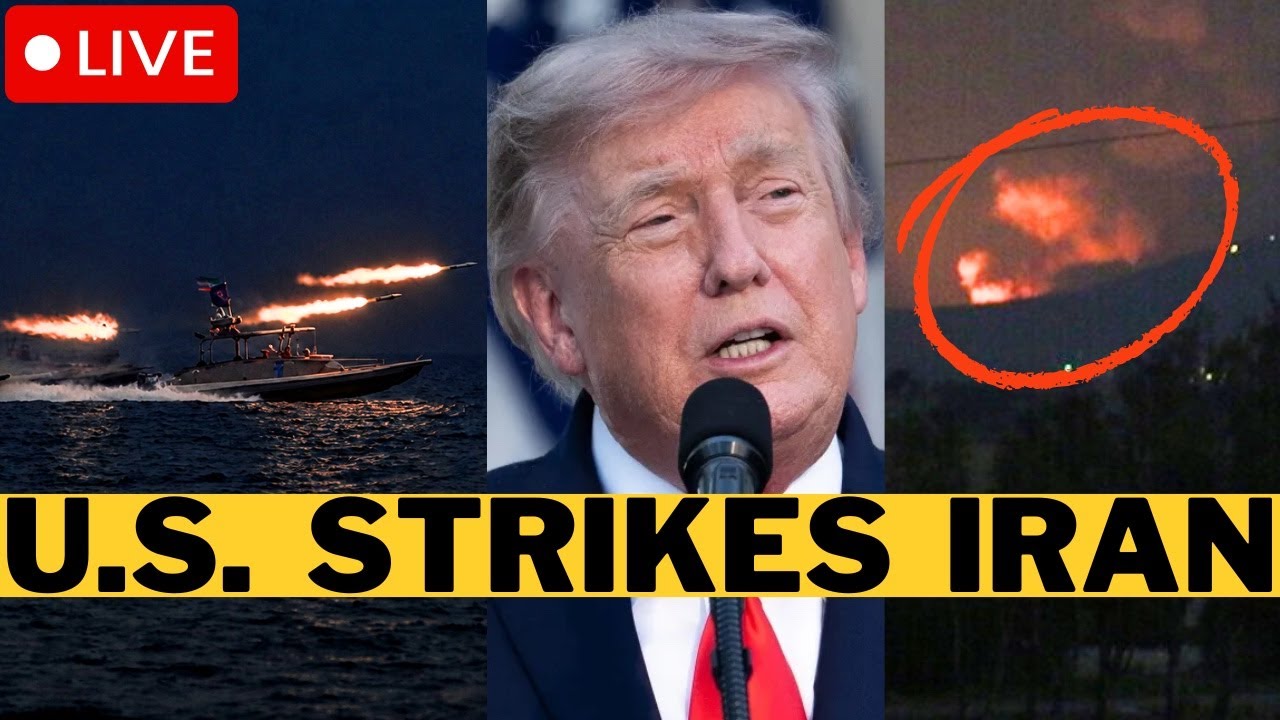
BREAKING: IRGC Break Ceasefire - U.S. Military Launch Strikes In Iran
"The US military launched retaliatory strikes against IRGC bases in Iran after the IRGC broke a ceasefire by attacking international vessels, while Hezbollah militants caused chaos in Beirut over a Lebanese-Israeli agreement."

BREAKING: Iran Threatens To END Talks; U.S. Vows Retaliation; Hezbollah Collapsing? | TBN Israel
"Iran is leveraging Hezbollah and the Strait of Hormuz to manipulate US negotiations, while Israel asserts its right to dismantle Hezbollah's eroding but still dangerous infrastructure in Lebanon, independent of international talks."

BREAKING: U.S. SINKS Iranian Boats; Iran Talks Stall; Israel Hits Beirut | TBN Israel
"The U.S. and Israel escalate military actions against Iran and its proxies, while diplomatic talks stall over Iran's nuclear program, Strait of Hormuz fees, and the future of Hezbollah."

Patrick Henningsen: Hezbollah JUST Fired Back at Israel - Iran Vows to “Crush” All Attacks
"Patrick Henningsen argues that the US and Israel initiated an illegal war against Iran, driven by Trump's incompetence and Israeli influence, leading to an inevitable escalation with severe global economic repercussions."