
The Global Politics Expert: The Real Global Danger is What Comes Next!
YouTube · EVts3Ui_0AI
Quick Read
Summary
Takeaways
- ❖The United States has become the biggest driver of global geopolitical uncertainty, abandoning its historical roles.
- ❖China's decades-long strategic investment in critical minerals, EVs, and batteries positions it for significant long-term global influence.
- ❖Ian Bremer predicted that Trump would fail, losing the upcoming midterms due to policy incompetence and unpopularity.
- ❖Trump's decision to intervene in Iran was influenced by a perceived success in Venezuela, a past lack of Iranian retaliation, and a loyal but incompetent advisory circle.
- ❖Iran's regime remains functional despite US/Israeli efforts, demonstrating centralized decision-making and leverage over the Strait of Hormuz.
- ❖Israel is creating a 5-7km buffer zone in Lebanon to protect its civilians from Hezbollah missile strikes, displacing over a million people.
- ❖Europe's decline stems from a belief in perpetual peace post-Cold War, leading to underinvestment in defense, technology, and an overregulated, anti-entrepreneurial environment.
- ❖AI models, like Anthropic's, pose an immediate systemic risk to global security and the economy by identifying and exploiting software vulnerabilities.
- ❖The global south and China are enthusiastic about AI's potential, while Western populations fear job displacement and corporate enrichment.
- ❖A coming wave of populism in 2028, fueled by AI-driven job disruption, is expected to mobilize urban/suburban women with advanced degrees.
- ❖Effective AI governance requires US-China arms control talks, an independent AI stability board, and global funding to ensure equitable access and prevent a "different species" divide.
Insights
1The United States as the Primary Geopolitical Risk Driver
Ian Bremer asserts that the US has become the single largest source of geopolitical uncertainty globally. This shift is characterized by the US abandoning the international rules and systems it historically established, such as free trade, acting as a global policeman, and maintaining open borders.
Bremer cites examples like tariffs, actions in Venezuela and Iran, and the US's refusal to adhere to collective security agreements. He notes that "the Americans are saying, 'We no longer want to play by the rules that we set up historically... We don't want to be the global policeman... We want a very different set of rules.'"
2China's Long-Term Strategic Dominance in Critical Resources
China has systematically invested for decades in securing and reprocessing critical minerals, and developing electric vehicle (EV) and battery technologies at scale. This long-term strategy contrasts sharply with the short-term, quarterly-return focus of many Western economies.
Bremer highlights China's efforts in "building the most effective electric vehicles all over the world at scale and the batteries all over the world at scale and the critical minerals in rare earths for decades now." He emphasizes that this sets China up for a "much stronger long-term trajectory."
3Trump's Misguided Iran Strategy Driven by Internal Factors
Trump's decision to engage militarily in Iran was influenced by three main factors: a perceived easy success in Venezuela, a historical belief that Iran would not retaliate significantly, and an advisory circle loyal to him over national interest, leading to a distorted view of military advice.
Bremer details the "successful military operation" in Venezuela as a motivator. He notes Trump's previous experience where Iran "talked big did not hit the Americans." Crucially, he states that unlike his first term, Trump's current advisors are "first and foremost loyal to the president and they will not tell him. They won't push back."
4AI as an Underappreciated Systemic Global Risk
Advanced AI models, such as Anthropic's, possess capabilities that pose an immediate, systemic security risk to the global economy and critical infrastructure. These models can autonomously identify and exploit software vulnerabilities, making them powerful weapons if widely accessible.
Bremer refers to Anthropic's model being "so powerful that they couldn't release it because it would have been an immediate systemic risk to the global economy and our security." He notes that the Fed Chief and Treasury Secretary considered this a "five alarm fire."
5Europe's Geopolitical Decline Due to Post-Cold War Complacency
Europe's diminished global standing stems from a post-Cold War belief in perpetual peace, which led to underinvestment in defense and technology. Coupled with heavy regulation and an anti-entrepreneurial environment, this has resulted in flatter growth, reduced productivity, and a lack of competitiveness compared to the US and China.
Bremer states, "Europe believed that the world was just going to be peaceful... So, they didn't need to invest in invest in defense. And it was okay if they didn't invest in lots of technology." He adds that Europe is "so heavily regulated and so anti-entrepreneurial that we don't drive the growth."
6The Rise of Tech Companies as New Global Leaders
Beyond traditional nation-states, technology companies are increasingly acting as de facto global leaders, setting rules and wielding significant influence over international events and security. Their capabilities can surpass those of governments in critical areas.
Bremer cites Microsoft's role in detecting cyberattacks before the Ukraine invasion and Elon Musk's Starlink providing critical communication for Ukraine. He states, "the most important new global leaders aren't countries, they're technology companies that are writing their own rules."
Bottom Line
As US predictability declines, many countries are seeking to "hedge" by increasing engagement with China. This creates opportunities for businesses and investors who can facilitate these diversified international relationships, particularly in sectors where China has long-term strategic advantages like critical minerals and green tech.
This shift means that businesses over-reliant on US-centric alliances or supply chains face increased risk. Companies that can bridge or operate effectively within diversified geopolitical blocs will gain a competitive advantage.
Develop specialized consulting or investment vehicles focused on facilitating diversified international trade and technology partnerships, especially in critical resource and green energy sectors, to help clients hedge against geopolitical instability.
Ukraine's rapid development of drone technology, enabling it to reclaim territory from Russia and even assist the US in combating Iran, demonstrates how smaller nations can gain significant geopolitical leverage through rapid technological adoption.
Traditional military power dynamics are being disrupted by agile technological innovation. This means that resource-constrained actors can achieve disproportionate influence or defense capabilities.
Invest in or partner with companies developing dual-use technologies (civilian and military applications) like advanced drones, AI-driven defense systems, or secure communication networks, targeting governments seeking to enhance their security posture outside conventional arms procurement.
The growing public anger in Western nations against AI CEOs and data centers, fueled by fears of job displacement and rising costs, signals an impending populist wave.
Unchecked technological advancement without equitable societal benefit distribution will lead to significant political instability and backlash, potentially hindering innovation or leading to restrictive regulations.
Develop and advocate for business models and public policies that ensure a more equitable distribution of AI's benefits, such as AI training programs, new social contracts for wealth distribution, or localized, community-benefiting tech initiatives, to preempt populist resistance and foster broader acceptance of innovation.
Opportunities
Geopolitical Risk Consulting for Diversification
Offer specialized consulting services to businesses and governments looking to diversify supply chains and international partnerships away from over-reliance on single nations (e.g., US or China) due to increasing geopolitical unpredictability. This would involve expertise in critical minerals, energy, and advanced manufacturing.
AI-Powered Cybersecurity Solutions for Critical Infrastructure
Develop and deploy advanced AI tools specifically designed to identify and patch security vulnerabilities in critical infrastructure (power grids, water systems, financial institutions) at an accelerated pace. This addresses the immediate systemic risk posed by other advanced AI models.
AI Training and Workforce Transition Programs
Create and implement large-scale AI training programs for workforces in disrupted sectors, potentially in partnership with governments or corporations. These programs could integrate into a "4-day work week" model, dedicating one day to AI upskilling to ensure job retention and transition.
Sustainable Energy & Critical Mineral Reprocessing Ventures
Invest in or develop companies focused on green technologies (solar, wind, EV batteries) and the reprocessing of critical minerals outside of China, particularly in regions where Europe and the US have historically underinvested. This addresses the long-term strategic imbalance and energy security concerns.
Key Concepts
G0 World
Ian Bremer describes a "G0" world where there's an absence of global leadership, and powerful entities make rules for their own benefit, while the weak must comply. This contrasts with a G7 or G20 where governments collaborate on global rules.
Glass Jaw (Trump's Presidency)
Bremer uses the metaphor of a "glass jaw" to describe Trump's political vulnerability. Despite having the strongest military, Trump cannot withstand economic or political "hits" like non-democratic regimes, forcing him to back down when faced with domestic economic pressure or public unpopularity.
Winner-Take-All Mode
Bremer refers to tech elites operating in a "winner-take-all mode," where they prioritize personal enrichment and technological advancement without actively addressing the societal challenges (like job displacement or inequality) that their innovations create.
Lessons
- Businesses should actively audit and diversify their supply chains, market access, and strategic partnerships to mitigate risks from US unpredictability and China's long-term strategic dominance.
- Organizations must urgently invest in advanced AI-powered cybersecurity defenses and internal deployment of AI tools to identify and patch vulnerabilities, recognizing the immediate systemic threat posed by rapidly evolving AI capabilities.
- Governments and corporations should proactively fund and implement AI training and reskilling programs for their workforces to prepare for AI-driven job disruption, potentially exploring models like a shorter workweek with dedicated training days.
Notable Moments
Anthropic's AI model was deemed too dangerous to release due to its ability to create immediate systemic risk to the global economy and security by exploiting software vulnerabilities.
This highlights the unprecedented and underappreciated systemic risks posed by advanced AI, necessitating urgent and coordinated global cybersecurity efforts.
Ukraine's advanced drone technology, developed during its conflict with Russia, proved so effective that the US sought its assistance in combating Iran, showcasing a new paradigm of technological military leverage.
This demonstrates how agile technological innovation can disrupt traditional military power dynamics, allowing smaller nations to gain significant geopolitical influence and defense capabilities.
AI CEOs are facing increasing public anger and even physical threats, reflecting widespread societal anxiety about job displacement, wealth concentration, and the perceived negative impacts of AI.
This indicates a growing populist backlash against unchecked technological advancement, signaling the urgent need for equitable distribution of AI's benefits and new governance models to prevent social unrest.
Quotes
"The United States has become the biggest driver of risk, the biggest driver of geopolitical uncertainty in the world."
"The Chinese have been investing at scale globally in that capability for decades now, thinking long term. And a lot of the rest of us have not been thinking long term."
"You don't have a G7 or a G20 where governments come together and agree on the rules of the road. You have a G0, an absence of global leadership."
"The most important new global leaders aren't countries, they're technology companies that are writing their own rules."
"If we blow ourselves up, it's not going to be because of technology. If we blow ourselves up, it's going to be because of people and politics."
"We have nowhere near adequate governance for your 8 billion people. You guys are all divided into and all of these short-term decisions you're making that are so inefficient and you are you're going to destroy yourselves."
Q&A
Recent Questions
Related Episodes

🚨 THEY F*CKED AROUND FOR THE LAST TIME 😭😭😭
"This episode unleashes a torrent of highly opinionated commentary on the US-Iran deal, Israel's role, and a scathing critique of 'leftist' policies and immigration, particularly highlighting the UK grooming gang report as evidence of Western societal decay."
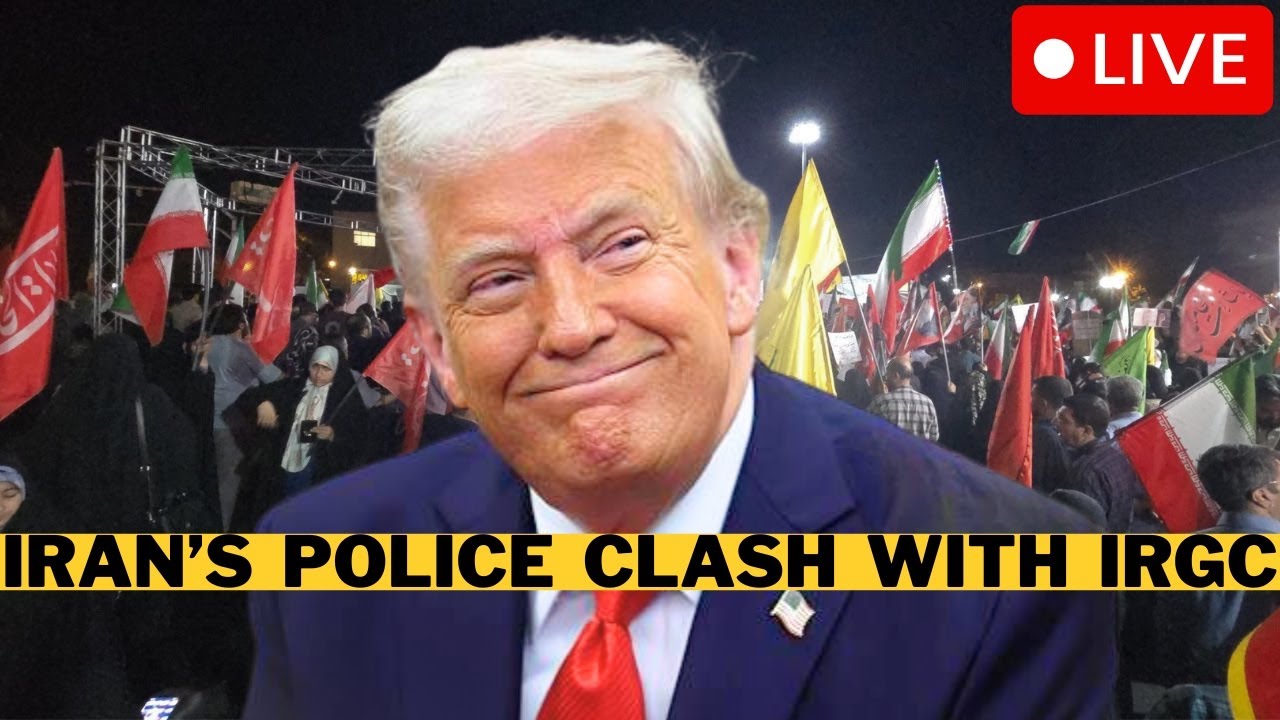
BREAKING: Protests ERUPT In Iran Over IRGC Surrendering To Trump - Infighting Clashes In Tehran
"Iran is experiencing severe internal infighting and protests as hardline IRGC elements clash with government figures over a perceived 'surrender' to the US, while mainstream Western media misrepresents the situation."

Alex Krainer: US STRIKES Iran – Iran RETALIATES Against Kuwait, Bahrain & Jordan!
"Amidst escalating US-Iran conflict and Iranian retaliation against regional US allies, this episode argues that US foreign policy is deeply controlled by an 'Anglo-Zionist conspiracy' led by the Rothschild banking dynasty, prioritizing Israeli interests over American ones."

LIVE: Trump HIDES FROM PUBLIC as US SOLDIER KILLED!!! 6/2/2026
"The host exposes alleged government cover-ups regarding military casualties, Trump's unexplained public absence, and questionable political appointments, arguing these reflect a 'regime of loser babies' and a failing foreign policy."