
Joe Rogan Experience #2441 - Paul Rosolie
YouTube · EoFniMSMj08
Quick Read
Summary
Takeaways
- ❖Uncontacted tribes in the Amazon, like the Mashkapiro, are emerging to request food and demand an end to deforestation.
- ❖The Amazon rainforest, responsible for 20% of Earth's oxygen and freshwater, has already lost 20% of its area, primarily due to cattle ranching (60%).
- ❖Scientists warn that exceeding 20% deforestation could break the Amazon's moisture cycle, leading to irreversible ecological collapse.
- ❖Conservation efforts are directly challenged by logging mafias, illegal gold miners (using mercury, causing widespread poisoning), and narco-traffickers, leading to violence and death threats against activists.
- ❖Indigenous communities possess invaluable knowledge of the Amazon's biodiversity, including potent medicinal plants like Sangre de Drago, which is 100x more potent than Neosporin.
- ❖Jungle Keepers' strategy involves creating protected corridors, securing indigenous land titles, and offering alternative, sustainable livelihoods to those involved in illegal activities.
- ❖The 'man-made Amazon' theory is largely overstated; while ancient settlements influenced localized areas, the vast majority of the rainforest remains wild and untouched by human engineering.
- ❖Ecosystems naturally regulate disease; deforestation creates stagnant water and mosquito breeding grounds, increasing the spread of illnesses like malaria and dengue.
- ❖Some 'green' initiatives, like the Mojave Desert solar farm, have unintended devastating environmental consequences, incinerating thousands of birds annually.
- ❖The perception of global despair is often a result of information overload; focusing on local, positive action and reconnecting with nature can combat apathy and drive real change.
Insights
1Uncontacted Tribes Emerge with Urgent Demands
Paul Rosolie's team had a rare encounter with an uncontacted Mashkapiro tribe in the Amazon. The tribe emerged, holding bows and arrows, requesting bananas and rope, and explicitly demanding that outsiders 'stop cutting down our trees.' This highlights the direct impact of external deforestation on even the most isolated communities and their awareness of environmental destruction.
They came out across the beach and you see them they're holding you know they're holding their bows and those bows are sixoot bows 7 foot arrows... and the really the only communications that we got was we need we need more food and stop cutting down our trees.
2Amazon's Ecological Collapse Threat: The Moisture Cycle
The Amazon rainforest is a critical global ecosystem, producing a fifth of the planet's oxygen and containing a fifth of its freshwater. Rosolie warns that 20% of the Amazon has already been destroyed, and scientists predict that if too much more is lost, the vital moisture cycle – where 20 trillion liters of water are pumped into the air daily, forming clouds that rain back down – will break, leading to irreversible ecological collapse.
Scientists are warning that if we cut too much of the Amazon, that moisture cycle... 20 trillion liters of water every day are pumped into the air from the Amazon and that becomes the cloud system that rains back down and creates the Amazon rainforest. If you cut too much of that, you break the cycle.
3Conservation as a 'War Zone' Against Organized Crime
Rosolie describes the Amazon as a 'war zone of influence,' where conservationists directly confront logging mafias, illegal gold miners, and narco-traffickers. His organization, Jungle Keepers, has faced violent pushback, including an assassination attempt on Rosolie and his local partner, JJ, after they interfered with drug operations. This underscores the extreme danger involved in protecting these critical ecosystems.
We have loggers and the gold miners coming in... the logging mafias and the narco traffickers started pushing back... 'If you see JJ or that gringo that flies the drone... if you kill them, we'll reward you.'
4Indigenous Plant Medicine Outperforms Modern Pharmaceuticals
Rosolie recounts being severely stung by a stingray, experiencing 'level 10 pain' and blacking out. Local indigenous healers used a plant called Sangre de Drago (Dragon's Blood) to treat the wound. This natural remedy, applied hot, extracted the venom and prevented nerve damage and infection, a stark contrast to a previous incident where a friend treated in a hospital suffered for months.
They went to two different trees and they removed compounds from the tree... and they put this boiling hot piece of plant material... against the wound... it starts to suck out the venom... I didn't get nerve damage and I didn't get a huge infection because they had this indigenous plant medicine to save me.
5The 'Man-Made Amazon' Theory is Overstated
Rosolie challenges the popular theory that the Amazon is largely man-made, arguing that while ancient indigenous settlements created 'terra preta' soil and influenced plant distribution in localized areas (especially along rivers), these areas represent a tiny fraction (10-15%) of the 2.7 million square miles of rainforest. The vast majority remains wild, untouched, and un-engineered, a fact often overlooked in sensationalized claims.
Estimates suggest that roughly 10 to 15% of the Amazon standing forest shows clear signs of being man-made or strongly shaped by long-term indigenous management... But that the this this message that the Amazon itself was engineered by ancient humans or prehistoric humans is not actually accurate. It was a wild clickbait.
Bottom Line
The 'Wild West' nature of remote Amazon regions, where state authority is minimal, creates a unique environment for direct action conservation, allowing organizations like Jungle Keepers to fill a governance void and achieve rapid, on-the-ground impact.
This highlights that effective conservation in lawless zones requires a paramilitary-like approach, combining direct intervention, community protection, and collaboration with non-corrupt local authorities, rather than relying solely on traditional scientific or policy-based methods.
Develop specialized training programs and operational models for 'frontier conservation' that equip teams with security, negotiation, and community-building skills for high-risk, high-impact environments, potentially attracting a new type of conservationist.
Indigenous knowledge of the Amazon's biodiversity, particularly medicinal plants, represents an untapped 'bio-pharmaceutical library' with potential for global health solutions far exceeding current Western understanding.
The rapid destruction of the Amazon not only eliminates species but also erases centuries of indigenous wisdom, potentially losing cures for future diseases or highly effective natural remedies. This loss is irreversible and has global implications.
Establish ethical, collaborative ventures with indigenous communities to research, document, and sustainably develop natural remedies. This could create new revenue streams for communities, incentivize forest protection, and bring groundbreaking medicines to the world, ensuring fair benefit sharing and intellectual property rights for indigenous groups.
Opportunities
Sustainable Livelihood Programs for Amazonian Communities
Develop and implement programs that offer former illegal loggers and miners alternative, higher-paying jobs as park rangers, educators, chefs, and boat drivers within protected areas. This provides economic stability and incentivizes conservation.
Ethical Commercialization of Indigenous Plant Medicine
Create a venture to ethically source, research, and commercialize highly potent natural remedies like Sangre de Drago, ensuring that indigenous communities receive substantial benefits and intellectual property rights. This could involve direct-to-consumer sales of sustainably harvested products or partnerships with pharmaceutical companies.
Key Concepts
Ecosystem Interconnectedness
The Amazon's moisture cycle, where 20 trillion liters of water are pumped into the air daily, creating clouds that rain back down, illustrates how a complex system relies on its components. Disrupting 20% of the forest threatens to break this entire cycle. Similarly, diverse ecosystems regulate disease by maintaining predator-prey balances (e.g., frogs eating mosquito larvae).
Tragedy of the Commons
The unregulated exploitation of the Amazon's resources by loggers, gold miners, and narco-traffickers, driven by short-term economic gain, exemplifies the 'Tragedy of the Commons.' Without collective management or strong governance, shared resources are depleted, leading to long-term harm for all, including the indigenous communities and global climate.
Indigenous Knowledge Systems
Indigenous communities possess deep, generational knowledge of their environment, including medicinal plants (like Sangre de Drago for stingray venom), animal behavior (monkey language, bird calls indicating danger), and sustainable resource management. This wisdom, often passed down orally, is critical for both survival in the jungle and for global scientific and ecological understanding.
Lessons
- Support organizations like Jungle Keepers that are directly protecting the Amazon and empowering indigenous communities on the ground.
- Educate yourself and others on the true scale of Amazon deforestation and the specific threats posed by illegal logging, mining, and drug trafficking.
- Advocate for policies that protect indigenous land rights and support sustainable economic alternatives in vulnerable ecosystems, challenging 'greenwashing' projects that cause more harm than good.
- Reconnect with nature by spending time outdoors, fostering an appreciation for ecosystems, and reducing reliance on digital distractions, as a way to combat apathy and find meaning.
- Be critical of information regarding environmental solutions; question the true impact of initiatives and consider the long-term ecological consequences, not just perceived benefits.
Notable Moments
Rosolie describes a harrowing experience where he was stung by a stingray, blacking out from the pain, and was saved by indigenous plant medicine (Sangre de Drago) applied by local healers.
This vividly illustrates the power and efficacy of indigenous knowledge and natural remedies, often surpassing Western medical approaches in remote jungle environments, and highlights the personal risks involved in his work.
Rosolie recounts an assassination attempt on him and his local partner, JJ, by narco-traffickers after their drone exposed a cocaine operation, leading to a police raid.
This underscores the extreme and violent nature of the conflict in the Amazon, demonstrating that conservation is not just about science but a dangerous, direct confrontation with organized crime.
Rosolie describes communicating with a drowning spider monkey in its own language, learned from rescued orphans, enabling him to save its life.
This highlights the deep connection and understanding Paul has developed with jungle wildlife, emphasizing the non-verbal communication and intricate relationships within the ecosystem, and the unique skills required for his work.
Quotes
"We need more food and stop cutting down our trees."
"Everyone knows the Amazon is the lungs of the earth. Everyone knows it's got a it produces a fifth of our oxygen on our planet. It contains a fifth of the oxygen of the fresh water on our planet. So, it's vital to global planetary stability, but we've already destroyed 20% of it."
"If you cut too much of that, you break the cycle. And that forest has been growing for something like 55 million years... we are the generation that's going to decide, do we find a sustainable way to keep the animal the Amazon rainforest functioning or are we going to break that cycle and once we lose it, it's not going to come back."
Q&A
Recent Questions
Related Episodes
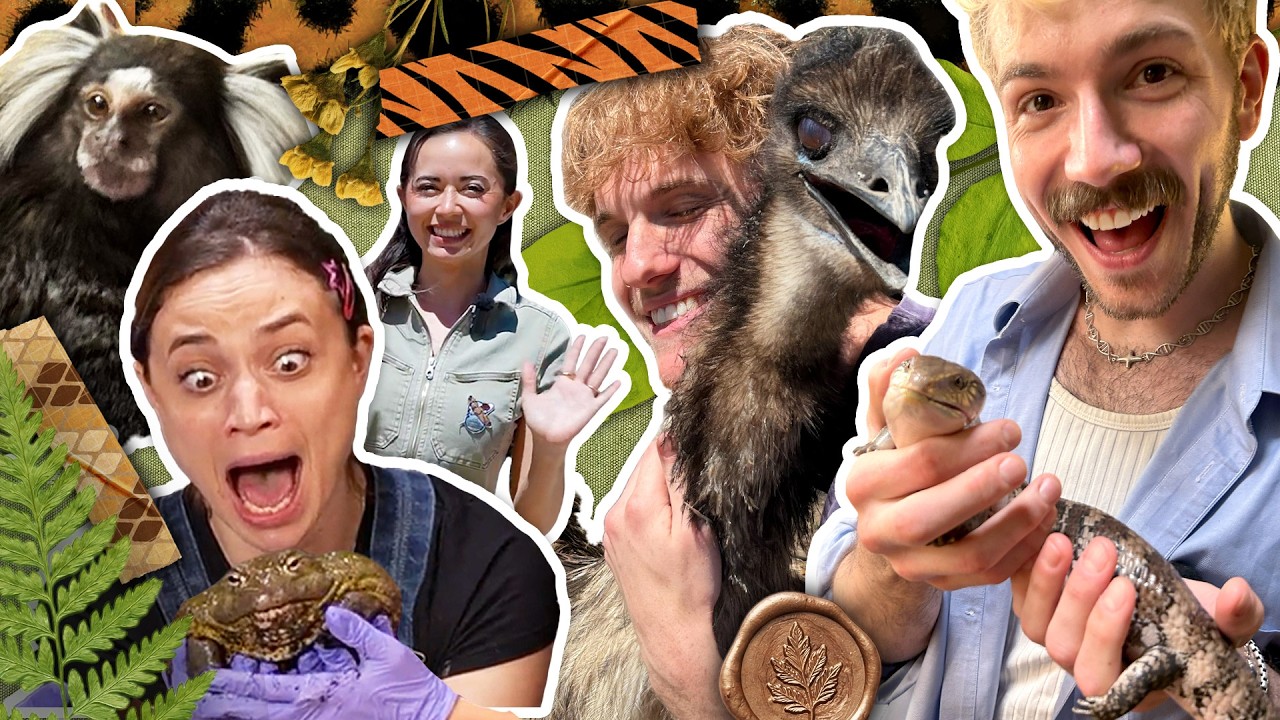
Smosh Finally Learns Animals w/ @AlveusSanctuary
"Explore Alveus Sanctuary's rescued animals and uncover surprising facts about their biology, conservation challenges, and the ethical implications of human-animal interactions."

THE DAY AFTER TOMORROW (2004) Movie Reaction! | First Time Watch! | Jake Gyllenhaal | Dennis Quaid
"CinePals hosts react to the 2004 disaster film 'The Day After Tomorrow,' dissecting its climate change message, special effects, and enduring relevance."

Disaster Tourists; Birds Of War; Perfume Capital Of The World | 60 Minutes Full Episodes
"This 60 Minutes episode uncovers how extremist groups exploit natural disasters for recruitment, explores Colombia's unique ecotourism boom where conflict preserved bird habitats, and reveals the enduring legacy and modern revival of Grasse, France, as the world's perfume capital."

Jeff Bridges | This Past Weekend w/ Theo Von #665
"Jeff Bridges shares profound life lessons from his 49-year marriage, the creative process, and navigating the challenges of AI, emphasizing vulnerability, continuous growth, and the power of individual influence."