BREAKING: U.S. STRIKES Iran Tanker; Israel Drops 100 BOMBS On Hezbollah Bunker | TBN Israel
YouTube · EodmlHJtWA8
Quick Read
Summary
Takeaways
- ❖The United States conducted a military operation against an oil tanker sailing to Qasham Island, Iran, disabling it with a Hellfire missile after the crew ignored warnings.
- ❖Iran's Revolutionary Guard responded by launching missiles and drones towards Kuwait and Bahrain, which were largely intercepted or failed to hit targets.
- ❖Israel's Air Force bombed a secret Hezbollah bunker in Lebanon with approximately 100 bombs, continuing its campaign against the organization.
- ❖The Strait of Hormuz is a critical strategic lever for Iran, used for financial blackmail and to influence negotiations.
- ❖Lebanon has become a central issue in US-Iranian negotiations, with Iran demanding a ceasefire to include a halt to Israeli activity against Hezbollah.
- ❖Israel insists on a 'freedom of action' clause in any agreement with Lebanon, allowing it to strike terror infrastructure even during a ceasefire.
- ❖Iran is preparing a massive funeral for former Supreme Leader Khamenei, three months after his elimination, as a show of internal stability and control.
Insights
1US Surgical Strike on Iranian-Bound Tanker and Iranian Retaliation
The United States military disabled an oil tanker bound for Iran in the Strait of Hormuz using a Hellfire missile, targeting its engine room after the crew ignored repeated warnings. This action was part of the American blockade. Iran's Revolutionary Guard retaliated by launching ballistic missiles and drones towards neighboring Gulf states like Kuwait and Bahrain, most of which were intercepted or failed to reach their targets, demonstrating Iran's intent to expand the conflict regionally.
The United States military announced a military operation against an oil tanker sailing to Qasham Island in Iran (). Later, the Maha news agency reported an explosion in the area (). Kuwaiti and Bahraini militaries announced intercepting hostile missiles and drones (, ). CENTCOM confirmed American forces thwarted Iranian ballistic missiles and drones and carried out strikes against an Iranian military ground control station on Qasham Island (, ). Iran's Revolutionary Guard stated they attacked in response to the US hitting an Iranian tanker ().
2Strait of Hormuz as a Geopolitical and Economic Lever
The Strait of Hormuz is identified as Iran's most significant lever of power and influence globally. Iran has historically used its control over this international shipping lane to disrupt trade, exert financial and military pressure, and engage in blackmail, demanding payment from ships for safe passage. The ongoing conflict in the Strait is a visible indicator of the broader struggle for control over global energy flow and the stability of the dollar.
Mati Shoshani states, 'The Iranians have figured out that one of the biggest levers of power, the biggest levers of influence they have in the world is the Strait of Hormuz' (). He adds that Iran uses it for 'financial blackmail' and to 'get money out of ships that are trying to travel through' (, ). The host later notes, 'If Iran can close Hormuz whenever that they want to... it holds an enormous strategic lever' ().
3Israel's 'Freedom of Action' Clause in Lebanon Negotiations
Lebanon has become a central point in the American-Iranian negotiations due to Hezbollah's role as a key Iranian asset. Iran demands that any ceasefire include a halt to Israeli military activity in Lebanon and protection for Hezbollah. However, Israel vehemently rejects this, insisting on an 'exceptional clause' in any agreement that guarantees its freedom of action to strike terror infrastructure or rebuild capabilities near its border, even during a ceasefire, to prevent Hezbollah from rearming.
The host explains, 'Tehran is demanding that any future agreement also includes Lebanon... a halt to the Israeli activity in Lebanon, and above all, protection for Hezbollah' (, ). He continues, 'Israel insists on an exceptional clause in this agreement. Freedom of action even in the event of a ceasefire' (, ).
4Israeli Air Force Campaign Against Iran and Hezbollah
The Israeli Air Force has conducted extensive operations against both Iranian and Hezbollah targets. In Lebanon, thousands of sorties have hit missile launchers and infrastructure, including 65 targets connected to Hezbollah's Radwan forces. Against Iran, the IAF has carried out approximately 2,500 sorties, dropping 6,500 munitions, significantly damaging Iran's missile launchers (estimated 65% hit) and striking a key underground command bunker in Tehran.
The IDF continues to fight in southern Lebanon against Hezbollah (). The Air Force carried out thousands of sorties, hitting missile launchers and regime targets (). In the past day, about 200 targets were struck in Lebanon, and 500 since the start of the campaign (, ). 65 targets connected to the Radwan forces were struck (). The Israeli Air Force has carried out about 2,500 sorties and 150 strike waves, dropping roughly 6,500 munitions (). About 65% of Iran's missile launchers have been hit (). A significant strike was against an underground bunker in Tehran, with 50 fighter jets dropping 100 munitions ().
5Iran's Internal Stability and Leadership Transition
Iran's regime is preparing a massive, 24-hour funeral procession for former Supreme Leader Khamenei, three months after his elimination, expecting 15-20 million participants across multiple cities. This delayed public display, previously feared to incite protests, is now intended as a show of force and internal stability under the new leadership. The new IRGC commander, Ahmad Vahidi, is tasked with protecting the regime from within, focusing on preventing internal collapse and civil unrest rather than conventional warfare.
The regime in Tehran is publishing the first details about the funeral procession of the former supreme leader more than 3 months after he was eliminated (). The plan speaks of 3 days of mourning, a 24-hour procession, and possibly 15 to 20 million participants (). The decision to hold it now indicates 'stabilization in the condition of the regime and growing internal confidence' (, ). Ahmad Vahidi, the new IRGC commander, is tasked with protecting the regime from within and preventing internal collapse (, ).
Lessons
- Monitor global energy markets closely, as ongoing conflicts in the Strait of Hormuz will continue to cause volatility in oil prices.
- Understand the interconnectedness of regional conflicts; actions in one area (e.g., Hormuz) directly influence dynamics in others (e.g., Lebanon).
- Recognize that diplomatic negotiations in the Middle East are often accompanied by military posturing and direct engagements, reflecting a 'test of will' between opposing forces.
Quotes
"The United States operated in Hormuz, Iran attacked Kuwait and Bahrain, and Trump is hardening his position against Iran. And it looks like this is only the beginning."
"Behind the headlines about diplomatic progress, there is a much broader struggle hiding in a struggle that is connected to control over the flow of global energy, the status of the dollar, the stability of the United States to reshape the balance of power in the Middle East, and its ability to do so."
"Hezbollah is an organization. Their entire purpose in the world is to disrupt diplomacy, to disrupt agreements between countries."
"This was a surgical action against one vessel with a clear message. The American blockade on Iran is not only a diplomatic statement, it is being enforced on the ground."
"Iran is still threatening. Iran is still firing. Iran is still operating proxies. But more and more of its moves look like the actions of a regime trying to survive, not a regime that feels confident in victory."
Q&A
Recent Questions
Related Episodes

BREAKING: Iran Threatens To END Talks; U.S. Vows Retaliation; Hezbollah Collapsing? | TBN Israel
"Iran is leveraging Hezbollah and the Strait of Hormuz to manipulate US negotiations, while Israel asserts its right to dismantle Hezbollah's eroding but still dangerous infrastructure in Lebanon, independent of international talks."
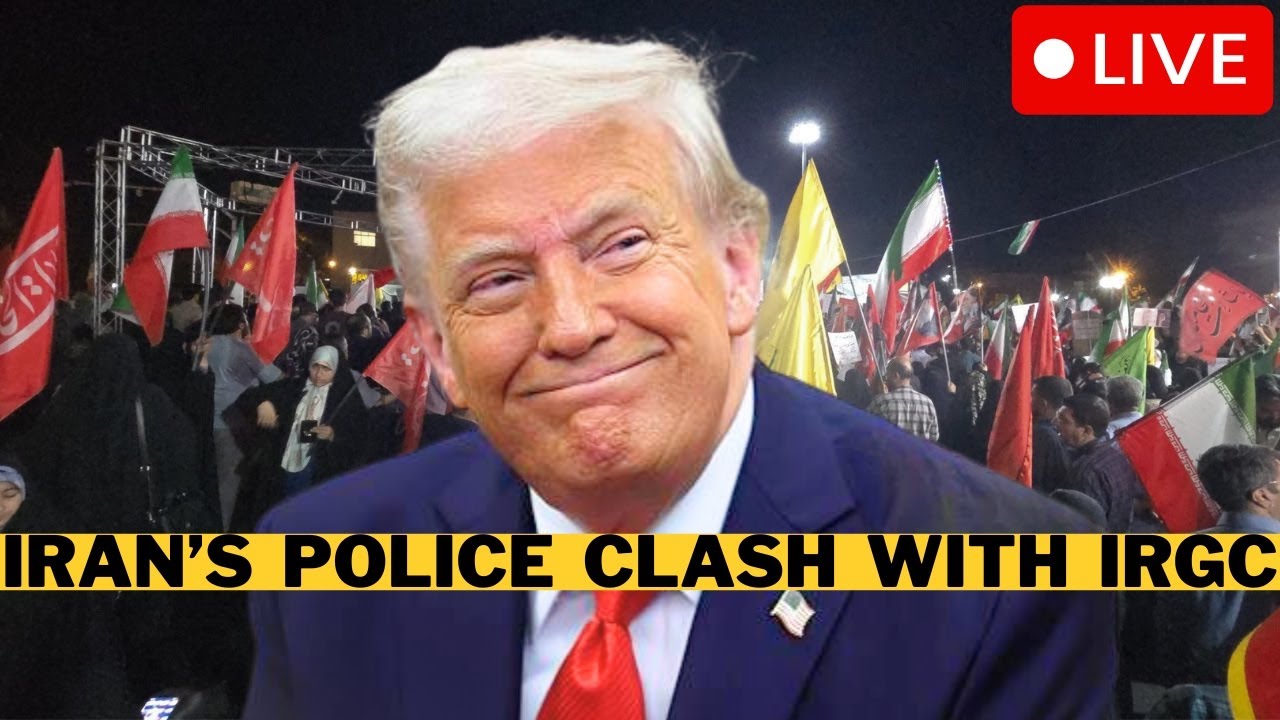
BREAKING: Protests ERUPT In Iran Over IRGC Surrendering To Trump - Infighting Clashes In Tehran
"Iran is experiencing severe internal infighting and protests as hardline IRGC elements clash with government figures over a perceived 'surrender' to the US, while mainstream Western media misrepresents the situation."

Patrick Henningsen: Hezbollah JUST Fired Back at Israel - Iran Vows to “Crush” All Attacks
"Patrick Henningsen argues that the US and Israel initiated an illegal war against Iran, driven by Trump's incompetence and Israeli influence, leading to an inevitable escalation with severe global economic repercussions."

Pentagon Prepares For EXTENDED War With Iran
"This episode dissects the geopolitical maneuvers surrounding potential US-Iran conflict, revealing strategic leaks, Netanyahu's diplomatic sabotage playbook, and the true intent behind economic sanctions."