
SC v. Alex Murdaugh Supreme Court Oral Arguments - Will Murdaugh get a New Trial?
YouTube · FE4SNMr2syQ
Quick Read
Summary
Takeaways
- ❖Alex Murdaugh's appeal for a new murder trial is based on two main grounds: Clerk of Court Becky Hill's misconduct and the admission of extensive financial crimes evidence.
- ❖The defense argues for a shift to a 'presumed prejudice' standard for state actor interference with a jury, aligning with federal law.
- ❖Clerk Becky Hill was convicted of perjury and obstruction of justice, but not jury tampering, related to her actions during the Murdaugh trial.
- ❖A previously unexamined affidavit from an 'egg juror' revealed Clerk Hill told the juror 'the Murdaughs probably got to him,' asked about her leanings, and suggested the foreperson push for a quick guilty vote.
- ❖The Supreme Court justices expressed significant concern over the 'expansive' nature of the financial crimes evidence, questioning its relevance as motive versus prejudicial character evidence.
- ❖The defense also challenged the scientific reliability of the state's cell phone 'throwing experiment' and toolmark analysis.
- ❖The prosecution maintains that Hill's comments were 'fleeting' and that the overwhelming evidence of motive, means, and opportunity supports the conviction.
- ❖If a new trial is granted, it is most likely to be based on the clerk's misconduct or the excessive financial evidence.
- ❖The defense team stated they would pursue federal court appeals if the state Supreme Court denies a new trial.
Insights
1Clerk of Court Becky Hill's Misconduct as Primary Appeal Ground
The defense argued that Clerk of Court Becky Hill's actions, including telling jurors to 'watch his body language,' not to be 'fooled' by the defense, and expressing a desire for a guilty verdict for book sales, constituted egregious misconduct. They pushed for the South Carolina Supreme Court to adopt a 'presumed prejudice' standard, similar to federal law, where such state actor interference automatically warrants a new trial without needing to prove actual juror bias. The host highlighted this as the 'easiest grounds' for a new trial.
Clerk Hill was convicted of perjury and obstruction of justice. The 'egg juror' affidavit, read aloud by a justice, detailed Hill telling the juror 'the Murdaughs probably got to him,' asking about her leanings, suggesting Murdaugh was lying, and advising the foreperson to push for a quick, unanimous guilty verdict. Hill's testimony at a prior hearing was deemed 'not completely credible' by Justice Tol.
2Admissibility and Scope of Financial Crimes Evidence
The defense contended that the extensive financial crimes evidence, spanning six days of testimony and involving numerous transactions and victims, was unfairly prejudicial character evidence rather than legitimate motive. They argued it created a 'trial within a trial,' leading the jury to convict Murdaugh based on his character as a thief, not on evidence directly linking him to the murders. The host noted this as the second most likely ground for a new trial.
Defense attorney Jim Griffin cited '10 witnesses over six days, 38 transactions, $9.97 million' in financial crimes evidence. Justices questioned the 'granular detail' and 'expansiveness' of this evidence, asking if any financial crime evidence was disallowed (none was). They probed the 'logical connection' between the financial pressures and the murder of Murdaugh's wife and son, suggesting it might be too far removed to constitute proper motive.
3Challenges to Scientific Evidence Methodology
The defense challenged the scientific validity and reliable application of two key pieces of state evidence: a cell phone 'throwing experiment' and toolmark analysis. They argued the cell phone expert lacked proper methodology for simulating a phone being thrown from a moving car, and that the toolmark analysis was subjective and lacked quantifiable metrics for reliable matching.
The defense described the cell phone experiment as a deputy 'throwing a phone around his office' without scientific rigor. For toolmark analysis, the defense argued the expert did not adequately explain the methodology or demonstrate its reliable application, contrasting it with quantifiable DNA evidence. The court questioned the expert's 'unprecedented methodology' and the lack of explanation for how the method was applied to specific evidence.
Lessons
- Legal professionals should closely examine appellate court decisions on judicial misconduct and the scope of character evidence, as this case could redefine standards for fair trials.
- Citizens interested in judicial accountability should follow the outcome of this appeal, as it directly addresses the impact of court officials' actions on trial integrity.
- Anyone involved in high-profile legal cases should be aware of the potential for extensive 'other bad acts' evidence to be admitted and the importance of meticulously preserving objections for appeal.
Quotes
"Courthouse Becky really might have [expletive] this whole thing. I'm real curious what the Supreme Court in South Carolina is going to do."
"A juror must be as indifferent as he stands unsworn. His verdict must be based upon the evidence developed at the trial. This is true regardless of the heinousness of the crime charged, the apparent guilt of the offender, and the station in life which he occupies."
"Everything the defendant has said has been lies, and you should forget about the guns. They will never be seen again... The foreperson should just go in and ask for a raise of hands and this will be over and done with and everybody needs to be on the same page."
"The gate here was just left open. And I couldn't find any example of financial crime evidence that was excluded. And the granular detail in the expansiveness of which everything under the sun was allowed is arguably problematic."
"You win an appeal on your briefs, and our briefs were excellent, thanks to Phil and Maggie, and not so much, Dick."
Q&A
Recent Questions
Related Episodes

Brian Hooker’s ex claims he threatened she would have an ‘accident’ in new report- where is Lynette?
"New court documents reveal Brian Hooker's ex-wife accused him of threatening her with an 'accident' and physical abuse years before his current wife, Lynette, mysteriously vanished at sea, drawing chilling parallels to Lynette's daughter's claims."
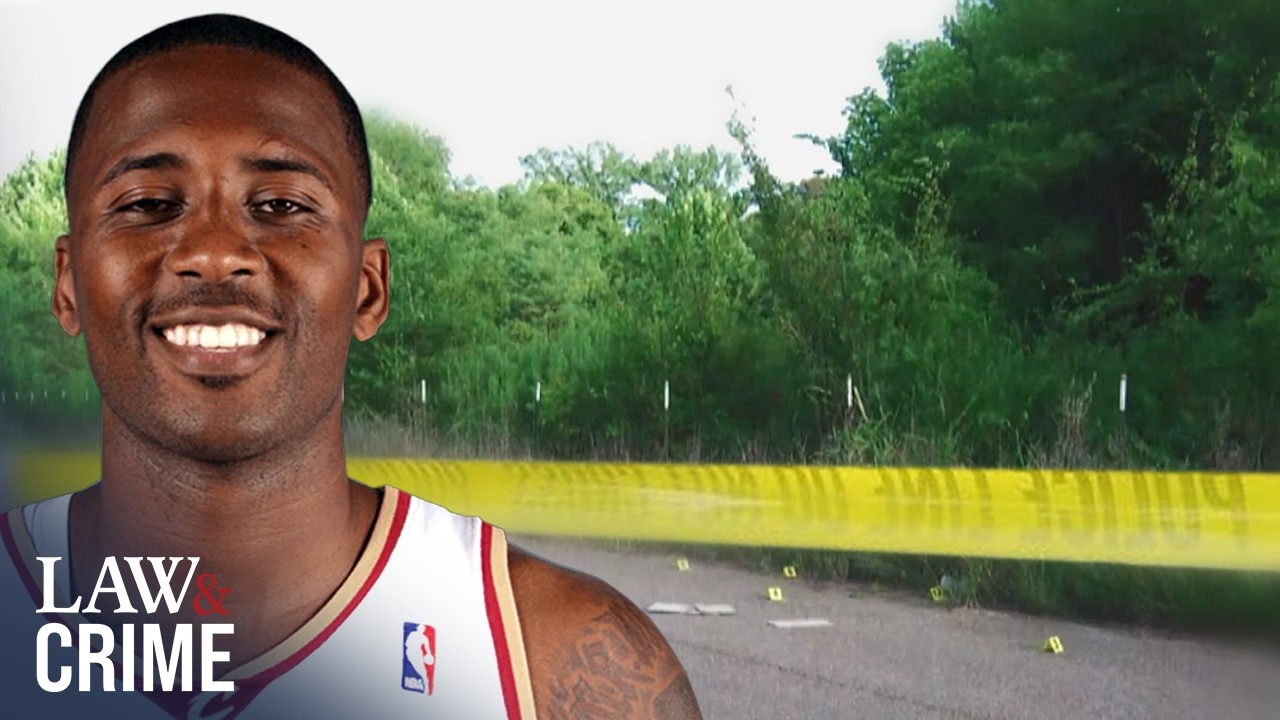
Killer Cases: NBA Star Lured to Execution In Rural Tennessee
"The decade-long cold case of NBA star Lorenzen Wright's murder was cracked through a persistent mother, a jailed informant, and a covert police operation that recovered the murder weapon from a lake and exposed a conspiracy driven by greed."

Divers in the water searching for Lynette Hooker — ‘no body homicide’ prosecutor’s insight
"New GPS data contradicts Brian Hooker's account of his wife Lynette's disappearance, prompting a murder investigation and a deep dive into 'no body homicide' prosecution strategies."

Demands and Ultimatums | “48 Hours" Full Episodes
"This episode explores three distinct murder cases, each driven by escalating demands and ultimatums within complex relationships, revealing how personal conflicts can spiral into deadly outcomes."