
SHOULD THE NFL MOVE TO 18 GAME REGULAR SEASONS & MARK CUBAN REGRETS SELLING THE DALLAS MAVERICKS!
YouTube · FK8m2YZ2TjA
Quick Read
Summary
Takeaways
- ❖NFL owners are motivated by an estimated $1 billion in additional revenue to expand the regular season to 18 games, demanding more from highly paid players.
- ❖International NFL games face significant travel challenges for teams, making a full European expansion difficult despite fan interest.
- ❖Mark Cuban regretted selling the Dallas Mavericks due to the buyers' focus on a casino project rather than the team's basketball success.
- ❖The Dallas Cowboys' use of non-exclusive franchise tags is a 'genius' financial strategy by Jerry Jones to evaluate players like George Pickens before long-term commitments.
- ❖The Philadelphia Eagles face a dilemma with A.J. Brown, whose 'distracting force' and locker room antics may outweigh his talent, potentially forcing a trade.
- ❖Team USA's decision to omit Caitlin Clark and Angel Reese from the WNBA training camp is viewed as a major marketing misstep, failing to capitalize on their current popularity.
Insights
1NFL Owners Prioritize Revenue in 18-Game Season Push
NFL owners are actively pushing for an 18-game regular season, reducing preseason games from three to two and adding an extra bye week. The primary motivation is financial, with an estimated $1 billion in additional revenue for the league. This move is also seen as a way for owners to demand more from players who are receiving increasingly larger contracts.
Maurice Clarrett states, 'The average owner for regular season games profits between 8.5 to $10 million... I seen a billion dollars in additional revenue for the league.' He adds, 'these owners are saying, 'Hey man, we're going to demand more out of you because we obviously paying you guys more.''
2Mark Cuban's Regret Over Mavericks Sale Tied to Buyer's Motives
Mark Cuban publicly expressed regret not about selling the Dallas Mavericks, but about 'who I sold it to.' The new majority owners, the Adena and Deont families, were reportedly more interested in building a casino than in the basketball team itself. This shift in priority, coupled with decisions like the potential departure of Luka Doncic, has led Cuban, who remains a minority owner, to reportedly explore options to buy the team back.
Cuban stated, 'I don't regret selling. I regret who I sold it to. I made a lot of mistakes in the process.' Maurice Clarrett notes, 'these people were more interested in building the casino than really getting the team and running the team.' Mace adds that Cuban 'was even making a play... to try and get some investors to buy it back.'
3Cowboys' Franchise Tag Strategy for Wide Receivers
The Dallas Cowboys are employing a strategic financial approach by using a non-exclusive franchise tag for George Pickens, guaranteeing him $27.3 million for the 2026 season, while CD Lamb is on a long-term $136 million deal. This allows Jerry Jones to evaluate Pickens' performance and commitment without a long-term contract, especially given the team's history of high player salaries without championship success. Players typically dislike franchise tags due to injury risk.
Mace describes the franchise tag as 'genius for Jerry Jones' to 'save money' and 'see what this [player] going to do this year if I give this [player] his long-term contract.' He highlights the Jones family's frustration: '30 something years without a championship and everybody gets paid.'
4A.J. Brown's Distracting Behavior Poses Eagles Dilemma
A.J. Brown's 'distracting force' and 'antics'—including public comments, crying for the ball, and perceived innuendos—have created a 'cancerous' locker room environment for the Philadelphia Eagles. Despite his talent, his behavior is seen as detrimental to team cohesion and focus, potentially forcing the Eagles to consider moving on from him.
Maurice Clarrett states, 'he was so much of a distracting force... with all the antics, the crying for the ball, the innuendos.' Mace adds, 'he thinks that everybody is a problem to him.'
5WNBA Misses Marketing Opportunity with Clark and Reese Exclusion
Team USA's decision to exclude highly popular collegiate stars Caitlin Clark and Angel Reese from its initial WNBA training camp roster is criticized as a significant marketing misstep. While an insider suggested it's normal for players to rotate for evaluation, the panel argues that the WNBA, as a developing brand, should capitalize on 'who's hot' to generate publicity and expand its audience, rather than strictly adhering to traditional 'earning their deal' protocols.
Maurice Clarrett states, 'they dropped the ball significantly' and that Clark and Reese are 'synonymous with modernday women's sports.' Mace emphasizes, 'the team just is going to get more publicity' with them, and it's 'a part of marketing this WNBA to a bigger audience.'
Bottom Line
The NFL's push for an 18-game season, coupled with international games, indicates a global revenue maximization strategy that may eventually lead to permanent overseas franchises, despite current logistical challenges.
This signals a long-term shift in how professional sports leagues view their market boundaries, prioritizing global expansion and revenue over traditional player welfare or travel concerns, potentially creating new economic hubs for the sport.
Entrepreneurs could explore ventures in international sports logistics, fan engagement platforms for global audiences, or localized merchandise and media rights for emerging NFL markets.
Mark Cuban's regret over his Mavericks sale highlights a growing tension between traditional sports ownership (focused on team success and community) and new ownership (often driven by broader business interests like real estate or gambling licenses).
This divergence can lead to instability and fan dissatisfaction if new owners prioritize non-sports ventures, potentially devaluing the team's core identity and performance. It also underscores the importance of due diligence on buyer motivations in high-value asset sales.
Advisory services specializing in sports franchise sales could develop specific frameworks to vet potential buyers' long-term vision for the team, ensuring alignment with sports values and preventing future 'seller's remorse' scenarios.
Lessons
- When negotiating high-value asset sales, thoroughly vet the buyer's long-term intentions and secure explicit commitments to prevent future regrets or misalignment of values.
- For developing brands, prioritize leveraging current cultural phenomena and popular figures for marketing, even if it means bending traditional 'earning your stripes' protocols.
- Recognize that in high-stakes environments, financial incentives often drive strategic decisions, requiring a clear understanding of stakeholder motivations beyond stated goals.
Quotes
"If we put another game on a record or if we put another regular season game on the schedule that we can generate, I think I seen a billion dollars in additional revenue for the league."
"I don't regret selling. I regret who I sold it to. I made a lot of mistakes in the process and I'll leave it at that."
"When you have just that attitude in locker room, that stuff is like cancerous. You know, when you're trying to go pursue it all and win it all, you don't need somebody distracting your quarterback."
"I don't think you can disqualify somebody's opinion from them not basically being as good as you in that sport. People have eyes, people have opinions, people have a right to opinions."
Q&A
Recent Questions
Related Episodes
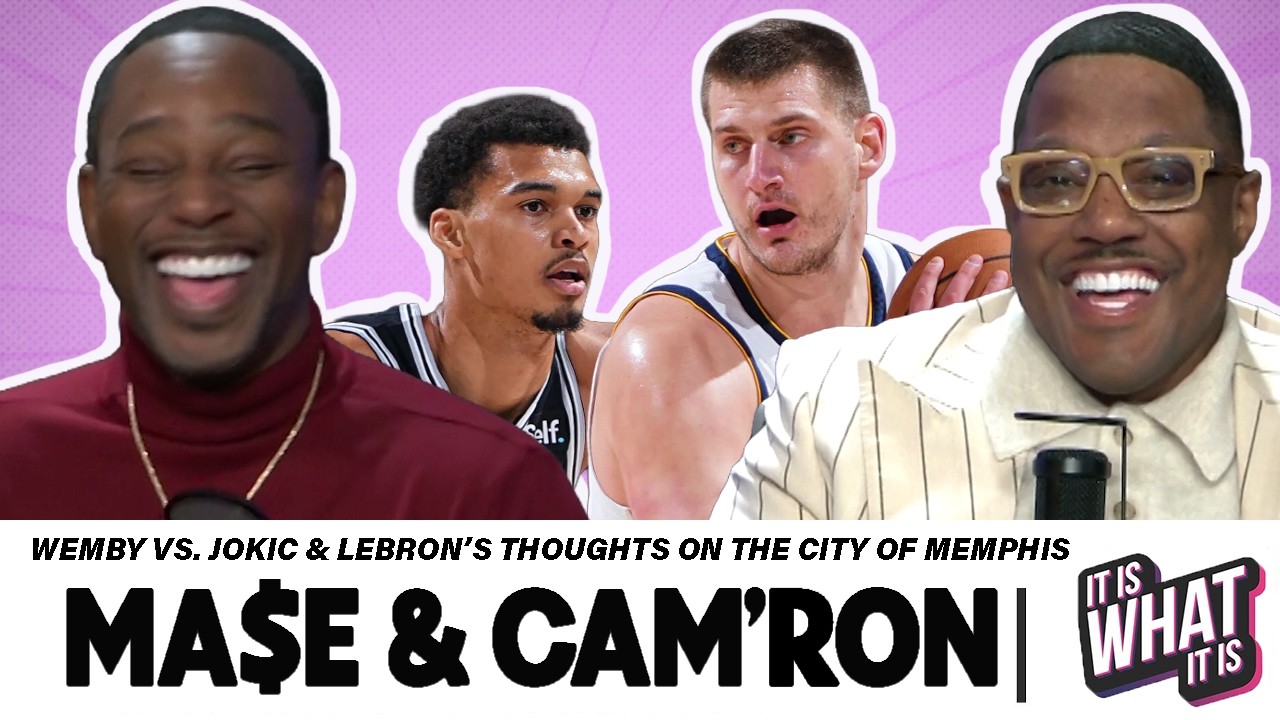
LAKERS ARE IN TROUBLE, JOKIC VS. WEMBY & WE REACT TO LEBRON JAMES' COMMENTS ABOUT MEMPHIS! | S8 EP61
"This episode dives into the Lakers' injury woes, the Jokic vs. Wemby debate, LeBron's controversial comments on Memphis, and the fiery Don Staley-Gino Auriemma rivalry."

Jaxon Smith-Njigba Just FLIPPED The WR Market!!
"The NFL wide receiver market is experiencing a dramatic reset with record-breaking contracts, while a raw and emotional discussion highlights the severe reality of CTE and the distinct nature of flag football versus tackle football."

The Arena Reacts To The Pro Bowl LIVE From Radio Row
"NFL analysts dissect Shadur Sanders' Pro Bowl debut, the contentious departures of Micah Parsons and George Pickens from the Cowboys, and the league's push for an 18-game season, all while debating the NFL's top wide receiver."
Unc, Ocho & Iso Joe BEST of NBA! Ja TRADED, LaMelo MOVED, Giannis to Miami?! | Nightcap
"NBA analysts break down recent high-profile trades and contract decisions, revealing the financial and strategic shifts impacting player value and team building in the league."