FBI finds more images from Nancy Guthrie’s cameras, but what's missing is ‘odd’ - day 41 on scene
YouTube · FWrFPW7wKkI
Quick Read
Summary
Takeaways
- ❖The FBI recovered thumbnail images from Nancy Guthrie's backyard and sideyard cameras, but no video footage.
- ❖Crucially, these cameras recorded nothing suspicious on the night of Nancy Guthrie's abduction, a fact described as 'odd' by sources.
- ❖Pima County Sheriff Nanos stated that the suspect could 'absolutely' strike again, despite believing the crime was targeted.
- ❖DNA found in Nancy Guthrie's home is 'mixed,' meaning it contains DNA from multiple individuals, complicating analysis.
- ❖Forensic science professor April Stonehouse explained that DNA from skin cells on gloves is less 'DNA-rich' than blood, semen, or saliva.
- ❖The flashlight seen in the suspect's mouth in a photo is a potentially strong source of saliva DNA if recovered.
- ❖Investigative genetic genealogy (IGG) is a rapidly advancing technique that can identify suspects by matching their DNA to relatives in public databases, even if the suspect is not in criminal databases (e.g., Golden State Killer, Moscow Idaho murders).
- ❖Law enforcement is investigating a 'Savannah stalker' theory, checking if anyone unusual was present during a recent TV segment filmed with Nancy Guthrie.
Insights
1Unexplained Gap in Surveillance Footage
The FBI successfully retrieved thumbnail images from Nancy Guthrie's backyard and sideyard motion-activated cameras. However, these cameras failed to capture any activity on the specific night of the abduction, a detail sources found 'odd.' This raises questions about potential internet outages, signal blocking, or deliberate disabling of the surveillance system.
Images were recovered from motion-activated cameras trained on the swimming pool, backyard, and sideyard. They were unable to recover video footage, only thumbnails. The cameras captured nothing on the night of the abduction, which one source described as 'odd.'
2Sheriff's Warning: Suspect Could Strike Again
Pima County Sheriff Nanos, in a recent interview, expressed strong concern that the suspect in Nancy Guthrie's abduction could commit another crime. While still believing the initial incident was targeted, he acknowledged a lack of 100% certainty, indicating an ongoing threat to the community.
Sheriff Nanos was asked, 'Do you think the suspect could strike again?' and immediately responded, 'Absolutely.' He still believes it was targeted but 'can't say that 100% certainty.'
3Challenges and Potential of Mixed DNA Evidence
DNA found inside Nancy Guthrie's home is a 'mixed' sample, containing genetic material from multiple individuals, which complicates analysis. Professor April Stonehouse detailed how forensic scientists analyze mixed DNA, noting that while challenging, significant differences in DNA quantity between contributors can help parse out individual profiles. She emphasized that even weak profiles, unsuitable for national databases, can be used for direct comparisons with suspect samples.
The DNA found in Nancy's home was 'mixed,' making it harder to analyze. Professor Stonehouse explained that a mixture of two people shows four peaks in DNA profiles, and while difficult, drastic differences in peak height (e.g., 90% from one person, 10% from another) can allow for separation. Weak DNA profiles, even if not suitable for CODIS, can be used for direct comparisons.
4High-Value DNA Sources and Investigative Genetic Genealogy
Professor Stonehouse identified specific high-value DNA sources, such as blood, semen, and saliva, noting that the flashlight seen in the suspect's mouth in a photo would be an excellent source of saliva DNA if recovered. She also highlighted the transformative role of Investigative Genetic Genealogy (IGG), which can identify unknown suspects by matching their DNA to relatives in public genealogy databases, as demonstrated in cases like the Golden State Killer and the Moscow Idaho murders.
Blood, semen, and saliva are the 'best forms of DNA.' The flashlight in the suspect's mouth is a 'great source of DNA' due to saliva. IGG uses public genealogy databases to find relatives of a suspect, even if the suspect is not in criminal databases, allowing for identification in cases like the Moscow Idaho murders within six weeks.
Lessons
- Understand that even with advanced surveillance, gaps in critical moments can occur, potentially due to technical issues or deliberate interference.
- Recognize the complexities of forensic DNA analysis, particularly with mixed samples, and how advancements like genetic genealogy are changing cold case and active investigation outcomes.
- Be aware that law enforcement may withhold specific crime scene details (e.g., interior conditions) to verify suspect confessions and prevent false claims, a common investigative tactic.
Notable Moments
Discussion of internet outage/signal blocker theories due to 'odd' camera behavior.
This suggests a potential level of sophistication or planning by the perpetrator to avoid detection, or a significant coincidence impacting the investigation.
Detailed explanation of DNA collection from gloves and the process of DNA extraction and analysis.
Provides a clear, scientific understanding of how forensic evidence is processed, demystifying a critical aspect of criminal investigations.
Demonstration and explanation of DNA mixtures and how they are analyzed.
Clarifies why the 'mixed DNA' in the Guthrie case is a challenge and how forensic scientists attempt to overcome it, emphasizing the nuance beyond a simple 'match'.
The host's confirmation that authorities are investigating the Mexican restaurant where Nancy Guthrie was filmed with Savannah Guthrie for suspicious individuals.
This directly supports the 'Savannah stalker' theory, indicating it is a live and active line of inquiry for investigators.
Quotes
"The cameras captured nothing on the night of the abduction, though, so that's important and unfortunate. Um, but they did capture people in the days uh before. The source told ABC that investigators have drawn no conclusions as to why the cameras captured nothing on the night of the abduction, but one source described it as odd."
"Do you think that the suspect could strike again? And he responded, 'Absolutely.'"
"As a forensic corologist, I would have queued into that immediately and said that is a great source of DNA. So, I would have asked, did they recover that flashlight? Because I would want to swab the end of that flashlight that was in his mouth where he was depositing saliva on it because I know from the video that he's got it in his mouth, he's leaving saliva behind and that's a really strong source of DNA."
"It's quite possible [they have eyes on people because of genetic genealogy], but if they did, they would be making an arrest. I think I think we would see and and that might be something that unfolds as time goes on."
Q&A
Recent Questions
Related Episodes

Nancy Guthrie Detective Reveals Chilling New Theory
"Investigators in the Nancy Guthrie disappearance are leveraging cutting-edge genetic genealogy and advanced surveillance tech, revealing new theories about a targeted crime and the suspect's amateur yet elusive tactics."

TEEN'S DNA REVEALED IN ANNA KEPNER'S R*** KIT
"The investigation into Anna Keaptainner's death on a cruise ship reveals shocking DNA evidence, a previously unknown male minor, and critical questions about evidence handling and family dynamics."

The Lindbergh Conspiracies | Post Mortem
"Explore the enduring mystery of the 1932 Lindbergh kidnapping, from the compromised investigation and Bruno Hauptmann's unfair trial to Charles Lindbergh's controversial character and the modern resurgence of conspiracy theories."
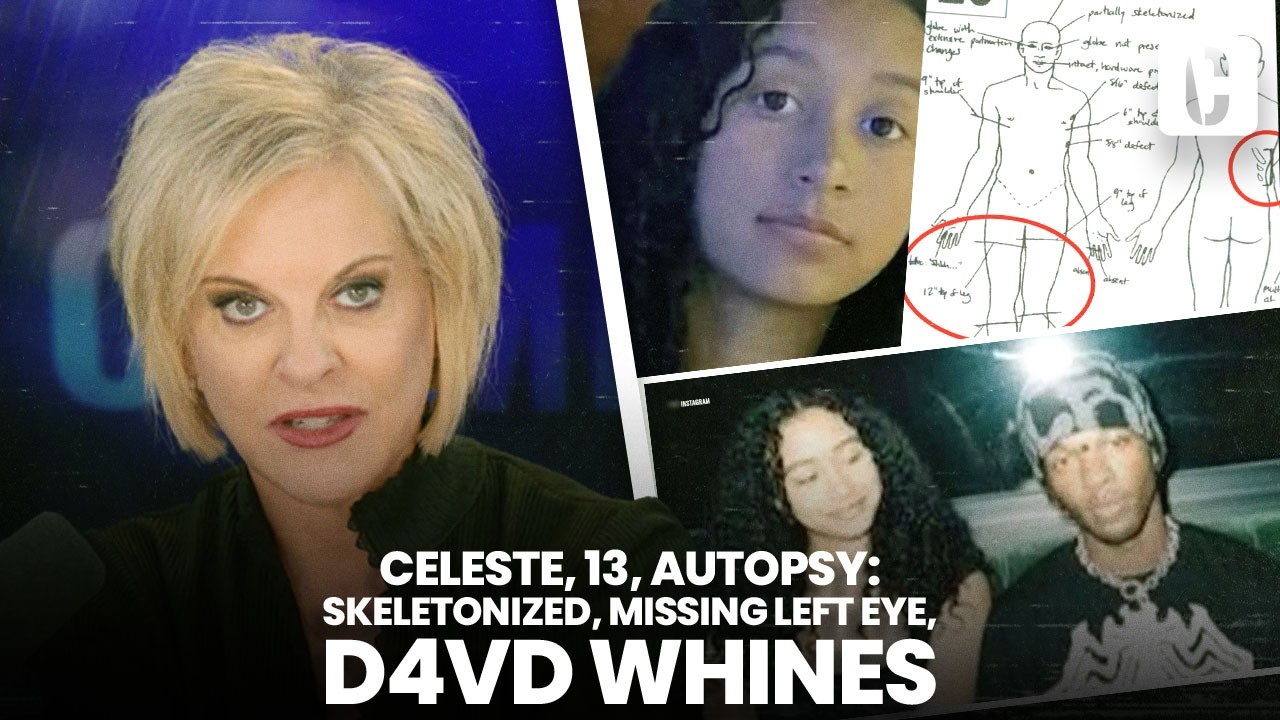
CELESTE, 13, AUTOPSY: SKELETONIZED, MISSING LEFT EYE, D4VD WHINES
"A 13-year-old girl, Celeste Rivas, was found partially skeletonized with a missing left eye, traces of meth and MDMA, and fatal stab wounds, while the accused musician David Anthony Burke (D4VD) complains about jail conditions."