BREAKING: Strike on HEZBOLLAH Command Center REVEALS Regime's TWISTED Strategy | TBN Israel
YouTube · FgGC_rsHRPs
Quick Read
Summary
Takeaways
- ❖The United States is striking Iran, not seeking war, but aiming to secure agreements while Iran's Revolutionary Guards escalate tensions at every negotiation point.
- ❖Iran's strategy involves igniting multiple fronts (Strait of Hormuz, Houthis, American bases) to pressure global powers and link agreements to its regional influence.
- ❖Israel's strike on a Hezbollah command center in Beirut's Dahiya district was a message that Beirut is no longer immune to retaliation for attacks on northern Israel.
- ❖Iran declared 'ownership' over Hezbollah by responding directly to Israeli strikes in Lebanon, aiming to turn Israeli actions against Hezbollah into direct crises with Tehran.
- ❖The world often views Middle East conflicts as isolated events, but they are part of a single system operated by Iran to fight without appearing to initiate war.
- ❖Ysef Hadad, an Arab Christian Israeli, argues that Israel is losing the PR war due to simplified, false narratives, but that historical and religious facts can change opinions.
- ❖Hezbollah builds military infrastructure within Lebanese villages, using civilians as human shields, making Israeli defensive actions appear as attacks on innocent homes.
- ❖Hamas adapts by preserving cells, money, weapons, and tunnels during ceasefires, rebuilding capabilities for future attacks, rather than disappearing.
- ❖Ysef Hadad passionately defends Israel's actions as protecting Christian and Sunni Muslim communities in Lebanon from Iranian-backed Hezbollah, exposing Western hypocrisy.
- ❖The 'ring of fire' strategy allows Iran to activate proxies and then use diplomacy to halt Israeli counter-offensives, enabling proxies to rearm during pauses.
Insights
1Iran's Coordinated Regional Escalation Strategy
Iran's Revolutionary Guards consistently escalate tensions across multiple fronts—global shipping, Houthi threats in the Red Sea, attacks on American bases, and demands to link Lebanon to Iranian agreements—precisely when negotiations approach a decision point. This indicates a deliberate strategy to prevent calm agreements and expand Iran's regional influence, rather than a genuine desire for peace.
Every time negotiations near a decision, Iran ignites a new front: ships in Hormuz, drones near shipping lanes, Houthis threatening the Red Sea, fire towards American bases, and demands to tie Lebanon to agreements. This makes negotiations look like an attempt to blow them up rather than sign them.
2Hezbollah's Immunity Through Iranian 'Ownership'
Iran actively claims 'ownership' over Hezbollah's actions in Lebanon. When Israel strikes Hezbollah targets in Lebanon, Iran responds directly against Israel, attempting to transform any Israeli counter-terrorism operation into a direct diplomatic crisis with Tehran. This strategy grants Hezbollah de facto immunity, as international pressure then focuses on de-escalation with Iran, rather than holding Hezbollah accountable.
After Israel struck a Hezbollah command center in Dahiya, Iran responded by launching missiles towards Israel, claiming it was a response to strikes in Lebanon. This was a declaration of ownership, aiming to turn Israeli operations against Hezbollah into a direct crisis with Tehran, thereby granting Hezbollah immunity through negotiations with the U.S.
3The Unified 'Ring of Fire' System
The various conflicts involving Israel—in Lebanon, Gaza, with the Houthis in Yemen, and militias in Iraq—are not separate events but components of a single, interconnected system. This 'ring of fire' is built and operated by Iran to allow it to wage war indirectly through proxies, maintaining regional instability without appearing to be the direct aggressor.
The host asks if we are looking at separate fronts (Lebanon, Gaza, Iran, Houthis, Yemen) or 'one system that's operated by the same head.' He concludes that all these are 'part of a system built to allow Iran to fight without always looking like the one starting the war.'
4Challenging Western Narratives with Local Perspective
Western public opinion often misinterprets conflicts in the Middle East due to simplified narratives that portray Israel as the aggressor. Ysef Hadad, an Arab Christian Israeli, demonstrates how leveraging local knowledge, religious texts (Bible, Quran), and archaeological evidence can effectively debunk these narratives and reveal the complex realities, including the oppression of local communities by Iranian-backed militias.
Ysef Hadad, an Arab Christian from Nazareth and former IDF officer, explains how he convinces people by speaking their language, knowing the Quran, and presenting historical and archaeological evidence. He recounts changing an anti-Israel Christian activist's view by using biblical references to Jewish presence in Jerusalem and Bethlehem, and by highlighting the hypocrisy of condemning Israel while ignoring Christian persecution by other groups.
Key Concepts
The Ring of Fire Strategy
Iran's geopolitical strategy involves establishing a network of proxies (Hezbollah, Hamas, Houthis, Iraqi militias) around Israel and key shipping lanes. These proxies are activated to create a 'ring of fire' that keeps pressure on Israel and global powers, allowing Iran to fight indirectly and leverage regional instability for diplomatic gains, while avoiding direct accountability for initiating conflict.
Narrative Warfare and Double Standards
The concept that geopolitical conflicts are also battles over public perception. Opposing factions actively construct and disseminate narratives, often simplified, to sway international opinion. This model highlights how certain actors (e.g., Israel) are held to different, often higher, standards of accountability and scrutiny compared to others, leading to a 'double standard' in media and political discourse.
Lessons
- When analyzing Middle East conflicts, always seek to understand the broader regional context and the potential role of state and non-state actors beyond the immediate combatants.
- Challenge simplified narratives by seeking out diverse perspectives, especially from individuals with direct experience and cultural understanding of the region, such as Arab Christians living in Israel.
- Recognize that pauses or ceasefires in conflicts involving Iranian proxies may not signify peace but rather periods for rearming and rebuilding capabilities, requiring a long-term strategic view.
Notable Moments
Ysef Hadad's passionate defense of Israel's actions in Lebanon, urging the IDF to destroy Hezbollah infrastructure and accusing Western Christian activists of hypocrisy.
This moment powerfully challenges the prevailing Western narrative by presenting a perspective from an Arab Christian Israeli who sees Israel as a protector, not an oppressor, and highlights the perceived double standards in international criticism.
Quotes
"If Iran really wants an agreement, why does it keep threatening global shipping? Why does it strengthen its grip on the Strait of Humuz? Why does it activate the Houthis exactly when the Americans are trying to move forward? And why does Tehran try to turn every Israeli strike against Lebanon into a regional crisis?"
"What if the real story is that one country, Iran, spent years building an entire system around Israel, and every time Israel begins to dismantle one part of it, the whole system responds?"
"I'm an Arab Christian son of a priest from Nazareth. I urge my army to destroy every house on the border of southern Lebanon north of Israel. Every house, every Shia Muslim Iranian village should be destroyed house by house, room by room because the Iranian regime and Hezbollah which is the proxy of the Iranian regime occupied south of Lebanon terrorizing Lebanese Christian and Lebanese Muslim Sunni and Lebanese Jerusalem."
"Israel is the only only safe place for Christian community in the Middle East."
"If you think that [Hezbollah] is terrorizing you guys, meaning the Israelis, then you have no idea what they are doing to us here inside southern Lebanon. Please, this time, finish the job."
"Whatever you see today on the ground is a war between the IDF and the state of Israel and the terrorist Iranian regime."
Q&A
Recent Questions
Related Episodes

BREAKING: Iran Threatens To END Talks; U.S. Vows Retaliation; Hezbollah Collapsing? | TBN Israel
"Iran is leveraging Hezbollah and the Strait of Hormuz to manipulate US negotiations, while Israel asserts its right to dismantle Hezbollah's eroding but still dangerous infrastructure in Lebanon, independent of international talks."

Iran Update: Israel’s Newest Bombing Campaign, the Oncoming War With China and How to Avoid It
"Colonel Wilerson reveals how the US and Israel are actively bombing China's strategic infrastructure in Iran, escalating a covert economic war that Beijing intends to win without direct military conflict by dismantling the dollar's global dominance."

Patrick Henningsen: Hezbollah JUST Fired Back at Israel - Iran Vows to “Crush” All Attacks
"Patrick Henningsen argues that the US and Israel initiated an illegal war against Iran, driven by Trump's incompetence and Israeli influence, leading to an inevitable escalation with severe global economic repercussions."
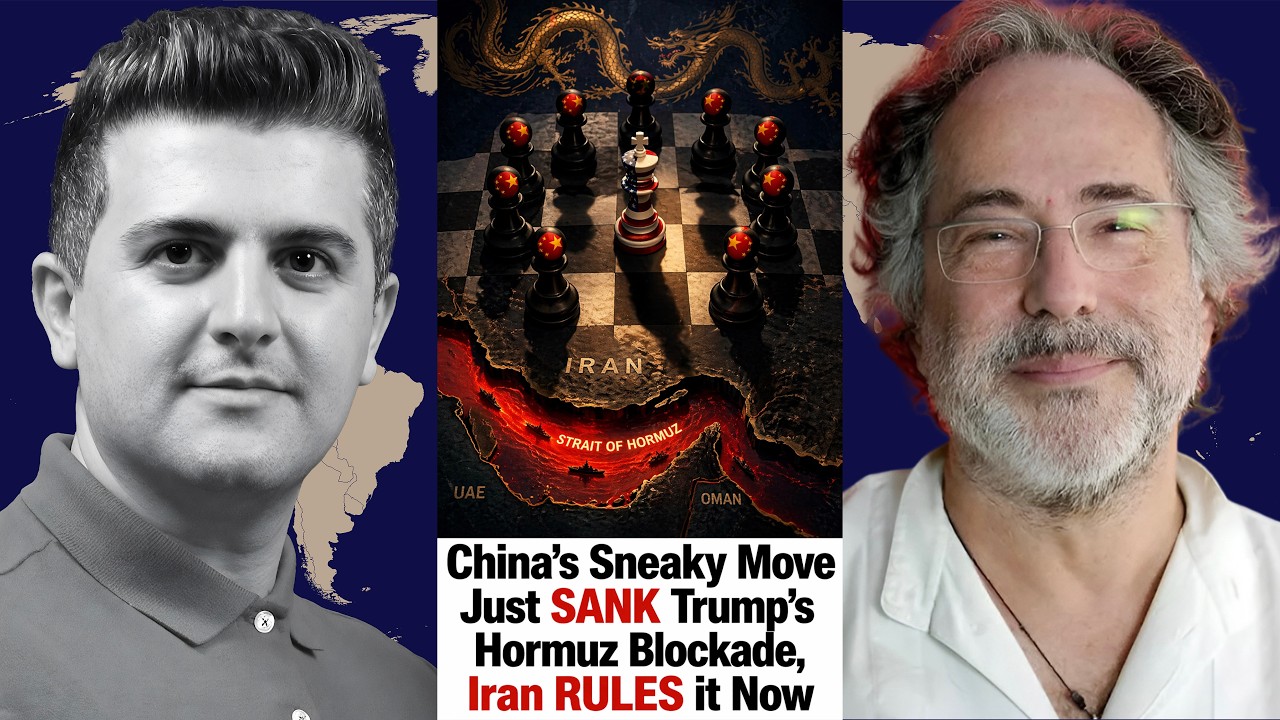
Pepe Escobar: “Total Failure”: Trump’s Blockade Just Backfired Disastrously
"Pepe Escobar argues that the US blockade against Iran, spearheaded by Donald Trump, has utterly failed and backfired, accelerating global economic chaos and challenging US geopolitical dominance."