
Larry Johnson: Iran & Israel Move Closer to Full Confrontation
YouTube · GiUeKx8wWcg
Quick Read
Summary
Takeaways
- ❖The head of the Lebanese parliament, Nabih Berri, rejected the proposed agreement between Lebanon and Israel, calling it a 'conspiracy and provocation' that legitimizes Israeli occupation.
- ❖Larry Johnson asserts that the US violated the Memorandum of Understanding (MOU) with Iran by launching an attack after Iran interdicted a ship in the Strait of Hormuz, as the MOU did not prohibit Iran's actions.
- ❖Despite initial military exchanges, both US and Iranian strikes were characterized as 'symbolism over substance,' indicating a desire to avoid full escalation, though the MOU is now 'violated'.
- ❖Iran's military spokesperson announced plans for advanced domestic drone production and acquisition of new equipment from 'friendly countries' (likely Russia and China) within days.
- ❖The Strait of Hormuz is effectively closed to non-friendly shipping, with only Iranian oil tankers and Asian-bound ships currently transiting, contrary to US claims of stable oil prices and open passage.
- ❖The proposed Lebanon-Israel agreement's terms are seen as humiliating for Lebanon, including legitimizing Israeli occupation, conditioning US military aid, financially strangling resistance groups, and delaying reconstruction funds until Hezbollah disarms.
- ❖Larry Johnson believes US military assets are being withdrawn from the region, not increased, with the process expected to take several months.
Insights
1Lebanon-Israel Agreement Rejected as 'Conspiracy'
The head of the Lebanese parliament, Nabih Berri, a Shia leader, publicly rejected the proposed agreement between Lebanon and Israel. He stated that the agreement does not end the war, fails to ensure Lebanese sovereignty, and is a 'conspiracy and provocation' that legitimizes Israeli occupation. This rejection highlights significant internal Lebanese opposition and renders the agreement largely theoretical and non-binding.
Nabih Berri's statement explicitly mentioned the agreement's failure to end the war, ensure sovereignty, and his view of it as a conspiracy. Larry Johnson confirmed Berri's stance and the lack of legislative support for the deal.
2US Violated Iran-US Memorandum of Understanding (MOU)
Larry Johnson argues that the US initiated a violation of the MOU by attacking Iran after Iran interdicted a ship in the Strait of Hormuz. He contends the MOU did not prevent Iran from enforcing its protocol for transit through the Strait, which requires ships to seek permission from the IRGC. The US strike, therefore, constituted the 'first punch' in violation of the MOU's clause against mutual military action.
Johnson states, 'the US attack on Iran the other day violated the MOU because there was nothing in the MOU that precluded or prohibited Iran from taking action against ships that tried to break through the Strait of Hormuz without following the protocol.' He adds, 'it was clear that the United States took the first launch...threw the first punch.'
3Strait of Hormuz Effectively Closed by Iran
Despite US claims that the Strait of Hormuz remains open and oil prices are stable, Larry Johnson asserts that Iran has effectively closed the Strait to non-friendly shipping. He cites real-time marine tracking data showing significantly reduced traffic, primarily limited to Iranian oil and Asian-bound ships, contradicting official narratives.
Johnson refutes the US ambassador's claim of 'dozens of ships' moving daily, stating, 'It's an absolute flatout lie.' He refers to 'real time mariner.com' and notes, 'The last ship to come out was apparently is either an Iraqi or Iranian ship... Iran still Iran has effectively closed closed the straight.'
4Lebanon Agreement Terms Deemed Humiliating
The specific clauses of the Lebanon-Israel agreement are described as deeply disadvantageous and humiliating for Lebanon. These include Israel declaring no territorial ambition while maintaining its current occupation, US military aid being strictly conditioned and graded by Washington, Lebanon and the US jointly committing to financially strangling resistance groups (Hezbollah), and reconstruction money being withheld on a 'slower track' until Beirut disarms.
The host reads the clauses: 'Israel declares no territorial ambition in Lebanon while staying exactly where it is until it unilaterally signs of a on disarmament.' 'US military aid to the Lebanese army comes strictly conditioned on milestones Washington sets and grades.' 'Lebanon and the United States jointly commit to financially strangling any group tied to the resistance.' 'Reconstruction money kept on a separate slower track from the military conditions so Beirut disarm first and waits to get paid.'
Bottom Line
The vagueness of the US-Iran MOU, particularly regarding the release of frozen assets, was a critical flaw that Iran failed to capitalize on, allowing the US to delay compliance without explicit violation.
Future international agreements must include highly specific timelines and percentages for commitments like asset releases to be enforceable, otherwise, they serve more as de-escalation gestures than binding accords.
Analysts and negotiators should prioritize concrete, measurable terms in diplomatic documents to prevent ambiguity from undermining their intent and enabling non-compliance.
The 'symbolism over substance' nature of recent US and Iranian military strikes suggests a mutual, albeit unspoken, desire to avoid full-scale war while still projecting strength and resolve.
This delicate balance means that while tensions are high, both sides are likely seeking off-ramps or limited engagements rather than direct, destructive confrontation, making the situation unpredictable but not necessarily catastrophic in the immediate term.
Diplomatic efforts could leverage this implied restraint to push for more robust, clearly defined de-escalation mechanisms, potentially through third-party mediation that acknowledges both sides' need to save face.
Lessons
- Monitor real-time shipping data for the Strait of Hormuz to gauge actual transit activity, rather than relying solely on official statements, to assess global oil supply chain risks.
- Analyze the specific language and enforceability clauses of international agreements, recognizing that vague terms can be exploited to delay or avoid commitments.
- Track internal political divisions within countries like Lebanon, as minority factions or governments may sign agreements that lack broader popular or legislative support, rendering them ineffective or catalysts for internal conflict.
Quotes
"The deal between Lebanon and the Zionist entity is a conspiracy and a provocation."
"The US attack on Iran the other day violated the MOU because there was nothing in the MOU that precluded or prohibited Iran from taking action against ships that tried to break through the Strait of Hormuz without following the protocol."
"It's just a big lie. It's an absolute flatout lie. Dozens of ships. The ships that have moved out of the Persian Gulf have come out under basically uh ships that are headed to Asia and they are uh carrying Iranian oil. That's it."
"It's like, hey, you make all the sacrifice up front. We promise you, we pinky swear we'll pay you. Then time comes to get paid. They'll say, 'Oh, well, you did X, Y, and Z. You don't deserve the money.'"
Q&A
Recent Questions
Related Episodes

BREAKING: Iran Threatens To END Talks; U.S. Vows Retaliation; Hezbollah Collapsing? | TBN Israel
"Iran is leveraging Hezbollah and the Strait of Hormuz to manipulate US negotiations, while Israel asserts its right to dismantle Hezbollah's eroding but still dangerous infrastructure in Lebanon, independent of international talks."

Patrick Henningsen: Hezbollah JUST Fired Back at Israel - Iran Vows to “Crush” All Attacks
"Patrick Henningsen argues that the US and Israel initiated an illegal war against Iran, driven by Trump's incompetence and Israeli influence, leading to an inevitable escalation with severe global economic repercussions."
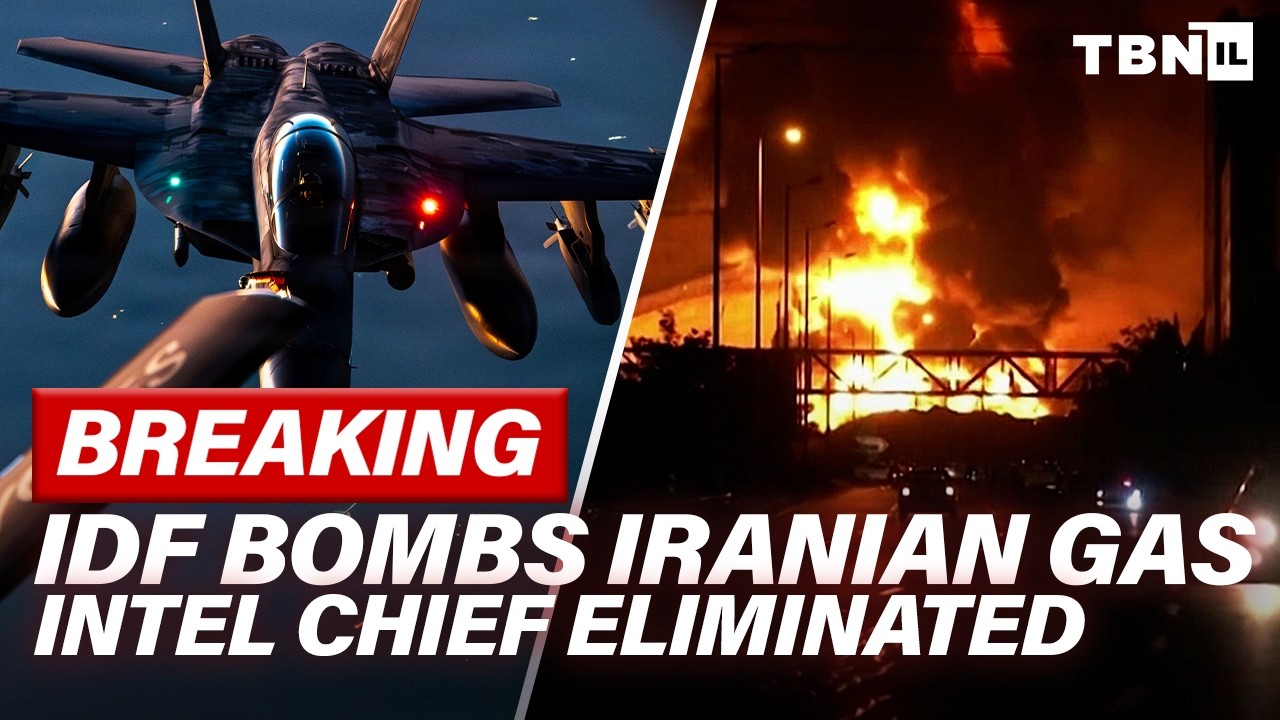
BREAKING: Israel BOMBS Major Iran Gas Site; Top Mullah ELIMINATED; Iran Vows VENGEACE | TBN Israel
"Israel and the United States have escalated their 'Roaring Lion War' against Iran, striking its largest gas facilities, eliminating key intelligence and military figures, and disrupting missile production, while Iran threatens a broader energy war in the Gulf."

🚨 TOTAL F*CKING CHECKMATE 😂😂😂
"The host argues that Trump's 'ceasefire' with Iran was a calculated '5D chess' move to orchestrate a global energy market reshuffle, while simultaneously lambasting 'woke' domestic policies and the 'freefall' of anti-Trump conservative figures."