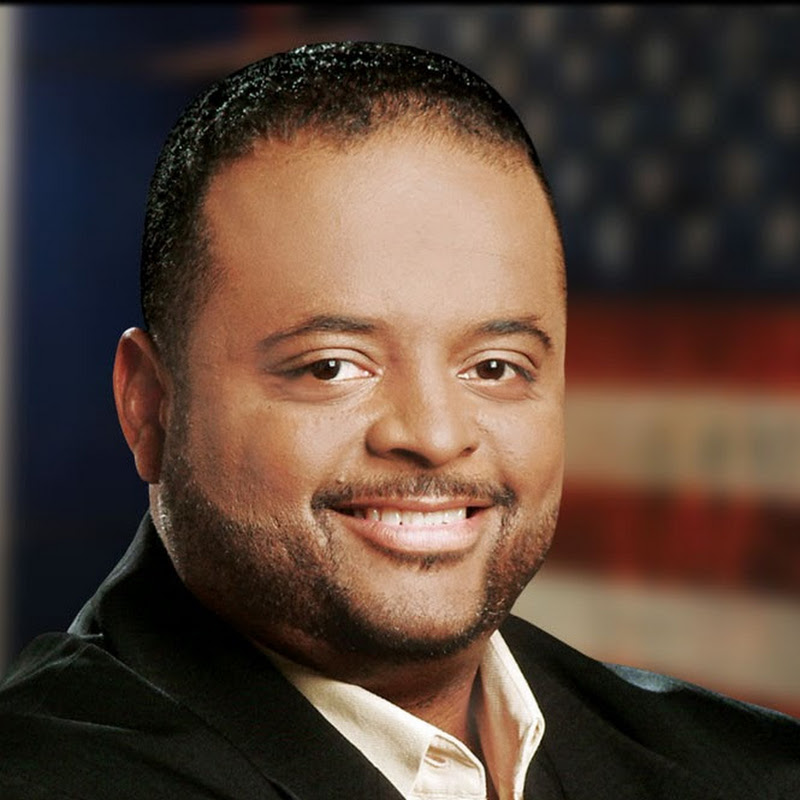
Trump Mail-In-Voting Order. KSU Students Sue Over Takeover Threat. SCOTUS Tosses Death Sentence
YouTube · GzT-mF1kFVU
Quick Read
Summary
Takeaways
- ❖Kentucky State University is suing the state over a legislative move to convert it into a polytechnic institution, which plaintiffs argue will dismantle its HBCU status and liberal arts programs.
- ❖Kentucky owes KSU over $172 million in underfunding over 23 years, a pattern seen in other states like Tennessee and Maryland where HBCUs are owed billions.
- ❖A federal judge allowed Donald Trump's executive order limiting mail ballots to stand, citing it was 'too early' to block, despite upcoming elections.
- ❖The Supreme Court, in a 5-4 decision, reversed a Mississippi death sentence for Terry Pitchford due to racial bias in jury selection, with Justice Clarence Thomas dissenting.
- ❖Apple is closing its first unionized store in Towson, Maryland, terminating 70-90 workers, while transferring employees from two other non-union stores, sparking accusations of union-busting.
- ❖Black organizational leaders and corporate board members are criticized for not leveraging their positions for collective Black empowerment, focusing instead on individual benefits.
- ❖The host advocates for a massive legal fund to sue states for underfunding HBCUs and emphasizes the importance of collective voting power to counter political and corporate attacks.
Insights
1Systemic Underfunding and Attempted Dismantling of HBCUs
Kentucky State University (KSU), an 1890 land-grant HBCU, is being targeted by Republican lawmakers to be converted into a polytechnic institution, which would eliminate liberal arts programs and effectively turn it into a 2-year associate degree program extension. This move comes after the state underfunded KSU by over $172 million over a 23-year period, a practice of intentional discrimination against HBCUs seen across multiple states. The lawsuit argues this is a deliberate attempt to cause the demise of the university by shutting down programs, deterring enrollment, and granting unilateral control to the president to terminate tenured faculty and staff.
Kentucky was found in 1981 to be engaging in intentional discrimination against KSU. The state owes KSU $172 million in underfunding from 1987-2020, with an additional $10-15 million withheld annually since. The state's response to federal demands to rectify underfunding was a $23 million loan with interest, followed by legislation to convert the university and grant the president unfettered control over faculty, staff, and enrollment.
2Judicial Obstruction to Voting Rights
A federal judge allowed Donald Trump's executive order creating a federal voter list and limiting mail voting to stand, rejecting requests from Democrats and civil rights groups to block it. The judge's rationale was that it was 'too early' to block the order as it had not yet been implemented, despite primaries and elections being imminent. This is seen as a tactic by Trump-appointed judges and the Republican party to game the system and suppress votes, particularly targeting Black communities.
US District Judge Carl Nichols, a Trump appointee, rejected requests to block Trump's executive order on mail ballots, stating it was 'too early' because it hadn't been implemented. Critics argue this ignores the immediate impact on election preparations and is a deliberate delay tactic.
3Supreme Court's Mixed Stance on Racial Justice and Clarence Thomas's Dissent
The Supreme Court, in a 5-4 decision, reversed a Mississippi death sentence for Terry Pitchford, an 18-year-old Black man, due to racial bias in jury selection. The majority, including Justices Kavanaugh and Roberts, acknowledged that the trial court erroneously omitted a key part of the Batson inquiry, which prevents racial discrimination in jury selection. However, Justice Clarence Thomas dissented, aligning with Gorsuch, Alito, and Barrett, effectively arguing against the Black defendant's relief and upholding a strict interpretation that would deny appeals even in cases of clear legal error.
The Supreme Court's 5-4 ruling in Pitchford's case saw Justices Kavanaugh, Roberts, Kagan, Sotomayor, and Jackson in the majority. Justice Kavanaugh's opinion cited a 2019 case involving the same prosecutor and stated the Mississippi trial court 'erroneously omitted a key part of the Batson inquiry.' Clarence Thomas dissented, arguing Pitchford failed to meet the high bar for federal post-conviction relief.
4Corporate Union-Busting by Tech Giants
Apple, a company with a market cap of $4.59 trillion, is closing its first unionized retail store in Towson, Maryland, and terminating all 70-90 workers. In contrast, employees at two other non-union Apple stores being closed are being automatically transferred to other locations. This disparity is seen as a clear act of union-busting, demonstrating how massive corporations fight desperately against workers' rights to unionize, despite immense profits and executive compensation.
Apple is closing three stores: Towson, MD (unionized), North County, CA, and Trumbull, CT (non-unionized). Workers at the non-union stores are being transferred, while Towson workers received termination letters and must reapply through a portal. Eric Brown, a leader at Apple Towson, stated, 'Absolutely. In my opinion, yes. Absolutely. If we weren't, there would be no issue with us transferring to those other stores.'
Bottom Line
The systematic underfunding of Historically Black Colleges and Universities (HBCUs) by state governments is not merely neglect but a deliberate strategy to weaken and ultimately dismantle these institutions, often disguised by legislative maneuvers like forced polytechnic conversions.
This pattern reveals a deeper, ongoing racial discrimination that deprives Black communities of vital educational and economic anchors, perpetuating inequality rather than rectifying historical wrongs. It highlights the need for aggressive legal and political challenges to reclaim owed funds and protect HBCU missions.
Establish a well-funded, coordinated legal consortium of HBCU law schools, alumni, and civil rights organizations to systematically sue every state that has underfunded its HBCUs, demanding billions in reparations and injunctive relief to prevent further institutional erosion.
The 'politics of perception' and the outsized influence of media platforms are critical battlegrounds in challenging corporate power and promoting organized labor, potentially more impactful than traditional organizing methods alone.
Corporations like Apple fear negative public perception that could disrupt their market value and consumer base. Amplifying worker struggles through influential media can quickly shift public sentiment and force companies to reconsider anti-union tactics, even if direct boycotts are challenging.
Leverage Black-owned media and influential personalities to create sustained, high-visibility campaigns exposing corporate exploitation and supporting unionization efforts. This can create a 'global solidarity' among consumers and workers, forcing corporate accountability through reputational and economic pressure.
Many Black organizational leaders and corporate board members are criticized for prioritizing individual gain and maintaining 'leading black' status over advocating for the collective economic and social advancement of Black America.
This 'me, myself, and I' approach undermines collective Black power, allowing systemic injustices to persist without unified challenge. It creates a disconnect between the aspirations of the broader Black community and the actions of those in positions of influence.
Demand accountability from Black organizational leadership and corporate board members. Establish clear 'civil rights indexes' for corporations, measuring not just diversity at the top, but also contracts with Black-owned businesses, hiring across all levels, and support for Black community initiatives. Fund independent Black media and legal entities that are not beholden to corporate or political interests, ensuring a platform for collective advocacy.
Opportunities
What's the Hook? Card Game
A card game for intellectual music lovers where players identify popular songs whose lyrics have been rewritten using formal, well-spoken, or proper speech. It challenges musical knowledge and translation skills across various genres and eras.
Lessons
- Support Black-owned media and businesses, as they are crucial for covering issues often ignored by mainstream outlets and for building collective economic power.
- Engage actively in all elections (primaries and general) to ensure that candidates who align with Black community interests are nominated and elected, recognizing that political power directly impacts judicial appointments and policy.
- Challenge Black organizational leaders and corporate board members to prioritize collective Black empowerment over individual gain, demanding accountability for their impact on the broader Black community.
Notable Moments
Critique of Black Organizational Leadership
The host and panelists extensively criticize current Black organizational leaders and corporate executives for not leveraging their influence for the collective good of Black America, distinguishing between 'black leaders' (chosen by the people) and 'leading blacks' (chosen by media/corporations for individual benefit). This highlights a significant internal challenge to building unified Black power.
Discussion on the 'Politics of Perception'
Dr. Greg Carr emphasizes that in the struggle against capitalism and corporate power, changing public perception through media and protest can be as potent as traditional organizing. This suggests a strategic shift in how Black communities can challenge powerful entities, leveraging platforms like Roland Martin Unfiltered to raise awareness and foster solidarity.
Quotes
"You caused the problem and then you say, 'Well, you got a problem, so therefore, might as well shut you down.' When they're the ones who cause the problem."
"If you took $15 million away from University of Kentucky every single year for 20 years straight, guaranteed it would impact them. They're a lot bigger than Kentucky State University and most H.B.C.U."
"The most important thing is to vote, but this administration is trying to make these votes not count, to make this election not count."
"There is nothing in our society, nothing. Nothing. Nothing. Nothing. N O T H I N G Boldface underline it atalicized all caps that politics does not impact."
"If you are an African-American sitting on a corporate board today and you are still the only African-American on that corporate board and if you sit on two or three other boards and you have not used your presence uh to create opportunities for three, four, five, 10, 15, 20 other black people, then you have failed when it came to the arrangement."
"They're not strict constructionists. They are conven They They're convenient artists. Whatever works for them to get the result that they believe is correct or that they believe the majority of Americans may believe is correct. In that case, in their mind, white Americans because they're the only ones they see. That's what they go for."
Q&A
Recent Questions
Related Episodes
DeSantis Map Sued in Florida. Tennessee Targets Black District. FBI Raids Louise Lucas
"This episode exposes aggressive Republican gerrymandering efforts in Florida and Tennessee, a politically charged FBI raid on a Virginia Democratic leader, and disproportionate death penalty sentences against Black individuals in Tarrant County, Texas, framing them as a systemic assault on Black political power and civil rights."

Jasmine Crockett Detonates. Roland Destroys MAGA Lies. Activists Confront Racist. Best of #RMU
"This episode exposes Republican hypocrisy on white supremacy, systematically debunks MAGA political lies, and highlights a new NAACP initiative leveraging Black athletic power to combat voting rights suppression in Southern states."
Colo. Gov Blasted Over Tina Peters. FedEx Targeted Over Voting Rights. Jan. 6 Cops Sue Trump.
"Colorado's Democratic Governor faces censure for commuting an election denier's sentence, while activists target FedEx for its silence on Black voting rights, and a House hearing exposes partisan divides on defining hate groups and compensating January 6 rioters."
George Floyd 6 Years Later. Redistricting War in The South. Talarico Senate Campaign
"This episode exposes the ongoing legislative battles and strategic resistance against efforts to diminish Black political power, from federal policing reform to state-level gerrymandering and calls for economic boycotts by Black athletes."