BREAKING: Iran Faces DEAL Deadline; U.S. Hardens Hormuz Blockade; China Watches | TBN Israel
YouTube · HHUlOEaKJdY
Quick Read
Summary
Takeaways
- ❖The U.S. naval blockade has effectively halted 98% of Iranian oil exports through the Strait of Hormuz, causing oil to accumulate and threatening irreversible damage to oil wells.
- ❖President Trump has issued an ultimatum to Iran: accept a deal to end the war and open Hormuz, or face bombings of 'much higher level and intensity.'
- ❖Iran's leadership is deeply divided between President Pazakan, who seeks an agreement to alleviate economic crisis, and the hardline Revolutionary Guards, who prioritize deterrence and regime survival.
- ❖Saudi Arabia reportedly blocked U.S. access to Prince Sultan air base and airspace, forcing the temporary suspension of 'Project Freedom,' a major U.S. operation to escort ships through Hormuz.
- ❖China benefits from the U.S. being tied down in the Middle East but also requires stable energy and trade, leading to a 'double game' in its dealings with Iran.
- ❖Israel is deeply concerned that any emerging agreement will not adequately address Iran's nuclear program (especially the 'sunset clause'), ballistic missiles, or proxy networks, potentially allowing the regime to rebuild.
Insights
1Naval Blockade Cripples Iranian Oil Exports
The U.S. naval blockade on Iran's ports, initiated in mid-April, has almost completely halted Iranian oil exports through the Strait of Hormuz, which previously accounted for 98% of its exports. Iran, producing about 4 million barrels per day with half intended for export, is rapidly filling its inland storage tanks and Persian Gulf tankers, facing the prospect of reducing or even irreversibly closing oil wells within weeks.
Hosts state the blockade began in mid-April, stopped 98% of exports, and that Iran produces 4 million barrels/day, with half for export. Experts estimate Iran will run out of storage within weeks, forcing production cuts.
2U.S. Demonstrates Blockade Enforcement with Live Fire
The United States military actively enforced the naval blockade by firing on an Iranian tanker, MT Hassana, in the Gulf of Oman. After the vessel failed to obey warnings and attempted to break through, an FA-18 Super Hornet from the USS Abraham Lincoln aircraft carrier fired a 20mm cannon at its steering system, disabling it without sinking it. This action served as a clear message that the blockade is real and not a 'joke.'
A U.S. military FA-18 Super Hornet from the aircraft carrier Lincoln fired on the MT Hassana tanker in the Gulf of Oman, disabling its steering system after it ignored warnings.
3Saudi Arabia's Unexpected Blockade of U.S. Military Operations
Saudi Arabia significantly hampered a major U.S. operation, 'Project Freedom,' designed to escort ships through the Strait of Hormuz. Reports indicate Saudi Arabia denied the U.S. use of Prince Sultan air base and its airspace for the operation, forcing its temporary suspension. This highlights Saudi Arabia's desire to weaken Iran without escalating to an open-ended war.
Reports indicate Saudi Arabia sent a clear message to America: 'Do not use Prince Sultan air base and do not pass through Saudi airspace for the purpose of this operation.' This forced the White House to stop Project Freedom.
4Internal Iranian Leadership Split Over Agreement
A growing rift exists within Iran's leadership between President Masoud Pazakan and the hardline Revolutionary Guards. Pazakan, concerned about the worsening economic crisis, inflation, and potential protests, views an agreement with the U.S. as a way out. The Revolutionary Guards, however, prioritize deterrence, honor, and the survival of the system, fearing that any concession will lead to further demands and ultimately threaten the regime itself.
Security sources report a growing rift between President Masoud Pazakan and the Revolutionary Guards. Pazakan was 'furious' over strikes on the UAE, citing economic concerns, while the Guards prioritize 'deterrence, honor, and survival of the system.'
5China's Strategic 'Double Game' in the Middle East Conflict
China is playing a complex 'double game' in the Iran crisis. While it benefits from the U.S. being bogged down in the Middle East, aligning with its narrative of weakening American leadership, China also needs stable energy supplies and global trade. Beijing embraces Iran as a strategic partner but pressures it to open Hormuz, criticizing American pressure while not wanting energy prices to spiral out of control. This allows China to gain leverage over both Iran and the U.S.
China 'enjoys seeing the United States get entangled' and benefits from the 'weakening of American leadership.' However, China 'does not need Iran in order to survive' and is 'still very dependent on the economic, commercial, and strategic systems led by the United States.' It 'embraces Iran as a strategic partner but tells it to open Homus.'
Bottom Line
The U.S. has executed a 'master play' to control global oil production and distribution, using the Iran blockade as a key component to shift global markets towards American-controlled supplies.
This strategy provides the U.S. with significant geopolitical leverage over major energy consumers like China and could postpone direct conflicts over issues like Taiwan by making adversaries dependent on U.S.-influenced energy.
Nations and businesses should assess their energy supply chain resilience and diversification, understanding that global oil control is now a primary tool of geopolitical power, potentially leading to increased volatility or strategic alliances based on energy access.
Iran's internal decision-making is driven by regime survival and ideological legitimacy, making it less responsive to traditional economic or military pressures that would typically force a 'rational' actor to concede.
This 'irrational' calculus means that U.S. pressure, if not fundamentally different, may only prolong the conflict or lead to unintended escalations, as the regime is willing to absorb significant economic and human costs to maintain face and power.
Any negotiation strategy with Iran must account for this unique decision-making framework, potentially requiring internal leverage or a 'different' kind of pressure beyond conventional military or financial sanctions to achieve desired outcomes.
Iran's strategy of threatening global trade routes (Hormuz, Bab el Mandeb, Red Sea) with cheap tools like drones and missiles aims to create enough fear to raise insurance prices and shipping costs, forcing the West to pay a diplomatic price for quiet.
This tactic demonstrates that Iran doesn't need to win a conventional war; it only needs to disrupt global commerce sufficiently to make the cost of conflict resolution (e.g., a 'bad' deal) seem preferable to continued instability for other nations.
Global shipping, insurance, and energy industries must develop robust contingency plans and risk mitigation strategies for persistent, low-level disruptions in critical maritime choke points, recognizing that 'quiet' may come at a significant, ongoing diplomatic or economic cost.
Key Concepts
Rational vs. Irrational Actors in Geopolitics
The podcast argues Iran's regime is not a 'rational player' in the Western sense, as it prioritizes ideological survival and legitimacy over economic damage or loss of life, making traditional negotiation tactics less effective. This contrasts with the assumption that all state actors respond predictably to economic or military incentives.
Economic Warfare as a Primary Weapon
The naval blockade is framed as a more potent weapon than air strikes, demonstrating how economic pressure, by targeting a nation's core revenue (oil) and storage capacity, can create an existential crisis and force concessions without direct military engagement.
The 'Master Play' of Global Oil Control
The U.S. strategy, orchestrated by the Trump administration, is presented as a deliberate, multi-stage plan to isolate sanctioned oil supplies (e.g., Venezuela), impose a blockade on Iran, drive up oil prices, and then leverage U.S.-controlled oil producers (Saudi Arabia, UAE, Canada) to stabilize global supply under American influence, thereby gaining significant geopolitical leverage.
Lessons
- Monitor the internal power dynamics within Iran, particularly the growing rift between the President and the Revolutionary Guards, as this internal struggle will heavily influence Iran's willingness to negotiate or escalate.
- Evaluate the long-term implications of the U.S. strategy to control global oil supplies, considering how this affects energy security, trade relationships, and geopolitical stability for your region or industry.
- Assess the potential for 'bad' agreements in complex geopolitical conflicts, understanding that such deals may only postpone or change the form of conflict rather than resolving underlying threats, requiring continuous vigilance and preparedness.
Notable Moments
The hosts explain that the naval blockade is a more serious threat than war because it puts Iran's oil and energy exports at risk, potentially leading to irreversible damage to oil wells.
This highlights the severity and strategic impact of economic warfare, demonstrating how non-kinetic actions can have devastating and long-lasting consequences comparable to or exceeding direct military conflict.
The discussion of the U.S. 'master play' to control global oil production and distribution, starting with Venezuela and culminating in the Iran blockade.
This reveals a sophisticated, long-term geopolitical strategy by the U.S. to consolidate its influence over a critical global resource, fundamentally altering the balance of power and affecting global energy markets.
The detail that Saudi Arabia denied the U.S. use of its air base and airspace for 'Project Freedom,' forcing the operation's suspension.
This demonstrates that even close allies have their own strategic interests and limits, and can exert significant leverage, complicating U.S. military operations and revealing the nuanced nature of regional alliances.
Quotes
"The naval blockade is an even more serious threat than the wall because right now Iran's oil and energy exports are at risk. And if they collapse, how real is this blockade?"
"The Iranian regime is about survival. It's not planning to beat the Americans at any game. It's not planning to win. It's not planning to make money here. What they're hoping to do, what they're planning to do is to survive this phase of the war and to be around after this phase of the war."
"The Iran war is a war very much between the Chinese and the Americans as much as it is between the Iranians and the Americans."
"The United States has made a master move here of controlling the oil production and distribution around the world."
"In a space like this, war does not always begin with a cabinet decision. Sometimes it begins with a fast boat that comes to too close, with a small drone flying low, with a tanker that does not understand the order, or with an Iranian field commander trying to prove loyalty to the revolutionary guards."
Q&A
Recent Questions
Related Episodes

Patrick Henningsen: Hezbollah JUST Fired Back at Israel - Iran Vows to “Crush” All Attacks
"Patrick Henningsen argues that the US and Israel initiated an illegal war against Iran, driven by Trump's incompetence and Israeli influence, leading to an inevitable escalation with severe global economic repercussions."
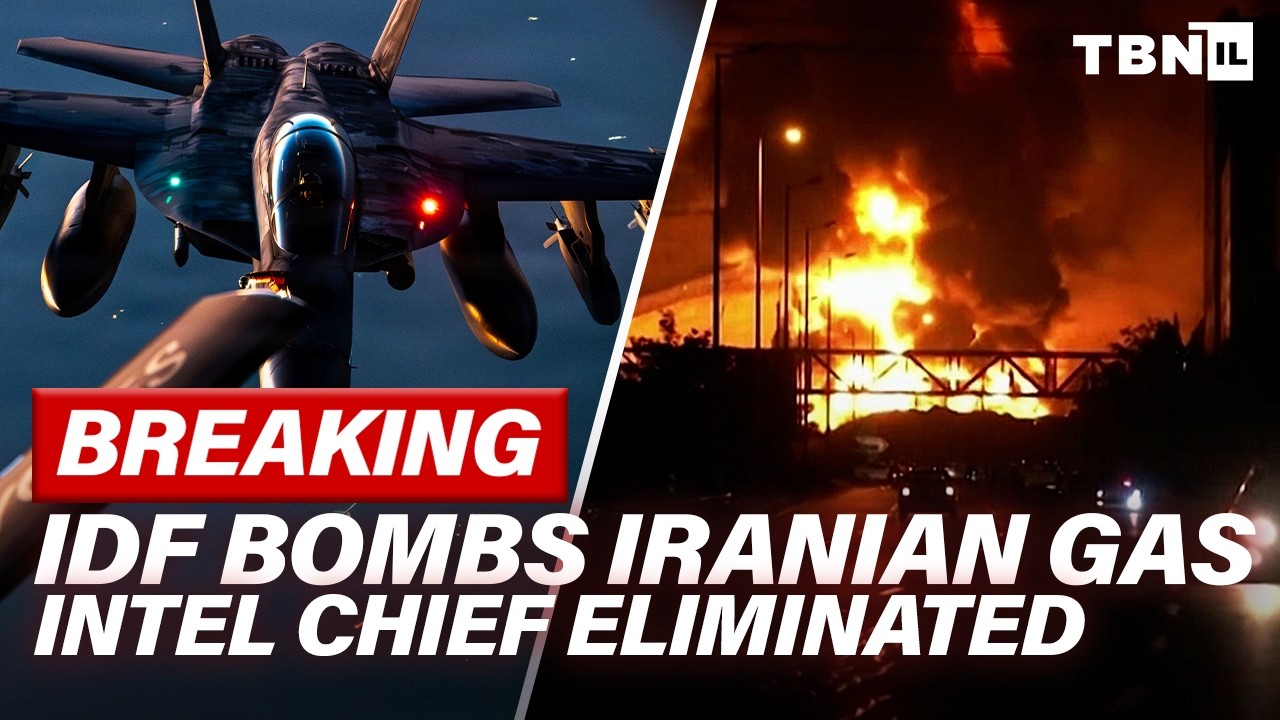
BREAKING: Israel BOMBS Major Iran Gas Site; Top Mullah ELIMINATED; Iran Vows VENGEACE | TBN Israel
"Israel and the United States have escalated their 'Roaring Lion War' against Iran, striking its largest gas facilities, eliminating key intelligence and military figures, and disrupting missile production, while Iran threatens a broader energy war in the Gulf."

🚨 TOTAL F*CKING CHECKMATE 😂😂😂
"The host argues that Trump's 'ceasefire' with Iran was a calculated '5D chess' move to orchestrate a global energy market reshuffle, while simultaneously lambasting 'woke' domestic policies and the 'freefall' of anti-Trump conservative figures."
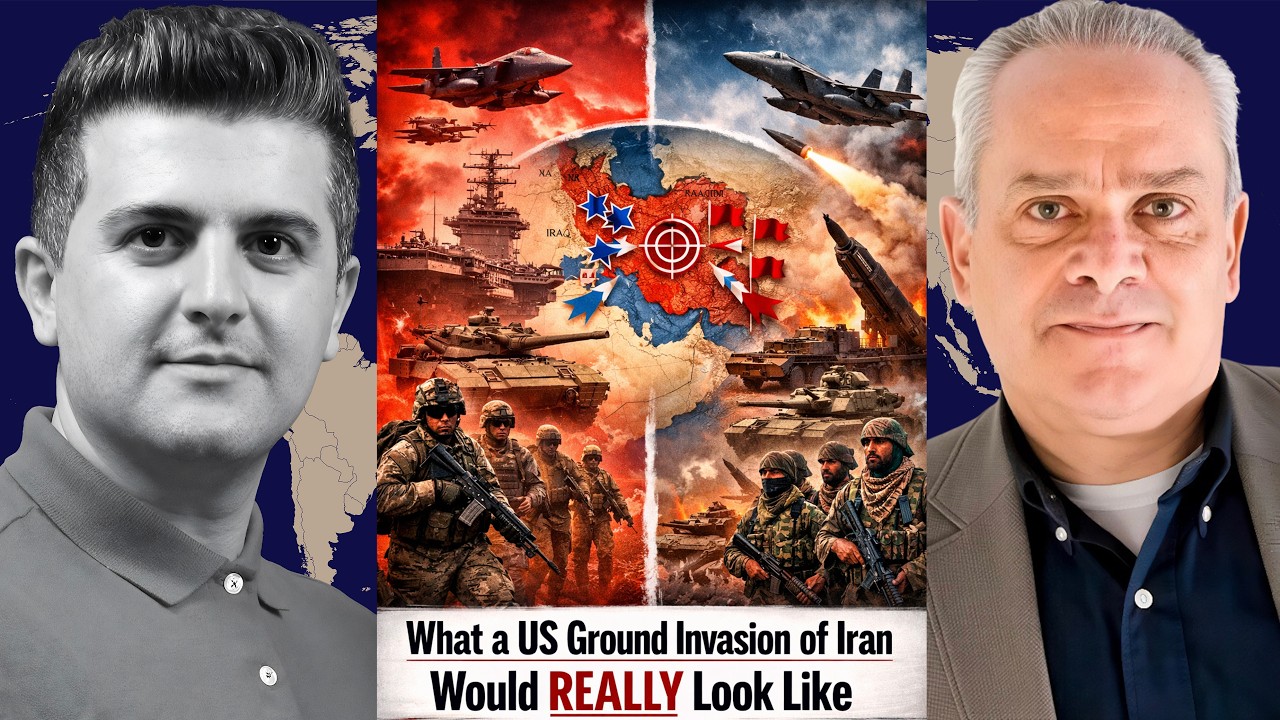
Col. Jacques Baud: What a US Ground Invasion of Iran Would REALLY Look Like
"Colonel Jacques Baud dissects the strategic futility of a US ground invasion of Iran, arguing that current troop levels are insufficient and such an action would backfire, exposing US allies and potentially leading to Iran's nuclearization."