The Joe Budden Podcast Episode 893 | Authorized User
YouTube · I0SQ6DY2iOE
Quick Read
Summary
Takeaways
- ❖Social media, particularly TikTok, dictates event aesthetics, leading to costly 'Instagrammable' parties and a decline in DIY efforts.
- ❖The concept of 'popped' (financially tight) is discussed in the context of post-holiday spending and the impact of authorized users on credit card bills.
- ❖The killing of Renee Nicole Good by ICE agents in Minneapolis is condemned as an execution, highlighting concerns about masked agents, lack of accountability, and the dehumanization of 'illegal aliens'.
- ❖Production deals in the music industry can be predatory, especially for young artists, as seen in Salt-N-Pepa's legal battle over their masters.
- ❖NFL player Rashee Rice faces severe domestic violence allegations, prompting discussion on the league's inconsistent approach to such issues.
- ❖Russell Wilson's post-season disclosure of a hidden injury is criticized as selfish and potentially damaging to his former team, the Giants.
- ❖Dame Dash's ongoing public feuds are framed as financially motivated and indicative of a 'religious psychosis' by some hosts, contrasting with Charlemagne Tha God's '200 million is my reply' stance.
- ❖The importance of family presence in court is emphasized, as judges often consider community support when sentencing, a point raised in the context of Lil Durk's ongoing legal issues.
Insights
1Social Media Drives Excessive Spending on Events
The hosts observe that social media platforms like TikTok and Instagram have created a culture where events, even children's birthday parties, must be elaborately decorated and 'Instagrammable.' This leads to hiring professional decorators for thousands of dollars instead of DIY, driven by a desire to impress online audiences.
Joe Budden recounts his experience planning his daughter's birthday, where his partner insisted on hiring a decorator for 'lavender balloon horses' and a custom cake, despite his attempts to find cheaper Amazon alternatives. He contrasts this with older generations who would decorate themselves.
2The Dehumanizing Impact of ICE Tactics and Political Rhetoric
The hosts express outrage and concern over the killing of Renee Nicole Good by ICE agents in Minneapolis. They argue that the use of terms like 'illegal alien' dehumanizes individuals, making it easier for law enforcement to act with aggression and impunity. They highlight the militarized appearance of ICE agents, their masked identities preventing accountability, and the apparent lack of due process.
Mark Lamont Hill details Renee Nicole Good's execution by an ICE agent, noting she was an American citizen, mother of three, and an activist resisting ICE. The hosts discuss civilian footage showing her pulling off slowly before being shot in the face. They draw parallels to the Civil Rights era, where Black people were similarly dehumanized and targeted. Joe Budden points out that ICE agents are offered $50,000 signing bonuses, incentivizing individuals who might lack the mental fortitude for such a role.
3Financial Control as a Form of Abuse in Relationships
The discussion around Rashee Rice's domestic violence allegations expands to include financial control as a significant aspect of abuse. The hosts argue that when one partner cedes all financial control, it can leave them vulnerable and dependent, making it harder to escape abusive situations.
The alleged victim's statement details how Rashee Rice cut up her clothes, locked her out in freezing weather, and refused to send money for her and her children to travel, leaving her without means. Ish emphasizes that giving up financial control allows a partner to 'literally control your life,' forcing compliance.
4The Perils of Production Deals for Young Artists
The hosts discuss the legal battle between Salt-N-Pepa and UMG over their masters, attributing the core issue to a production deal with Herby Love Bug. They explain that such deals, while sometimes beneficial, often disproportionately favor producers or intermediaries, especially when artists are young and inexperienced, leading to long-term financial and ownership disputes.
Joe Budden and Ish explain that Salt-N-Pepa's beef is primarily with Herby Love Bug, who signed a deal with UMG, not directly with the artists. They advocate for a policy preventing individuals under 25 from signing production deals independently, likening it to the age restrictions for renting a car, given the life-altering nature of these contracts.
5Public Image, Financial Motives, and Hip-Hop Beefs
The ongoing feuds in hip-hop, particularly between Dame Dash and Charlamagne Tha God, and Cam'ron and Jim Jones, are analyzed through the lens of public image, financial gain, and personal ego. The hosts debate whether these conflicts are genuine or performative, designed to generate engagement and monetize controversy.
Dame Dash's claim that Charlamagne's $200 million deal was a result of making Dame look bad is dismissed as self-absorbed. Joe Budden suggests that some artists, like Dame, are 'addicted to the fame' and 'financially messed up,' using controversy to 'generate revenue and income.' The Dipset beef is seen as a long-standing, deeply personal conflict, with Jim Jones leveraging viral moments for business, while Cam'ron's disses are perceived as having a 'tough love' element.
Bottom Line
The increasing militarization and lack of transparency (masked agents, blanketed immunity) in domestic law enforcement agencies like ICE create an environment ripe for abuse and make accountability nearly impossible.
This erodes public trust and can lead to tragic outcomes, as seen with Renee Nicole Good, while potentially normalizing state-sanctioned violence against perceived 'others.'
Advocacy groups and tech developers could focus on creating tools for citizen monitoring and reporting of law enforcement actions that are harder for authorities to suppress, ensuring public awareness and external accountability.
The 'white solidarity' rhetoric, as exemplified by Elon Musk's reposted tweet, indicates a growing fear among some white demographics of losing majority status and experiencing historical retribution, rather than guilt over past actions.
This fear-driven narrative fuels political polarization and justifies policies aimed at 'protecting white interests' at the expense of other groups, making constructive dialogue and social progress more difficult.
Media and educational initiatives could focus on historical literacy and empathy-building, challenging the zero-sum narrative and promoting understanding of diverse experiences, rather than reinforcing fear-based political strategies.
Lessons
- Be mindful of social media's influence on spending habits; prioritize genuine needs over 'Instagrammable' aesthetics for events.
- Educate yourself and others on the legal and human rights implications of immigration enforcement tactics, advocating for transparency and accountability from agencies like ICE.
- For artists, seek comprehensive legal counsel and understand all terms of production deals, especially when young, to avoid long-term disputes over intellectual property and earnings.
Notable Moments
Joe Budden's passionate condemnation of ICE tactics and the killing of Renee Nicole Good, drawing parallels to the Civil Rights era.
This segment shifts the podcast's tone to a serious, activist stance, highlighting a critical social justice issue with historical context and emotional urgency.
The hosts' debate on whether giving a partner an authorized user credit card saves money or encourages more spending, with Mona's candid take on 'not my money' mentality.
This offers a relatable and humorous, yet insightful, discussion on financial dynamics within relationships and consumer psychology.
Russell Wilson's post-season revelation of a hidden injury, leading to a heated discussion about athlete accountability and loyalty to their teams.
This moment exposes the complex relationship between athletes, their health, team obligations, and career longevity, sparking debate on ethical disclosures.
Quotes
"Nobody is the girls the baby mas are not decorating their own kid party spaces anymore."
"When you call people illegal alien, to your point, it dehumanizes them."
"This fight don't start when I punch you. It start on why I'm punching you."
Q&A
Recent Questions
Related Episodes

A major shift is happening right now
"Donald Trump is losing his grip on the Republican party and movement, evidenced by internal dissent and a broader political landscape grappling with a collapse of accountability and truth."
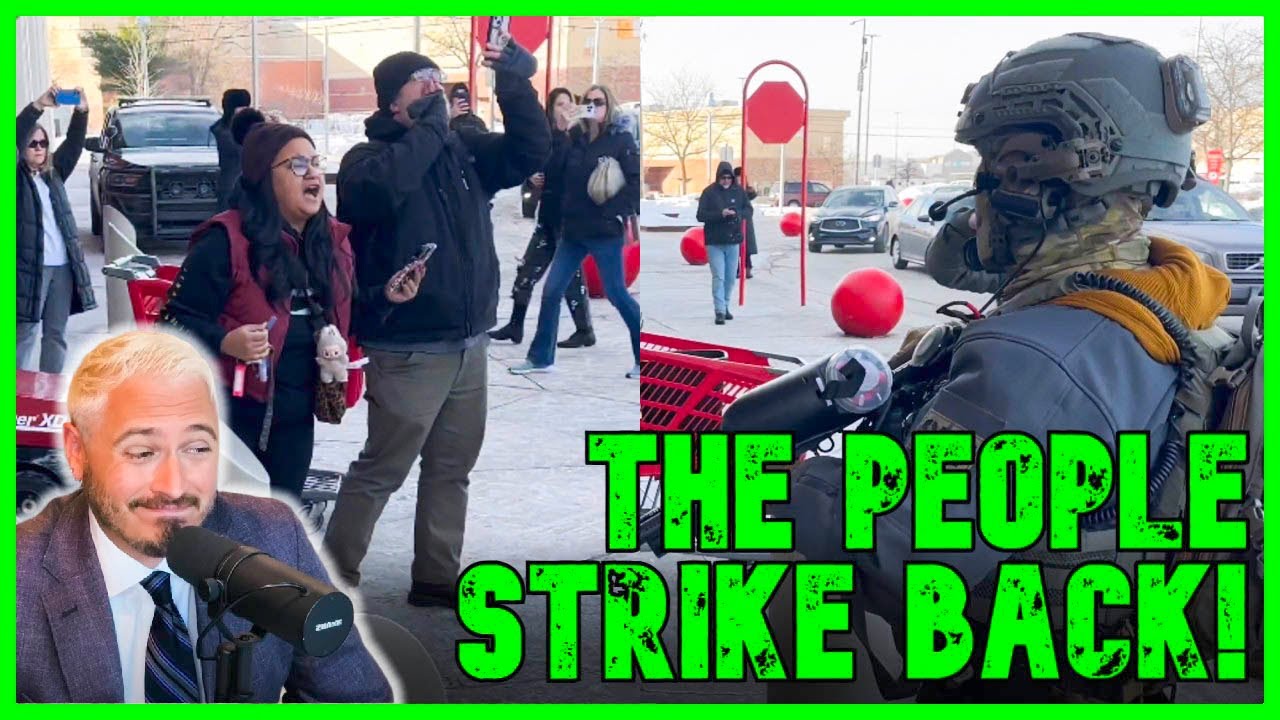
‘YOU’RE A B*TCH!’: Americans EXPLODE At ICE Thugs TO THEIR FACE | The Kyle Kulinski Show
"Host Kyle Kulinski presents multiple graphic videos and eyewitness accounts of alleged ICE abuses, including assaults, illegal detentions, and sexual misconduct, arguing that these actions are galvanizing widespread public resistance and exposing a growing authoritarian state."

Mamdani CELEBRATES NYC Rent Freeze, This Will DESTROY The City | Timcast IRL
"New York City's rent freeze, celebrated by Mandami, is framed as a socialist 'land grab' that will devastate the city's housing market and economy, while a FIFA Pride Match in Seattle sparks outrage from conservative nations."

NC Targets DEI. Trump Blocks Housing Bill. Minority Banks Face New Rules. Kohen Wiley Protests
"This episode exposes how current political actions, from changes in minority bank definitions to attempts to regulate college athlete earnings and block foreign aid, are systematically undermining Black economic power, voting rights, and social justice."