Trump's SHOCKING Iran War Power Grab w/ David Sirota
YouTube · I8wJlQnn7vU
Quick Read
Summary
Takeaways
- ❖The presidency has evolved into an 'imperial' office, allowing presidents to initiate 'World War II situations' without congressional authorization.
- ❖Post-Watergate, Congress temporarily reclaimed power (e.g., War Powers Resolution), but a 'backlash to the backlash' led to renewed executive dominance.
- ❖Congress's reluctance to vote on war, especially after the Iraq War, stems from a desire to avoid political repercussions, effectively delegating power to the executive.
- ❖The 'unitary executive' theory posits that the president should control the entire federal bureaucracy, including independent agencies, to implement their mandate.
- ❖A 'ratchet effect' sees Republican presidents aggressively expand executive power, while Democrats often fail to use existing power or even relinquish it.
- ❖The 'democracy crisis' is partly driven by presidents failing to deliver on promises, leading to public disillusionment that strongmen exploit.
- ❖Public pressure can force Congress to use its 'power of the purse' to constrain presidential actions, as seen in responses to mass deportations and military deployments.
- ❖Funding bills for military operations can inadvertently serve as de facto war authorizations, bypassing explicit declarations of war.
Insights
1The Post-Watergate Backlash and its Reversal
After Watergate, Congress pushed back against the 'imperial presidency' by passing legislation like the War Powers Resolution and the Budget Impoundment Act to curb presidential overreach. However, a subsequent ideological backlash, particularly from figures like Dick Cheney, asserted that Congress should never encroach on presidential authority, leading to the current state of executive dominance.
Richard Nixon's secret expansion of the Vietnam War and impoundment of congressionally authorized spending led to post-Watergate reforms. Dick Cheney's influence as Gerald Ford's chief of staff and later as Vice President exemplified the 'unitary executive' ideology.
2Congressional Complicity in Ceding War Powers
Congress has become complicit in the expansion of presidential war powers by actively avoiding votes on military conflicts. After the Iraq War, many members realized that taking a vote could lead to future political repercussions, making it easier to let the president act unilaterally and then blame them if things go poorly.
The host notes that the last time Congress took a vote on war (Iraq War), it 'ended up coming back to bite' many who voted for it. Sirota agrees, stating Congress 'figured out like, hey, instead of taking tough votes to stop anything, we can just not vote at all.'
3The 'Ratchet Effect' of Executive Power
There's a concerning pattern where Republican administrations aggressively use and expand executive power, while Democratic administrations, when in office, often either fail to fully utilize existing executive authority or even relinquish it, leading to a continuous expansion of presidential power over time.
Sirota questions whether Democrats, upon regaining the presidency, should use the concentrated power or relinquish it. He cites Obama's aggressive use of drone warfare and 'kill lists' alongside his failure to use existing authority to close tax loopholes or require dark money disclosure.
4The Threat to Independent Agencies and Constitutional Balance
The 'unitary executive' theory extends to challenging the existence and independence of regulatory agencies like the FTC and CFPB. Proponents argue the president should have total hiring and firing power over all executive branch members, even those designed to be insulated from political cycles. This approach undermines the constitutional balance by using constitutional arguments to bypass legislative processes for structural changes.
The Trump administration's attempt to assert the right to fire members of independent agencies, despite their deliberately insulated structures, is framed as a constitutional challenge rather than a legislative one. Sirota argues that if changes are desired, Congress should pass new legislation, not make broad constitutional claims.
Key Concepts
Unitary Executive Theory
The legal and political theory asserting that the President of the United States possesses all executive power, without exception, and therefore has the authority to control the entire executive branch, including independent agencies, and to act unilaterally in areas like foreign policy and war.
Power of the Purse
The constitutional power of Congress to control government spending. This power is identified as the only real check Congress has on an imperial presidency, especially concerning military actions, as it can defund wars or executive initiatives.
Democracy Crisis
A state where democratic institutions are weakened, public trust is eroded, and the ability of elected officials to deliver on promises is compromised, often leading to disillusionment and the rise of authoritarian figures.
Ratchet Effect (Executive Power)
The phenomenon where executive power tends to expand during certain administrations (often Republican) through aggressive use and power grabs, but then is not fully relinquished or even utilized by subsequent administrations (often Democratic), leading to a continuous, one-directional increase in presidential authority over time.
Lessons
- Recognize that public pressure is a vital, albeit indirect, check on executive power. Engaging in protests or advocating for specific policies can influence congressional action.
- Demand that Congress utilize its 'power of the purse' to control military spending and prevent unauthorized wars, rather than simply passing resolutions of disapproval.
- Understand the 'unitary executive' theory and its implications for presidential power, particularly regarding war-making and control over federal agencies.
Notable Moments
The hosts and Sirota discuss the 'Master Plan' podcast trailer, which visually depicts the historical expansion of presidential power and the 'unitary executive' concept.
The trailer serves as a compelling visual summary of the core argument, highlighting the long-term, deliberate nature of the power shift.
Sirota recounts a debate within the Reagan administration, involving a young John Roberts, about classifying military operations (Lebanon, Grenada) as 'wars' for veterans' benefits, and the legal implications for congressional war authorization.
This anecdote illustrates that the debate over presidential war powers and congressional authority was once a serious, internal legal consideration, a stark contrast to the current presumption that Congress lacks real war-making authority.
Quotes
"How is it that we've arrived at a place where a president has a constitution that says Congress declares war and yet we're now where we are where a war was started basically like a World War II situation... without any real authorization at all?"
"The presumption that the branches would protect their own power... in the modern era, what we've seen is that actually the institution... that is supreme for the Republicans is the Republican party and not the presidency or the Congress or the courts."
"Do you not want a king or do you just not want the king that's not your king? Right? Like let's really get to the issue here and let's really be honest about what each side actually wants."
"The problem that the conservative movement saw at the time was um the government has become too responsive to the people. Like the government is passing all the Ralph Nader is getting all these things passed that we the oligarchy do not like."
Q&A
Recent Questions
Related Episodes

Trump DOJ REACHES NEW LOW Trying to SAVE Trump
"Professor Aziz Huck dissects the foundational principles of the rule of law, revealing how modern political partisanship and the Justice Department's 'weaponization fund' challenge core constitutional mechanisms and legal predictability."
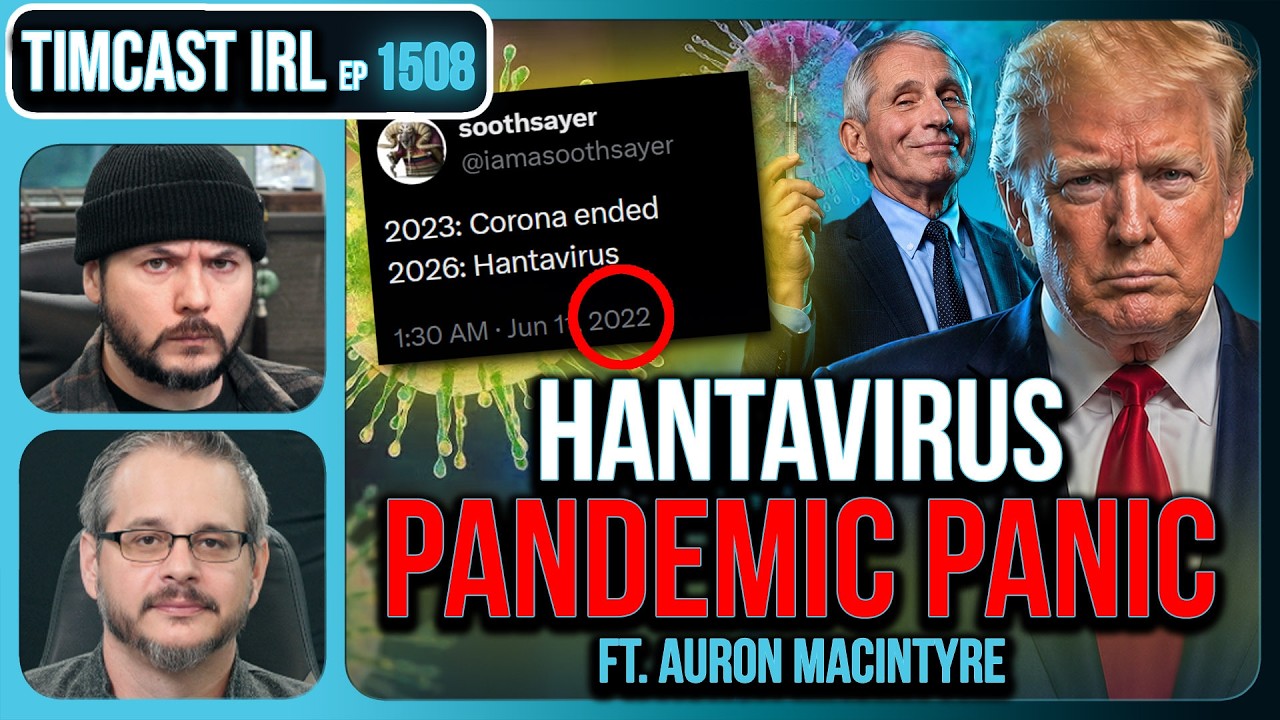
HANTAVIRUS PANDEMIC PANIC, Human To Human Spread Feared | Timcast IRL
"Tim Pool and his guests dismiss the Hantavirus panic as media desperation, pivot to discussing escalating political polarization, the rise of technocracy, and the weaponization of social issues."
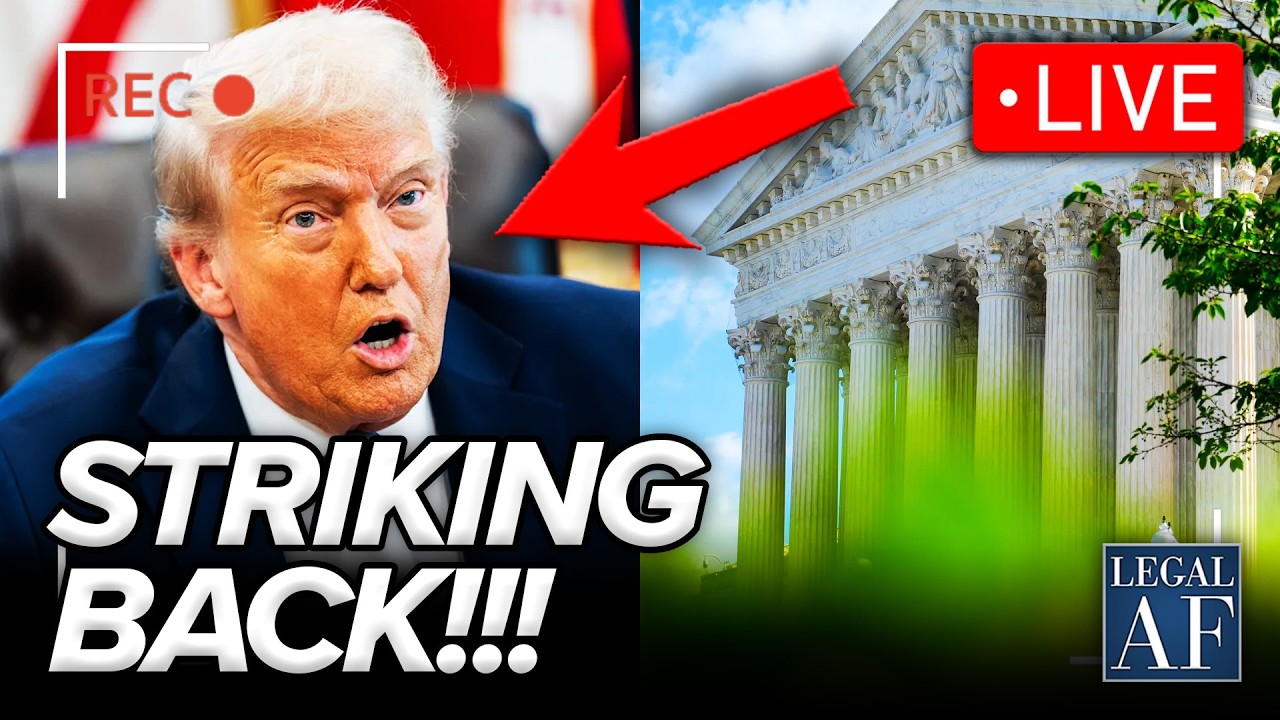
LIVE: Lawyers and Fmr. Judges STRIKE BACK as Trump Threatens Courts
"Former federal and state judges, alongside leading lawyers, unite to defend the independent judiciary and the rule of law against unprecedented political attacks and the erosion of public trust."
All-White Jury Convicts Karmelo Anthony. Georgia Election Lawsuit. Tennessee Map Challenge Dropped.
"This episode dissects systemic racial biases in the justice system, politically motivated election law changes, and the dangers of unchecked AI in law enforcement, all while highlighting the ongoing fight for civil rights."