
Larry Johnson: Israel’s Sabotage Backfires – Trump’s Last Move ENDS Israel's Agenda
YouTube · IY1BU0bKEgM
Quick Read
Summary
Takeaways
- ❖Hezbollah welcomed the Iran-US MOU, viewing it as a major achievement leading to a comprehensive ceasefire in Lebanon and calling for Lebanese unity.
- ❖Larry Johnson is highly skeptical of the Iran-US MOU, calling it an 'IOU MOU' due to significant discrepancies in US and Iranian interpretations, particularly regarding immediate sanction relief and asset release.
- ❖Iran's foreign ministry spokesman, Esmaeil Baghaei, stated Iran would manage the Strait of Hormuz with Oman and collect 'necessary fees' for navigation services, not 'tolls,' after an initial 60-day no-fee period (though this 60-day period is disputed by Johnson).
- ❖J.D. Vance's optimistic portrayal of the deal, emphasizing Iranian commitments on nuclear programs for economic access, contrasts sharply with Iranian expectations of immediate asset release and compensation.
- ❖Israel's Golani Brigade is reportedly withdrawing from Lebanon, potentially indicating some compliance with the MOU's ceasefire terms, but Larry Johnson doubts Israel's political will for full withdrawal.
- ❖The physical damage to oil wells and Qatar's LNG facility in the Gulf is severe, with repairs potentially taking a year, meaning economic relief from the Strait of Hormuz reopening will be significantly delayed.
- ❖Larry Johnson asserts that Israel is not a truly sovereign state due to its dependence on US economic and military support, yet it effectively controls the US Congress and influences the President.
- ❖Russia is expanding its offensive in Ukraine, with recent large-scale missile and drone attacks on Kyiv, indicating a readiness to engage NATO countries if necessary and a push to end the war militarily.
Insights
1Conflicting Interpretations Threaten Iran-US MOU
The proposed Memorandum of Understanding between Iran and the United States faces significant challenges due to vastly different interpretations from both sides. While Iran expects immediate release of frozen assets, compensation for war damages, and comprehensive sanction relief, US officials like J.D. Vance emphasize Iranian commitments on its nuclear program as a prerequisite for economic access. This fundamental disconnect, coupled with the US's historical record of withdrawing from agreements like the JCPOA, leads to strong skepticism about the MOU's enforceability and longevity.
Larry Johnson highlights that Iran's foreign ministry spokesman, Esmaeil Baghaei, detailed expectations of 'immediate and permanent ceasefire,' $12 billion up front, and immediate sanction relief, while the US side, through J.D. Vance, speaks of a 'two-step verification process' where Iran must honor commitments on its nuclear program to gain economic access. Johnson states, 'The two sides are just sort of engaged in self-delusion... one side is lying and that's the United States.'
2Israel's Dependence and Trump's Untapped Leverage
Israel is increasingly isolated internationally and remains heavily dependent on US military and economic support. Despite this, Israeli officials express defiance against external pressure, asserting their right to act independently. Larry Johnson argues that former President Trump possesses the power to significantly curb Israeli actions by withdrawing critical US military assets, such as air refuelers essential for long-range strikes, but has historically lacked the political will to do so.
Smotrich stated Israel has 'never experienced such pressure' and Ben Gvir declared a 'sovereign state is not a subcontractor of any superpower.' Johnson notes Israel's reliance on 'US air refuelers in order to carry out strikes on Iran' and that Trump 'has it in his power to say, 'Okay, we're calling all those back.'' He adds, 'He can shut down Israel, but he does not have the will.'
3Protracted Economic Recovery for Gulf Energy Markets
Even with a potential reopening of the Strait of Hormuz, the economic recovery for Gulf energy markets will be significantly delayed. Extensive physical damage to oil wells and critical infrastructure, particularly Qatar's liquid natural gas facility, requires substantial repair time. Additionally, a large number of ships that have been stranded for months will need servicing before they can resume operations, further hindering the immediate flow of goods.
Johnson states, 'There is physical damage to oil wells and especially in Qatar to the liquid natural gas facility that some say it's going to take a year to repair.' He also mentions 'a large number of ships that are going to have to get serviced before they can even begin to go out back to sea.'
4Iran's Nuclear Program as a Pretext for Conflict
The focus on Iran's nuclear program is framed as a pretext rather than the true underlying cause of conflict. Iran has consistently stated it is not pursuing nuclear weapons, and its enrichment efforts were primarily aimed at compelling Western powers back to the negotiating table after the US withdrew from the JCPOA and European signatories failed to uphold their commitments.
Johnson asserts, 'The whole focus on the Iranian nuclear program is just an excuse. This was This was not about Iran getting a nuke.' He explains Iran 'went to the 60% level was to try to compel the West to come back to the negotiating table.'
Quotes
"This is That's why I call this agreement this MOU. I call it the IOU MOU. We'll see."
"You do not trust the United States. I mean, it's ridiculous. Pay Make them pay. That's is their leverage. That is Iran's leverage."
"The two sides are just sort of engaged in self-delusion, I think. They they tell themselves what they want to hear instead of stepping back and say, 'Okay, what does it actually say and what's the other side actually doing?'"
"He said that we don't give we don't have to give Iranians anything if they don't make the commitments that we want long-term on the nuclear program."
"Israel's going to have to lose. And that's, you know, not going to make the Israelis happy, but uh their entire uh ethnocidal project going to have to come to an end."
"A sovereign state is not a subcontractor of any superpower. It's not obliged to to agreements that shut down its ability to defend its people in the face of existential threats."
"Trump has the power. He has the power. He can do this. He can shut down Israel, but he does not have the will."
Q&A
Recent Questions
Related Episodes
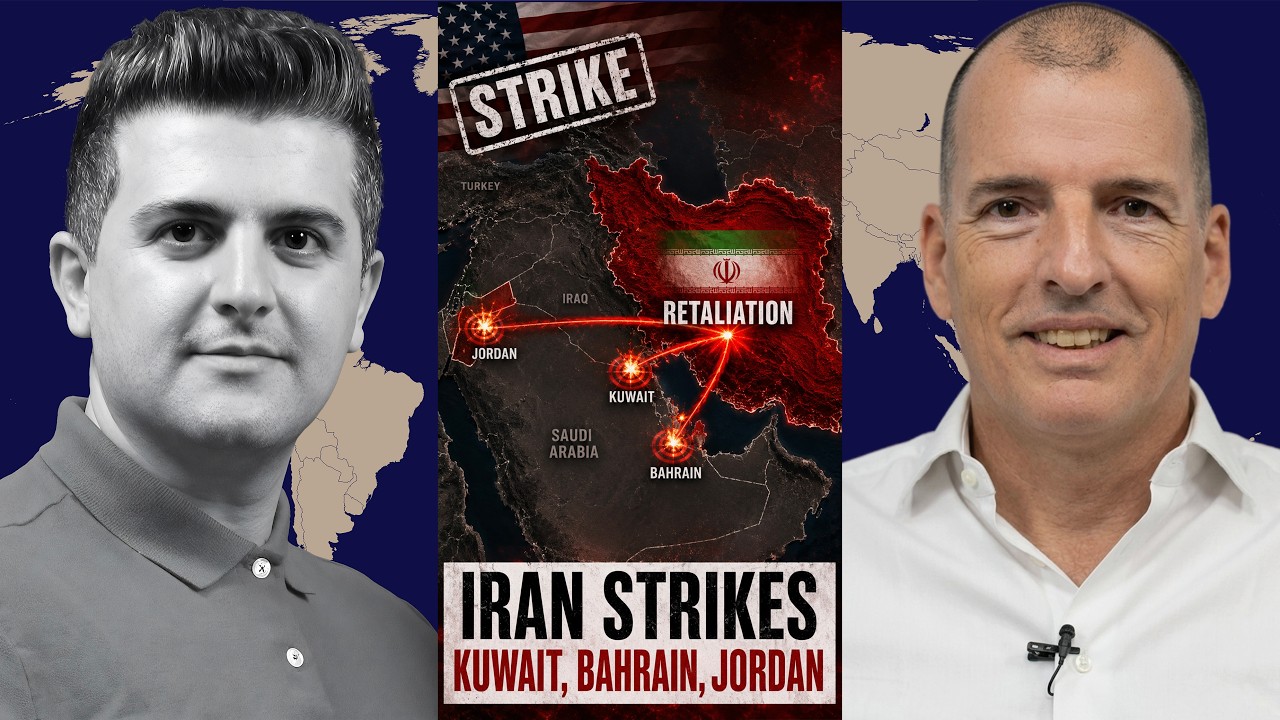
Alex Krainer: US STRIKES Iran – Iran RETALIATES Against Kuwait, Bahrain & Jordan!
"Amidst escalating US-Iran conflict and Iranian retaliation against regional US allies, this episode argues that US foreign policy is deeply controlled by an 'Anglo-Zionist conspiracy' led by the Rothschild banking dynasty, prioritizing Israeli interests over American ones."

LIVE: Trump HIDES FROM PUBLIC as US SOLDIER KILLED!!! 6/2/2026
"The host exposes alleged government cover-ups regarding military casualties, Trump's unexplained public absence, and questionable political appointments, arguing these reflect a 'regime of loser babies' and a failing foreign policy."

Iran Update: Israel’s Newest Bombing Campaign, the Oncoming War With China and How to Avoid It
"Colonel Wilerson reveals how the US and Israel are actively bombing China's strategic infrastructure in Iran, escalating a covert economic war that Beijing intends to win without direct military conflict by dismantling the dollar's global dominance."

Patrick Henningsen: Hezbollah JUST Fired Back at Israel - Iran Vows to “Crush” All Attacks
"Patrick Henningsen argues that the US and Israel initiated an illegal war against Iran, driven by Trump's incompetence and Israeli influence, leading to an inevitable escalation with severe global economic repercussions."