
PBS News Hour full episode, March 16, 2026
YouTube · J-46cQUOVBM
Quick Read
Summary
Takeaways
- ❖The Iran war has entered its third week, with Israel initiating ground operations in Lebanon and U.S. and Israeli forces continuing strikes on Iranian military and energy infrastructure.
- ❖Iran has effectively shut down the Strait of Hormuz, impacting 20% of global oil and natural gas flow, leading to Brent crude prices above $100/barrel and a significant increase in U.S. gas prices.
- ❖President Trump has sought help from U.S. allies to secure the Strait of Hormuz, but European nations have expressed no interest in deploying military assets, citing a lack of consultation and belief in the effectiveness of such action.
- ❖Ordinary Iranians describe a terrifying daily struggle for survival amidst bombings and a communications blackout, with widespread anti-government protests not materializing due to immediate survival concerns and severe repression.
- ❖Anti-Islamic rhetoric from Republican politicians has surged, drawing condemnation from civil rights advocates who highlight the dangerous scapegoating of Muslim Americans and a perceived lack of accountability from party leadership.
- ❖President Trump's top legislative priority is the 'SAVE America Act,' requiring proof of citizenship to vote, despite lacking Senate votes and concerns that such rhetoric could demotivate Republican voters.
Insights
1Israel Expands War with Ground Operations in Lebanon
Israel launched 'limited targeted ground operations' in Southern Lebanon, targeting Hezbollah infrastructure near the border. This new offensive has led to the evacuation of over one million people from southern cities, who Defense Minister Israel Katz warned would not be allowed to return soon. This marks a significant expansion of the conflict beyond direct engagements with Iran.
Israel announced yet another front in the war, a ground operation in Lebanon (). In Southern Beirut today, an Israeli bombardment... Israel launched what it called limited targeted ground operations in Lebanon's south (). The new offensive has already emptied southern cities and sparked the evacuation of more than one million people ().
2Allies Resist Trump's Call to Secure Strait of Hormuz
President Trump has approached half-a-dozen countries, including European nations, South Korea, and Japan, to help secure the Strait of Hormuz, which Iran has effectively shut off. However, European officials explicitly stated they are not interested in deploying military assets, citing a lack of consultation in the war's decision and a belief that military deployment won't resolve the issue. This highlights a significant rift in traditional alliances.
President Trump described Iran as increasingly weak, but he acknowledged that he approached half-a-dozen countries for help securing the Strait of Hormuz (). A European official goes further, telling PBS NewsHour that, while the war is ongoing, no European countries are interested in deploying military assets to help secure the Persian Gulf (). Nathalie Tocci stated, 'they have very little intention of getting dragged into a war, which they didn't participate in deciding' ().
3Iran War Drives Up Global Oil Prices and U.S. Gas Costs
The ongoing conflict has led to Brent crude prices remaining above $100 a barrel, and American gas prices are nearly $1 more expensive per gallon than a month prior. Iran is actively maintaining financial pressure through attacks on Gulf oil facilities, including a key Emirati oil export terminal and a fuel tank near Dubai International Airport. President Trump dismissed these as a 'very small price to pay' for ending decades of terror.
Shipping traffic through the critical Strait of Hormuz remains effectively shut off, and the shockwaves to the global supply chain of oil are being felt here at home with gas prices on the rise (). Brent crude prices remain above $100 a barrel, and American gas prices are nearly $1 more expensive per gallon than just one month ago (). Iran struck a key Emirati oil export terminal () and a fuel tank next to Dubai International Airport (). Trump called it a 'very small price to pay' ().
4Iranian Civilians Endure Daily Bombardment and Repression
Ordinary Iranians are experiencing intense daily bombardment, with residential buildings destroyed and a communications blackout imposed by their government. Despite hopes for widespread anti-government protests, citizens' primary focus is on survival, with families stockpiling food and fearing electricity cuts. Many feel trapped between the regime's repression and foreign bombs, expressing a desire for political change that benefits the people, not just politicians.
Ordinary Iranians share audio messages about life in the midst of the ongoing war (). 'Being bombed is a truly terrifying sound' (). 'Each morning reveals shattered husks of residential buildings across Iran's densely populated capital' (). 'The widespread anti-government protests some hoped for have not come' (). 'Their focus right now is survival' (). 'Bombs raining from the sky is not help, does not bring democracy... It only brings misery and tragedy and death and destruction' ().
5Surge in Anti-Islamic Rhetoric from Republican Politicians
Republican politicians, including Congressmen Andy Ogles and Randy Fine, and Senator Tommy Tuberville, have made public statements containing anti-Islamic rhetoric, with Fine explicitly calling for 'more Islamophobia.' Civil rights advocates and Democratic lawmakers have condemned these remarks as dangerous and bigoted, noting a lack of accountability from party leadership, contrasting it with past responses to similar rhetoric.
An increase in anti-Islamic rhetoric from Republican politicians raises concerns about religious hatred and potential violence (). Tennessee Congressman Andy Ogles posted that Muslims don't belong in American society (). Florida Congressman Randy Fine wrote, 'We need more Islamophobia, not less. Fear of Islam is rational' (). Maya Berry stated, 'the fact that it's coming from elected officials... stoking fear and putting communities and individuals at risk' ().
Bottom Line
European allies view military deployment to secure the Strait of Hormuz as ineffective and are unwilling to be drawn into a war they were not consulted on, indicating a fundamental breakdown of transatlantic trust and a shift away from automatic compliance with U.S. foreign policy.
This reluctance means the U.S. may face increased isolation in managing global crises, potentially leading to prolonged conflicts, greater economic instability due to disrupted trade routes, and a re-evaluation of NATO's collective defense mechanisms.
This situation creates an opportunity for non-Western powers or new regional alliances to step into security vacuums, or for the U.S. to re-evaluate its diplomatic strategies and alliance-building approaches to foster genuine multilateralism.
The surge in anti-Islamic rhetoric from Republican politicians is framed by an expert as a deliberate strategy to generate 'viral moments' and raise money, rather than a genuine response to security concerns, highlighting a transactional approach to political discourse.
This instrumentalization of hate speech for political gain normalizes bigotry, erodes democratic institutions, and puts targeted communities at risk of violence, while also distracting from substantive policy debates.
There is an opportunity for civil society organizations and media to expose and counter this tactic, educate the public on its dangers, and pressure political parties to enforce accountability for hateful rhetoric, thereby strengthening democratic integrity.
Lessons
- Monitor global energy markets and supply chain disruptions, particularly those related to the Strait of Hormuz, as the ongoing Iran war will continue to impact oil and gas prices.
- Engage with political discourse critically, recognizing how rhetoric, especially on sensitive social issues, can be strategically deployed for political gain (e.g., 'viral moments,' fundraising) rather than genuine policy debate.
- Support initiatives that promote interfaith understanding and combat hate speech, given the documented rise in anti-Islamic rhetoric and its potential to incite violence and erode social cohesion.
Notable Moments
Audio messages from ordinary Iranians describing the terror of daily bombings and the struggle for survival amidst a communications blackout.
This segment provides a rare and crucial human perspective on the war, circumventing government repression to reveal the profound suffering and resilience of civilians, underscoring the devastating human cost often obscured by geopolitical analysis.
The expert discussion on why European allies are unwilling to deploy military assets to secure the Strait of Hormuz, despite economic reliance on Gulf oil.
This moment highlights the deep fissures within Western alliances, revealing a breakdown of trust and a strategic divergence from U.S. foreign policy, which has significant implications for future international cooperation and burden-sharing in global security.
Quotes
"Being bombed is a truly terrifying sound. No matter how much you feel you're getting used to it, every time you hear it, it haunts you."
"This is a paper tiger that we're dealing with now. It wasn't a paper tiger two weeks ago. It's a paper tiger now."
"There's certainly, I think, a decision among some that this rhetoric is helpful. It gives them viral moments. It helps them raise money."
"Bombs raining from the sky is not help, does not bring democracy, doesn't bring regime change, doesn't bring relief. It only brings misery and tragedy and death and destruction."
"For people who are living paycheck to paycheck, this is actually a big price to pay. And this is an election that we know is going to hinge on affordability and the cost of living."
Q&A
Recent Questions
Related Episodes
Robby Soave GOES OFF On ANNOYING Liberal Black Woman Making Emotional Trump Deranged Arguments!
"The host dissects a heated foreign policy debate, arguing that 'left-wing' emotionalism and 'Trump derangement' prevent a rational understanding of US sanction strategies against Cuba and Iran."

BREAKING: Iran Threatens To END Talks; U.S. Vows Retaliation; Hezbollah Collapsing? | TBN Israel
"Iran is leveraging Hezbollah and the Strait of Hormuz to manipulate US negotiations, while Israel asserts its right to dismantle Hezbollah's eroding but still dangerous infrastructure in Lebanon, independent of international talks."
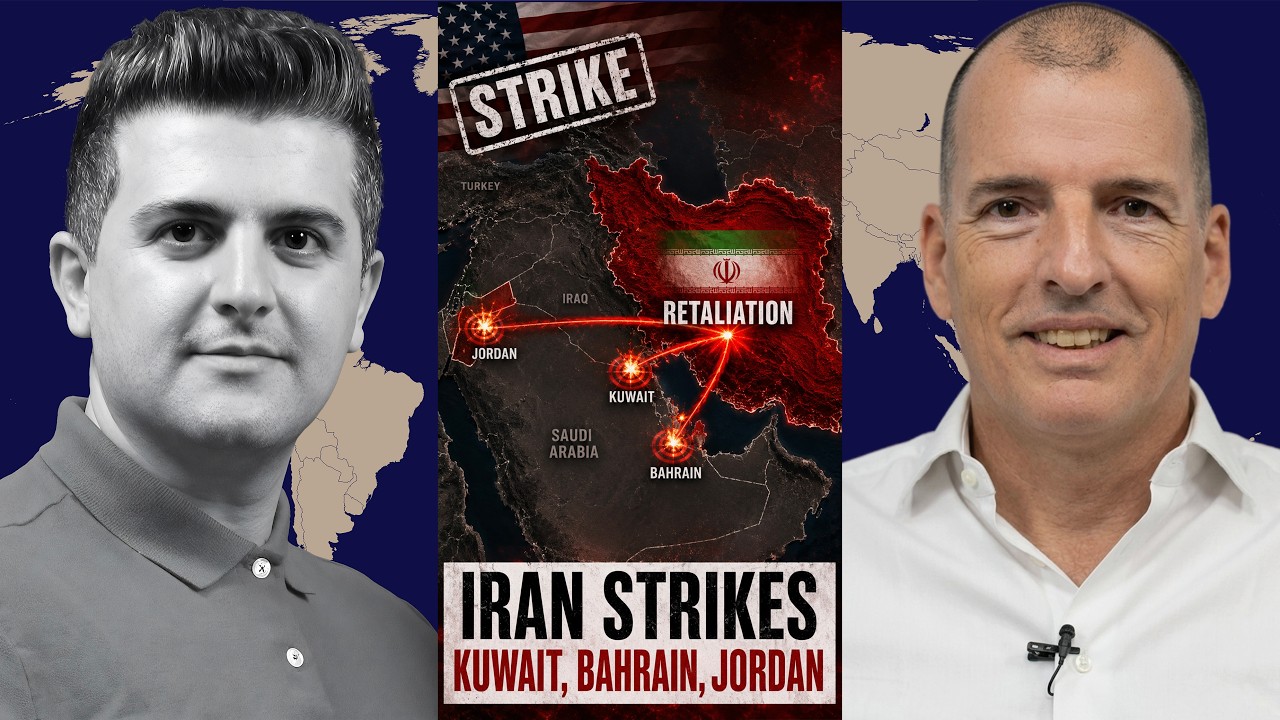
Alex Krainer: US STRIKES Iran – Iran RETALIATES Against Kuwait, Bahrain & Jordan!
"Amidst escalating US-Iran conflict and Iranian retaliation against regional US allies, this episode argues that US foreign policy is deeply controlled by an 'Anglo-Zionist conspiracy' led by the Rothschild banking dynasty, prioritizing Israeli interests over American ones."

Iran Update: Israel’s Newest Bombing Campaign, the Oncoming War With China and How to Avoid It
"Colonel Wilerson reveals how the US and Israel are actively bombing China's strategic infrastructure in Iran, escalating a covert economic war that Beijing intends to win without direct military conflict by dismantling the dollar's global dominance."