BREAKING: Explosions SHAKE Tehran; Houthis Fire Missile; IDF Strikes Hezbollah Hideout | TBN Israel
YouTube · JSRih0MP-ZM
Quick Read
Summary
Takeaways
- ❖Israel executed deep strikes into Iran, targeting air defense systems, surface-to-surface missile launchers, and petrochemical complexes linked to missile production.
- ❖Iran launched 22-24 ballistic missiles towards Israel, all reportedly intercepted, in response to an Israeli strike on a Hezbollah stronghold in Beirut.
- ❖The IDF views the current escalation as a direct continuation of 'Operation Roar of the Lion,' not a new conflict, emphasizing pre-planned responses.
- ❖Iran's 'end of operations' announcement is interpreted by Israel as a face-saving retreat after suffering significant damage and humiliation.
- ❖The Houthis in Yemen announced a renewed maritime blockade, threatening Israeli vessels in the Red Sea and impacting global trade through Babel Mandab.
- ❖The United States assisted Israel in defense but is actively pressing for de-escalation, creating a dilemma for Israel regarding its freedom of action versus US alliance.
Insights
1Israel's Shift to Direct Retaliation Against Iran
Israel has moved away from its pre-October 7th, 2023, policy of containing attacks, now directly retaliating against Iranian territory if attacked. This was demonstrated by wide-ranging Israeli Air Force strikes deep inside Iran following Iranian ballistic missile launches.
Mati Shashani states, 'Israel has said publicly in words and in action to Iran, if you get your nose in our business, we will retaliate.' The IDF launched 'a wide wave of strikes inside Iran' after Iranian missile attacks.
2Targeting Iran's Strategic Defensive and Missile Production Capabilities
Israeli strikes focused on dismantling Iran's air defense systems, detection arrays, radars, and batteries that had been redeployed. Crucially, they also targeted a petrochemical complex in Mashahar, identified as producing essential raw materials for Iran's ballistic missile program, blending economic and military objectives.
The IDF spokesperson stated that 'dozens of air force fighter jets... completed a wide strike... against strategic defensive systems of the Iranian terror regime.' The Mashahar complex 'produced raw materials used by the armed forces of the Iranian regime for the production and the export of weapons' and 'essential components for developing ballistic missiles.'
3Iran's 'End of Operations' as a Face-Saving Retreat
Iran's announcement to unilaterally cease operations against Israel is interpreted by the hosts as an attempt to 'fall with dignity' after suffering significant military humiliation and damage from Israeli strikes, rather than a genuine strategic decision to de-escalate.
The host states, 'Suddenly comes the Iranian announcement. The operations against Israel have ended. Not victory, not a decisive outcome, not a picture of achievement, a dry announcement, almost panicked with a threat attached at the end.' Mati Shashani adds, 'Iran already announces on their official outlets that the war has ended. Very interesting development.'
4US Pressure and Israel's Diplomatic Dilemma
While the US provided defensive assistance, President Trump actively called for an immediate cessation of hostilities, putting significant pressure on Israel. This creates a dilemma for Israel: maintaining its freedom of action to strike Iran versus preserving crucial American diplomatic and defense support.
The host notes, 'Coordination is at a high level with the United States... The United States assisted in interceptions... but that doesn't mean that they were happy. Trump is trying to stop the file.' A source familiar with the Trump-Netanyahu call indicated Netanyahu was 'considering stopping the next strikes.'
Bottom Line
Iran's deep commitment to Hezbollah, once a strength, is now a strategic vulnerability, forcing Iran to directly intervene and expose its own assets when Hezbollah is targeted.
This shift allows Israel to apply pressure directly on Iran by striking Hezbollah assets in Lebanon, effectively making Hezbollah's strongholds 'Iranian assets' in the eyes of Tehran, and thus legitimate targets for Iranian retaliation, which Israel then counters directly against Iran.
For regional actors seeking to counter Iranian influence, targeting Iranian proxies in a way that forces direct Iranian response could expose Iran's overextension and internal vulnerabilities, potentially straining its resources and political will.
Key Concepts
The 'Equation' of Deterrence
This model describes the reciprocal actions and reactions between Israel and Iran/its proxies. Iran attempts to establish an 'equation' where Israeli actions in Lebanon trigger Iranian retaliation against Israel, and vice-versa. Israel's strategy is to 'break the equation by force,' ensuring its freedom of action and imposing a cost on Iran for its proxy activities, rather than allowing Iran to dictate terms.
Financial Attrition Warfare
Beyond military engagement, Israel and the US are actively targeting the financial capabilities of the Iranian Revolutionary Guard Corps (IRGC). This involves striking key economic infrastructure, such as petrochemical facilities, that generate revenue for the IRGC, aiming to impose a significant financial 'price tag' on Iranian aggression and undermine its ability to fund proxies.
Lessons
- Monitor the Strait of Babel Mandab and the Strait of Hormuz for renewed Houthi and Iranian threats to maritime trade, as these choke points are critical global economic pressure levers.
- Analyze statements from both Israeli and Iranian leadership carefully, recognizing that official announcements may serve diplomatic or propaganda purposes rather than reflecting the full strategic reality.
- Observe the interplay between US diplomatic pressure and Israeli military actions to understand the evolving dynamics of alliances and independent national security interests in the Middle East.
Quotes
"If you get your nose in our business, we will retaliate."
"Iran is trying to sell the world a retreat as a position of strength. But in the Middle East, everyone understands when Iran announces that it has finished exactly after it takes a hit, that's not power. That's the way to run away without saying that you ran away."
"We're fighting a war of financial attrition, not just a military war. Israel and specifically the United States is going after the financial abilities of the Iranian Revolutionary Guard."
Q&A
Recent Questions
Related Episodes
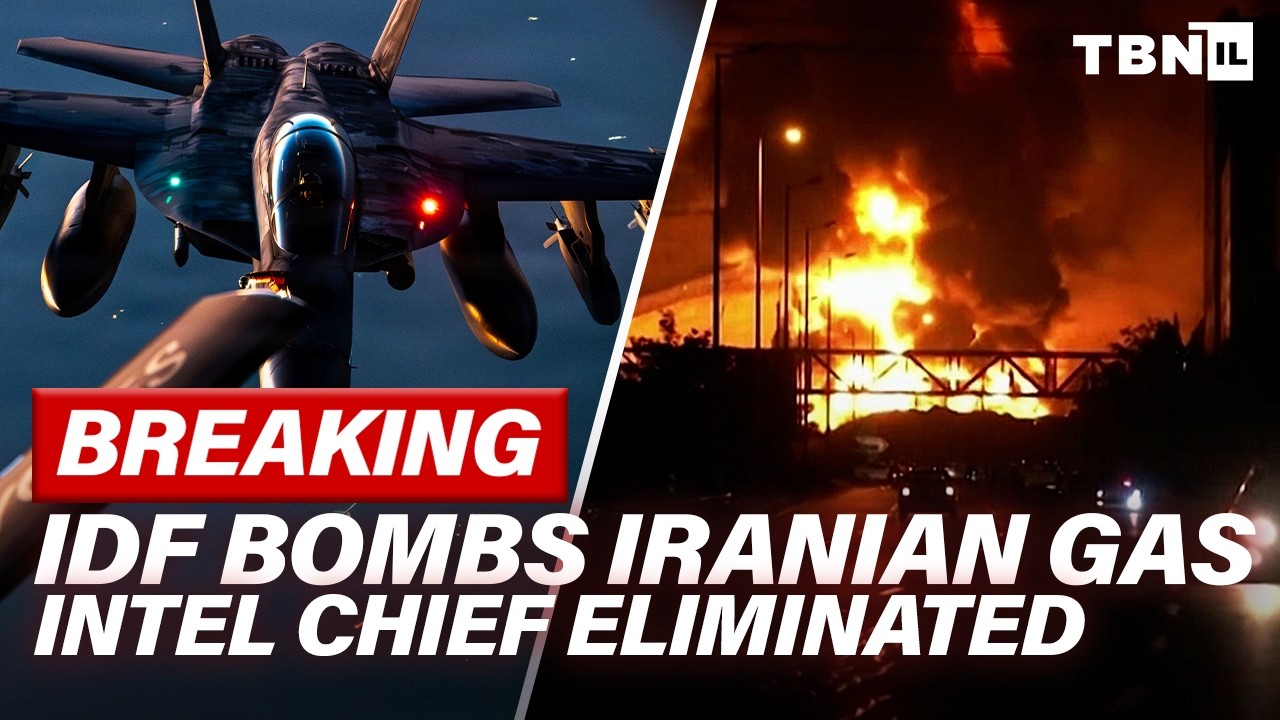
BREAKING: Israel BOMBS Major Iran Gas Site; Top Mullah ELIMINATED; Iran Vows VENGEACE | TBN Israel
"Israel and the United States have escalated their 'Roaring Lion War' against Iran, striking its largest gas facilities, eliminating key intelligence and military figures, and disrupting missile production, while Iran threatens a broader energy war in the Gulf."

BREAKING: Iran Threatens To END Talks; U.S. Vows Retaliation; Hezbollah Collapsing? | TBN Israel
"Iran is leveraging Hezbollah and the Strait of Hormuz to manipulate US negotiations, while Israel asserts its right to dismantle Hezbollah's eroding but still dangerous infrastructure in Lebanon, independent of international talks."

Iran Update: Israel’s Newest Bombing Campaign, the Oncoming War With China and How to Avoid It
"Colonel Wilerson reveals how the US and Israel are actively bombing China's strategic infrastructure in Iran, escalating a covert economic war that Beijing intends to win without direct military conflict by dismantling the dollar's global dominance."

Patrick Henningsen: Hezbollah JUST Fired Back at Israel - Iran Vows to “Crush” All Attacks
"Patrick Henningsen argues that the US and Israel initiated an illegal war against Iran, driven by Trump's incompetence and Israeli influence, leading to an inevitable escalation with severe global economic repercussions."