Joe Rogan Experience #2474 - Dave Smith
YouTube · JUePtc0bJSE
Quick Read
Summary
Takeaways
- ❖Howard Lutnick's firm, Cantor Fitzgerald, was accused of exploring profit from tariff refund rights while he was in administration, though the firm denies executing trades.
- ❖Dave Smith criticizes US foreign policy in the Middle East, arguing it creates more enemies and is driven by interests like Israel's 'Greater Israel project'.
- ❖The US immigration system allegedly allows individuals directly affiliated with terrorist organizations to apply for asylum, preventing immediate deportation.
- ❖The UFC's move to Paramount+ is seen as a smart business strategy to convert pay-per-view buyers into loyal streaming subscribers, despite initial concerns about devaluing content.
- ❖The hosts express strong disapproval of political tribalism, arguing that group adherence compromises individual critical thinking and honesty.
Insights
1Allegations of Political Corruption and Conflicts of Interest
The hosts discuss accusations against Howard Lutnick, former head of Cantor Fitzgerald and a government official, for allegedly exploring a business venture to profit from tariff refund rights, which would become valuable if Trump's tariffs were overturned. While Cantor Fitzgerald denied executing these trades, the discussion highlights perceived conflicts of interest within government. Additionally, Lutnick's alleged downplaying of his association with Jeffrey Epstein is cited as an example of public figures fabricating narratives.
, ,
2Critique of US Foreign Policy and the Israel-Iran Conflict
Dave Smith argues that US foreign policy, particularly regarding the Israel-Iran conflict, is heavily influenced by external interests, specifically the Israeli lobby. He contends that the US is being 'lied into war' with Iran, despite public opposition and a lack of clear justification, and that such interventions destabilize regions and create more enemies. He points to Trump's shifting justifications for military action and the lack of a clear 'off-ramp' from the conflict.
, ,
3Concerns over Immigration and National Security
The discussion highlights concerns about the number of undocumented immigrants in the US, citing Anne Coulter's book 'Adios America' which estimated 30-50 million before the Biden administration. A significant national security concern is raised regarding individuals directly affiliated with terrorist organizations applying for asylum, which legally prevents their deportation until the lengthy asylum process is complete, potentially allowing sleeper cells to operate within the country.
,
4The Decline of Corporate Media and Rise of Podcast Authenticity
Rogan and Smith assert that corporate media has lost its power and influence, with audiences migrating to podcasts for news and debate. They criticize corporate media's attempts to mimic podcast formats as inauthentic, emphasizing that the success of podcasts like Rogan's stems from the hosts' genuine and unscripted personalities, a quality they believe traditional media figures cannot replicate due to their ingrained practices of reading teleprompters and adhering to executive oversight.
,
5MMA Weight Class 'Silliness' and Dangerous Weight Cuts
The hosts criticize the current MMA weight class system, calling the names 'silly' because they are borrowed from boxing but represent different weights (e.g., UFC lightweight is 155 lbs, boxing lightweight is 135 lbs). They advocate for more weight classes (e.g., every 10 lbs) to reduce extreme and dangerous weight cuts, which they argue compromise fighter health and performance, making competition about who can dehydrate best rather than who is the superior fighter.
,
Bottom Line
The US government's asylum process inadvertently shields individuals directly affiliated with terrorist organizations, allowing them to remain in the country for extended periods while their cases are processed.
This creates a significant national security vulnerability, as known threats cannot be immediately removed, potentially enabling hostile actors to establish themselves within the US.
A critical review and reform of asylum laws could address this loophole, balancing humanitarian concerns with national security imperatives, potentially through expedited review processes for individuals with verified terror affiliations.
Corporate media's attempts to replicate the podcast format by adopting visual aesthetics (like microphones) fundamentally miss the core reason for podcast success: authenticity and unscripted conversation.
This indicates a deep misunderstanding by traditional media of audience preferences and the underlying factors driving their own decline, reinforcing public perception of their inauthenticity.
Independent content creators and alternative media platforms continue to gain market share by prioritizing genuine dialogue and diverse perspectives, capitalizing on the trust deficit of mainstream outlets.
Opportunities
Paramount+ UFC Streaming Model
Paramount+ secured a deal to offer all UFC pay-per-view events as part of its monthly subscription. This strategy aims to convert existing loyal pay-per-view buyers (who pay ~$70 per event) into long-term subscribers (paying ~$14/month), significantly increasing the streaming service's subscriber base and providing a more affordable, consistent viewing option for fans.
Key Concepts
Suicidal Empathy
A concept by Gad Saad, described as an excessive or misplaced empathy that leads to actions detrimental to one's own society, such as allowing individuals affiliated with terrorist organizations to remain in the country under asylum rules.
Homicidal Empathy
A counter-concept suggested by Keith Knight, implying that while avoiding 'suicidal empathy,' one should also avoid an empathy that justifies or ignores the harm inflicted on others through foreign policy or military actions.
Escalation Dominance
A military strategy where one side possesses the capability to respond to any escalation by an adversary with a more powerful counter-escalation, effectively controlling the conflict's trajectory. Dave Smith argues the US lacks this against Iran.
Lessons
- Question official narratives, especially those preceding military conflicts, as they are often influenced by political agendas and external pressures.
- Seek information from diverse, independent sources, recognizing that traditional media may prioritize institutional narratives over authentic reporting.
- Be wary of political tribalism and groupthink, as adherence to a 'team' can compromise critical thinking and lead to support for indefensible positions.
Notable Moments
Discussion of a Waymo self-driving car incident in San Francisco where tech employees were trapped inside while a homeless man attacked the vehicle, yelling about 'paying robots'.
This anecdote highlights the social friction and unexpected challenges arising from advanced technology interacting with complex urban social issues, particularly economic displacement and public resentment towards automation.
Concerns about an upcoming UFC fight event scheduled at the White House, specifically regarding the potential for extreme heat and humidity in Washington D.C. in June.
This raises questions about fighter safety and performance, as radical environmental conditions could significantly impact the outcome of high-stakes championship bouts and compromise the integrity of the sport.
Quotes
"It's like, look, if you're, you know, if you came here illegally, then that's a crime. You're here illegally. That's the law. And hey, I get that argument. But also, the supreme law of the land is the Constitution of the United States of America."
"Suicidal empathy. That's what Gad Sad calls it, you know, and I think he's right."
"We are taught, for example, to regard Gaddafi in a certain way. Okay. But if you look into what happened in his country while he was the leader, you look into the fact that every person is given a house at a certain age. You look at the fact that everybody's education and health care is free. You look at if somebody showed a particular talent for something that required further education overseas, all of the costs that were paid for by the government. Now, these are all things put in place by the same country's leader that we're told is evil and corrupt."
"It's like your friend that like you've been friends with since high school and every time you go out he gets you in a fight. Like dude, don't do this. Like those guys over there are a [__] problem. Let's go over there and [__] them up. And like you know all your buddies are like dude guy again."
"You already know. You're, you know, like you already know who he is. He's that guy and then offstage he's that guy. You know what I mean? Like that's who he is. And people like that."
Q&A
Recent Questions
Related Episodes

Alex Krainer: US STRIKES Iran – Iran RETALIATES Against Kuwait, Bahrain & Jordan!
"Amidst escalating US-Iran conflict and Iranian retaliation against regional US allies, this episode argues that US foreign policy is deeply controlled by an 'Anglo-Zionist conspiracy' led by the Rothschild banking dynasty, prioritizing Israeli interests over American ones."

Trump Just ENDED JD Vance’s White House Dreams
"A New York Times article and internal White House dynamics reveal Donald Trump's deep dissatisfaction with J.D. Vance, potentially ending Vance's 2028 presidential ambitions and highlighting a broader struggle for control within the Republican Party."

🚨 TOTAL F*CKING CHECKMATE 😂😂😂
"The host argues that Trump's 'ceasefire' with Iran was a calculated '5D chess' move to orchestrate a global energy market reshuffle, while simultaneously lambasting 'woke' domestic policies and the 'freefall' of anti-Trump conservative figures."
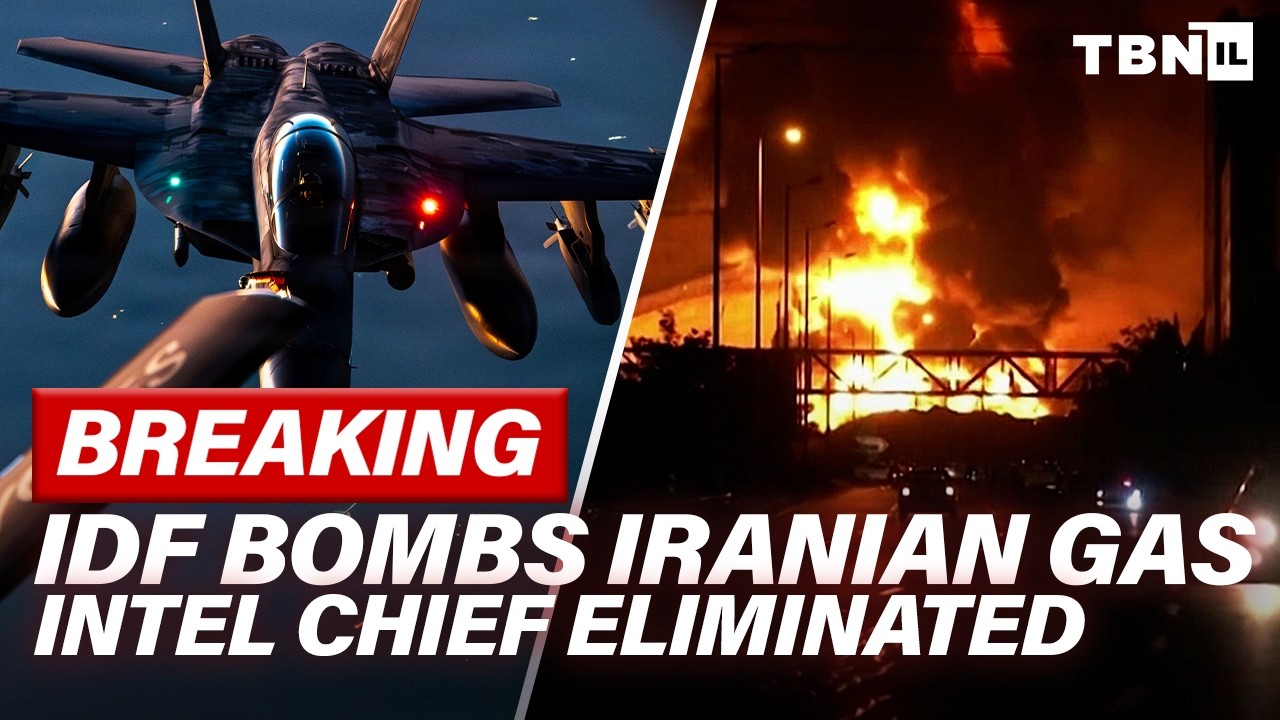
BREAKING: Israel BOMBS Major Iran Gas Site; Top Mullah ELIMINATED; Iran Vows VENGEACE | TBN Israel
"Israel and the United States have escalated their 'Roaring Lion War' against Iran, striking its largest gas facilities, eliminating key intelligence and military figures, and disrupting missile production, while Iran threatens a broader energy war in the Gulf."