
Joe Rogan Experience #2470 - Pierre Poilievre
YouTube · JtbGgSwuE_U
Quick Read
Summary
Takeaways
- ❖Pierre Poilievre's entry into politics was sparked by a wrestling injury and a sense of 'Western alienation' in Calgary, leading him to advocate for individual freedom.
- ❖Canada's parliamentary system features a 'loyal opposition' designed to rigorously challenge the government, acting out of loyalty to the people.
- ❖Poilievre proposes 'unblocking' Canada's natural resources (oil, uranium, potash, natural gas, defense minerals) through fast permitting and low taxes to create jobs and strategic stockpiles.
- ❖He argues that inflation is a 'fraud perpetrated on the working class' by excessive money printing, which devalues currency and makes essential goods unaffordable.
- ❖Poilievre criticizes Canada's assisted suicide (MAID) program for potentially being offered to those with only mental illness or seasonal depression, advocating for hope and treatment instead.
- ❖He supports a 'pay-as-you-go' law, similar to Bill Clinton's 1990s policy, requiring new spending to be matched by savings to curb deficits and inflation.
- ❖Poilievre highlights the success of First Nations in entrepreneurial development, citing the Squamish Nation's housing project and Heisla's LNG plant, as models for efficient resource development.
- ❖He advocates for a tougher justice system, particularly on repeat offenders, citing instances of individuals with hundreds of convictions being quickly released.
- ❖Both Poilievre and Rogan emphasize the importance of eating real, unprocessed foods and engaging in physical activity to combat chronic illness and improve mental health.
- ❖Poilievre calls for massive investment in abstinence-based treatment and recovery programs for the opioid crisis, noting the success of incorporating physical exercise into recovery.
Insights
1Kettlebell History and Functional Fitness
Pierre Poilievre, a self-proclaimed 'kettlebell freak,' shares the history of kettlebells, explaining they originated in Russia as counterweights at farmer's markets. Farmers would use them for strength displays, leading the Russian and later Soviet army to adopt them for training. He argues kettlebells are superior to dumbbells for developing explosive power, crucial for real-life situations like fighting or lifting heavy objects, due to their 'catapult effect.'
Poilievre recounts the accidental design of kettlebells from farmer's market counterweights and their subsequent adoption by the military, emphasizing their functional benefits over dumbbells. (, )
2Path to Politics: Injury, Western Alienation, and Freedom Philosophy
Poilievre's political career began unexpectedly after a severe shoulder tendinitis ended his athletic pursuits in wrestling during his mid-teens. Bored, he joined local conservative meetings, driven by a belief that 'normal, hardworking people' in Western Canada were being 'screwed over' by a distant national government. He developed a philosophy based on maximizing personal financial and religious freedom, animated by readings from figures like Milton Friedman.
Poilievre states, 'tendinitis got you into politics? Yeah, that's what it was. I just couldn't get rid of it.' He describes growing up in Calgary with the impression that 'the government didn't listen to people like them' and his subsequent immersion in political philosophy. (, , )
3Critique of Canada's Assisted Suicide (MAID) Policy
Poilievre expresses concern over Canada's Medical Assistance in Dying (MAID) program, particularly the suggestion of offering it to minors or individuals whose sole condition is mental illness. While acknowledging individual choice in terminal cases, he argues the system should prioritize giving people hope, promoting fitness, and instilling a sense of meaning, rather than presenting MAID as an 'automatic path.' He highlights a case of a young person receiving MAID for seasonal depression.
Poilievre states, 'the concern we have is the suggestion that it would be offered to kids or offered to people whose only condition is mental illness.' He mentions a case of MAID for seasonal depression and advocates for 'more to give people hope when they're suffering with mental illness.' (, , )
4Canadian Parliamentary System vs. US Republic
Poilievre explains the fundamental difference between the Canadian parliamentary system (based on the British model) and the US republican system. In Canada, the 'loyal opposition' actively challenges the government out of loyalty to the people, with debates occurring multiple times a week in the House of Commons. This system is designed to constrain government power and ensure accountability.
Poilievre recounts an interaction with Joe Biden, who questioned the term 'loyal opposition.' He explains, 'in our system the opposition is an act of loyalty... the opposition is to prosecute the hell out of the government.' (, )
5Unlocking Canada's Resource Potential
Poilievre's primary policy goal is to 'unblock' Canada's vast natural resources, which include the fourth-largest oil supply, top uranium and potash reserves, and significant natural gas. He proposes implementing the 'fastest permits anywhere in the world' and the 'lowest taxes' on production to create high-paying jobs, build strategic stockpiles, and enhance Canada's international leverage. He cites the example of Hardesty, a town of 600 managing $100 billion in oil with one-week, one-page permits.
Poilievre states, 'I would unblock our resources... We need to have the fastest permits anywhere in the world and the lowest taxes on producing those resources.' He lists Canada's resource wealth and the Hardesty example. (, )
6Inflation as a 'Fraud' and the Need for Fiscal Discipline
Poilievre frames inflation as the 'biggest fraud perpetrated on the working-class people in the last hundred years,' directly attributing it to excessive government money printing. He uses the '10 apples and $10' analogy to explain how increasing money supply without corresponding goods devalues currency. He argues that this wealth transfer benefits 'have yachts' (elites) at the expense of working people, making homes and food unaffordable.
Poilievre asserts, 'This is the biggest fraud perpetrated on the workingclass people in the last hundred years.' He explains the apple analogy and the disproportionate growth of money supply versus homes in America. (, , )
7Proposed Solution: 'Pay-As-You-Go' (PAYGO) Law
To combat inflation and national debt, Poilievre advocates for a 'pay-as-you-go' (PAYGO) law, inspired by Bill Clinton's policy in the 1990s. This law would require any new government spending to be matched by an equivalent amount of savings, forcing politicians and bureaucrats to internalize scarcity and seek out waste, rather than simply printing or borrowing money. He points to Switzerland's low inflation and balanced budgets as a model.
Poilievre details the PAYGO law, stating, 'Every time the administration wanted to bring in a new dollar of spending, they had to match it with a dollar of savings.' He cites Clinton's success and Switzerland as an example of fiscal discipline. (, , )
8Combating the Opioid Crisis with Treatment and Recovery
Poilievre highlights the devastating impact of the opioid crisis, noting that Canada lost more people to overdoses in 10 years than in WWII. He condemns pharmaceutical companies for their role in promoting addiction and calls for massive investment in abstinence-based treatment and recovery programs. He emphasizes the importance of counseling, group therapy, and physical exercise in helping individuals reclaim their lives, citing success stories from treatment centers.
Poilievre states, 'We lost more people in the last 10 years to opioid overdoses than we lost fighting in the Second World War.' He discusses the need for 'massive treatment and recovery programs to get people off drugs. Abstinence-based treatment is incredible.' (, )
Bottom Line
The Canadian 'loyal opposition' system, where opposition parties are expected to rigorously challenge the government out of loyalty to the nation, is a unique constitutional concept not readily understood in a US republican context.
This structural difference implies a more adversarial yet institutionally recognized role for opposition in Canada, potentially leading to different dynamics in policy debate and government accountability compared to the US system.
Understanding this dynamic is crucial for international observers and could inform discussions about strengthening democratic checks and balances in other nations with similar parliamentary structures.
First Nations communities in Canada are demonstrating significant entrepreneurial success in housing and resource development by bypassing federal bureaucracy, achieving rapid project completion and economic uplift.
This challenges the perception of Indigenous communities as solely reliant on government aid and highlights their capacity for self-governance and economic innovation when empowered to control their land and resources.
Governments could learn from these Indigenous-led models to streamline permitting and foster economic development more broadly, potentially unlocking significant national growth and improving Indigenous self-determination.
The historical origin of kettlebells as farmer's market counterweights, later adopted by the military, reveals how functional tools for daily life can accidentally become highly effective fitness equipment.
This insight suggests that innovation in fitness or other fields might be found by observing existing tools or practices in unexpected contexts, rather than solely through dedicated R&D.
Entrepreneurs could explore 'accidental' functional tools from history or other cultures for modern applications, potentially uncovering overlooked market opportunities in fitness, health, or other industries.
Ibogaine, a natural psychedelic from the Tabernanthe iboga tree, is being explored in Texas as a highly effective, non-recreational treatment for opioid addiction, with reported success rates in the 80-90% range after one or two sessions.
This presents a potentially revolutionary approach to the opioid crisis, offering a 'factory reset' for the brain's addiction pathways, far surpassing traditional therapies in efficacy.
Further research, clinical trials, and policy advocacy for Ibogaine could transform addiction treatment globally, saving countless lives and reducing the societal burden of opioid dependency. Investment in safe, supervised treatment centers could be a significant social and business venture.
Opportunities
Rapid Permitting & Resource Development Consulting
A consulting firm specializing in navigating and streamlining permitting processes for natural resource projects in Canada, drawing inspiration from efficient First Nations models and the Hardesty municipality. Focus on achieving 'fastest permits anywhere in the world' for oil, uranium, potash, natural gas, and defense minerals.
Abstinence-Based Opioid Recovery Centers (with integrated fitness)
Establish and operate comprehensive abstinence-based opioid treatment and recovery centers in Canada, incorporating counseling, group therapy, and significant physical exercise components, including weightlifting and outdoor activities, to aid in physical and mental recovery.
Ibogaine Addiction Treatment Clinics
Develop and operate specialized clinics offering Ibogaine treatment for opioid addiction, potentially in regions where it is legally approved (e.g., Texas, Mexico), with a focus on veterans and those struggling with severe dependency. Emphasize the 'factory reset' effect and high success rates.
Canadian Maple Syrup & Superfood Products
Market and export premium, authentic Canadian maple syrup, positioning it as a natural superfood with health benefits (lower calories, more minerals than honey). Develop a line of related health products or recipes incorporating real maple syrup.
Key Concepts
Internalizing Scarcity
The principle that all entities, except politicians, must operate within limits of scarce resources. Poilievre advocates for imposing this scarcity on politicians and bureaucrats by requiring new spending to be offset by equivalent savings, forcing them to identify waste.
Simplicity in Governance
The idea that effective government should be simple, clear, and easy to manage, focusing on core functions like roads, military, and basic safety nets, and then leaving people alone to live their lives. This contrasts with complex, overreaching bureaucracy.
Lessons
- Prioritize eating 'real food'—unprocessed meats, vegetables, fruits, and healthy fats—to improve overall health and combat chronic illness, avoiding foods with long shelf lives and artificial ingredients.
- Integrate consistent physical activity into your daily routine, even simple acts like walking for 20 minutes after meals, to boost mood, physical health, and a sense of control over your life.
- Educate yourself on economic principles, particularly how government spending and money printing contribute to inflation, to better understand its impact on personal finances and advocate for fiscal responsibility.
- Support policies that reduce bureaucratic hurdles and taxes on productive industries, as this can lead to job creation, lower costs for goods, and overall economic growth.
Poilievre's Playbook for Canadian Economic Revival
**Unblock Resources**: Eliminate restrictive laws and implement the fastest permitting processes globally for oil, gas, uranium, potash, and defense minerals, coupled with lowest production taxes.
**Curb Inflation**: Implement a 'pay-as-you-go' (PAYGO) law, requiring all new government spending to be matched by equivalent savings, and cut wasteful spending on bureaucracy, consultants, and corporate welfare.
**Expand Home Ownership**: Reduce government gatekeepers, speed up housing permits, free up land, and cut development taxes to make homes affordable for young Canadians.
**Strengthen Justice System**: Toughen bail laws and impose severe restrictions on repeat criminal offenders to reduce crime rates and enhance public safety.
**Invest in Recovery**: Redirect resources towards massive abstinence-based treatment and recovery programs for the opioid crisis, incorporating physical fitness and counseling to save lives.
Notable Moments
Pierre Poilievre presents Joe Rogan with a custom-made 70-pound kettlebell featuring Canadian symbols and Rogan's favorite quotes, as a 'subliminal message' to encourage him to visit Canada.
This unique gift serves as a memorable opening, immediately establishing a personal connection and highlighting Canadian hospitality, while also setting a tone for discussions on fitness and national pride.
Poilievre recounts his viral 'apple' video, where he calmly ate an apple while debating a reporter, unknowingly creating a powerful visual of 'rational thinking meeting empty narratives.'
The story illustrates Poilievre's perceived authenticity and composure under pressure, reinforcing his public image as a grounded and logical leader, which resonated widely with audiences.
Quotes
"Tendinitis got you into politics? Yeah, that's what it was. I just couldn't get rid of it."
"If you know the way broadly, you will see it in everything."
"This is the biggest fraud perpetrated on the working-class people in the last hundred years."
"If you cannot trust a man to govern himself, how can you trust him to govern for others?"
"My legacy is just to let other people build their legacies in their own lives."
Q&A
Recent Questions
Related Episodes

Republicans Don't Even Pretend to Care About Debt (w/ Jessica Riedl) | Mona Charen Show
"Both Republican and Democratic parties have abandoned fiscal responsibility, leading the U.S. towards an inevitable debt crisis exacerbated by demographic shifts and ineffective policy approaches."

Casey Putsch Takes On Vivek Ramaswamy & ENTIRE GOP ESTABLISHMENT In OH Gov Race!
"Ohio gubernatorial candidate Casey Putsch fiercely challenges Vivek Ramaswamy and the GOP establishment, accusing them of being out of touch, beholden to corporate interests, and actively undermining the American dream through detrimental policies on education, housing, and immigration."
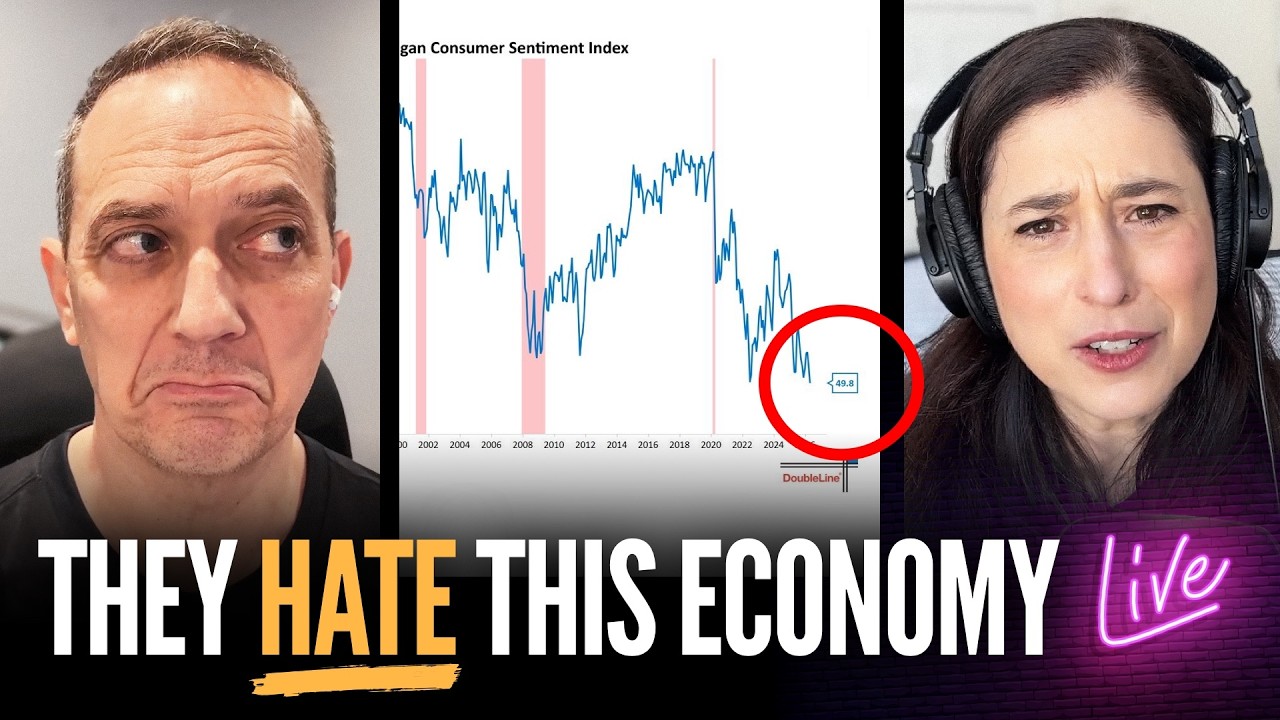
BREAKING: Worst Consumer Sentiment in History; DOJ Drops Criminal Probe of Chair Powell | Receipts
"This episode dissects the political weaponization of the Department of Justice against the Federal Reserve Chair and the partisan distortion of consumer confidence data, highlighting the erosion of independent institutions and free markets."

SHOCK BREAKING: SHOCKED TRUMP STORMS OUT OF SUPREME COURT IN RAGE!
"This episode dissects Donald Trump's contentious Supreme Court appearance regarding birthright citizenship, the growing disillusionment of right-wing figures like Alex Jones with Trump, and the political fallout from Kristi Noem's husband's alleged cross-dressing scandal."