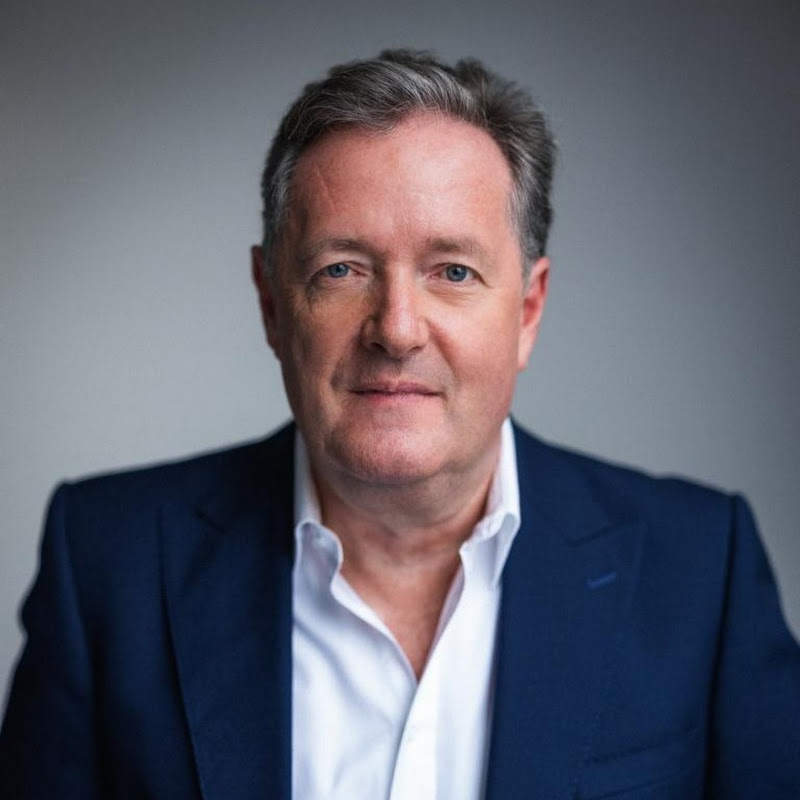
“Destined To COLLAPSE!” Trump’s Iran War Deal Angers Israel
YouTube · JtlyEYE-gfs
Quick Read
Summary
Takeaways
- ❖The Trump administration's Iran deal is framed by critics as a 'massive loss' for the US and Israel, potentially worse than the Obama-era JCPOA.
- ❖The deal is seen as failing to achieve regime change in Iran, instead replacing an older Ayatollah with a younger, more militant one.
- ❖The Strait of Hormuz, previously open, is now controlled by Iran, contributing to global economic instability and rising gas prices.
- ❖Israeli officials, including Naftali Bennett and hard-right ministers, openly state Israel's intention to continue military action against Iran and Hezbollah, irrespective of the US deal.
- ❖The 'octopus doctrine' suggests focusing on the head (Iran) rather than its 'tentacles' (proxies) to accelerate the regime's collapse through non-military means like providing Starlink to protestors.
- ❖Some analysts argue Trump's motivation for the deal is primarily political and economic, aiming to end an unpopular war before midterm elections.
- ❖The US decision to pursue a deal is seen by some as a sign of weakness, causing allies to seek partnerships with countries like China.
- ❖The deal's success hinges on Iran giving up enriched uranium and guaranteeing no nuclear weapons, which remains highly skeptical given Iran's history of obfuscation.
Insights
1Trump's Deal: A 'Massive Loss' for US and Israel
Wajahat Ali contends that the new Iran deal is significantly worse than the Obama-era JCPOA, representing a major setback for the US and Israel. He argues that the war led to the replacement of an older Khomeini with a younger, more militant one, the closure of the Strait of Hormuz, and a stronger, more assertive Iran. He also highlights the financial concessions, claiming Trump will provide $300 billion to Iran and release frozen assets, while the US has lost allied trust.
Wajahat Ali's direct statement: 'It is far, far worse. It is a massive loss for President Trump, the United States, and Benjamin Netanyahu.' He cites the replacement of Khomeini, closure of the Strait of Hormuz, and alleged $300 billion aid package. He also mentions 4,000 Iranian and Lebanese deaths and Israel's occupation of Lebanon.
2Israel's Unilateral Stance on Iran Conflict
Despite the US-Iran deal, Israeli officials, including former Prime Minister Naftali Bennett and hard-right ministers like Ben-Gvir and Smotrich, assert Israel's sovereign right to continue its fight against Iran and Hezbollah. They view the deal as not binding on Israel and emphasize their duty to protect Israeli citizens and Jewish people, suggesting a potential divergence in strategy between the US and Israel.
Naftali Bennett: 'Surely every country has a right to self-defense, and so does Israel.' He also states, 'I'm going to be your worst nightmare ever. I won't relent until we free your people, ensure you don't have a nuclear weapon.' Piers Morgan quotes Ben-Gvir: 'Trump's agreement does not bind us. Israel is not subject to United States and we are an independent and sovereign nation.'
3Economic Imperatives Driving US Deal-Making
Piers Morgan and panelists suggest that Donald Trump's urgent desire for an Iran deal is driven by political and economic pressures, particularly the upcoming midterm elections and the severe global economic damage caused by the war, including high gas prices and supply chain disruptions. The deal is seen as a means to quickly exit the conflict, even if its terms are perceived as unfavorable.
Piers Morgan: 'Donald Trump has a political and economic imperative to stop this war. He just knows it's getting more and more damaging to him politically and to the Republicans with the midterms coming and economically it just isn't sustainable to keep doing this.' Wajahat Ali mentions gas prices up to $4.50-$5 and energy/food shortages.
4Iran's Regime Stability vs. Internal Collapse
There's a significant disagreement on the stability of the Iranian regime. Naftali Bennett and Goldie Ghamari argue the regime is corrupt, incompetent, and 'destined to collapse,' with Ghamari claiming internal footage shows dissent. Conversely, Wajahat Ali and Professor Mohammad Marandi assert the regime remains totalitarian, has strengthened, and maintains popular legitimacy, with no significant popular uprising occurring despite the war.
Naftali Bennett: 'Iran is very similar to the Soviet Union of the '80s. It's a very disconnected, corrupt, incompetent regime that doesn't care about its own people, and it's destined to collapse.' Goldie Ghamari: 'The Islamic regime is slowly collapsing internally.' Wajahat Ali: 'He promised regime change. There isn't a regime change. Sadly, there isn't. This is a totalitarian regime.' Professor Marandi speaks of 'popular legitimacy of the Islamic Republic of Iran.'
Bottom Line
The US-Iran deal, despite its perceived flaws, could be a strategic move by Trump to avoid a full-scale 'neocon route' of ground invasion and regime change, which has historically proven costly and ineffective.
This suggests that Trump prioritized disengagement and avoiding prolonged military intervention over achieving maximalist demands, potentially redefining US foreign policy away from traditional interventionism in the Middle East.
For policymakers, this implies a need to develop diplomatic strategies that allow for disengagement from conflicts without necessarily achieving 'unconditional surrender,' focusing on mitigating immediate risks and economic fallout.
The argument that Israel's influence is the primary driver for US military action in Iran is a 'tired dog whistle' and untrue, according to Jonathan Conricus, who attributes US actions to its own strategic interests.
This challenges a common narrative, suggesting that US foreign policy decisions are rooted in its own global power competition (e.g., with China) and regional influence, rather than solely being swayed by allies.
Analysts should critically examine the stated and unstated motivations behind US foreign policy, moving beyond simplistic explanations to understand the complex web of national interests, economic factors, and global power dynamics.
Key Concepts
Octopus Doctrine
Proposed by Naftali Bennett, this doctrine suggests that Iran is an 'octopus of terror' with tentacles across the Middle East. Instead of bleeding resources fighting its proxies (tentacles), the focus should be on directly targeting the head (Iran itself) to accelerate the regime's collapse through various means, not just war.
Lessons
- Monitor the specific details of the Iran deal, particularly regarding uranium stockpiles and sanctions relief, as these will dictate its true impact on global energy markets and regional security.
- Observe the actions and rhetoric of Israeli leadership post-deal, as their commitment to independent military action could escalate regional tensions regardless of US agreements.
- Analyze the broader economic implications of geopolitical conflicts, recognizing how disruptions like the closure of the Strait of Hormuz can rapidly impact global supply chains and consumer prices.
Notable Moments
Piers Morgan challenges Goldie Ghamari's assertion of an impending Iranian popular uprising, citing a lack of evidence of such movements since the war began.
This exchange highlights the difficulty in assessing internal dissent and regime stability in authoritarian states, particularly when information is controlled or interpreted through ideological lenses.
A heated exchange erupts between Wajahat Ali and Goldie Ghamari, with Ghamari accusing Ali of speaking 'Iranian propaganda talking points' and Ali dismissing Ghamari's views as 'alternative take on history.'
This illustrates the deep polarization and emotional investment in the debate surrounding Iran, where personal identity and political alignment heavily influence interpretations of facts and events.
Quotes
"I want to tell the Iranian regime from here, the regime, I'm going to be your worst nightmare ever."
"The Iran war currently looks like Trump's biggest mistake. Thousands of people in the Middle East have been killed. The global economy has suffered serious and lasting damage."
"Trump's agreement does not bind us. Israel is not subject to United States and we are an independent and sovereign nation."
"It is far, far worse. It is a massive loss for President Trump, the United States, and Benjamin Netanyahu."
"I've been a proponent of what I call the octopus doctrine, where Iran is octopus of terror, and it sends its tentacles across the Middle East, and we should be focused on Iran, and not bleed ourselves to death just fighting its tentacles."
"The US, I believe, did this because it serves American purposes of being the strongest country in the world, power competition with China, of having a stronger influence in the Middle East, and for the president to show capacity to take on enemies and adversaries and do it well."
Q&A
Recent Questions
Related Episodes
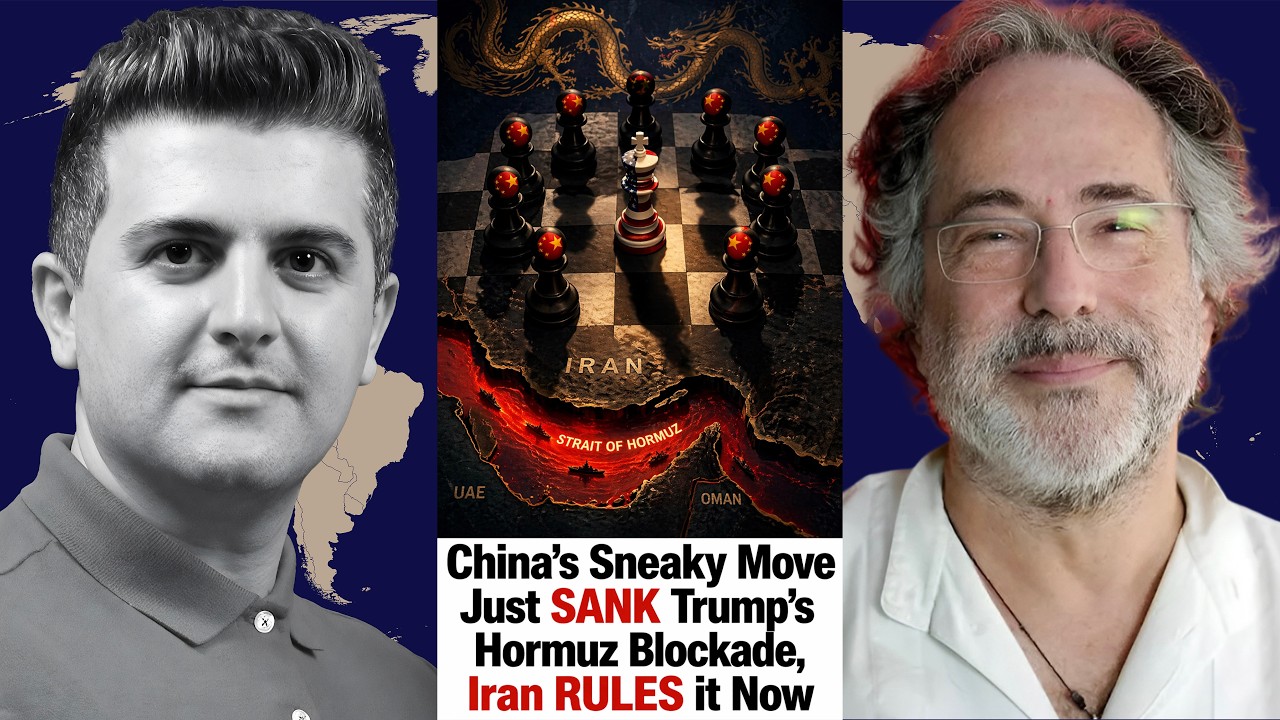
Pepe Escobar: “Total Failure”: Trump’s Blockade Just Backfired Disastrously
"Pepe Escobar argues that the US blockade against Iran, spearheaded by Donald Trump, has utterly failed and backfired, accelerating global economic chaos and challenging US geopolitical dominance."

🚨 TOTAL F*CKING CHECKMATE 😂😂😂
"The host argues that Trump's 'ceasefire' with Iran was a calculated '5D chess' move to orchestrate a global energy market reshuffle, while simultaneously lambasting 'woke' domestic policies and the 'freefall' of anti-Trump conservative figures."
Robby Soave GOES OFF On ANNOYING Liberal Black Woman Making Emotional Trump Deranged Arguments!
"The host dissects a heated foreign policy debate, arguing that 'left-wing' emotionalism and 'Trump derangement' prevent a rational understanding of US sanction strategies against Cuba and Iran."

Iran Deal Skepticism. Whoopi Vs Vance. Potomac Park Invasion. Racist Hurls Slurs At Black Boy.
"This episode dissects multiple instances of alleged anti-Black policies and racial injustice, from the Trump administration's legal challenges to reparations and the Iran deal, to police brutality and the erasure of Black history."