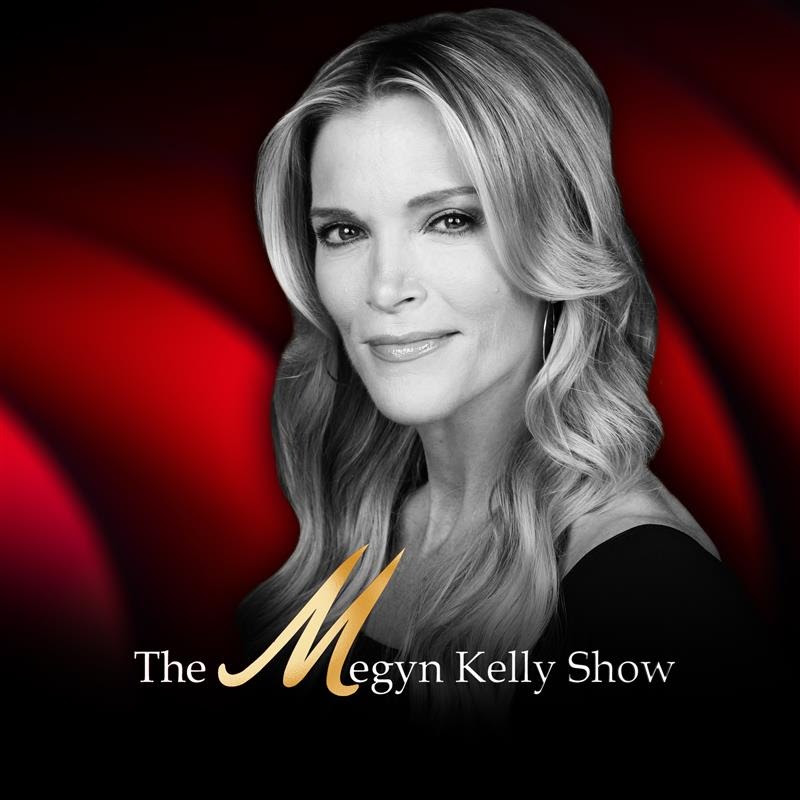
Tucker Carlson Says He’s Leaving GOP, How World Cup Renewed American Patriotism, w/ Halperin & More
YouTube · KLSv-aWZW38
Quick Read
Summary
Takeaways
- ❖New York Democratic primaries saw significant victories for radical Democratic Socialist candidates, indicating a strong leftward shift within the party, with anti-Israel stances being a key issue.
- ❖Chamath Palihapitiya argues that social media's 'outrage machine' has enabled the rise of 'articulate but nuts' politicians, suggesting bans for youth could help restore rational discourse.
- ❖AI is presented as a powerful economic leveler that will ultimately create more jobs by automating tedious tasks, with 'doomer' narratives often driven by a desire for control and capital by a select few.
Insights
1Democratic Party's Hard Left Turn in Key Primaries
Recent New York House primaries saw establishment Democrats defeated by candidates backed by socialist Zohran Mamdani. Winners like Claire Valdez, Brad Lander, and Darlene Lisa Oliva Chevalier campaigned on staunch opposition to Israel and radical policies such as abolishing police, prisons, ICE, the US Senate, and the Supreme Court. This indicates a significant and growing far-left influence within the Democratic Party, especially in deep blue districts.
Claire Valdez defeated Antonio Reynoso campaigning on opposition to Israel (). Brad Lander defeated Dan Goldman, advocating to 'reset our relationship with Israel' (). Darlene Lisa Oliva Chevalier, a Democratic Socialist, won against a five-term incumbent, advocating to abolish police, prisons, ICE, the US Senate, and the Supreme Court (). Polling data shows 66% of Democrats view socialism favorably, compared to 42% for capitalism ().
2Israel as a Litmus Test in Democratic Primaries
Hostility towards Israel and organizations like AIPAC has become a central and often decisive issue in Democratic primaries. Candidates who are more critical of Israel tend to win, signaling a shift in the party's stance on the issue. This trend is observed in New York and other states, though not universally.
Jeremy Carl of the Hoover Institute stated, 'Israel, and in particular AIPAC, are absolutely toxic in a Democrat primary' and 'the candidate that was more hostile to Israel won in each' of the three NY primaries (). Mark Halperin largely agreed, noting it's a 'single emotional issue that could make or break a candidacy' ().
3Chamath Palihapitiya's Optimistic View on AI and Job Creation
Chamath Palihapitiya asserts that AI is the 'most important and powerful economic leveler' he has ever seen. He argues that AI will not eliminate jobs but rather augment human capabilities, handling tedious tasks and allowing people to focus on higher-level judgment and creativity. He cites historical examples like animators and radiologists whose job numbers increased after technological adoption.
Chamath states AI is 'the most important and powerful economic leveler I've ever seen' (). He uses the analogy of an 'exoskeleton' for human intellect (). He debunks job loss fears by citing how animators at Disney increased 10x after Pixar's computer animation () and how radiology jobs increased after AI implementation ().
4Critique of AI 'Doomer' Narrative as Self-Serving
Chamath Palihapitiya characterizes the 'doomer' narrative around AI (predicting job losses, existential threats) as a misdirection propagated by a small cohort of AI developers. He argues their true motives are to gain absolute control over the technology and secure massive capital, as their expensive development models require immense funding and a lack of competition.
Chamath states the negative view on AI 'has everything to do with the personalities and the insecurities that have spilled out into the open amongst the players in this play' (). He claims 'the doomers want control' and 'all of the money' because their approach is 'extremely expensive' (). He contrasts Anthropic's expensive model with a Chinese competitor's 1/10th cost ().
Bottom Line
The current political radicalization, particularly the rise of Democratic Socialists and extreme anti-Israel sentiment, is deeply intertwined with social media's attention economy, which rewards outrage and extreme viewpoints.
This suggests that addressing political polarization may require fundamental changes to how social media platforms are designed and regulated, rather than just focusing on political discourse itself. The proposed bans on social media for youth in other countries could be a leading indicator for future policy in the US.
Entrepreneurs and policymakers could explore and invest in alternative social media models or digital literacy programs that prioritize nuanced discussion and critical thinking over outrage, potentially fostering a more moderate political environment.
The 'doomer' narrative surrounding AI's impact on jobs is primarily a strategic maneuver by a few dominant AI developers to consolidate power and capital, rather than an accurate prediction of widespread job displacement.
This implies that fears of mass unemployment due to AI may be overblown or misdirected. Instead, the focus should be on how AI can enhance human productivity and create new, higher-skilled roles by automating mundane tasks, leading to overall economic growth.
Businesses and educational institutions should proactively invest in training and upskilling programs to prepare the workforce for AI-augmented roles, rather than resisting AI adoption. This could unlock significant productivity gains and create competitive advantages.
Key Concepts
Attention Economy
Social media platforms incentivize outrage and extreme views to capture user attention, which can be exploited by politicians to gain algorithmic reach and influence, even if their policies are radical.
Economic Leveler
AI acts as an 'exoskeleton' for human intellect, democratizing access to expertise and knowledge, thereby evening the 'starting line' for individuals and potentially increasing overall productivity and job creation across various industries.
Lessons
- Critically evaluate political narratives, especially those amplified on social media, by considering the underlying economic anxieties and the motivations of the speakers, rather than accepting them at face value.
- For parents, consider the potential long-term impact of social media on youth and explore policies or personal choices that limit exposure to the 'outrage machine' to foster more balanced perspectives.
- Business leaders and policymakers should focus on AI's potential as an 'economic leveler' and invest in strategies that democratize access to AI tools and retrain the workforce for AI-augmented roles, rather than succumbing to fears of mass job displacement.
Notable Moments
Jack Schlossberg's defeat in the New York Congressional primary, despite his Kennedy lineage and establishment endorsements.
This moment signifies a rejection of perceived entitlement and 'unserious' candidates by New York voters, suggesting a shift away from legacy politics towards more substantive or ideologically aligned representation, even if radical.
President Trump's decision to cancel a bipartisan housing affordability bill signing in favor of pushing a voter ID bill with no chance of passing.
This highlights a political strategy prioritizing ideological battles (voter ID) over tangible, bipartisan policy wins (housing affordability), potentially alienating voters and hindering effective governance.
A DEI executive from JP Morgan Chase was fired after being caught on video stealing a trash can during a Knicks parade.
This incident became a viral symbol for critics of DEI initiatives and perceived 'wokeness,' used to highlight perceived hypocrisy or incompetence within certain corporate roles.
Quotes
"If you are not fully on board yet, it's fine to just say that."
"Israel, and in particular AIPAC, are absolutely toxic in a Democrat primary, especially anywhere vaguely progressive."
"How could I or any American voter support a political party that's not loyal to the United States? That puts the interest of a foreign country above those of its own citizens."
"It is the most important and powerful economic leveler I've ever seen."
"The doomers want control. They want The Handmaid's Tale. They want to decide who gets to use things and how."
Q&A
Recent Questions
Related Episodes

Mamdani CELEBRATES NYC Rent Freeze, This Will DESTROY The City | Timcast IRL
"New York City's rent freeze, celebrated by Mandami, is framed as a socialist 'land grab' that will devastate the city's housing market and economy, while a FIFA Pride Match in Seattle sparks outrage from conservative nations."

🚨 TOTAL F*CKING CHECKMATE 😂😂😂
"The host argues that Trump's 'ceasefire' with Iran was a calculated '5D chess' move to orchestrate a global energy market reshuffle, while simultaneously lambasting 'woke' domestic policies and the 'freefall' of anti-Trump conservative figures."

A major shift is happening right now
"Donald Trump is losing his grip on the Republican party and movement, evidenced by internal dissent and a broader political landscape grappling with a collapse of accountability and truth."

🚨 THEY F*CKED AROUND FOR THE LAST TIME 😭😭😭
"This episode unleashes a torrent of highly opinionated commentary on the US-Iran deal, Israel's role, and a scathing critique of 'leftist' policies and immigration, particularly highlighting the UK grooming gang report as evidence of Western societal decay."