
LIVE GENERAL STRIKE March Against ICE in -10 DEGREES | LIVE From Minneapolis
YouTube · KOfRXTaWHfU
Quick Read
Summary
Takeaways
- ❖Thousands participated in a general strike and march in Minneapolis against ICE, enduring -10°F temperatures.
- ❖The protest was a direct response to increased ICE presence, family separations, and the killing of Renee Good by an ICE agent.
- ❖An independent autopsy indicated Renee Good's fatal shot was fired from the side of her vehicle, sparking further outrage.
- ❖The one-day general strike aimed to halt economic activity, demonstrating collective 'people power' and resistance to federal overreach.
- ❖Protesters expressed profound anger, fear, and a strong sense of community solidarity, vowing sustained resistance.
- ❖Calls for justice included the prosecution of Agent Jonathan Ross and the complete abolition of ICE.
- ❖Many criticized Democratic Party leaders for not adopting a strong stance against ICE's existence.
- ❖The city is described as feeling 'occupied' by federal agents, with six times more immigration agents than local police officers.
- ❖Protesters connected their local struggle against ICE to broader injustices, including the Palestinian cause and historical trauma of Indigenous peoples.
Insights
1General Strike as Economic Leverage Against Federal Overreach
Minneapolis residents, supported by labor unions and community groups, orchestrated a one-day general strike, halting work, school, and shopping to demonstrate economic power. This action aimed to show the Trump administration the collective strength of the people and the potential for prolonged resistance if federal immigration enforcement continued to escalate. The strike was framed as a 'flex of economic strength' to push for the removal of ICE agents.
The host states, 'This is all to call on the Trump administration to remove ICE... and to end the suffering... they feel like they have no other recourse than to initiate a general strike... to show what true people power looks like.' (, , ). He later adds, 'We are talking about a near cessation of all economic activity here in the state of Minnesota. That is what this is about. It is about grinding to a halt the gears that are within the masses control.' (, ).
2Outrage Over Renee Good's Killing Fuels Mass Mobilization
The killing of Renee Good by ICE agent Jonathan Ross was a central catalyst for the widespread 'mass rage' driving the protest. An independent autopsy revealed that Good sustained non-fatal wounds from the first two shots, but the third, fired from the side of her vehicle, was fatal. This detail intensified public anger, suggesting excessive and unjustified force, and became a rallying cry for justice and accountability.
The host notes, 'rage. That is the emotion that I have heard motans express more than anything else. Not only about the Trump administration's immigration enforcement actions, but also about the killing of Renee Good...' (). He details the autopsy findings: 'it was the third shot... that was fired from the side of her vehicle... That was the shot that hit her in the head and killed her.' (, , ).
3Community Resilience and Solidarity in Extreme Conditions
Despite facing extreme -10°F temperatures and wind chill, thousands of Minneapolis residents participated in the march, demonstrating remarkable resilience and solidarity. This defiance of harsh weather conditions became a symbol of their unwavering commitment to the cause, with many protesters emphasizing that the cold would not deter them. The shared hardship strengthened their sense of community and collective resolve.
The host notes the temperature: '-10. It feels colder with the wind chill. Earlier today, it reached a low of -22°.' (). Protester Ian states, 'We deal with this every year, the winter. This is another Friday in Minnesota.' (). Mia adds, 'It's worth it. We're motans. This is nothing for us.' (). Another protester, Ununice, came without gloves, stating, 'I'm still going to be out here... just to be a part of what is happening because it feels that important.' ().
4Federal Presence Perceived as 'Occupation' and Threat to Rights
The deployment of thousands of ICE agents to Minneapolis created a pervasive sense of federal 'occupation' and a direct threat to civil liberties. Residents reported feeling constantly surveilled and targeted, with instances of racial profiling against US citizens and aggressive tactics like home invasions without warrants. This perceived overreach led to fears of rights erosion, including the First and Fourth Amendments, prompting widespread calls for ICE's abolition.
The host states, 'This city has been pushed to the brink... feeling like being pushed into a corner by this administration.' (). Scotty Ducharm, a law professor, compares ICE's masked operations to the KKK and states, 'they think they can suspend the Constitution, suspend habius corpus, suspend civil liberties.' (, ). He highlights ICE's unprofessionalism and aggression, including gassing people and driving 'like complete maniacs.' (, ). The host notes, 'There are six times as many Trump administration, immigration enforcement agents in this city as there are Minneapolis police officers.' ().
5Critique of Democratic Party's Stance on ICE Abolition
Several protesters voiced strong criticism of the Democratic Party, particularly those who do not support the complete abolition of ICE. They argued that such politicians are 'cowards' and out of touch with their constituents, especially given the agency's unpopularity. Protesters advocated for primarying Democrats who fail to align with the movement's demand for ICE's dismantling, viewing it as a critical step toward justice and reallocating funds to social programs.
Protester Ian states, 'They're cowards. They're afraid to stand up for what's right. They're afraid to stand up for their constituents. ICE is not popular.' (). Nate, a labor union member, says, 'If those Democrats are not going to get on board, they need to be primaried. All Democrats need to be primaried.' (, ). He also suggests reallocating ICE's budget to 'universal healthcare, universal basic income, public transit, highspeed rail.' ().
Bottom Line
The extreme cold in Minneapolis (down to -40°F wind chill) paradoxically strengthened the protest, becoming a symbol of local resilience against federal pressure, rather than a deterrent.
This suggests that for highly motivated communities, environmental adversity can be integrated into the narrative of resistance, turning a challenge into a source of pride and unity.
Organizers in other regions facing harsh conditions could leverage local resilience narratives to mobilize support, framing participation as a demonstration of local strength and defiance.
Protesters explicitly linked local ICE actions to broader historical and global struggles against oppression, including the KKK, Nazi Germany's winter invasion, and the Israeli-Palestinian conflict.
This framing elevates the local protest beyond a single issue, connecting it to universal themes of human rights and resistance, potentially broadening its appeal and moral weight.
Movements can gain deeper resonance and wider solidarity by articulating clear parallels between their specific grievances and established historical or global injustices, fostering a sense of shared struggle.
The general strike's success was measured not just in participation, but in the near cessation of economic activity, demonstrating a direct and tangible impact on the state's functioning.
This highlights the potential of economic disruption as a powerful, non-violent tool for political leverage, especially when traditional protest methods are perceived as insufficient.
Activists seeking to influence policy could focus on organizing targeted, short-term economic disruptions, building infrastructure for longer strikes, and clearly communicating the economic cost of inaction to authorities.
Lessons
- Organize community-level rapid response networks to monitor and counteract perceived federal overreach, as seen with Minneapolis residents forming groups to 'keep our community safe.'
- Leverage local cultural resilience (e.g., ability to withstand harsh weather) as a symbolic strength to galvanize participation in protests and demonstrate unwavering commitment.
- Pressure elected officials, particularly within opposition parties, to adopt clear, strong stances on contentious issues like ICE abolition, threatening primary challenges if they fail to represent constituent demands.
Notable Moments
Thousands of protesters, including many without gloves, marched in -10°F weather, with wind chills making it feel much colder, showcasing extreme dedication.
This vividly illustrates the depth of conviction and anger among the protesters, turning a severe environmental challenge into a powerful symbol of their unwavering resolve against perceived injustice.
The planned indoor rally at the Target Center was overwhelmed by the sheer number of participants, forcing it to primarily serve as a warming center, with thousands still outside.
This highlights the unprecedented scale of the demonstration, exceeding even the organizers' expectations and underscoring the widespread public sentiment against ICE policies.
Protesters explicitly compared ICE's tactics to historical oppressive forces like the KKK and Nazi Germany's winter blunders, and linked their struggle to the Palestinian cause.
These comparisons elevate the local protest to a broader moral and historical context, framing it as a fight against universal forms of tyranny and expanding its potential for solidarity.
Quotes
"There are thousands of people out here converging on downtown Minneapolis for the general strike march and rally... to call on the Trump administration to remove ICE..."
"And yet, we are seeing tens of thousands of people taking to the streets here in Minnesota in a popular demonstration of mass rage against the Trump administration."
"It was the third shot, the one that could, I think, regardless of your political orientation or predisposition to uh law enforcement, you would agree that was fired from the side of her vehicle... That was the shot that hit her in the head and killed her."
"They want to break us down. They want to divide us. They want to make us feel powerless. And what we're seeing here today is that together we do have power. We have power to resist their regime."
"Justice won't be so served until ICE is abolished. Dismantle the entire organization. We don't need it. It doesn't need to exist."
"They're cowards. They're afraid to stand up for what's right. They're afraid to stand up for their constituents. ICE is not popular."
"Yeah, these guys are coming into our homes, coming in our neighborhoods with huge [expletive] guns, huge [expletive] vests on, and we're showing up completely unarmed. And we're still pushing back. We're still resisting, and we're not afraid of their [expletive] macho masculinity that they're showing up with."
"The American people have spent almost a trillion dollars on ICE over the last 20 years... That money could be going towards universal healthcare, universal basic income, public transit, highspeed rail."
"The people that are keeping us safe here are the citizens of Minneapolis. Everyone out here who are in signal chats and in rapid response groups, we are the ones who are keeping us safe."
"The Kulex clan used to call themselves the Invisible Empire, and they wore masks, and they used to raid immigrant communities much like ISIS right now."
"There are six times as many Trump administration, immigration enforcement agents in this city as there are Minneapolis police officers. Just let that sink in."
"HISTORY IS GOING TO LOOK BACK at all the people that didn't show up. THEIR THEIR GRANDKIDS ARE GOING TO ASK THEM, 'What were they what were what were they doing?' And so that's what I'm here for."
"I think there's actually more people out here because it was this cold. Cuz it's like it's not going to keep me out, you know?"
"I feel very optimistic that we're going to [expletive] win and we're going to shut this [expletive] [expletive] down. Winning looks like this. Winning looks like unity. Winning looks like solidarity, love, helping each other out."
"They're conducting with fear. They're going around installing fuel into people, having them think that they cannot fight for themselves. And that's just wrong."
Q&A
Recent Questions
Related Episodes
ROUNDUP: ALL Trump Admin LIES About MN Shooting
"This episode exposes the Trump administration's alleged lies and misrepresentations surrounding the fatal shooting of Alex Petti by federal agents in Minnesota, arguing it represents a severe erosion of civil liberties and public trust."
‘YOU’RE A B*TCH!’: Americans EXPLODE At ICE Thugs TO THEIR FACE | The Kyle Kulinski Show
"Host Kyle Kulinski presents multiple graphic videos and eyewitness accounts of alleged ICE abuses, including assaults, illegal detentions, and sexual misconduct, arguing that these actions are galvanizing widespread public resistance and exposing a growing authoritarian state."
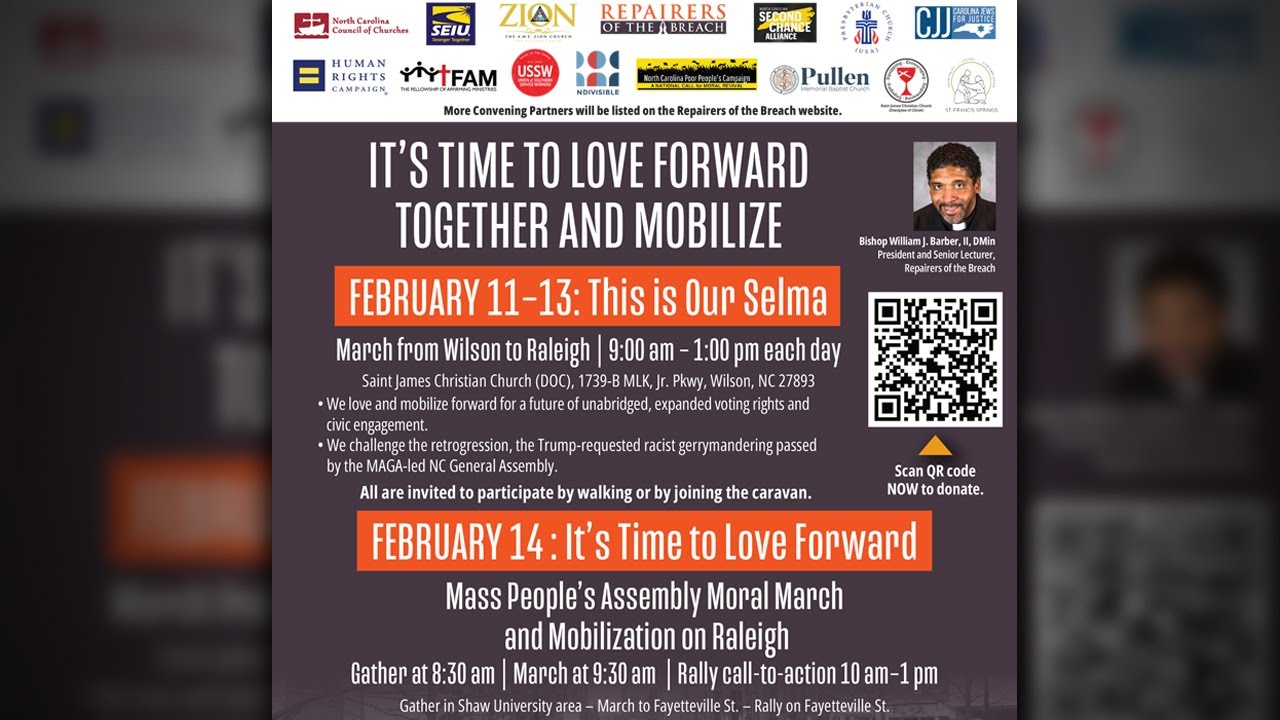
Love Forward Together Mass People’s Assembly & Moral March Mobilization | Day 2
"This episode documents Day 2 of the 'Love Forward Together' march in rural North Carolina, a mobilization against voter disenfranchisement and redistricting, emphasizing community unity and persistent activism."

Trump Dirt REVEALED: Iran, Zohran, Pardons, Deportations
"Journalists Maggie Haberman and Jonathan Swan reveal how Donald Trump operates in his second term, detailing his inner circle, policy priorities, and the surprising checks on his executive power."