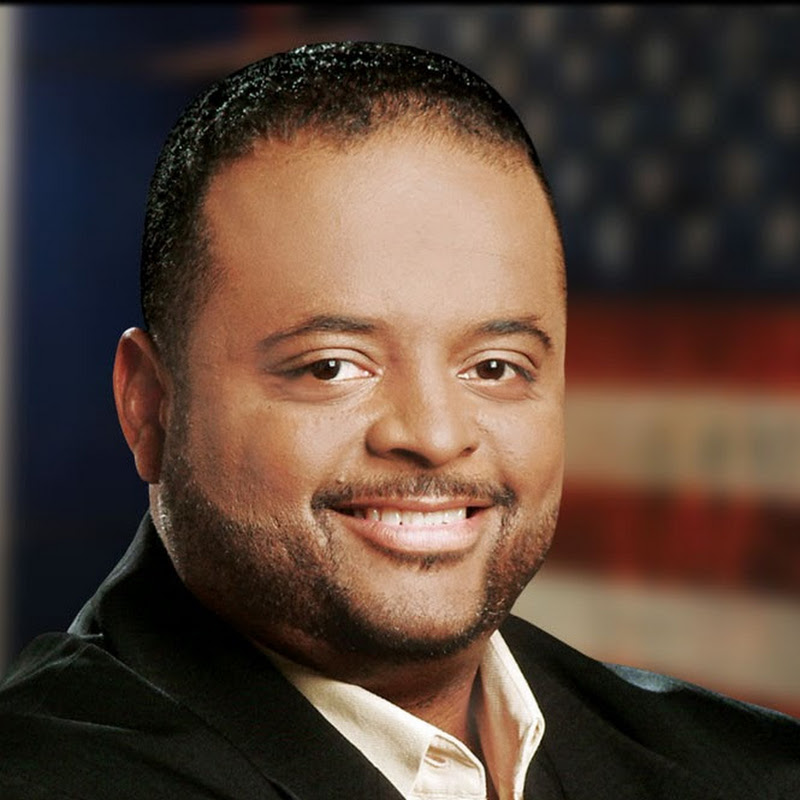
Celebrating the Life and Legacy of Rev. Jesse L. Jackson Sr.
YouTube · KRR8BNczMy4
Quick Read
Summary
Takeaways
- ❖The celebration of life for Reverend Jesse L. Jackson Sr. at Chicago's House of Hope drew an unprecedented gathering of three U.S. Presidents, the Vice President, governors, mayors, and international envoys.
- ❖Speakers universally praised Jackson's unwavering commitment to justice, economic empowerment, and his 'Keep Hope Alive' philosophy.
- ❖Jackson was credited with pioneering the modern progressive coalition and expanding the Democratic Party's inclusivity, directly influencing figures like Barack Obama and Kamala Harris.
- ❖His economic activism, including Operation Breadbasket and the Wall Street Project, created opportunities for Black-owned businesses and pushed for corporate diversity.
- ❖Personal anecdotes highlighted Jackson's profound impact on individuals, from inspiring self-worth to offering personal support during crises.
- ❖A strong call to action emerged, urging attendees to honor Jackson's legacy by continuing the fight for voting rights, social justice, and addressing issues like hunger and inequality.
- ❖Jackson's international diplomacy, freeing hostages and engaging with global leaders, underscored his role as a global liberator, not just a domestic civil rights figure.
- ❖The event emphasized that Jackson's greatest contribution was psychological, instilling a sense of 'somebody-ness' in those society had dismissed.
Insights
1Jackson's Enduring Fight for Equality and Personal Connection
Gospel singer Yolanda Adams shared her deep personal connection with Reverend Jackson, recalling his consistent support for gospel music and his 'corny jokes.' She expressed gratitude that his suffering had ended, but also issued a call to action to continue the fight for equality globally, reflecting Jackson's lifelong mission.
Yolanda Adams recounts seeing Jackson at Sheila Jackson Lee's service, always giving him a hug, and his support for her concerts and prayer breakfasts. She states, 'I'm just grateful that the pain is gone... let's continue the fight... until everyone is treated equally and with the same amount of love all over the world.'
2Advocacy for a Liberative Black Woman on the Supreme Court
In an archived interview, Reverend Jackson articulated the critical need for a Black woman on the Supreme Court whose viewpoint is 'liberative, not suppressive.' He emphasized that race alone is insufficient, citing Clarence Thomas as an example of antithetical views, and highlighted the power of the Black vote to influence such appointments.
Jackson states, 'Now is the time for the president to make an historic appointment and to nominate a black woman to serve on the supreme... to have one whose point of view is liberative and not suppressive. And that's really important that clearly Clarence Thomas shows us color is not enough.' He also mentions the power of the Black vote in South Carolina to 'determine the next president.'
3Courageous Leadership and the Call to Action
Actor Glenn Turman reflected on Reverend Jackson's 'pure courage' in running for president, noting how he stepped into moments of great gravity. Turman posed a challenge to the audience, asking who today possesses the courage to step up and lead without seeking validation or putting others down, echoing Jackson's fearless example.
Glenn Turman describes Jackson's style and ability to 'captivate the audience, mesmerize them, and get them to understand the importance of the moment, all with great style.' He then states, 'it was then I realized how much courage Reverend Jackson had because he would step on the elevator with these guys surrounding him... this man is serious... with pure courage. That's what we need now. Who will step up in these times?'
4History Maker, Not Just an Observer
State Senator Vincent Hughes emphasized that Reverend Jackson was not merely an observer of history but an active participant who 'made so much history.' He connected Jackson's work from the Voting Rights Act to Barack Obama's presidency, urging people to engage in the 'passion and action of our times' and to vote as the ultimate tribute.
Hughes states, 'He didn't just watch history being made. He made so much history. As I said, from watching the Voting Rights Act getting signed into law to in fact standing there in Chicago as Barack Obama walked across the stage.' He concludes, 'it's a lesson for all of us that we should not stand on the sidelines that we should always be engaged in the... action of our times. Don't let someone else write the history. You write the history.'
5Economic Activism and the 'Tree Shaker' Strategy
Janice Matthysse, a longtime colleague, detailed Jackson's impactful, though often private, economic activism. She cited his campaign against an international automotive manufacturer that led to dozens of Black-owned dealerships and his innovative strategy of buying company stock to gain access and speak at shareholder meetings, forcing corporations to address diversity. She characterized his role as a 'tree shaker,' dislodging opportunities for others.
Matthysse highlights a 'campaign against an international automotive manufacturer that ended up with several dozen blackowned dealerships. That campaign was not very public, but it was very meaningful.' She explains Jackson's strategy of buying shares in companies to 'speak at shareholder meetings' and 'address the leadership.' She quotes Jackson: 'Somebody has to be the tree shaker. Somebody got to shake the tree and the stuff that falls down from the tree, others, their job is to scoop it up. My job is to shake the tree.'
6Empowering Women and Unifying the Black Electorate
Siobhan Johnson, CEO of the National Council of Negro Women, praised Jackson's progressive stance on women in leadership, noting he was 'never threatened by the advancement of women.' She highlighted his commitment to unity, preventing 'narratives of divide' between Black men and women, and his consistent emphasis on the untapped power of the Black vote, urging for increased turnout and ground game investment.
Johnson states, 'He wasn't afraid of women's voices. He was never threatened by the advancement of women.' She also notes, 'He never let a a narrative of the divide come in between us.' She recalls Jackson's focus on voter turnout, saying, 'we are leaving our power is untapped. It's unused because we won't show up to the ballot box.'
7International Figure Connecting African Americans to the Diaspora
Melvin Foot, President of the Constituency for Africa, underscored Reverend Jackson's international stature and his pivotal role in connecting African Americans with the African continent. Jackson's efforts led to a shift in self-identification from 'negroes' to 'African Americans' and continued the work of fostering commerce and relationships with African nations.
Foot states, 'Reverend Jackson obviously was an international figure.' He adds, 'Jesse was committed to African people. He got us to change our tone from being negroes to black Americans to being Africanameans.' He also mentions Jackson carrying forth Leon Sullivan's work 'connecting African-Americans with African countries when it came to commerce.'
8The Bridge to Multi-Racial Politics and the 'Blood-Stained Ballot'
Senator Raphael Warnock described Reverend Jackson as the crucial 'bridge between the civil rights activism of Martin Luther King Jr. and the kind of multi-racial coalition politics' that moved the country forward. He emphasized Jackson's belief in the 'blood-stained ballot' and the imperative to vote, urging continued vigilance against legislative efforts to suppress voting rights.
Warnock states, 'He is the bridge between the civil rights activism of Martin Luther King Jr. and the kind of multi-racial coalition politics... I'm the beneficiary of that.' He adds, 'He reminded us that our ballot is a blood stained ballot. I often say that a vote is a kind of prayer for the world we desire.' He also vows to 'kill that piece of legislation' (Save Act) that he believes is 'trying to save their power.'
9Unwavering Presence for the Marginalized and Economic Empowerment
Civil rights attorney Ben Crump highlighted Jackson's consistent presence for the 'least of these,' even when his own health was failing. Crump quoted Jackson's powerful analogy: 'You don't drown because the water is deep. You drown because you stop kicking.' He also credited Jackson with creating more Black millionaires than any other individual by holding corporations accountable for economic inclusion.
Crump states, 'this man who had climbed the highest hikes would come and show up for the least of the Roland.' He recalls Jackson saying, 'you don't drown because the water is deep. You drown because you stop kicking.' Crump also asserts, 'Reverend Jackson doesn't get the credit he deserves. He probably helped make more mi black millionaires in the United States of America than any other individual. I mean, he would hold corporations to account.'
10Revolutionary Christian Faith and the Legacy of the 'Shoes On'
Yousef Jackson, Reverend Jackson's son and CEO of Rainbow Push, described his father's life as a 'revolutionary Christian faith rooted in justice, non-violence, and the moral righteousness of standing with the least of these.' He emphasized Jackson's commitment to dying 'with my shoes on,' actively working until the very end, and his belief in the power of faith to move mountains and inspire hope in the masses.
Yousef states, 'He lived a revolutionary Christian faith rooted in justice, non-violence, and the moral righteousness of standing with the least of these.' He adds, 'he often said, 'I intend to die with my shoes on.'' He also notes that even as his body failed, Jackson 'urged me to organize churches and pastors to help feed millions of people who were affected by food insecurity.'
11The Mighty River and Gentle Brook of Chicago
Illinois Governor JB Pritzker characterized Reverend Jackson as both a 'mighty roaring river' that galvanized masses and a 'gentle brook' that provided guidance and comfort to individuals. He highlighted Jackson's unique ability to connect with millions while also being a beloved 'neighbor' and 'friend' in Chicago, consistently engaging in political discourse and offering advice until his final days.
Pritzker states, 'Reverend Jackson was at once a mighty roaring river, able to create movements and galvanize masses with his words and his passion and a gentle brook able to provide guidance and comfort to the belleaguered and the bererieved.' He adds, 'here in Chicago, he was our neighbor. He was our friend.' Pritzker also notes, 'He never failed to pull me aside at an event to ask about something in the news or offer a word of advice or encouragement.'
12Instincts of a Strategic Genius for Collective Liberation
Chicago Mayor Brandon Johnson lauded Reverend Jackson as a 'brilliant strategist, a master negotiator, an organizing savant,' whose 'instincts' guided his fight for collective liberation. Johnson highlighted Jackson's ability to unite diverse groups, stand against injustice, and make strategic political decisions that paved the way for future Black leaders, viewing the Selma bridge as a symbol of the cross leading to a 'win' for human rights.
Johnson describes Jackson as 'a brilliant strategist, a master negotiator, an organizing savant. his instincts.' He states, 'It was in his instincts that understood that labor and faith were one and the same.' He also credits Jackson's 'instincts to run in 84 and 88, but not in '92 to make way for somebody in the deep south and a brother on the southside to become president.'
13Paving the Road for Black Political Leadership
President Barack Obama credited Reverend Jackson's two presidential campaigns (1984, 1988) with laying the groundwork for future Black political success, including his own. Obama noted that Jackson's candidacies forced the Democratic Party to change its rules, making it possible for underdogs and outsiders to compete, and his message of fairness and dignity resonated with all marginalized groups, not just Black Americans.
Obama states, 'Jesse's two candidacies ultimately came up short, but he paved the road for so many others to follow.' He mentions, 'Because of Jesse, the Democratic Party changed its rules... And it was because of that path that he had laid... that two decades later, a young black senator from Chicago Southside would even be taken seriously as a candidate.'
14Personal Kindness and the Power of an Agenda
President Bill Clinton shared deeply personal anecdotes, revealing Jackson's compassion beyond his public persona. He recalled Jackson's powerful message to youth, 'You have to open your brains, not your veins,' and the unexpected call Jackson made to his daughter, Chelsea, during Clinton's impeachment. Clinton emphasized that while not everyone can be as eloquent as Jackson, having a clear 'agenda' is crucial for making change.
Clinton recounts Jackson telling kids, 'You have to open your brains, not your veins.' He also shares, 'Jesse called me one night in the White House... I don't want to talk to you. I want you to go get Chelsea.' Clinton concludes, 'If you want to make change, there's still plenty you could do if you got an agenda. You've got to have it. He always had an agenda.'
15Kicking Doors Open: The Founder of the Modern Progressive Coalition
Vice President Kamala Harris described Reverend Jackson as 'impatient' and a 'strategist' who, when doors to opportunity remained closed, taught that 'sometimes you have no choice but just to kick that door open.' She identified him as the 'founder of the modern progressive coalition,' whose methodology of uniting diverse groups around shared values has been the 'heartbeat' of progress in America.
Harris states, 'Sometimes you have no choice but just to kick that door open.' She calls Jackson 'one of the most effective community and political organizers of our time... the founder... of the modern progressive coalition.' She notes his vision 'to tap into what otherwise had been untapped in terms of the potential of a coalition of seemingly different people.'
16Human Diversity as the Foundation of Freedom
President Gustavo Petro of Colombia honored Jackson as a 'living symbol of the struggle' for the legacy of Africans brought by force. He emphasized that 'there cannot be freedom without human diversity,' drawing parallels between Chicago's diverse founding and Colombia's history. Petro warned against any objective that seeks to eliminate diversity, equating it to fascism, and called for a global 'rainbow' to face contemporary dangers.
Petro states, 'I saw him as a living symbol of the struggle to uphold the legacy of all of the Africans who had been brought across the seas by force.' He asserts, 'There cannot be freedom without human diversity... Eliminating diversity means eliminating humanity.' He warns, 'one who pursues that sort of an objective automatically becomes a fascist.'
17The 'Bulletproof Prophet' and the Danger of 'Negro Amnesia'
Reverend Al Sharpton hailed Jackson as the 'first modern prophet in American history to prove to be bulletproof,' having resisted compromise from the government. Sharpton criticized a contemporary 'Negro Amnesia,' where people forget the struggles that led to their empowerment, leading to a rollback of hard-won progress. He challenged the audience to embody Jackson's 'faith' and 'fire' to continue fighting against injustice and corruption.
Sharpton states, 'This is the first modern prophet in American history to prove to be bulletproof. This is the very first prophet that the government could not compromise.' He warns against 'Negro Amnesia where you forgot where you came from and forgot how you got where you got. Therefore, they're trying to take back everything you have.' He urges, 'leave here with some Jackson fire in you.'
18The 'Stranger Was God': Jackson's Psychological Impact
Jesse L. Jackson Jr. argued that his father, like Martin Luther King Jr., was 'immensely unpopular' at the time of his death, and would have been actively fighting against current injustices like the war in Gaza and threats to the Affordable Care Act. He used the analogy of Howard Thurman's 'stranger' who restored his hope, equating that stranger to 'God,' to explain his father's profound psychological impact: instilling 'somebody-ness' in the marginalized and restoring hope where it was lost.
Jesse Jr. states, 'Jesse Jackson at the hour of his death was not Roland Martin, a popular figure. He would have stood against the war in the Gaza.' He recounts Howard Thurman dedicating his autobiography 'to the stranger in the railroad station... who restored my broken dream.' He then asserts, 'to Howard Thurman, the stranger was God... because he redeemed and restored the hope of Howard Thurman.' He concludes, 'Jesse Jackson's greatest contribution is not political. It is psychological. Negro, you are better off today than you were when you met this negro.'
19Originator of Diversity, Equity, and Inclusion
Congresswoman Maxine Waters declared Reverend Jackson the 'originator of diversity, equity, and inclusion' through his Rainbow Coalition, which brought together diverse groups including Latinos, Asians, Blacks, whites, Native Americans, and farmers. She shared personal stories illustrating his inspiring power, such as her sick mother jumping out of bed upon his arrival, and his international influence in securing the release of hostages.
Waters states, 'Jesse Jackson is the originator of diversity, equity, and inclusion. The Rainbow Coalition is diversity, equity, and inclusion.' She recalls, 'We had ultraconservatives farmers in rural areas who had never shook the hand of a black man before. And when they learned who Jesse Jackson was... they were literally kissing his feet.' She also recounts her mother 'jumped out of bed and ran down the hall and told everybody, 'Jesse Jackson is here.''
Lessons
- Engage in civic action and voter registration: Honor Jackson's legacy by actively participating in elections, registering new voters, and educating communities on political issues.
- Fight for economic justice: Advocate for policies that create economic opportunities for marginalized communities and hold corporations accountable for diversity and fair practices, as Jackson did with his Wall Street Project.
- Build diverse coalitions: Work across racial, ethnic, and social lines to address common challenges, embodying the spirit of the Rainbow Coalition to achieve collective liberation.
- Challenge injustice wherever it appears: Do not remain silent or on the sidelines when faced with racism, inequality, or threats to democracy, but actively 'shake the tree' for change.
- Support independent Black media: Invest in platforms that provide unfiltered information and tell the stories of Black communities, recognizing their crucial role in empowerment and mobilization.
Quotes
"You don't drown because the water is deep. You drown because you stop kicking."
"Somebody has to be the tree shaker. Somebody got to shake the tree and the stuff that falls down from the tree, others, their job is to scoop it up. My job is to shake the tree."
"He is the bridge between the civil rights activism of Martin Luther King Jr. and the kind of multi-racial coalition politics that has moved our country forward."
"If that invitation is not offered and if that door remains shut even after repeated attempts to knock on said door. Sometimes you have no choice but just to kick that door open."
"Jesse Jackson's greatest contribution is not political. It is psychological. Negro, you are better off today than you were when you met this negro."
"Jesse Jackson is the originator of diversity, equity, and inclusion. The Rainbow Coalition is diversity, equity, and inclusion."
"This is the first modern prophet in American history to prove to be bulletproof."
Q&A
Recent Questions
Related Episodes

LIVE! Love Forward Together Mass People’s Assembly & Moral March Mobilization In Raleigh, NC
"Thousands marched across North Carolina in the 'This Is Our Selma' movement, led by Reverend William Barber, to combat gerrymandering, voter suppression, and advocate for a proactive, love-driven vision of social and economic justice."

George Floyd 6 Years Later. Redistricting War in The South. Talarico Senate Campaign
"This episode exposes the ongoing legislative battles and strategic resistance against efforts to diminish Black political power, from federal policing reform to state-level gerrymandering and calls for economic boycotts by Black athletes."
Moral Monday at BLM Plaza. Cleo Fields Sounds Alarm on Louisiana & Gary Chambers Pushes Turnout
"Activists and faith leaders gathered at Moral Monday to denounce 'policy violence' in various forms, from war and budget cuts to voter suppression and healthcare denial, urging sustained mobilization against a 'hijacked' democracy."
Black Woman Killed in ICE Pursuit. Newsom “Can’t Read” Remark. Tariff Repayment Push. TPS Fight
"This episode dissects multiple critical events, from the tragic deaths during an ICE pursuit and a police shooting, to debunking a viral controversy around Governor Gavin Newsom's remarks, and honoring Reverend Jesse Jackson's enduring legacy in economic and media justice."