
Mohammad Marandi: Starlink is DOWN. Iran's reality HITS Trump
YouTube · KfYfPjhmKuc
Quick Read
Summary
Takeaways
- ❖Western media actively promotes fabricated narratives and disinformation to justify intervention in Iran.
- ❖Recent 'riots' in Iran were orchestrated by 'professional rioters' supported by external powers, distinct from initial peaceful protests.
- ❖Figures like Reza Pahlavi are unpopular 'jokes' used by the West and Israel to create a pretext for war and regime change.
- ❖Elon Musk's Starlink is implicated in facilitating 'color revolutions' and psychological warfare against Iran.
- ❖Iran's internet shutdown was a defensive measure to disrupt foreign coordination of riots and prepare for potential conflict.
- ❖US foreign policy, regardless of administration, consistently aims to destabilize and fragment countries in the Middle East for Israeli interests.
- ❖Regional powers like Turkey and Saudi Arabia are increasingly fearful of Western/Israeli destabilization tactics, recognizing the threat to their own stability.
Insights
1Western Media's Disinformation Campaign Against Iran
Professor Marandi asserts that Western mainstream media functions as a tool for oligarchs and regimes, taking minor rumors or misrepresenting events to create a narrative against Iran. He cites examples like footage of pro-government rallies being depicted as anti-government protests and fabricated stories about Iranian officials contacting opposition figures, or even absurd claims like the government 'killing cats.' This campaign is described as psychological warfare designed to prepare the ground for military intervention.
Marandi mentions the rumor about Jawad Zarif contacting the former Shah's son, footage of millions at pro-government rallies being mislabeled as anti-government, and claims of the Iranian government 'killing cats.' He notes 'thousands' of trolls in Albania and Zionist online presences generating millions of interactions, contrasting this with a lack of real-world presence for opposition.
2Distinction Between Protesters and Foreign-Backed Rioters
Marandi differentiates between initial peaceful protests in Tehran, which faced no arrests or harassment, and subsequent 'riots' that were infiltrated by 'professional, very well-trained' individuals. He provides an account of a woman shot in the face by a rioter, highlighting their professional and violent tactics. He claims Israelis take credit for these actions, while Western media insists on a 'peaceful protester' narrative, ignoring the killing of hundreds of security agents and ordinary people.
Marandi describes peaceful protests on day one and two, followed by the infiltration of 'rioters' on day three. He recounts an interview with a woman shot by a 'professional' rioter and mentions Israeli Channel 14 claiming responsibility for sending weapons, leading to hundreds of security agent deaths.
3The Use of Unpopular Figureheads for Regime Change
Marandi argues that figures like Reza Pahlavi (son of the former Shah) are 'jokes' with no popular mandate in Iran, yet they are promoted by Western powers to justify war. He details Pahlavi's historical unpopularity due to his family's corruption and alignment with foreign powers, and his calls for bombing Iran. The objective is to create a false impression of internal division and a ready-made leader for a post-regime-change scenario, ultimately aiming for chaos and fragmentation.
Marandi states Pahlavi's father stole billions, his family were 'agents of empire,' and Iran was 'very backward' under their rule. He highlights Pahlavi's unpopular actions like visiting Israel and calling on Trump to bomb Iran. He contrasts Pahlavi's lack of knowledge about Iran with his ambition to 'do the transition and come back.'
4Starlink's Role in 'Color Revolutions' and Elon Musk's Influence
The host and guest discuss Starlink's deployment in Ukraine and its alleged use in Iran to facilitate 'color revolutions' and psychological warfare. They frame Elon Musk as a new, more powerful 'Soros-like' figure, using his platforms (Starlink, X) to manipulate societies and push for regime change, despite Trump's initial anti-regime change rhetoric. Marandi dismisses Musk's intelligence compared to Soros but acknowledges his significant power.
The host explicitly states Starlink was 'supposed to be for human development' but is 'using it for regime change color revolution.' He points to Musk's role in Venezuela and Iran, and a message from Pahlavi on X receiving millions of views despite internet shutdowns in Iran. Marandi notes Musk's attempts to discredit pro-government rallies as 'AI' and refers to him as a 'new Soros.'
5Iran's Strategic Internet Shutdown and War Preparedness
The internet shutdown in Iran is presented as a dual strategic move: first, to cut off communication between foreign-backed rioters and their external 'masters,' which quickly ended the riots; and second, to prevent American and Israeli intelligence from monitoring Iranian communications and preparations for a potential war. Marandi emphasizes Iran's extensive military capabilities, including a vast arsenal of missiles and drones, designed to target American bases and complicit regional regimes in an existential conflict.
Marandi states the internet was cut 'so that they would lose communication with their masters abroad' and that riots 'went downhill very fast and within 28 hours they were all over.' He adds that Iranians are 'preparing for war' and don't want Americans/Israelis to 'monitor what people are saying on the phone on their cell phones.' He details Iran's 30-year preparation for war with the US, building 'mid-range and short range' missiles and drones in underground bases, capable of striking anywhere in the Persian Gulf and Indian Ocean.
Bottom Line
The 'Israel first' mentality within US leadership is the primary driver for seemingly illogical wars against Iran, prioritizing Israeli regime interests over American national interests or logical outcomes.
This suggests that US foreign policy in the Middle East is not solely driven by traditional geopolitical or economic considerations, but by a powerful, external lobby, leading to actions that may be detrimental to the US itself.
Understanding this dynamic can inform alternative foreign policy approaches that decouple US actions from perceived Israeli demands, potentially leading to more stable regional outcomes or a re-evaluation of alliances.
The consistent US foreign policy across administrations (Bush, Obama, Trump, Biden) is to destabilize and fragment Middle Eastern countries, not to promote democracy or stability, but to serve a 'Greater Israel project.'
This challenges the perception of distinct foreign policy ideologies between US political parties, suggesting a deeper, consistent agenda of regional fragmentation, exemplified by actions in Iraq, Syria, Libya, and Yemen.
This insight could be used to advocate for a fundamental re-evaluation of US foreign policy objectives in the Middle East, moving away from interventionist and destabilizing strategies towards genuine regional cooperation and self-determination.
Lessons
- Critically evaluate mainstream media narratives about geopolitical conflicts, especially those involving 'protests' and 'regime change,' by seeking out diverse and non-Western perspectives.
- Recognize that internet shutdowns in conflict zones can be defensive measures by governments to counter foreign-orchestrated destabilization, not solely acts of oppression.
- Understand that figures promoted by Western media as 'opposition leaders' in targeted countries may lack internal legitimacy and serve as pretexts for external intervention.
Quotes
"The Israelis, uh, you know, they take credit for it and then Western media says no no no these were peaceful protesters. The Israelis beg to differ. They are saying, you know, we we we were there."
"The objective is to destroy Iran because none of these people are going to be able to hypothetically... rule over the country. They have no popular mandate. So what's going to happen? Chaos. That's what Israel wants."
"Elon Musk is becoming one of those giants of going after these color sort of color revolution in Venezuela right now. I see what's going on in Iran. He definitely is behind what's going on in Iran because he facilitated everything using stalling using ax you know."
"The person who gave the green light for that war was Obama. Biden was the person who with Netanyahu initiated the Holocaust in Gaza. and uh Bush, of course, George Bush and Iraq... They're all the same."
"The Americans like to pretend that um that uh the population in Iran supports what they want them to support. But they've been saying that for many decades... It's a very slow death apparently."
Q&A
Recent Questions
Related Episodes
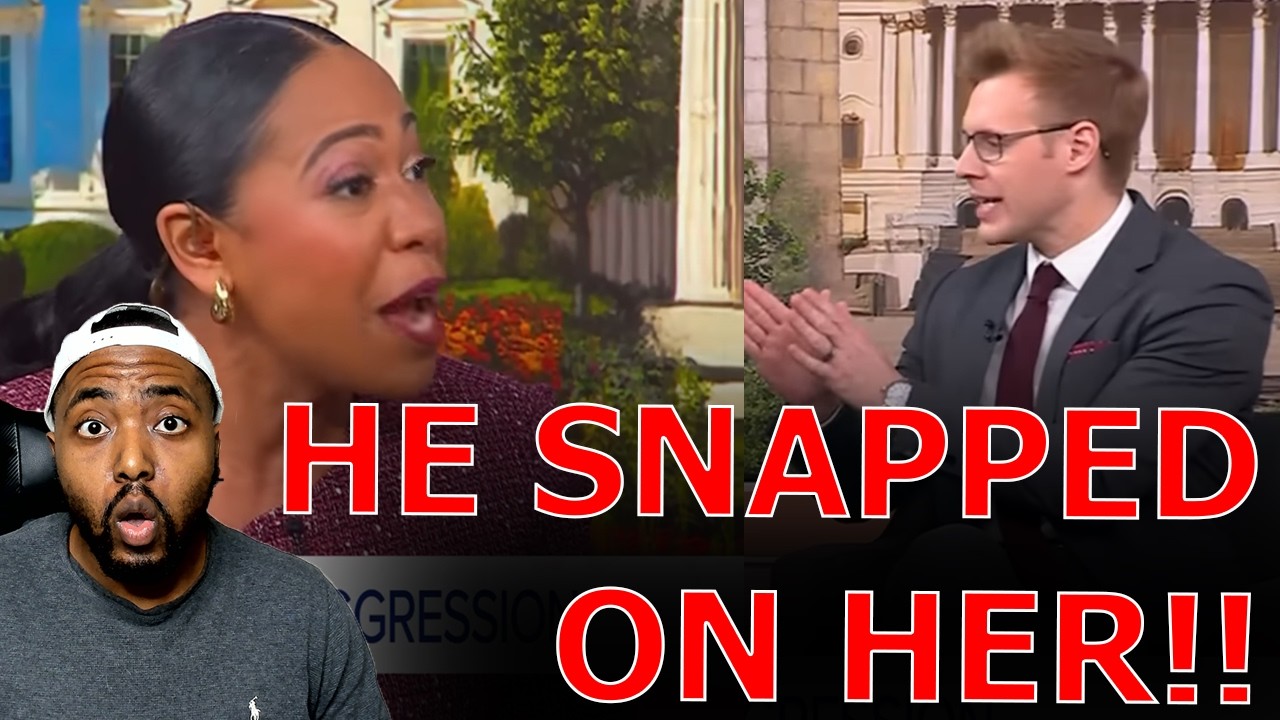
Robby Soave GOES OFF On ANNOYING Liberal Black Woman Making Emotional Trump Deranged Arguments!
"The host dissects a heated foreign policy debate, arguing that 'left-wing' emotionalism and 'Trump derangement' prevent a rational understanding of US sanction strategies against Cuba and Iran."

Pentagon Prepares For EXTENDED War With Iran
"This episode dissects the geopolitical maneuvers surrounding potential US-Iran conflict, revealing strategic leaks, Netanyahu's diplomatic sabotage playbook, and the true intent behind economic sanctions."

A Whistleblower Running For Congress?!
"The Young Turks expose alleged government and media complicity in covering up critical information, from the push for war with Iran and DHS surveillance of activists to shocking revelations from the Epstein files and the suppression of dissent against Israeli influence."

Mohammad Marandi & Larry C. Johnson: U.S. & Iran on the Brink as Critical Negotiations Unfold LIVE
"Two geopolitical analysts argue that the US and Israel are on the brink of a catastrophic war with Iran, driven by irrationality and miscalculation, which would lead to global economic collapse and US instability."