
Cold As Ice | Full Episode
YouTube · KjxTCbWUMvc
Quick Read
Summary
Takeaways
- ❖Maria Rudolph, 7, disappeared in Sycamore, IL, in 1957; her body was found five months later.
- ❖Eyewitness Kathy Chapman, 8 at the time, identified 'Johnny' (later Jack McCulla) 55 years after the event.
- ❖McCulla's mother, Eileen Tessier, made a deathbed confession implicating him in 1994.
- ❖McCulla was convicted of Maria's murder in 2012, largely on circumstantial evidence and testimony from his sisters.
- ❖In 2016, McCulla was exonerated after newly discovered phone records confirmed his alibi, placing him 40 miles away during the abduction.
Insights
1The Initial Disappearance and Cold Case
Seven-year-old Maria Rudolph vanished from Sycamore, Illinois, on December 3, 1957, while playing with Kathy Chapman. Her body was found five months later, 90 miles away. The FBI initially investigated but handed the case to Illinois State Police when it was determined no state lines were crossed. The crime scene was trampled, and the only lead was an 8-year-old eyewitness, leading the case to go cold for decades.
Kathy Chapman's account of Maria taking a piggyback ride with 'Johnny' and then disappearing (, ). Maria's body found five months later (, ). FBI taking over then handing off the case (, ).
2Deathbed Confession and Reopening the Case
In 1994, Eileen Tessier, on her deathbed, confessed to her daughter Jan that her son, John (Jack McCulla), was responsible for Maria's disappearance. This confession, along with Jean Tessier's later revelation of sexual abuse by her brother, prompted Jan to contact authorities, eventually leading to Special Agent Brian Hanley reopening the investigation.
Jan Tessier's mother's deathbed confession: 'John did it. John did it. And you have to tell someone.' (). Jean Tessier's testimony about her brother's sexual abuse (, ).
3Eyewitness Identification and Initial Conviction
In 2010, Kathy Chapman, then 61, positively identified John Tessier (Jack McCulla) from a photo lineup as 'Johnny.' Despite McCulla's alibi and lack of physical evidence, this identification, combined with the deathbed confession and McCulla's prior plea to 'communication with a minor for immoral purposes' in 1982, led to his conviction for Maria's murder in 2012.
Kathy Chapman identifying John Tessier in a photo lineup: 'That was Johnny' (). McCulla's prior plea to 'communication with a minor for immoral purposes' in 1982 (). The judge finding all prosecution witnesses credible, including Kathy Chapman (, ).
4Exoneration Based on Newly Reviewed Alibi Evidence
After serving five years, McCulla's motion for a new trial led to a review by State's Attorney Richard Smok. Smok found thousands of documents, previously ruled inadmissible, including newly discovered phone records that confirmed McCulla's alibi. These records placed him 40 miles away at the time of Maria's abduction, leading to his conviction being vacated and his official declaration of innocence in 2017.
McCulla's alibi: 'I was in the induction center joining the Air Force' and made a collect call at p.m. (, ). Prosecutor Richard Smok's review found 'no way McCulla could have killed Maria Rolof' (). Newly discovered phone records confirmed McCulla's alibi ().
Lessons
- Recognize the inherent challenges in cold cases: As time passes, memories fade, witnesses die, and physical evidence can be compromised or lost, making convictions difficult and potentially unreliable.
- Understand the limitations of eyewitness testimony, especially after many decades: While powerful, long-delayed identifications can be influenced by external factors and are not infallible, as demonstrated by Kathy Chapman's identification and subsequent exoneration.
- Advocate for thorough and ongoing evidence review in long-term cases: The eventual exoneration of Jack McCulla hinged on the re-evaluation of previously dismissed or overlooked evidence, highlighting the importance of continuous scrutiny in the pursuit of justice.
Notable Moments
Kathy Chapman, Maria's playmate, recounts the day Maria disappeared with 'Johnny' in 1957, emphasizing the innocence of the era.
This sets the scene for the crime and establishes the primary eyewitness whose testimony would be crucial decades later.
Eileen Tessier's deathbed confession in 1994, implicating her son John (Jack McCulla) in Maria's murder.
This confession, though hearsay, was the catalyst that reopened the cold case and led to McCulla's eventual arrest and conviction.
Jean Tessier's testimony about her brother Jack McCulla's sexual abuse, which was used to establish a pattern of behavior.
This deeply personal and painful testimony was a significant factor in the prosecution's case, attempting to paint McCulla as a dangerous individual, despite the rape charge ultimately resulting in an acquittal.
Jack McCulla's conviction for Maria Rudolph's murder in 2012, 55 years after the crime.
This marked a seemingly impossible resolution to one of the nation's oldest cold cases, bringing closure to Maria's family, albeit temporarily.
Jack McCulla's exoneration in 2016 and official declaration of innocence in 2017, based on newly reviewed phone records confirming his alibi.
This stunning reversal highlighted the judicial system's capacity for error, the power of definitive evidence, and the enduring challenges of achieving true justice in historical cases.
Quotes
"You are the only one that can recognize this man. You have to remember what he looks like till we find him."
"This isn't just a cold case. This is an ice cold case. This is a 55-year-old case. It's probably one of the most challenging murder prosecutions in American history, but he is the perfect suspect."
"John did it. John did it. And you have to tell someone."
"I may have I may have been a sinner, but I'm not a murderer."
Q&A
Recent Questions
Related Episodes
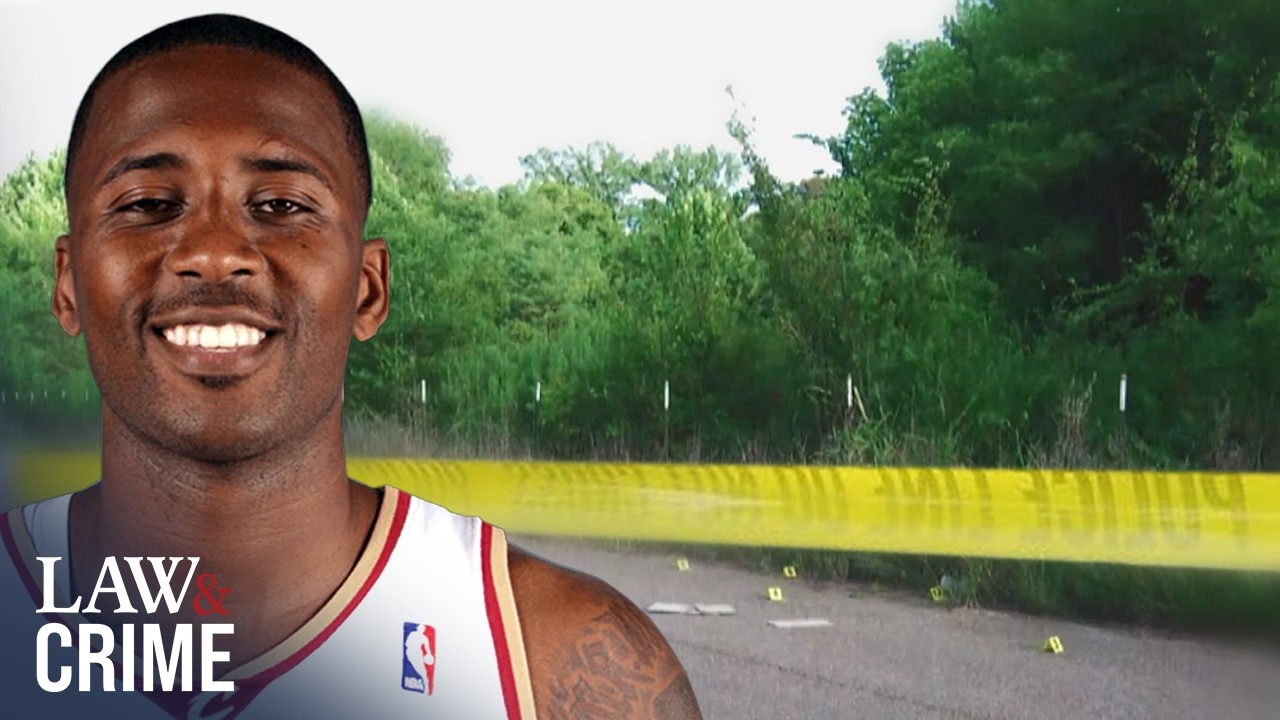
Killer Cases: NBA Star Lured to Execution In Rural Tennessee
"The decade-long cold case of NBA star Lorenzen Wright's murder was cracked through a persistent mother, a jailed informant, and a covert police operation that recovered the murder weapon from a lake and exposed a conspiracy driven by greed."

True-crime cases with recent developments | 48 Hours Full Episodes
"This episode reconstructs four complex true-crime cases, detailing the harrowing searches for missing persons, the challenges of prosecuting murders without bodies, and the enduring quest for justice in cold cases spanning decades."

TEEN'S DNA REVEALED IN ANNA KEPNER'S R*** KIT
"The investigation into Anna Keaptainner's death on a cruise ship reveals shocking DNA evidence, a previously unknown male minor, and critical questions about evidence handling and family dynamics."

M&M's Employee Steals $26 MILLION (How He Did It)
"This episode details a series of white-collar crimes, from an M&M's sugar expert embezzling $26 million to a fake immigration attorney scamming undocumented immigrants, highlighting vulnerabilities in various systems and the surprising leniency of some sentences."