
L.A. Fire Survivors Fight Foreclosure & Demand Justice in Altadena
YouTube · KsG_1pcEFgs
Quick Read
Summary
Takeaways
- ❖The 2023 Altadena fires, caused by Southern California Edison (SCE) negligence, destroyed over 9,000 structures, including 6,000 homes.
- ❖Altadena, an unincorporated LA County area, has the second-largest percentage of Black homeownership in the U.S., with 60% of affected homes owned by Black families.
- ❖SCE accepted responsibility but delayed compensation, leading to 61% of Altadena families facing a housing crisis and potential foreclosures.
- ❖Predatory developers are exploiting the hardship by offering pennies on the dollar for fire-damaged land.
- ❖Many residents were dropped by insurance companies months before the fire or are now denied payouts, despite decades of premium payments.
- ❖Community activists, like Heavenly Hughes of My Tribe Rise, are petitioning Governor Newsom for a foreclosure moratorium and demanding SCE advance billions in funds to families.
Insights
1Southern California Edison's Negligence Caused the Fire and Delayed Compensation
Filmmaker Andi Matoner states that Southern California Edison (SCE) was responsible for starting the Altadena fire. SCE failed to turn off power despite raging fires and high winds, and a dormant power line, which should have been removed, was activated by a live wire, igniting uncleared brush. While SCE accepted responsibility, they are delaying compensation until the following year, leaving affected families in financial limbo.
Andi Matoner states, 'Southern California Edison actually started the fire... they didn't turn the power off even though the Palisades and Malibu fire was raging all day... they had a dead line that was supposed to be dormant for years that they were supposed to take down that they didn't take down and it was activated by colliding with a live wire and the brush that they had not cleaned ignited.' She adds, 'They've accepted responsibility, but they won't pay until next year.'
2Altadena's Black Homeowners Face Disproportionate Impact and Displacement Threats
Altadena holds the second-largest percentage of Black homeownership in the country, with 60% of the fire-affected homes belonging to Black families. This community was built through redlining, and residents now feel they are being forced out due to the fire's aftermath. The delay in compensation from SCE means 61% of families face a housing crisis and potential foreclosures, threatening generational land ownership.
Amy Goodman notes, 'Altadena represents... the second largest percentage of black home ownership in the country.' Heavenly Hughes confirms, '60% of ownership within the black community was homeowners.' She adds, 'We feel like we're being forced out... and not really getting the support... to preserve and protect our black and brown community.' Andi Matoner states, 'Over 61% of Altadena families are going to face a housing crisis in the next 2 months. They're going to lose their homes.'
3Predatory Practices by Developers and Insurance Companies Exacerbate Crisis
Developers are acting as 'vultures,' approaching distressed homeowners with low offers for their land, exploiting their hardship and lack of information about the true value of their properties. Additionally, many residents, particularly on Westside Altadena, had their insurance policies dropped four months before the fire, or their long-standing insurance companies (like State Farm) are refusing to pay out claims, demanding upfront payments from families who have lost everything.
Heavenly Hughes describes 'predatory behavior happening now. I call them vultures. It is the developers who are coming and buying up the land... offering pennies on the dollar of what this land is worth.' She also notes, 'On Westside Altadena, 4 months before the fire, many homes they were dropped' by insurance companies. 'Some folks have been paying insurance premiums for 20, 30, 40, even 50 years. And now when it's time to pay out, they're not doing it.'
Bottom Line
The Altadena fire exposes a 'disaster capitalism' scenario where a natural disaster (exacerbated by corporate negligence) creates conditions for predatory economic practices to displace a historically marginalized community.
This isn't just a story about a fire; it's a case study in how systemic vulnerabilities, from historical redlining to inadequate regulatory oversight of utilities and insurance, converge to dispossess communities of color.
Advocacy groups can leverage this narrative to push for stronger consumer protections post-disaster, enforce corporate accountability for utility companies, and implement policies that prevent predatory land acquisition in vulnerable communities.
Lessons
- Support the petition to Governor Newsom and the legislature for a moratorium on foreclosures in Altadena to protect Black and brown families from displacement.
- Demand that Southern California Edison immediately advance funds to fire-affected families, bridging the gap until full compensation is paid.
- Educate yourself and your community about predatory developer tactics and insurance company non-payout strategies following disasters to prevent exploitation.
Notable Moments
The trailer for 'All the Walls Came Down' showcases the immediate devastation and emotional toll on Altadena residents, including the filmmaker Andi Matoner's personal loss.
It visually conveys the human impact of the fires and sets the stage for the community's struggle, emphasizing the loss of homes, family legacies, and the fight for survival and justice.
Heavenly Hughes describes 'power luncheons' where fire-impacted Altadenians gather, fostering community bonds that strengthened after displacement.
This highlights the resilience and self-organizing capacity of the community in the face of adversity, demonstrating how shared trauma can forge stronger collective action and support networks.
Quotes
"They've been wanting to get us out of there for a very long time. Altadena is not for sale!"
"This catastrophe has been a hardship that we are still struggling to overcome. So, yes, this is a black community... built this community of Altadena through redlining. We all came together... and we feel like we're being forced out... because of this fire and not really getting the support that we need from our elected officials to be sure to preserve and protect our black and brown community."
"Southern California Edison actually started the fire... they didn't turn the power off even though the Palisades and Malibu fire was raging all day... They've accepted responsibility, but they won't pay until next year."
"It's predatory behavior happening now. I call them vultures. It is the developers who are coming and buying up the land."
Q&A
Recent Questions
Related Episodes

Black Trucker Sues Sheriff. Trump Name Removed From Kennedy Center. FBI Targets Voting Rights Group
"This episode exposes systemic injustices, from a black trucker's assault by a deputy to the FBI targeting a voting rights group, while also highlighting cultural battles over public institutions and the financial struggles of black museums."
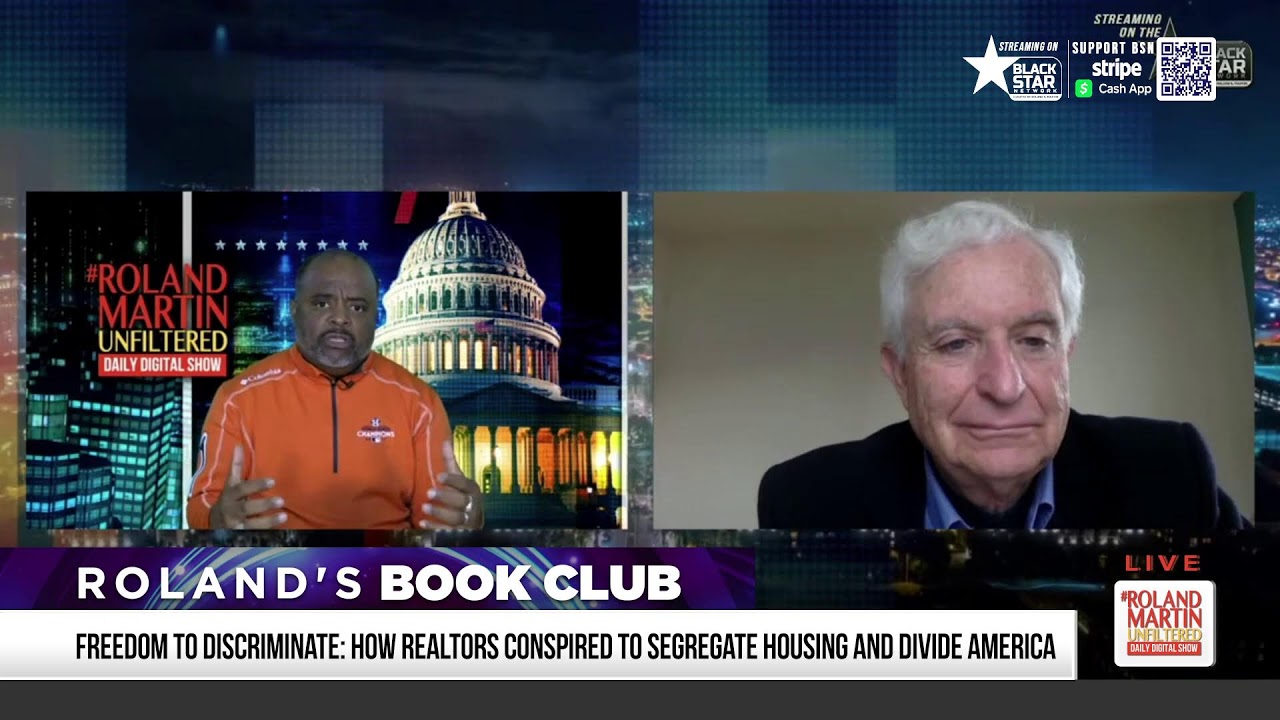
Freedom to Discriminate: Realtors Conspired to Segregate Housing & Divide America |#RolandsBookClub
"This episode exposes how American realtors deliberately invented and institutionalized housing segregation, shaping federal policy and ultimately redefining the concept of 'freedom' to fuel a political ideology that continues to divide the nation."

NC Targets DEI. Trump Blocks Housing Bill. Minority Banks Face New Rules. Kohen Wiley Protests
"This episode exposes how current political actions, from changes in minority bank definitions to attempts to regulate college athlete earnings and block foreign aid, are systematically undermining Black economic power, voting rights, and social justice."

Israel First CRASHES OUT After Pro Palestine Democrats Win Big
"New York Democratic primary results signal a significant shift away from pro-Israel politicians, while concerns mount over Israel's nuclear threats and Trump's political maneuvering on a housing bill."