BREAKING: Iran Navy BURNS; Mojtaba Named Heir; Qatar EXPELS Hamas Leaders | TBN Israel
YouTube · LIskO0Mcz40
Quick Read
Summary
Takeaways
- ❖The Israeli Air Force and US forces are conducting heavy bombings on Iranian naval bases, cargo ships, port facilities, and Revolutionary Guards headquarters.
- ❖Mojtaba Khamenei, son of the eliminated Supreme Leader, has been appointed as Iran's new Supreme Leader, stirring internal turmoil and consolidating the Revolutionary Guards' power.
- ❖Qatar intends to expel Hamas leadership from its soil due to Hamas's failure to condemn Iranian attacks on Qatari and Gulf states.
- ❖Israel has significantly increased its strike pace in Iran, now outstripping US attacks, focusing on dismantling the regime's value chain.
- ❖US President Trump advocates for Iran's 'unconditional surrender' and considers taking control of Karaj Island, a critical oil export terminal.
- ❖The conflict is framed as a spiritual war, with biblical prophecies cited regarding Israel, Persia (Iran), and the rise of anti-Semitism.
- ❖Iranian attacks have impacted Gulf states like Bahrain, UAE, and Saudi Arabia, leading to casualties and infrastructure damage.
- ❖The IDF has launched a targeted ground raid in southern Lebanon to eliminate terrorists and destroy Hezbollah's financial infrastructure.
- ❖Mojtaba's succession is controversial due to his perceived lack of supreme religious authority and the contradiction of dynastic rule in an Islamic republic.
- ❖The war is causing global economic instability, evidenced by rising oil prices and partial paralysis of the Strait of Hormuz.
Insights
1Escalating Strikes on Iran's Military and Economic Arteries
Israel and the United States are intensifying attacks on Iran. The Israeli Air Force is bombing numerous targets across Iran, including naval bases, ballistic missile launch sites, rocket engine production plants, and Revolutionary Guards headquarters. The US is attacking cargo ships and port facilities, specifically in Bardabas and Jusk, aiming to paralyze the economic arteries of the Islamic Revolutionary Guards Corps. This includes strikes on the Shihad Bhnar pier, impacting supply routes and the connection between sea and land military efforts.
Heavy bombings by the Israeli Air Force and the Iranian Navy is simply going up in flames. The United States is attacking cargo ships and port facilities. (, ) Israel and the United States are stepping up the pace in their attacks, moving to paralyze the economic arteries of the Islamic Revolutionary Guards Corps in Iran. () Amongst the targets that were struck were long range ballistic missile launch sites, a rocket engine production plant, internal security headquarters, the regime's provincial cores headquarters, besiege bases and facilities used by the revolutionary guards. () Five large explosions were reported in the port complex of Jusks along with the evacuation of revolutionary guards personnel from the area and damage to ships and facilities at the Shihad Bhnar pier of Bandarabas. ()
2Mojtaba Khamenei's Controversial Succession and Internal Turmoil
Mojtaba Khamenei, son of the eliminated Supreme Leader Ali Khamenei, has been chosen as Iran's new Supreme Leader. This appointment is highly controversial, signaling the strengthening of the Revolutionary Guards at the top of the government and stirring internal turmoil. Mojtaba, described as a figure who operated in the shadows with deep ties to the Revolutionary Guards, lacks the supreme religious authority traditionally required for the role, and his dynastic succession contradicts the principles of the Islamic revolution. Citizens in Tehran express fear that he will 'take revenge on us, the Iranian people' if he cannot retaliate against the US.
After the elimination of Ali Kami, the appointment of his son Muchab as the supreme leader is steering internal turmoil. () Iran's assembly of experts chose Muchap, the son of the eliminated supreme leader, as his successor in the role. The choice comes in the midst of a war with Israel and the United States and marks the straightening of the revolutionary guards at the top of the government in Tehran. () If he cannot take revenge on the United States, he will take revenge on all of us. Citizens from Tehran said all of this. ()
3Qatar Expels Hamas Leadership, Shrinking Safe Havens
Qatar has informed the United States of its intention to expel the Hamas leadership from its territory. This dramatic move comes after Hamas failed to condemn Iranian attacks on Qatari soil and other Gulf states. This decision significantly shrinks the map of safe havens for Hamas, as Lebanon and Syria face different realities, and Turkey may not be a viable alternative. This indicates a changing regional dynamic where even states that previously mediated with Tehran are drawing conclusions.
Qatar said to the Americans, 'We intend to expel the Hamas leadership from the country's soil.' () The reason Hamas's true faith was exposed because of Hamas's inability to condemn the Iranian attack on Qatari soil and the Gulf states. States that were once a possible refuge have now become closed to the Hamas leadership. () If that leadership is expelled, the map of Hamas safe havens will shrink dramatically as well. ()
4Shift in Strike Dynamics: Israel Leads in Iran Operations
Initially, the United States carried out the majority of attacks in Iran during the 'Lion's Roar' operation. However, the trend has reversed in the 'next stage,' with Israel now striking nearly three times more targets than the US. In the first five days, the US struck 2,000 targets compared to Israel's 600. Since then, Israel has attacked approximately 2,800 targets compared to 1,000 American ones. This shift is attributed to the US concerns about munition stockpiles and the limits of a prolonged air campaign, while Israel perceives a critical 'window of time' to dismantle the Iranian regime's value chain.
In the first days of the operation lion's roar, most of the attacks in Iran were carried out by the United States military. But with the move to the next stage, the IDF is striking much more. () In the first 5 days of the war, the United States struck about 2,000 targets compared to about 600 Israeli strikes. But with the transition to what is defined as the next stage, the trend reversed. Since then, Islad has attacked nearly three times more with about 2,800 targets compared to about 1,000 American ones during that time period. ()
5The Conflict as a Spiritual War with Biblical Prophecy
The host and guest, Rabbi Jonathan Cahn, frame the ongoing conflict as a spiritual war with deep biblical roots. They highlight Israel's central role in world events as prophesied in the last days and connect Iran (biblical Persia) to prophecies of conflict against Israel (Ezekiel 38). The timing of current events, including the elimination of the former Supreme Leader and his son's succession, is linked to the Jewish holiday of Purim, which centers on an evil Persian leader seeking to destroy Jews. This perspective emphasizes God's faithfulness to Israel and the spiritual nature of anti-Semitism.
It seems like the Bible is repeating itself. I mean last time it was Purim, it was thousands of years ago and there was this evil Persian leader that wanted to destroy the Jewish people of Israel and it's like happening once more again. () The Bible says in the last days, Israel will be back and the world will focus on it. () The Bible also says that in the last days you will have Iran or Persia will be in the center of conflict. Persia in Ezekiel 38 the Hebrew is Paras and that is Persia and that is Iran. () This is a spiritual war because Israel does not have any natural resources... and yet everybody wants to destroy us. ()
Bottom Line
The decision not to attack Karaj Island, which handles 90% of Iran's oil exports, is a calculated strategic threat. While destroying it would crush Iran's economy, it risks skyrocketing global oil prices, hurting China, and leaving any future Iranian government without basic stabilization capabilities if the regime collapses.
This highlights a critical dilemma for the US and Israel: how to inflict maximum economic pressure without destabilizing global energy markets or creating an unmanageable post-regime scenario. It suggests a strategic restraint that keeps a powerful economic weapon 'on the table' as a deterrent.
For analysts, this reveals the complex interplay between military objectives, economic consequences, and long-term geopolitical stability in conflict zones. For energy markets, it signals ongoing volatility and the potential for sudden, drastic shifts based on strategic decisions.
Mojtaba Khamenei's succession as Supreme Leader, driven by the Revolutionary Guards, is causing deep internal cracks within Iran, particularly regarding religious authority and the contradiction of dynastic rule in an Islamic republic.
This internal dissent suggests the regime's perceived strength might be masking significant vulnerabilities. The choice of a hardline, military-backed leader over a more balanced candidate, especially under wartime conditions, indicates a desperate attempt to maintain control, potentially at the cost of broader public and religious legitimacy.
This internal instability could be exploited through psychological operations or support for opposition movements, potentially accelerating regime collapse from within. It also presents a challenge for any post-conflict stabilization efforts, as the legitimacy of the new leadership is already questioned internally.
Qatar's expulsion of Hamas leadership, following Hamas's inability to condemn Iranian attacks on Gulf states, marks a significant erosion of Hamas's regional support and safe havens.
This diplomatic shift isolates Hamas further, limiting its operational and financial maneuverability. It signals a realignment of interests among Gulf states, prioritizing their own security and stability over supporting proxy groups that could draw Iranian retaliation onto their soil.
This creates an opportunity for increased pressure on Hamas and other Iranian proxies, as their logistical and financial networks become more constrained. It also opens avenues for greater regional cooperation against Iranian influence, as Gulf states demonstrate a willingness to act against groups perceived as destabilizing.
Key Concepts
Spiritual War
The conflict is framed as a spiritual battle beyond natural, rational, or political explanations, rooted in ancient prophecies and ongoing for thousands of years, with the enemy (Satan) seeking to destroy God's purposes through attacks on Israel.
Abrahamic Covenant
The biblical promise that those who bless Israel will be blessed, and those who curse Israel will be cursed, is used to explain the fate of leaders and nations involved in the conflict, particularly Iran's former supreme leader.
Lessons
- Pray for the peace of Jerusalem and for wisdom for leaders in Israel, the United States, and the Middle East.
- Pray for the Iranian people, that they may achieve freedom from the current regime and worship God openly, and for revival in Iran and among Muslims.
- Share content that spreads awareness and truth about the ongoing conflict in the Middle East, and follow official TBN Israel channels for updates.
Notable Moments
The appointment of Mojtaba Khamenei as Iran's new Supreme Leader amidst heavy bombings, solidifying the Revolutionary Guards' power.
This marks a critical internal shift in Iran's leadership, indicating a more extreme, military-backed direction for the regime during a period of intense external pressure, and potentially deepening internal instability.
Qatar's decision to expel Hamas leadership due to their failure to condemn Iranian attacks on Gulf states.
This represents a significant diplomatic blow to Hamas, shrinking their regional safe havens and indicating a potential realignment of alliances in the Gulf, further isolating Iranian proxies.
The shift in military operations where Israel now conducts significantly more strikes in Iran than the United States.
This highlights Israel's increased operational tempo and strategic urgency, potentially due to a perceived 'window of time' to dismantle the Iranian regime's capabilities, contrasting with US concerns about prolonged air campaigns and munition stockpiles.
Quotes
"Either they will surrender or there will be no one left to surrender."
"He will not be able to take revenge on the United States. So he will take revenge on us, the Iranian people."
"The Bible says in the last days, Israel will be back and the world will focus on it. It'll be the center of attention."
"America does not... enter into wars just because of another country. America's going to enter a war because it's in the interest of America."
"If God keeps his promises to Israel, he will keep his promise to you. And so Israel is a sign that God is real. God is faithful. His word is true."
Q&A
Recent Questions
Related Episodes
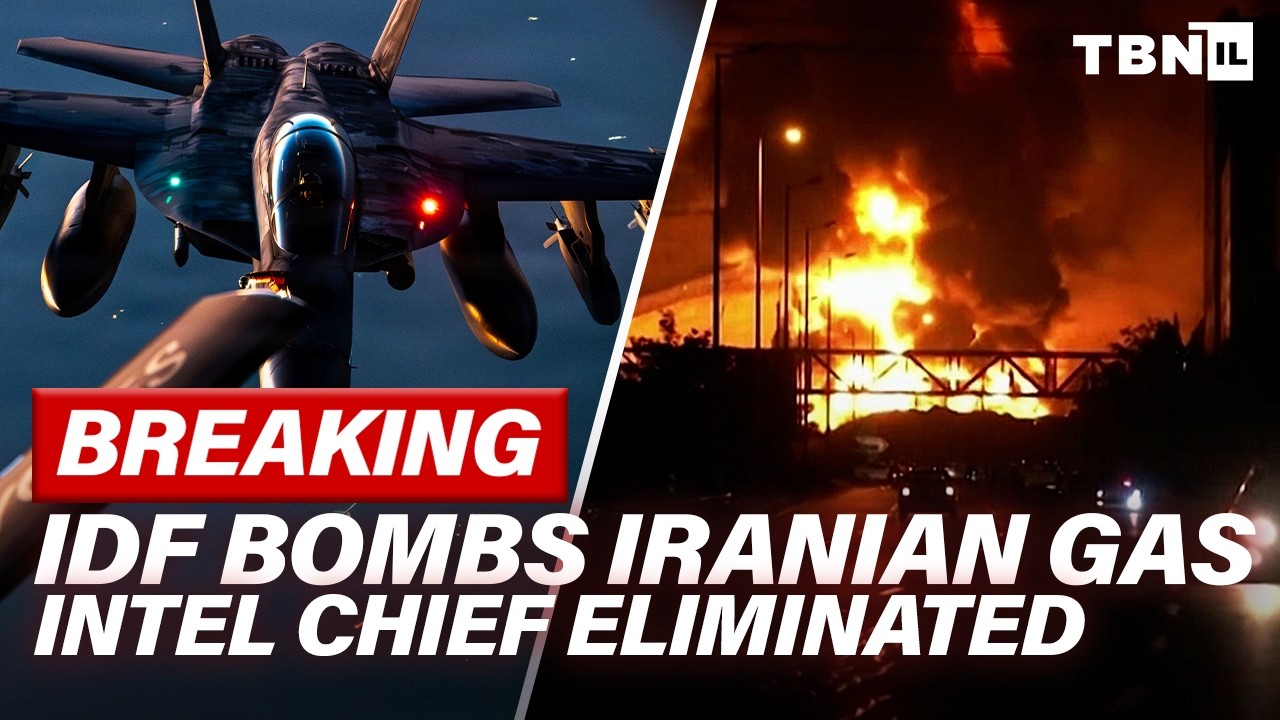
BREAKING: Israel BOMBS Major Iran Gas Site; Top Mullah ELIMINATED; Iran Vows VENGEACE | TBN Israel
"Israel and the United States have escalated their 'Roaring Lion War' against Iran, striking its largest gas facilities, eliminating key intelligence and military figures, and disrupting missile production, while Iran threatens a broader energy war in the Gulf."

Patrick Henningsen: Hezbollah JUST Fired Back at Israel - Iran Vows to “Crush” All Attacks
"Patrick Henningsen argues that the US and Israel initiated an illegal war against Iran, driven by Trump's incompetence and Israeli influence, leading to an inevitable escalation with severe global economic repercussions."
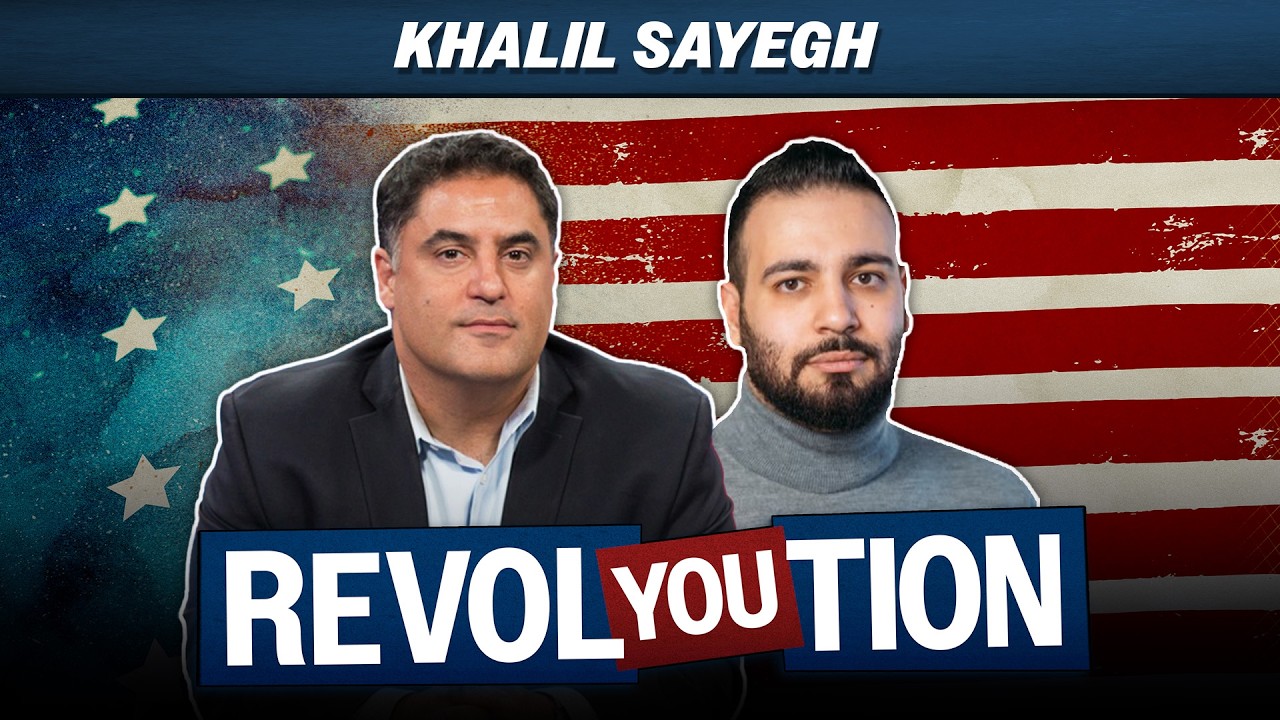
Palestinian Evangelical Analyst REACTS To U.S-Israeli War In Iran!
"The Young Turks dissect the US-Israeli war in Iran, alleging it's driven by Israeli expansionist goals, fueled by US political and media subservience, and resulting in devastating civilian casualties and economic fallout, while a Palestinian Christian analyst details the brutal realities of Israeli occupation and humiliation."

BREAKING: Iran Threatens To END Talks; U.S. Vows Retaliation; Hezbollah Collapsing? | TBN Israel
"Iran is leveraging Hezbollah and the Strait of Hormuz to manipulate US negotiations, while Israel asserts its right to dismantle Hezbollah's eroding but still dangerous infrastructure in Lebanon, independent of international talks."