
Alastair Crooke: Iran Threatens to WITHDRAW from Key Pact if Israel Doesn't Stop Lebanon Advance
YouTube · LQz66eU-pgQ
Quick Read
Summary
Takeaways
- ❖Iran views control of the Strait of Hormuz and its strategic presence in Lebanon as non-negotiable security assets.
- ❖Israel's 'permanent security' doctrine, focused on preventative action, is struggling against Hezbollah's advanced drone capabilities and guerrilla tactics.
- ❖Trump's administration is prioritizing US economic stability (oil prices, inflation) over unconditional support for Israel's military objectives in Lebanon.
- ❖The US is signaling potential costs, including withdrawal of military support, if Israel continues its aggressive actions in Lebanon.
- ❖The Israeli press acknowledges a significant defeat and the collapse of its grand strategy against Iran and the 'axis of resistance'.
- ❖A shift away from the petrodollar is gaining momentum, with China expanding digital clearing systems that bypass US financial oversight.
- ❖Many Israelis are in denial about the changing regional reality and their diminished strategic position without full US facilitation.
Insights
1Iran's Strategic Pillars: Hormuz and Lebanon
Iran's Supreme Leader has explicitly stated that control of the Strait of Hormuz is Iran's most important asset, and Lebanon is now considered an integral part of Iran's security posture. This declaration signals Iran's firm resolve to protect these interests, framing any Israeli advance into Lebanon as a direct threat to Iranian security.
The supreme leader made it clear that the most important asset for Iran is control of Hormuz, and Lebanon is strategically part of Iran's security posture.
2Israel's Strategic Paradigm Collapse
Israel's long-standing 'grand strategy' against Iran, Hezbollah, and the 'axis of resistance' has failed. The military acknowledges that buffer zones are obsolete against modern drones, and the nation's ability to project power without full US facilitation is severely limited. This has led to widespread turmoil and a realization in the Hebrew press that the Middle East will 'never be the same again'.
The entire Israeli strategy against Iran, Hezbollah, and the axis of resistance has failed and cannot be restored if the United States does not facilitate them. Some US tanker aircraft have already been withdrawn.
3US Shift: Prioritizing Economy Over Unconditional Israeli Security
The US, particularly under Trump, is prioritizing its own economic stability (e.g., preventing economic collapse, securing oil reserves, managing inflation) over Israel's demands for continued military action. Trump's public rebuke of Israeli tactics and his engagement with Iran as a sovereign state represent a significant departure from previous US policy, shocking Israel.
Trump crossed a 'Rubicon' by prioritizing relations with Iran over Israeli security claims in Lebanon. He stated the US was on the verge of economic collapse, with strategic oil reserves critically low, necessitating de-escalation.
4The Petrodollar's Erosion and Rise of Alternative Clearing Systems
The discussion highlights the potential for the Strait of Hormuz situation to accelerate a global shift away from the petrodollar. China is actively expanding its M-bank system for direct digital clearing between central banks, based on blockchain technology, which bypasses US financial oversight. This development, coupled with integrated card systems across BRICS states, threatens the existing financial architecture established in the 1970s.
The closing of Hormuz is a potent tool for moving away from the petrodollar. China has increased its M-bank system, a blockchain-based direct digital clearing system for central banks, with 56 countries indicating interest.
Lessons
- Monitor US foreign policy statements and actions for further indications of a shift away from unconditional support for Israel, particularly regarding military aid and refuelling capabilities.
- Evaluate the geopolitical and economic implications of Iran's control over the Strait of Hormuz, considering its potential to disrupt global oil markets and accelerate de-dollarization efforts.
- Investigate the growth of alternative financial clearing systems, such as China's M-bank and integrated BRICS payment networks, to understand their potential impact on international trade and currency dynamics.
- Analyze the internal political and psychological dynamics within Israel, particularly the tension between its 'permanent security' doctrine and the realities of modern warfare and diminished US support.
Quotes
"The most important, if you like, asset for Iran is control of Hormuz. That's absolutely clear. The second thing is Lebanon. And Iran has clearly stated now that Lebanon is not just one of the resistance allies, but is a part of the security needs of Iran, that it is strategically part of Iran's security posture."
"The entire Israeli strategy against Iran, against Hezbollah, against the axis of resistance is it failed has failed and cannot be restored because they cannot do it if the United States does not facilitate them."
"This issue of who's in control of America's foreign policy? Is it Israel or is it the United States? And so far they've seen it's Israel. And now Trump is actually saying things to Israel that they'd never expect he would have said."
"Israel is, you know, punching Trump and America in the face. It's a slap. No longer just a Trump, it's a slap at America's qua America as America sovereign nation."
"You know, we so there was a ceasefire agreed it was part of the document. And what does Israel do? It tries to steal half of all of Lebanon up He used those words. They stole it during the ceasefire during and want to keep it. And that's not acceptable."
"You depend 2/3 of of your of your everything comes from us. I mean, that's an implied threat to say, you know, if you won't cooperate, we won't define something and we believe and Trump believes, he will say that this is in the security interest of Israel."
Q&A
Recent Questions
Related Episodes
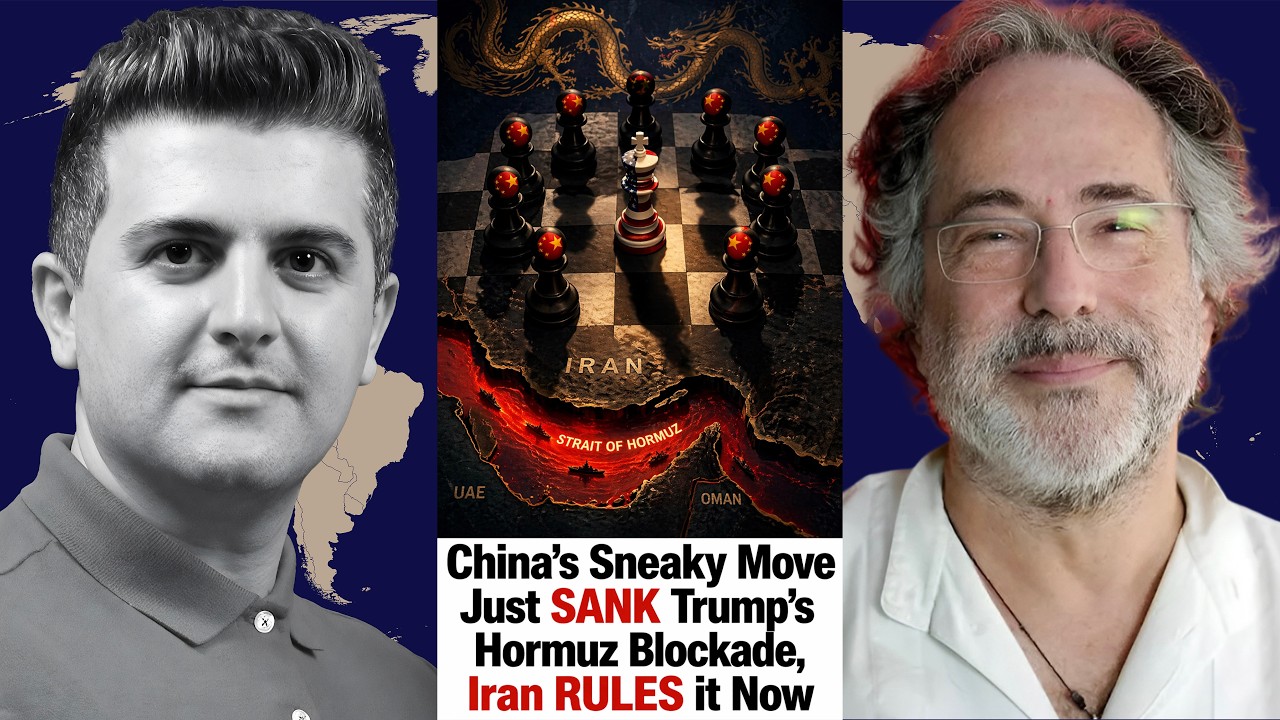
Pepe Escobar: “Total Failure”: Trump’s Blockade Just Backfired Disastrously
"Pepe Escobar argues that the US blockade against Iran, spearheaded by Donald Trump, has utterly failed and backfired, accelerating global economic chaos and challenging US geopolitical dominance."

Iran Update: Israel’s Newest Bombing Campaign, the Oncoming War With China and How to Avoid It
"Colonel Wilerson reveals how the US and Israel are actively bombing China's strategic infrastructure in Iran, escalating a covert economic war that Beijing intends to win without direct military conflict by dismantling the dollar's global dominance."
Robby Soave GOES OFF On ANNOYING Liberal Black Woman Making Emotional Trump Deranged Arguments!
"The host dissects a heated foreign policy debate, arguing that 'left-wing' emotionalism and 'Trump derangement' prevent a rational understanding of US sanction strategies against Cuba and Iran."

BREAKING: Iran Threatens To END Talks; U.S. Vows Retaliation; Hezbollah Collapsing? | TBN Israel
"Iran is leveraging Hezbollah and the Strait of Hormuz to manipulate US negotiations, while Israel asserts its right to dismantle Hezbollah's eroding but still dangerous infrastructure in Lebanon, independent of international talks."