Source close to Nancy Guthrie investigation has message to Savannah and major concerns - day 61
YouTube · Lptp_XHMs0M
Quick Read
Summary
Takeaways
- ❖The initial investigation into Nancy Guthrie's disappearance suffered from a 'rush to judgment,' treating it as a 'search and rescue' instead of a 'criminal issue.'
- ❖First responders, including the homicide unit supervisor, reportedly lacked prior homicide investigation experience.
- ❖The crime scene was not kept secure, leading to multiple re-entries by detectives and the FBI, which compromised evidentiary value.
- ❖As of day 61, there are 'no direct suspects' in the case, a consequence attributed to early investigative missteps.
- ❖Morale within the Pima County Sheriff's Office is 'extremely low,' with deputies expressing embarrassment over leadership's handling of the case and media interactions.
- ❖Savannah Guthrie's public stance of supporting law enforcement, despite frustrations, is seen as highly motivating for the working deputies.
Insights
1Initial Investigative Failures: Rush to Judgment and Inexperience
An anonymous source revealed that the initial response to Nancy Guthrie's disappearance was marred by an immediate 'rush to judgment' that she had simply wandered off. This led to the case being treated as a search and rescue operation rather than a potential criminal matter. Furthermore, the source stated that the initial responders, including the homicide unit supervisor, lacked significant homicide investigation experience. This inexperience likely contributed to overlooking critical signs that contradicted the 'wander-off' theory, such as blood at the scene and a ripped-out Ring camera.
The source explicitly stated, 'there was an immediate rush to judgment on what was happening at that scene and it was that Nancy had somehow wandered off.' They added that initial personnel 'were not tenure homicide detectives' and the supervisor 'never investigated homicide before.' Retired FBI agent Steve Moore confirmed that treating it as a wander-off case meant not looking for tire tracks, footprints, or securing the scene as a crime scene.
2Compromised Crime Scene and Loss of Evidence
A significant error was the failure to properly secure the crime scene from the outset. The scene was reportedly opened up and then re-processed multiple times by local detectives and later the FBI. This lack of continuous security raises serious questions about the integrity and evidentiary value of anything found after the initial breach. Any evidence collected later could be challenged as potentially planted or contaminated, making it difficult to establish its origin or context.
The source indicated detectives 'returned to that location not once but several times' and 'should have kept the scene secure.' Steve Moore stated, 'If you open the scene, you've lost a substantial amount of evidentiary value... Everything you find after it's been opened... opens the question, did somebody plant something once it was opened up.' He also noted the FBI would have likely removed blood-stained tiles immediately if present at the start.
3Low Department Morale and Leadership Crisis
Morale within the Pima County Sheriff's Office is described as 'extremely low' and marked by 'embarrassment,' particularly concerning Sheriff Chris Nanos's public handling of the case. The department had previously issued a 'no confidence' vote against Nanos, indicating a deep-seated distrust in his leadership. This environment of low morale and lack of confidence in leadership can hinder effective investigation, as deputies may feel unsupported or constrained.
The source stated, 'morale at the sheriff's office right now... it's extremely low. This is the lowest I've seen. There's a lot of embarrassment.' They also mentioned the 'no confidence vote' where 'every single deputy in the union voted that they don't have confidence in the sheriff.' The source also noted that deputies behind the scenes were telling Nanos to 'shut your mouth, stop talking' during press conferences.
Bottom Line
The anonymous source's decision to speak to the media, despite risking 'dishonor' and 'a lot of trouble,' represents a 'cry for help' from within the department, indicating extreme frustration and desperation over the handling of the case.
This suggests internal dissent is so profound that individuals are willing to break ranks with traditional law enforcement secrecy to highlight perceived injustices or incompetence, signaling a deeper systemic issue beyond just this one case.
External oversight bodies or investigative journalists could use such 'cry for help' signals to probe deeper into departmental practices, leadership accountability, and training deficiencies, potentially uncovering broader issues that impact public safety and justice.
Savannah Guthrie's public approach of expressing support for law enforcement, even amidst perceived failures, is seen by a retired FBI agent as highly motivating for the working deputies, preventing further alienation.
This highlights a nuanced strategy for victim families: maintaining a supportive public front can sustain the motivation of frontline investigators, even when frustrations with leadership or progress are high. Conversely, public attacks, while understandable, can demotivate those actively working the case.
Families in similar situations could be advised on strategic communication with law enforcement and the public, balancing advocacy for their loved one with maintaining a productive relationship with investigators to maximize the chances of resolution.
Key Concepts
Admitting When You're Wrong
A sign of a truly effective investigator is the ability to admit when their initial theory or track is incorrect, and to pivot based on new evidence, rather than clinging to a flawed hypothesis. This prevents tunnel vision and ensures the investigation follows the evidence, not preconceptions.
The Butterfly Effect in Investigations
Small, seemingly insignificant errors or delays in the initial stages of a complex investigation can have massive, unpredictable ripple effects, potentially leading to the loss of critical evidence or misdirection that makes the case much harder, if not impossible, to solve later on.
Lessons
- Law enforcement agencies should ensure that all personnel, especially those in specialized units like homicide, receive adequate training and experience before being assigned to critical roles or supervising complex investigations.
- Implement strict protocols for crime scene management, ensuring scenes are secured immediately and continuously until all potential evidence is collected, preventing contamination or compromise.
- Leadership within law enforcement must foster an environment where internal concerns and criticisms can be voiced and addressed without fear of reprisal, to prevent internal 'cries for help' and maintain morale.
- Families of missing persons should be persistent in providing specific details about the missing individual and the circumstances, especially if initial police theories seem to contradict known facts (e.g., medical conditions, physical capabilities).
Notable Moments
The anonymous source's message to Savannah Guthrie, stating that despite incompetent leadership, the working deputies 'are completely with her and her family' and 'don't want to be reflected in the hard work that they're doing.'
This moment humanizes the internal struggle within the department, showing that many dedicated officers are personally invested in solving the case despite their frustrations with leadership, and want the family to know their commitment.
The host reading messages from the 'Bring Her Home' banner outside KVOA, Savannah Guthrie's former TV station, showcasing widespread community support and prayers for Nancy's safe return.
This emphasizes the profound emotional impact of Nancy Guthrie's disappearance on the community and beyond, grounding the investigative analysis in the human element of the missing person's case.
Quotes
"There was an immediate rush to judgment on what was happening at that scene and it was that Nancy had somehow wandered off. And so they rushed to that judgment, stayed with that judgment, and then ran the investigation as if this was a search and rescue issue opposed to a possible criminal issue."
"From what I understand, the people that were there on the scene were not tenure homicide detectives. They didn't have a lot of experience in homicide at that point, to include the supervisor who from my understanding never investigated homicide before being installed as the supervisor for the the homicide unit."
"If you open the scene, you've you've lost a substantial amount of evidentiary value of anything you find after that. Everything you find after it's been opened, especially when the public knows what's been going on and the bad guy knows what's been going on, it opens the question, did somebody plant something once it was opened up."
"Just to explain it to Savannah that just because we have an incompetent lead doesn't mean that we don't care, that we don't want Nancy to be brought home safely and that we're not with her in this. We are completely with her and her family on this."
"She expects excellence from the police but she doesn't denigrate them for not having success in the investigation. She understands what they're going through... She has not turned on them publicly and that helps them. That motivates them more."
"For somebody to come forward to somebody in the media and say you got to know this is not going right. And that's almost to me a cry for help saying you know I know nobody would do that because they feel it's dishonorable. So doing that somebody's risking dishonor in order to do the right thing."
Q&A
Recent Questions
Related Episodes

New ransom note claims to know where Nancy Guthrie is — but is it real? Day 65 in the search
"A new ransom note surfaces on the day Savannah Guthrie returns to work, raising questions about its authenticity and the ongoing, politically fraught investigation into Nancy Guthrie's disappearance."

Nancy Guthrie Mystery: New Stalking Timeline & All The Haunting Questions Plaguing Police
"Ashleigh Banfield and Allison Winer dissect the Nancy Guthrie disappearance, exposing critical missteps and inconsistencies in the police investigation, from early crime scene release to contradictory public statements and the shrinking investigative team."

On the scene: Another note arrives in Nancy Guthrie investigation as police swarm the house again
"A second ransom note arrived at a local TV station, prompting renewed FBI activity at Nancy Guthrie's house and raising questions about the initial investigation's handling of the challenging desert terrain and local ordinances."
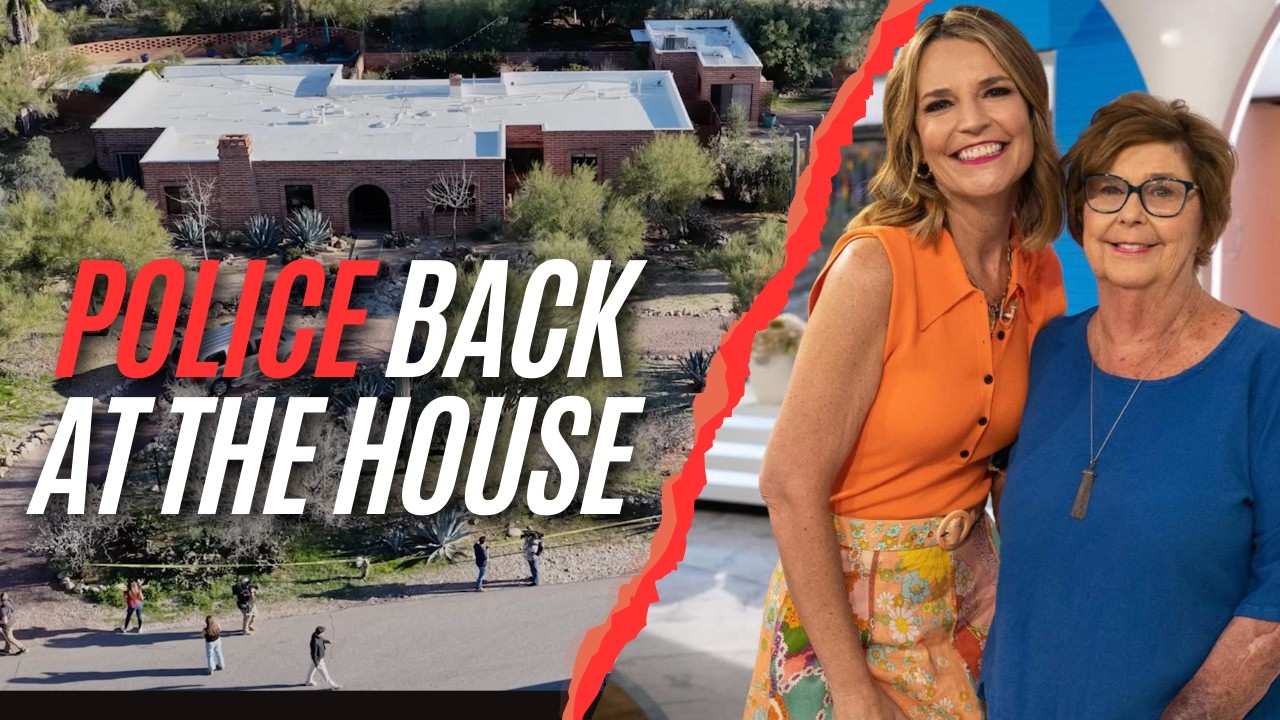
Police back at Nancy Guthrie's house -- what evidence did they take as Savannah pleads with captors
"Federal agents re-entered Nancy Guthrie's home for a targeted search and assisted Savannah Guthrie in crafting a public plea to her mother's alleged captors, revealing critical insights into the ongoing kidnapping investigation."