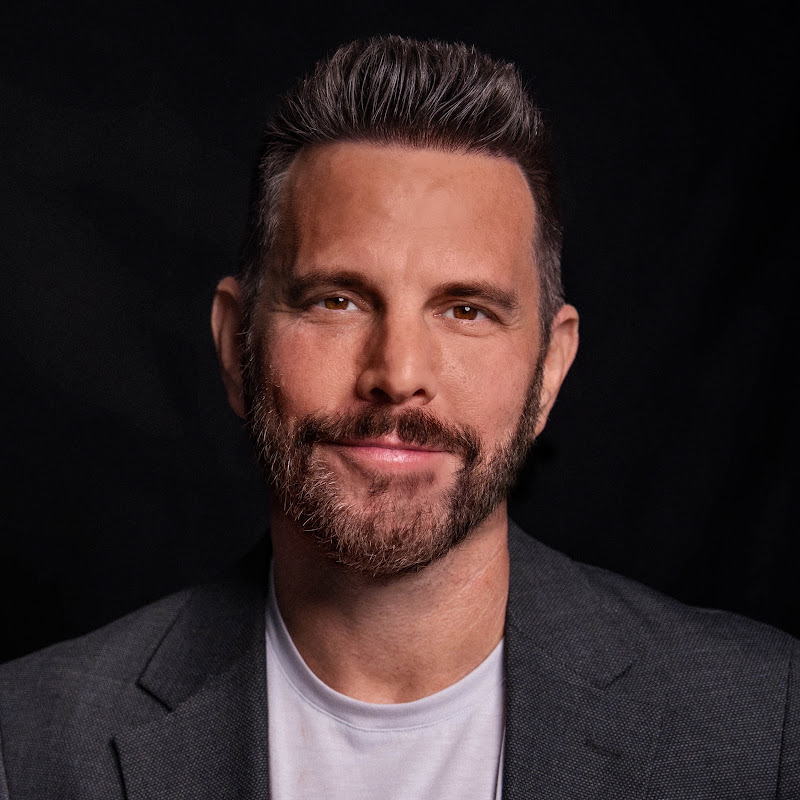
How Good Intentions Are Destroying Civilization | Gad Saad
YouTube · Ly-XuPush4I
Quick Read
Summary
Takeaways
- ❖Suicidal empathy is a form of orgiastic narcissism where individuals prioritize their moral self-image over the downstream societal consequences.
- ❖Academia has shifted from an 'epistemology of truth' to an 'epistemology of care,' leading to the concept of 'forbidden knowledge' where research is suppressed if it might cause discomfort or marginalization.
- ❖Canada and Britain are at 'stage five' of suicidal empathy, while the United States is at 'stage two' but rapidly advancing.
- ❖Social media exacerbates the problem by favoring quick, emotional responses over effortful cognitive reasoning.
- ❖The 'red-green alliance' of progressives and Islamists, combined with open border policies and socialist ethos, accelerates civilizational decline.
- ❖Immigrants often become the most vociferous defenders of Western traditions because they recognize its anomaly and value after experiencing other societal models.
- ❖The battle against these 'parasitic ideas' is long-term, extending beyond short-term political outcomes like elections, as these ideas have festered for decades in institutions.
Insights
1The Core Mechanism of Suicidal Empathy and Narcissism
Suicidal empathy is characterized by an 'orgiastic narcissism' where individuals prioritize their moral self-image and the appearance of compassion. The 'suicidal' aspect refers to the fact that while individuals may not directly harm themselves, their actions contribute to the 'civilizational seppuku' of society. The downstream effect of this moral preening is the deterioration of societal well-being, which is deemed acceptable as long as the individual can maintain their self-perception as a 'good person.'
The fact that the downstream effect of this orgiastic narcissism is that my society will go to hell, that's fine. So, in that sense, it is still a feature of societal empathy.
2Academia's Shift to 'Epistemology of Care' and 'Forbidden Knowledge'
Universities have moved away from the 'epistemology of truth,' which focuses on objective fact-finding, towards an 'epistemology of care.' This shift means that research findings are evaluated not just on their truthfulness but on whether they might 'hurt someone' or lead to marginalization. This creates 'forbidden knowledge,' where potentially true but uncomfortable results are suppressed to conform to a perceived need for care, hindering genuine intellectual inquiry.
Academia should be about the epistemology of truth. Once the universities became feminized, then what took over in many cases is what's called the epistemology of care. And that's what results, by the way, in something called forbidden knowledge.
3Stages of Civilizational Decline: Canada and UK at Stage Five, US at Stage Two
Gad Saad uses a cancer metastasis analogy to describe the progression of societal decline due to suicidal empathy. He asserts that Canada and Britain are at 'stage five,' a new, maximal stage beyond the traditional four, indicating severe and potentially irreversible damage. The United States is currently at 'stage two' but is 'galloping quickly' to catch up. This assessment is based on factors like open border policies, a lack of meritocracy, and the suppression of entrepreneurial spirit in favor of a 'nanny state' ethos.
Canada is in the very, very rarefied world of stage five of suicidal empathy. Britain is stage five. The United States is stage two, but galloping quickly to try to make up ground.
4The Long-Term Battle Against Parasitic Ideas
The current societal issues stem from 'parasitic ideas' that have festered within university ecosystems for 50 to 100 years before breaking into mainstream culture. While political figures like Trump can act as 'short-term doorstops' against these ideas (e.g., through executive orders), the fundamental battle is much longer. Eradicating these ideas requires more than just electoral victories; it demands beating the ideas themselves 'into extinction,' as evidenced by the modern debate over basic biological definitions like male and female.
The parasitic ideas that I discuss in the parasitic mind that eventually lead to swimming in the pool of societal empathy, those parasitic ideas, depending on which idea we're talking about, took about 50 to 100 years of festering within the university ecosystem.
Bottom Line
The most vociferous defenders of Western traditions are often immigrants who have experienced alternative societal models.
This suggests that a deep appreciation for Western values often comes from external comparison rather than inherent familiarity. Societies with long-standing stability may take their foundational principles for granted, making them more vulnerable to internal erosion.
Leverage the unique perspective of immigrants who have lived under different systems to articulate and defend the distinct advantages and values of Western civilization, potentially creating more compelling arguments for its preservation.
The success of 'suicidal empathy' and 'parasitic ideas' is partly due to the human mind's architecture, which avoids confronting threats until they become immediate and undeniable.
This 'monster bites you in the ass' phenomenon means that warnings about long-term societal decay are often dismissed as 'noise' until the consequences are directly experienced, making proactive intervention difficult.
Develop communication strategies that make abstract or distant threats feel more immediate and tangible, using concrete examples and personal narratives to bypass the mind's tendency to avoid uncomfortable truths, thereby accelerating public awareness and action.
Key Concepts
Suicidal Empathy
A concept where individuals or societies exhibit excessive, misdirected empathy that ultimately leads to self-destructive outcomes. It's often linked to narcissism, where the 'empathy' serves to signal one's own moral virtue rather than genuinely addressing complex problems, even if it harms the broader society.
Epistemology of Care vs. Epistemology of Truth
The contrast between two approaches to knowledge: 'Epistemology of Truth' prioritizes objective fact-finding and the pursuit of truth, while 'Epistemology of Care' prioritizes emotional well-being and avoiding harm, even if it means suppressing uncomfortable truths or 'forbidden knowledge'.
Elaboration Likelihood Model
A dual-process theory of persuasion in psychology, suggesting that people can be persuaded via a 'central route' (cognitive, fact-based) or a 'peripheral route' (affective, emotional). The podcast argues that modern society, especially social media, over-relies on the peripheral, emotional route.
Metastasis of Cancer (Societal Decline Analogy)
A metaphor used to describe the progression of societal decay, categorizing countries into 'stages' (e.g., stage one to stage five) based on how far advanced they are in succumbing to 'suicidal empathy' and 'parasitic ideas,' similar to how cancer spreads.
Lessons
- Cultivate critical thinking and cognitive reasoning to counter the pervasive emotional appeals amplified by social media, especially when evaluating complex societal issues.
- Challenge the 'epistemology of care' in educational and public discourse by advocating for the primacy of truth and open inquiry, even when findings are uncomfortable or controversial.
- Support institutions and individuals who actively defend foundational Western values like free speech, meritocracy, and individual liberty against 'parasitic ideas' and 'suicidal empathy.'
Notable Moments
Gad Saad's New York Times bestseller status for 'Suicidal Empathy' is viewed as a symbolic victory against institutions that typically oppose his views.
This moment highlights the tension between achieving mainstream recognition and maintaining ideological integrity when one's work challenges the establishment. It suggests that the sheer volume of public support can sometimes override institutional gatekeepers.
Gad Saad's move from Canada to the U.S. to teach at Ole Miss, specifically at the Declaration of Independence Center for the Study of American Freedom.
This personal decision underscores his deep frustration with the academic and societal climate in Canada and his optimism for the U.S. as a place where intellectual freedom and Western values are still appreciated and defended. It serves as a real-world example of his broader arguments about civilizational decline.
Discussion about Joe Rogan's evolving views on Israel and the influence of his social circle.
This illustrates the challenge of countering pervasive narratives, even among those who are generally open-minded. It highlights how personal connections and 'osmosis' can shape opinions on complex geopolitical issues, even when presented with alternative, fact-based perspectives.
Quotes
"Academia should be about the epistemology of truth. Once the universities became feminized, then what took over in many cases is what's called the epistemology of care."
"Forbidden knowledge is the idea that if some research is going to end up hurting someone, you shouldn't be publishing those results because those people might stand the possibility of being marginalized."
"Canada is in the very, very rarefied world of stage five of suicidal empathy. Britain is stage five. The United States is stage two, but galloping quickly to try to make up ground."
"The fact that the downstream effect of this orgiastic narcissism is that my society will go to hell, that's fine."
"The game of life is to know when to evoke which system in the right situation."
"The architecture of the human mind is such that it avoids this stuff until the monster literally bites you in the ass."
"The reason why many of the most vociferous defenders of the Western traditions are immigrants... is because we weren't born into this society. Therefore, we don't presume that this is the default value of how all societies are organized."
Q&A
Recent Questions
Related Episodes

🚨 THEY… F*CKING... FOUND… OUT… 😂😂😂
"The host delivers a fiery, unfiltered commentary on global and domestic political events, framing them as a battle between a 'collapsing globalist order' and a 'resurgent new right' that prioritizes national sovereignty and traditional Western values."

HANTAVIRUS PANDEMIC PANIC, Human To Human Spread Feared | Timcast IRL
"Tim Pool and his guests dismiss the Hantavirus panic as media desperation, pivot to discussing escalating political polarization, the rise of technocracy, and the weaponization of social issues."

🚨 OMFG!! TRUMP F*CKING SNAPPED!! 🚨
"The host argues that Trump's aggressive military actions against Iran are a necessary pre-emptive strike against a long-standing terrorist threat, while simultaneously exposing a domestic terror threat in NYC linked to legal immigration and a 'globalist left' agenda."

🚨 WTF!! NO ONE F*CKING SAW THIS COMING.. 😂😂😂
"The host reacts with shock and strong opinions to Hillary Clinton's unexpected stance on deportation, AOC's perceived incompetence, and Marco Rubio's 'diabolical' speech advocating for national sovereignty and Western civilization."