
Fine, I’ll tell it all…
YouTube · M5nt2GhfL9o
Quick Read
Summary
Takeaways
- ❖Adam Mockler started his YouTube channel at age nine, initially making gaming videos, and later transitioned to political commentary.
- ❖He found traditional college structures unappealing, dropping out to build his media apparatus, Mockler Media.
- ❖Mockler attributes Gen Z's engagement with serious issues to constant access to news via 'magic boxes' (smartphones) and formative experiences like COVID-19.
- ❖He draws a parallel between his early online engagement and the radicalization of individuals like Tyler Robinson, highlighting the impact of antisocial algorithmic spirals.
- ❖Mockler analyzes the appeal of controversial figures like Clavicular and Nick Fuentes, noting their ability to generate viral content and cater to a desire for 'edginess' and rebellion.
- ❖He received unexpected, yet valuable, advice from convicted felon Michael Avenatti about avoiding short-term outrage that could compromise long-term reputation.
- ❖Mockler criticizes the performative nature of cable news debates, where right-wing commentators often prioritize talking points over factual engagement.
- ❖He argues that ignoring the 'battlefield' of viral content and controversial figures is 'ill-advised' and that counter-voices must engage to drive alternative narratives.
Insights
1Unconventional Path to Media Influence
Adam Mockler's journey from creating Minecraft videos at age nine to becoming a political commentator on CNN at 23 demonstrates a non-traditional route to media influence. His early passion for editing and video creation, combined with a strong interest in politics and a dislike for rigid educational structures, allowed him to build a significant online presence and media apparatus (Mockler Media) independently, bypassing conventional career paths.
He created his YouTube channel at 9, making Minecraft and Call of Duty videos, then later pivoted to politics. He disliked college structure, dropping out after two semesters at IU Northwest and one quarter at DePaul, to build his own media company.
2The 'Clip Economy' and its Impact on Discourse
The modern media environment is characterized by a 'clip economy' where short, viral content and outrage-baiting drive engagement and narrative control. This format incentivizes provocative behavior and can lead to a focus on 'dopamine hits' rather than substantive debate. This dynamic shapes how political figures and content creators gain influence and how audiences consume information.
The host notes the world runs on 'clip economy' for viral, monetizable moments. Mockler states, 'The president of the United States has driven the narrative for the past decade based off of rage baiting, posting insane stuff, trying to go viral, and trying to control the narrative.'
3Radicalization through Algorithmic Bubbles
The guest posits that young people, particularly young men, are susceptible to radicalization due to antisocial algorithmic spirals, especially exacerbated by experiences like COVID-19. These algorithms can create isolated 'bubbles' that incentivize extreme behavior and dehumanize others, leading to acts of political violence.
Mockler uses Tyler Robinson (who allegedly killed Charlie Kirk) as an example, noting Robinson's early online engagement and how he 'probably got sucked down into this antisocial algorithmic radical thing.' He also mentions Elon Musk's Twitter incentivizing 'most radical behavior.'
4Strategic Engagement with Controversial Figures
Mockler advocates for engaging directly with controversial and even vile figures like Clavicular and Nick Fuentes on their own 'battlefield' of viral content. He argues that ignoring them is 'ill-advised' because they already command massive audiences and control significant narrative space. The strategy is to use the same distribution methods to push back with firm liberal values and counter-narratives.
Mockler states, 'The idea that I shouldn't be playing on this battlefield in my opinion is ill advised.' He aims to build his own 'clipping and distribution infrastructure to be able to push back against these vile ideas.'
Bottom Line
The advice from a convicted felon (Michael Avenatti) about playing the 'long game' and not being blinded by 'agitation' (short-term praise) can be uniquely valuable due to his firsthand experience of a spectacular public downfall.
This highlights that wisdom can come from unexpected sources, especially from those who have experienced the extreme consequences of public life and media scrutiny. It underscores the importance of discerning advice based on its content and context, rather than solely on the messenger's reputation.
Individuals in high-visibility roles should actively seek diverse perspectives and cautionary tales, even from controversial figures, to develop resilience and a long-term strategic mindset in a volatile public sphere.
The 'fragility' of some right-wing media personalities, who can 'dish it but not take it' in debates, reveals a performative aspect of cable news where genuine engagement is often sacrificed for pre-rehearsed talking points and outrage generation.
This indicates that many televised political debates are not designed for substantive discussion or truth-seeking, but rather for entertainment and reinforcing partisan narratives. It exposes a vulnerability in their approach when confronted with direct, fact-based challenges.
For those seeking to genuinely influence public opinion, understanding this performative dynamic allows for strategic interventions that expose disingenuous arguments and force a confrontation with reality, even if it breaks 'norms' of TV debate.
Opportunities
Leveraging 'Clip Economy' for Counter-Narrative Distribution
Develop a media apparatus focused on creating and distributing short, viral clips that promote specific values or counter harmful narratives. This involves actively engaging with trending topics and controversial figures on their 'battlefield' (e.g., Twitter, Instagram, YouTube Shorts) to insert alternative perspectives into the mainstream digital discourse.
Key Concepts
The Clip Economy
This model describes the current media landscape where short, viral video clips and soundbites dominate content consumption and drive engagement. Success is often measured by virality and the ability to generate 'dopamine hits' or 'adrenaline' through provocative or outrageous content, rather than long-form, academic discussion.
Algorithmic Radicalization
This model explains how personalized algorithms on social media can create 'bubbles' around individuals, feeding them increasingly extreme content. This can lead to antisocial behavior, dehumanization of others, and a spiral into radical ideologies, particularly among young men who may lack social cohesion.
Battlefield Engagement
This model proposes that to effectively counter harmful or disingenuous narratives, one must engage directly on the platforms and in the formats where those narratives are gaining traction. Rather than disengaging or 'not giving air' to controversial figures, the strategy is to occupy the same 'battlefield' to push back and offer alternative perspectives.
Lessons
- Cultivate a long-term vision for your public reputation, actively resisting the temptation to chase short-term viral outrage that could compromise your credibility, as advised by Michael Avenatti.
- Recognize and adapt to the 'clip economy' by understanding how short-form, provocative content drives engagement. Develop strategies to create impactful, concise messages that can compete in this environment while maintaining integrity.
- When confronting disingenuous or radicalized narratives, engage directly on the platforms where they thrive, rather than disengaging. This involves strategically challenging false claims and offering alternative perspectives within the same digital 'battlefield'.
Notable Moments
Mockler recounts being kicked out of sixth grade for debating his teacher on gay marriage, highlighting his early inclination to challenge authority and engage in political discourse.
This anecdote establishes Mockler's long-standing tendency to question established norms and engage in debate, foreshadowing his later career in political commentary.
Mockler describes swapping a clean version of his rap song for a 'dirty' one at his high school homecoming, leading to his principal screaming at him and being walked out.
This illustrates his rebellious nature and willingness to defy rules for self-expression, a trait that continues to define his approach to media and debate.
Mockler's grandpa, a CNN viewer, acts as a 'coach' before his TV appearances, offering insights into the personalities of other commentators.
This highlights an unconventional form of mentorship and shows how personal connections can inform professional strategy, bridging generational gaps in media consumption and analysis.
Quotes
"I didn't like the structure of college... I took this film class that sort of reinvigorated my love for editing and filmmaking."
"The system isn't working as it was supposed to anymore. There's an interesting stat that young men who go to college and who go for four years and who graduate are now finding jobs at the exact same rate as young men who don't go to college."
"Don't lose your long-term vision reputation due to this short-term outrage."
"The fragility of these people to dish it but not take it."
"The idea that I shouldn't be playing on this battlefield in my opinion is ill advised."
Q&A
Recent Questions
Related Episodes
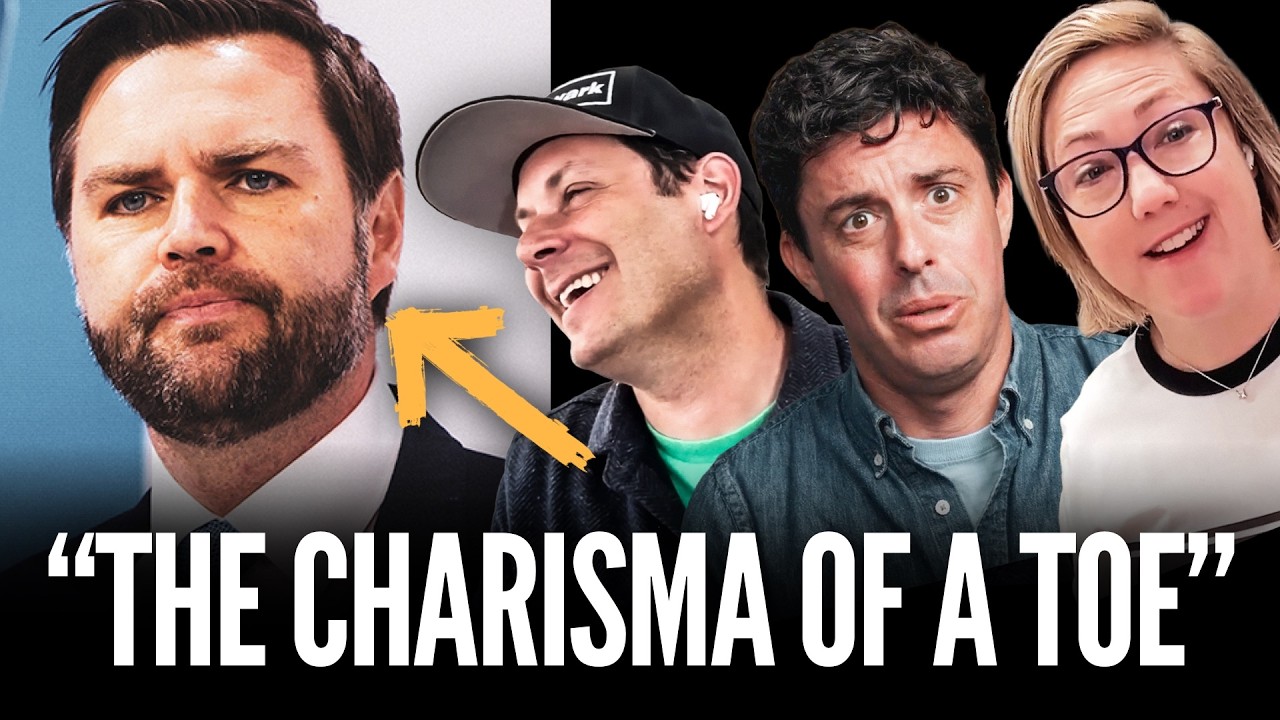
No Matter How Hard He Tries, JD Vance Will Never Be Cool
"This episode features a lively political trivia game and passionate rants, dissecting the 'Never Trump' movement, Democratic strategy, and the perceived lack of charisma of figures like JD Vance."

🚨 LEFTISTS ARE F*CKING SEETHING 😂😂😂
"The host aggressively celebrates perceived 'wins' for the right-wing, from global conflicts and domestic politics to cultural shifts, framing them as a 'humiliation' for the 'leftist world order' and a testament to Donald Trump's influence."

Scientology is Under Attack (Viral Speedrun) - H3 After Dark #50
"The hosts dissect viral online controversies, from a streamer's bizarre take on a video game to a new TikTok trend of 'Scientology speedruns,' highlighting the absurdity and underlying motivations in internet culture."

Fox and Friends with Benefits
"Hosts Jennifer and Angie air their grievances on everything from unchanging dental drill noise and airport 'plane trains' to the perceived hypocrisy of Fox News personalities and the absurdities of social media meltdowns."