
Why stepbrother accused of raping, murdering Anna Kepner on Carnival Cruise could stay out of jail
YouTube · M8KTmoct42U
Quick Read
Summary
Takeaways
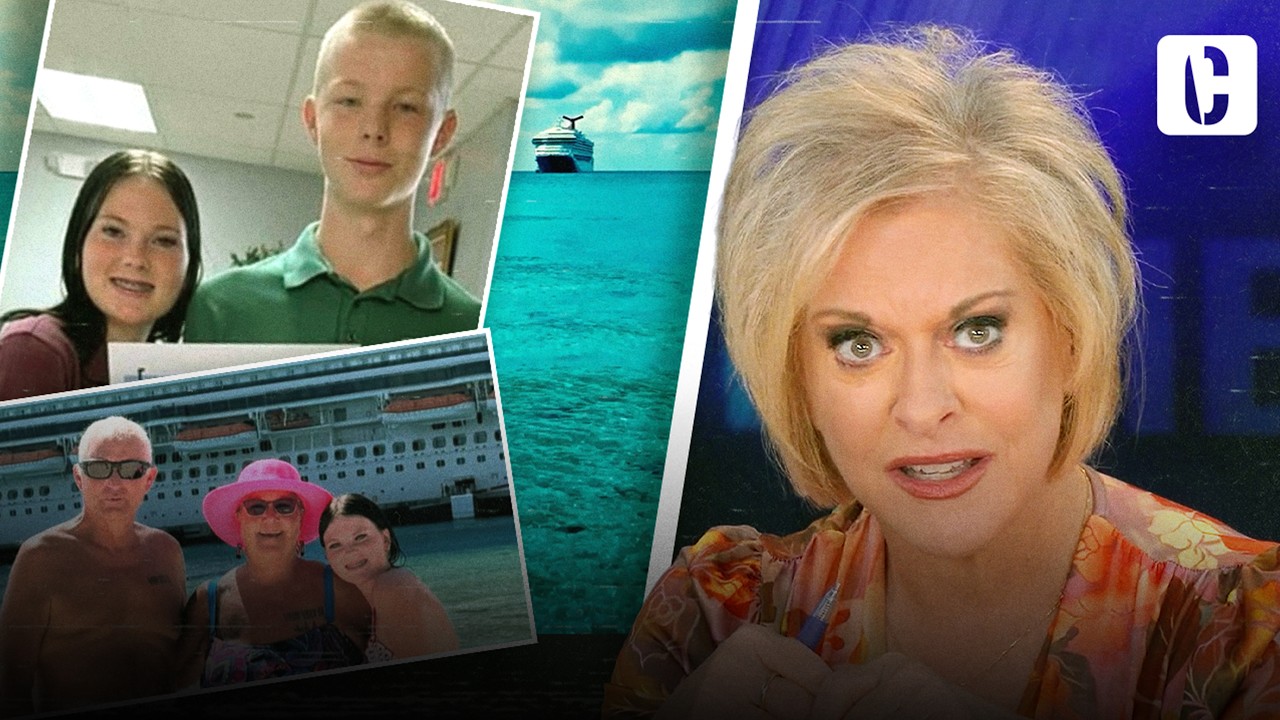
- ❖A 16-year-old is accused of raping and murdering his stepsister, Anna Kepner, on a Carnival cruise ship.
- ❖Despite federal adult charges for murder and rape, the suspect has never been jailed, living with an uncle.
- ❖The federal system is not designed for juvenile offenders, lacking dedicated detention facilities and having different pre-trial release standards.
- ❖Crimes on international waters fall under federal jurisdiction, preventing transfer to state courts which typically handle such cases.
- ❖Anna's father and the public are outraged by the suspect's continued freedom and perceived lack of remorse.
- ❖The upcoming arraignment will determine if the judge applies adult detention standards, potentially leading to incarceration in a state juvenile facility.
- ❖The defense may focus on the suspect's mental state, including ADHD and insomnia medications, and claims of memory loss regarding the incident.
Insights
1Federal System's Inadequacy for Juvenile Detention
The federal legal system is primarily geared towards adult offenders and lacks the infrastructure, such as juvenile detention centers, to house minors. This structural limitation often results in juveniles, even those accused of severe crimes, being treated with 'kid gloves' and released on pre-trial bond, often to relatives, rather than being incarcerated.
David Weinstein, a former Miami federal prosecutor, states, 'the federal system is not equipped to handle juveniles... Bureau of Prisons, US Marshalss has nowhere to house juveniles.' He adds, 'It's not unusual for a juvenile... to be treated with, if you'll pardon the expression, kid gloves.'
2International Waters Mandate Federal Jurisdiction
The crime's occurrence on a cruise ship in international waters automatically places it under federal jurisdiction, preventing state courts from prosecuting the case. This means the case cannot be 'passed on' to a state system that might have different, potentially stricter, detention policies for juveniles accused of violent crimes.
Weinstein confirms, 'Because this crime was committed on the high seas, it has to be charged under federal statutes... There is no default to turn this over to the state.'
3Shift in Detention Standards with Adult Charges
While initially treated as a juvenile delinquent with lenient detention standards, the suspect's re-charging as an adult means the magistrate judge can now apply the same detention standards used for adult offenders. This allows for considerations of risk of flight, danger to the community, and the setting of more significant bonds (cash, surety, 10% bonds) that carry greater consequences for non-compliance.
Weinstein explains, 'Now that he's been charged as an adult... the standard that the magistrate judge is going to use to look at detention is the same that they used for adult offenders.' He notes the judge can now 'detain him based on risk of flight, danger to the community, or set some sort of bond.'
4Mental State as a Key Defense Strategy
Given the suspect's claim of no memory of the events and his prescribed medications for ADHD and insomnia, his mental condition is likely to be a central component of the defense. This could involve exploring his competency at the time of the crime and the potential mitigating effects of his medications on his mental capacity.
The host mentions the suspect 'claims that he doesn't remember anything' () and is on medication for ADHD and insomnia (). Weinstein suggests, 'I think you have to focus on his mental condition... Was he competent at the time he committed the crime to understand the nature of the wrongdoing and to form the criminal intent?'
Bottom Line
The federal system's inability to easily detain juveniles, even for severe crimes, effectively creates a 'loophole' in justice perception for victims' families, who expect immediate incarceration.
This discrepancy fuels public outrage and distrust in the legal system, as the accused remains free while facing charges for a brutal crime, contrasting sharply with how state systems might handle similar cases.
This highlights a need for legislative review or systemic reform to address how federal law handles juvenile offenders in high-profile, severe cases, especially those with unique jurisdictional challenges.
Key Concepts
Jurisdictional Loophole
This refers to situations where the specific location of a crime (e.g., international waters) dictates which legal system has authority, potentially leading to outcomes that differ significantly from public expectations or state-level justice. In this case, federal jurisdiction over a crime at sea, combined with federal system's limitations regarding juveniles, creates a 'loophole' where a severe crime suspect remains free.
Juvenile vs. Adult Legal Standards
This model highlights the fundamental differences in how legal systems treat minors versus adults, particularly concerning detention, sentencing, and public disclosure. Even when a juvenile is charged as an adult, their age can still influence decisions on pre-trial release and the type of facilities they can be held in, reflecting a societal and legal distinction in accountability and rehabilitation.
Notable Moments
The host highlights the public's confusion and anger over the suspect's continued freedom despite being accused of rape and murder.
This sets the emotional context for the episode, emphasizing the public's expectation of immediate incarceration for such severe crimes and the perceived injustice.
Anna's father expresses his desire to see the stepbrother 'in an orange jumpsuit' and calls him a 'danger to the public,' noting no apology or remorse.
This provides the victim's family's perspective, underscoring their pain, fear, and demand for justice, which contrasts with the legal system's current handling of the case.
The expert, David Weinstein, confirms that the federal system is not equipped for juveniles and that it's 'not unusual' for them to be released, despite the severity of charges.
This moment provides the core legal explanation for the unusual situation, demystifying why the suspect has remained free by detailing the structural differences between federal and state juvenile justice.
Quotes
"The federal system is not equipped to handle juveniles. There is something called the Juvenile Delinquency Act that addresses all of this. But the bottom line is unlike the state system, the federal system is geared towards adult offenders."
"Because this crime was committed on the high seas, it has to be charged under federal statutes. There is a particular section of the federal statutes that deals with crimes committed on the high seas. That's what this is. There is no default to turn this over to the state."
"Now that he's been charged as an adult... the standard that the magistrate judge is going to use to look at detention is the same that they used for adult offenders."
"It's rare for a murder trial, a murder charge in the federal system, and it's it's even more rare for it to be a juvenile, it sounds like."
Q&A
Recent Questions
Related Episodes

Killer Cases: NBA Star Lured to Execution In Rural Tennessee
"The decade-long cold case of NBA star Lorenzen Wright's murder was cracked through a persistent mother, a jailed informant, and a covert police operation that recovered the murder weapon from a lake and exposed a conspiracy driven by greed."

Amanda Knox and John Ramsey - Megyn Kelly's "Double Feature" of Fascinating Interviews
"This episode features two individuals, Amanda Knox and John Ramsey, whose lives were irrevocably altered by tragic crimes and subsequent wrongful accusations, revealing systemic failures in justice and media manipulation."

The Joe Budden Podcast Episode 939 | On Some Bro Shit
"The Joe Budden Podcast crew dives into personal grooming, the chaotic Knicks championship parade, the decline of unique cultural experiences, and controversial celebrity revelations, sparking lively debates on relationships, addiction, and public behavior."
TEEN'S DNA REVEALED IN ANNA KEPNER'S R*** KIT
"The investigation into Anna Keaptainner's death on a cruise ship reveals shocking DNA evidence, a previously unknown male minor, and critical questions about evidence handling and family dynamics."