
Iverson's Take On Load Management IGNITES Gil's Arena
YouTube · MAKiBNE7kuQ
Quick Read
Summary
Takeaways
- ❖Allen Iverson's viral post criticizes load management, contrasting it with his era where he played through injuries and was scrutinized for missing practice.
- ❖Gilbert Arenas suggests load management is a strategic organizational decision to extend star players' careers for long-term financial benefits, citing players like Curry and Harden playing effectively into their late 30s.
- ❖The hosts debate if modern NBA practice is still relevant for superstars, with one arguing it's now about individual skill development (e.g., shooting 500 corner threes) rather than team execution.
- ❖A contrarian view posits that despite higher scoring and more three-pointers, the modern game is 'lazier' and less physically demanding than past eras, which involved more drives, contact, and full-court play.
- ❖The increased volume of three-point shooting in today's game leads to 'bad shots' from players who are not natural shooters, impacting overall game efficiency and quality.
Insights
1Load Management as an Organizational Strategy for Longevity
Gilbert Arenas argues that load management, while seemingly player-driven, is fundamentally an organizational strategy. Teams invest in extending the careers of their star players (like Stephen Curry or James Harden) to maximize long-term revenue from ticket sales, merchandise, and sustained fan engagement over many years, rather than risking burnout or career-ending injuries from playing through pain, as was common in Iverson's era.
Arenas states, 'Now, those guys are smarter than the guys before... we're going to take 10 games off. We're going to make sure you're not playing banged up so we can extend your career so I can have you longer... I have my product longer, meaning I get to sell out seats longer, years, decades, more jerseys every year.' He contrasts this with Iverson and Kobe's careers being cut short by injuries.
2The 'Laziness' of Modern NBA Offense vs. Past Eras
One host controversially claims that despite higher scoring, the modern NBA game is 'lazier' and less physically demanding than previous eras. He argues that the heavy reliance on three-point shooting, even by non-shooters, reduces the need for constant full-court running, driving to the basket, and enduring physical contact that characterized older styles of play. This leads to fewer layups and free throws (which result from contact) and more missed long-range shots.
The host states, 'How can you have a two time faster game and you score a team scores 98 points... and you're shooting 53s, 48 threes a game... If you're taking 50 threes, we took 14. That mean it's more though because you just take the output... You're not moving faster. It's is actually lazier. You playing lazy basketball.' He also notes that in the 60s, teams averaged 120-130 points with no threes, implying more efficient, aggressive offense.
3Impact of Volume Three-Point Shooting on Player Roles and Game Quality
The discussion highlights how the mandate to shoot more three-pointers has altered player roles and potentially decreased game quality. Players who are not naturally strong three-point shooters are now compelled to take more long-range shots, leading to lower percentages and 'bad shots.' This shift prioritizes volume over strategic shot selection and execution, contrasting with older eras where players had defined roles and would 'cut' or 'drive' if not a designated shooter.
One host illustrates this with an example: 'We have to take 30 more threes now. So we do we have to take 30 more threes from this team. Who is taking them, right? I took nine this game... that means Andre Blotch got to sit there and shoot more... So, now you see where the bad shooting comes from because shooters who can't shoot... I'm going to shoot it.' He uses Jared Vanderbilt as an example of a non-shooter being told to shoot threes.
Quotes
"This all hit different for me. Load management. They took me to hell for allegedly not practicing. Now they're crying about the players not playing games. I play with every injury you could think of to the point they had to hide my jersey to keep me from playing."
"Now, those guys are smarter than the guys before... because now you're I got to hide the jersey from you. That's what we're going to do now. So Allan Iverson, the Cobes, all those guys, we lost their careers because of injuries, right? So now if you look at today's game, you have Curry playing at 37. You have James Harden. Look what they're doing at this age."
"How can you have a two time faster game and you score a team scores 98 points... and you're shooting 53s, 48 threes a game... You're not moving faster. It's is actually lazier. You playing lazy basketball."
Q&A
Recent Questions
Related Episodes

The New York Knicks May NEVER Lose Again!!
"The New York Knicks' dominant sweep of the Cleveland Cavaliers has ignited fervent belief among analysts that their unique team chemistry, star player role acceptance, and strategic coaching adjustments make them an unstoppable force heading into the NBA Finals."

Unc, Ocho and Iso react to Spurs BLOWING OUT Wolves + Knicks beat 76ers + Cornbread joins | Nightcap
"The Nightcap crew dissects the NBA playoffs, from the Spurs' dominant win over the Timberwolves to the Knicks' tight victory against the 76ers, alongside deep dives into player dynamics, coaching challenges, and the politics of team selection."

Unc, Ocho & Iso Joe REACT to USA falls to Turkey + LaMelo Ball TRADED to TWolves | Nightcap
"The Nightcap crew reacts to the USA soccer team's loss to Turkey, the blockbuster LaMelo Ball trade to the Timberwolves, and the ongoing trade rumors surrounding Jaylen Brown, offering strong opinions on player valuations and team strategies."
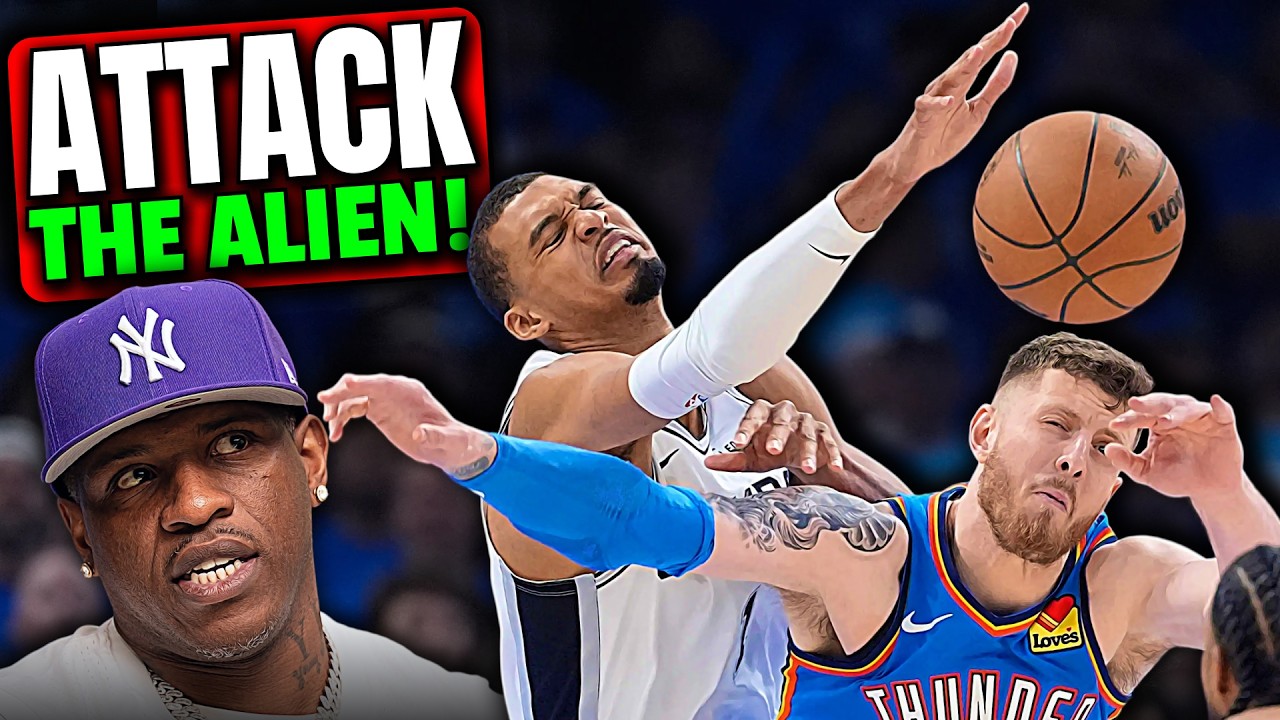
The Thunder's HOSTILE Game Plan Is DESTROYING Wemby
"The OKC Thunder's strategic defensive approach, centered on Isaiah Hartenstein's physical play, has effectively neutralized Victor Wembanyama, forcing him out of his comfort zone and highlighting areas for his development."