
The Iran War Is A DIRECT ASSAULT On The U.S. Food Supply! – Catherine Austin-Fitts
YouTube · MDyANhR_7lc
Quick Read
Summary
Takeaways
- ❖A 'secret governance system' is centralizing control, aiming to end democratic governance and shred the constitution.
- ❖The 'central banking warfare system' undergoes monumental resets every 80-120 years, with the current one being a 'once every 500 years event' towards a technocratic control grid.
- ❖Programmable money, whether CBDCs or 'private' stablecoins, is designed to enable central control over individual spending, movement, and even health choices (e.g., dictating food purchases).
- ❖The 'Iran War' is seen as a deliberate act to close the Straits of Hormuz, disrupting fertilizer supply and jeopardizing spring planting in Western countries, leading to food shortages.
- ❖The US government's financial state (trillions in deficit, increasing debt interest) is unsustainable, and the 'poisoning' of the population is presented as an intentional depopulation strategy to manage unfunded liabilities.
- ❖The 'control grid' relies on three pillars: programmable money, interoperable digital IDs with biometrics, and extensive hardware/software infrastructure (FLOCK cameras, Starlink, dense cell towers).
- ❖Individuals can resist by using cash, promoting cash-accepting businesses, and engaging in local food production (e.g., 'victory gardens').
Insights
1The Global Financial Reset and the Control Grid
Catherine Austin-Fitts asserts that the world is in the midst of a 'reset' of the 'central banking warfare system,' a monumental change occurring every 80-120 years. This current reset is described as a 'once every 500 years event' aiming to transition from currency-based systems to a 'technocratic control grid.' This new system would utilize programmable money (CBDCs or private stablecoins) to enforce rules centrally, controlling where and how individuals can transact, what they can buy, and their spatial movements. The goal is total central control, ending the constitutional republic.
Guest's explanation of the central banking system, historical resets (Spanish flu, WWI), and the current shift towards digital technology and programmable money, citing the head of the Bank of International Settlements (BIS) on setting and enforcing rules centrally.
2Intentional Depopulation and the US Deficit
Austin-Fitts claims that the systematic 'poisoning' of the American population through food (e.g., glyphosate), pharmaceuticals (e.g., COVID shots), and other means is an intentional depopulation strategy. She links this to unfunded retirement systems, arguing that if transparency isn't brought to missing federal funds, 'they' will continue to lower life expectancy to balance budgets. The increase in HHS budget and the 'deterioration in cognition' are cited as evidence of this ongoing poisoning.
Discussion about the $21 trillion missing from federal government, the increase in HHS budget, the alleged 'poisoning' of people with food and pharmaceuticals, and the impact on life expectancy and cognition. Trump's executive order shielding glyphosate makers is also cited.
3The Iran War as an Assault on the Food Supply
The 'Iran War' is presented as a deliberate action to disrupt global food supplies, specifically by closing the Straits of Hormuz. This closure, even for a short period (e.g., 21 days as suggested by Goldman Sachs), would severely impact the availability and cost of fertilizer materials for Europe and the United States, leading to failed spring planting. This disruption, combined with cuts to emergency food funding, is seen as a mechanism to centralize control by collapsing small businesses and consolidating market share into larger, publicly traded entities.
Guest's explanation of the connection between the Straits of Hormuz, fertilizer production, spring planting, and the economic ramifications for farmers and the food supply chain. Mention of Trump administration slashing emergency food funding.
4The Pillars of the Digital Control Grid
The 'control grid' is described as having three main components: 1) Programmable money, which can be turned on/off, adjusted, or have rules applied (e.g., negative interest rates, specific purchase eligibility). 2) A high-quality, globally interoperable digital ID system with biometrics. 3) Extensive hardware and software infrastructure for surveillance and control, including FLOCK cameras (license plate readers), Starlink satellites, and a dense network of cell towers (every 400-700 ft). This infrastructure collects 'mammoth amounts of data' to enable spatial and financial control.
Guest's detailed breakdown of the three main parts of the control grid, including examples like FLOCK cameras, Starlink, and FCC's push for more cell towers.
Bottom Line
The alleged 'Iran War' is not primarily about energy but is a direct, intentional assault on the global food supply, specifically targeting Western agricultural productivity by disrupting fertilizer access through the closure of the Straits of Hormuz.
This reframes geopolitical conflict as a tool for economic warfare aimed at food security, suggesting a deliberate strategy to create scarcity and consolidate control over essential resources.
Individuals and communities should prioritize local food production, establish 'victory gardens,' and build resilient, decentralized food systems to mitigate vulnerability to global supply chain disruptions.
The US government's inability or unwillingness to protect sea lanes (e.g., Straits of Hormuz) despite a trillion-dollar military budget is presented as either 'gross incompetence' or a deliberate part of a plan to accelerate de-dollarization and force European allies to negotiate directly with adversaries, thereby weakening the US syndicate.
This implies a calculated weakening of US global dominance, potentially leading to a multi-polar world with new financial and geopolitical alignments, or a strategic move to push nations into a global digital currency system.
Monitor shifts in global trade routes and currency dominance. Explore alternative investment strategies that are less reliant on the US dollar's reserve status and consider regional economic blocs.
Key Concepts
Central Banking Warfare System
A model where central banks print money, and the military ensures its acceptance and control, undergoing monumental 'resets' every 80-120 years to centralize control of labor and capital.
Technocratic Control Grid
A proposed future system leveraging digital technology, programmable money, digital IDs, and pervasive surveillance infrastructure (cameras, satellites, cell towers) to achieve total central control over populations, ending traditional currency and individual freedoms.
Lessons
- Prioritize and consistently use cash for transactions to resist the transition to an all-digital, programmable money system.
- Actively support and do business with local establishments that accept cash, helping to keep the cash economy viable.
- Invest in personal and community-level food resilience, such as starting 'victory gardens' or supporting local farmers, to reduce dependence on vulnerable global supply chains.
Resisting the Control Grid
**Pray and Engage:** Recognize the spiritual dimension of the struggle and actively participate in resistance efforts.
**Protect Cash:** Use cash for all possible transactions and encourage businesses to accept it. This is the primary defense against an all-digital control system.
**Disengage from the System:** Identify and reduce reliance on companies, banks, and digital mechanisms that contribute to the 'control grid' (e.g., digital IDs, certain digital payment platforms).
**Build Local Resilience:** Focus on local food production, energy sources, and community networks to reduce dependence on centralized systems.
**Advocate for Freedom:** Support legislative efforts at state and local levels to protect cash, privacy, and constitutional rights against programmable money and surveillance technologies.
Notable Moments
A power outage occurred during the discussion about the 'control grid' and surveillance, which the host jokingly referred to as a 'false flag' and the guest as 'that's what we had here,' adding an ironic layer to the conversation about systemic control.
This unplanned event underscored the very themes of vulnerability and potential disruption being discussed, making the abstract concepts of control and systemic fragility feel more immediate and tangible.
Quotes
"The central banks print money and the military make sure they take it. And every 80 to 120 years that system does a reset which is a monumental change."
"The beauty of the system is we can set the rules centrally and we have the technology to enforce them."
"If they are able to kill cash, I assure you they will have, you know, we will go from a world where we live in a constitutional republic to a world of complete slavery. It it's that extreme."
"The ramifications of closing those straits for 21 days to the global food supply is going to be astonishing."
Q&A
Recent Questions
Related Episodes
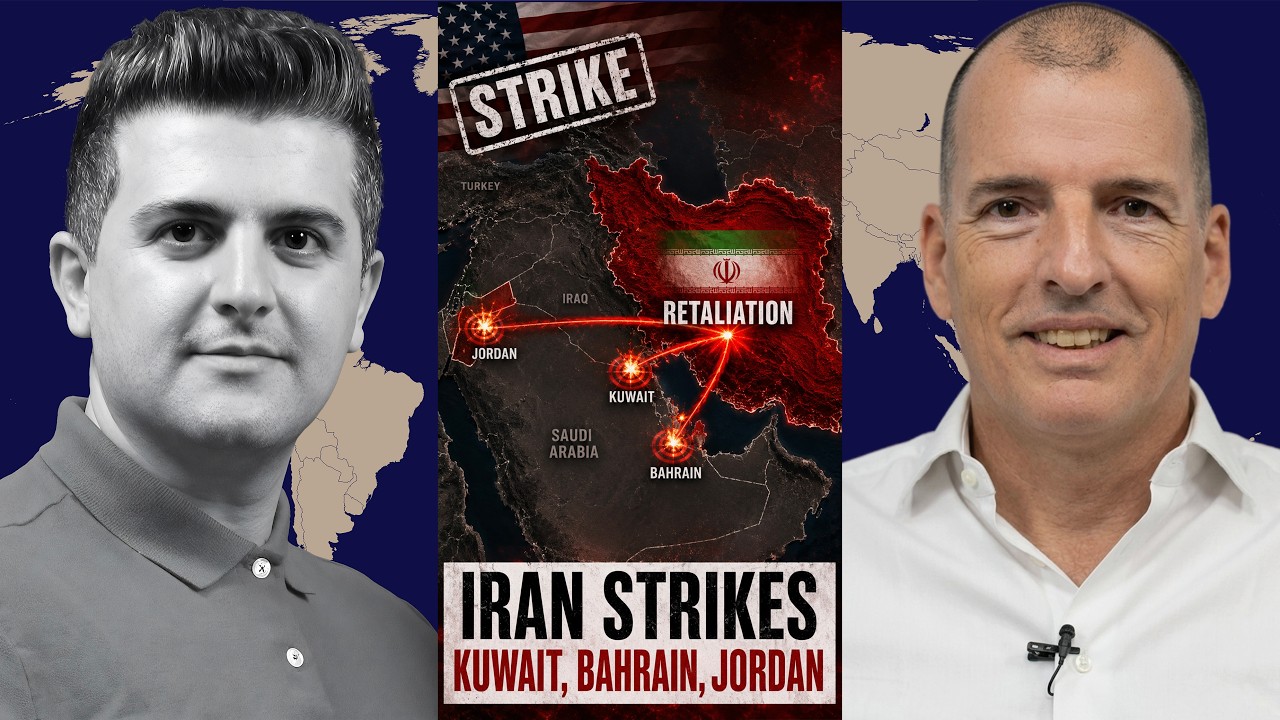
Alex Krainer: US STRIKES Iran – Iran RETALIATES Against Kuwait, Bahrain & Jordan!
"Amidst escalating US-Iran conflict and Iranian retaliation against regional US allies, this episode argues that US foreign policy is deeply controlled by an 'Anglo-Zionist conspiracy' led by the Rothschild banking dynasty, prioritizing Israeli interests over American ones."

🚨 LEFTISTS ARE F*CKING SEETHING 😂😂😂
"The host aggressively celebrates perceived 'wins' for the right-wing, from global conflicts and domestic politics to cultural shifts, framing them as a 'humiliation' for the 'leftist world order' and a testament to Donald Trump's influence."

Iran Update: Israel’s Newest Bombing Campaign, the Oncoming War With China and How to Avoid It
"Colonel Wilerson reveals how the US and Israel are actively bombing China's strategic infrastructure in Iran, escalating a covert economic war that Beijing intends to win without direct military conflict by dismantling the dollar's global dominance."

Basement #002: Mike Bara | JFK Assassination, Secret Space Program & Cities on Mars
"Aerospace insider Mike Bara connects the JFK assassination to a deep state cover-up of alien technology and a secret space program, arguing current UAP disclosure is a curated narrative to militarize space."