
Descubrí que Mi Abuelo Era un NAHUAL | Historias Malditas de Pueblos Mexicanos
YouTube · MNlws9sMjBI
Quick Read
Summary
Takeaways
- ❖Rural Mexican towns are 'seedbeds of stories' where the past is always present, and ancient beliefs deeply influence daily life.
- ❖The 'Rule of Three' is a common belief in some towns, where one death is quickly followed by two more, prompting rituals to prevent further loss.
- ❖Many modern Mexican legends, such as La Llorona, Nahuales, and brujas (witches), have direct roots in pre-Hispanic mythology.
- ❖Brujas are categorized into types like 'Momexc Pinky' (shapeshifting into dark birds) and 'Tlaguelpuchis' (shapeshifting into fireballs).
- ❖The 'Cart of Death' (La Carreta de la Muerte) is a widely feared omen, its distant sound indicating proximity and vice versa, always preceding a death.
- ❖Encounters with malevolent entities like 'El Fraile' (the Devil) can leave individuals physically and mentally scarred, serving as harsh lessons.
- ❖Asiwat, or Mexican sirens, are pre-Hispanic water spirits (half-fish or half-snake women) sent by Tlaloc, often appearing as omens before natural disasters like floods.
- ❖The ability to shapeshift into a Nahual is believed to be inheritable, passing down through family lineages.
Insights
1The 'Rule of Three' Deaths and the Water Ritual
In San Juan de las Labores, Oaxaca, a deeply held belief dictates that when one person dies, two more will follow. To prevent this 'Rule of Three,' villagers perform a ritual: a clay pot of water is placed in the church's bell tower, accompanied by prayers. This practice is believed to 'stop the angel of death' and has historically correlated with a reduction in subsequent deaths, despite medical skepticism.
The story of nurse Julián, who failed to perform the ritual after a fisherman's death, leading to the unexpected deaths of a child and another person shortly after. The community's strong belief and the observed pattern of deaths ceasing after the ritual.
2Pre-Hispanic Roots of Mexican Supernatural Beings
Many iconic Mexican supernatural figures, such as La Llorona, Nahuales, and brujas (witches), have direct origins in pre-Hispanic mythology. La Llorona, for instance, is linked to the Aztec goddess Cihuacoatl, who warned of Tenochtitlan's fall. This deep historical connection explains the pervasive and enduring nature of these beliefs in modern Mexico.
Antonio Chapa explains that if Mexican legends have a body, the pre-Hispanic forms the skeleton. He specifically links La Llorona to the Cihuacoatl goddess from the time of Tenochtitlan.
3Types of Brujas (Witches) and Their Manifestations
Mexican folklore distinguishes between different types of witches. 'Momexc Pinky' are witches who detach their feet and transform into large, dark, turkey-like birds to hunt children. 'Tlaguelpuchis' are witches who transform into 'balls of fire' of various colors. These manifestations are actively observed in rural areas, with specific protective measures like placing scissors under babies' pillows.
Antonio details the Momexc Pinky and Tlaguelpuchis, their methods (detaching feet, turning into fireballs), and the local beliefs about protecting newborns with scissors. He recounts a recent event in his town where a figure resembling a woman in white with hollow eyes was photographed in trees, coinciding with a local tragedy.
4The Cart of Death (La Carreta de la Muerte) Encounters
The 'Carreta de la Muerte' is a spectral cart pulled by a horse, often heard in the dead of night, signifying an impending death. Its sound is deceptive: if it sounds far, it's near; if it sounds close, it's far. Those who encounter the rider describe a chilling, yet sometimes peaceful, invitation to join the journey. Religious symbols, like a rosary, are believed to offer protection.
Martin Méndez's grandfather, Don Teodoro, encountered the 'death' figure disguised as a man asking for water. After offering water, the figure revealed a skull face and grabbed Don Teodoro, leaving a permanent mark. Don Teodoro escaped by running and praying with his rosary, believing it saved his life.
5Encounters with 'El Fraile' (The Devil) and Physical Afflictions
In some Mexican pueblos, the Devil is referred to as 'El Fraile' or 'El Malo.' Encounters with this entity often occur at night in desolate places and can result in severe physical and mental consequences. These encounters are described as tests of faith or warnings, and ignoring them can lead to permanent disability.
Antonio recounts two family stories: his great-uncle, after offering aguardiente to a 'Charro' (believed to be El Fraile), became possessed, throwing 50kg sacks of corn like pillows before convulsing. Another story details Don Pantaleón, who was warned by a voice in a dense part of the forest (El Fraile's domain) not to pass at night. After ignoring the warning a second time, he was physically assaulted by a shadow, leaving him hemiplegic and permanently 'twisted.'
6Asiwat: Pre-Hispanic Sirens as Omens of Disaster
Asiwat are Mexican sirens with pre-Hispanic origins, depicted as women with fish or snake tails, believed to be consorts of the rain god Tlaloc. They inhabit lakes and rivers and are often seen as harbingers of misfortune or natural disasters, particularly floods. Their appearance is interpreted as a warning of impending catastrophe.
Antonio explains the pre-Hispanic origin of Asiwat and their role as Tlaloc's envoys. He cites stories of people seeing sirens in rivers in Puebla weeks before the devastating floods and landslides in Tesiutlán in 1999. The story of the Alchichica lagoon siren, who 'claimed' a woman and preserved a man's body, further illustrates their power.
7The Ambiguous Legacy of the Nahual and Inherited Abilities
The legend of the Nahual, a shapeshifting human, is deeply feared in some communities, associated with animal and child disappearances. The ability to transform is believed to be inheritable. The accusation of being a Nahual can lead to violent community retribution, even if the accused has a rational explanation for their suspicious behavior. However, the pattern of strange occurrences often continues, suggesting the true Nahual might be someone else, or the ability has passed on.
A listener's story from La Cañada Seca details his grandfather, a solitary man, being accused and killed by villagers as a Nahual after a baby disappeared. Years later, the grandfather's illegitimate son (the child from the photos) moves to another town, and similar animal disappearances begin, raising questions about inherited Nahual abilities.
Bottom Line
The 'Carreta de la Muerte' (Cart of Death) offers a unique psychological aspect where the 'death' figure, when encountered, can evoke a sense of peace rather than fear, even inviting the individual to join the journey.
This challenges the typical fear response to death personifications, suggesting a more complex, perhaps even comforting, relationship with mortality in some cultural contexts.
Explore the psychological and cultural underpinnings of how death is perceived and personified in different societies, particularly in indigenous and rural traditions, to understand coping mechanisms and spiritual frameworks.
The Alchichica lagoon siren (Asiwat) not only 'claimed' a woman, leaving her body with 'fin-shaped bruises,' but also preserved the body of her male companion for 16-17 days, found standing upright and appearing merely asleep.
This specific detail about the preserved body suggests a selective or differential interaction of the supernatural entity, implying a distinct purpose or relationship with each victim, beyond mere drowning.
Investigate specific local legends for unique details about supernatural interactions with human bodies, as these often reflect distinct cultural beliefs about the afterlife, spiritual 'ownership,' or the nature of the entity itself.
Key Concepts
Cultural Preservation Through Oral Tradition
This model highlights how ancient beliefs and legends are not just historical artifacts but living traditions, actively shaping the worldview and behaviors of communities through storytelling and shared experiences, particularly in rural areas where these narratives are passed down through generations and influence reactions to unexplained phenomena.
Causality in Folklore
This model describes how communities attribute specific, often supernatural, causes to otherwise inexplicable events (e.g., sudden deaths, disappearances, natural disasters). These attributed causes reinforce existing folklore and rituals, creating a self-sustaining belief system where omens and actions (or inactions) are directly linked to outcomes.
Lessons
- When visiting rural Mexican towns, actively seek to understand and respect local legends and beliefs, as they often dictate community behavior and social norms.
- Be aware that traditional remedies and spiritual practices (like 'limpias' or specific protective items) are often prioritized over conventional medicine in these communities for certain ailments or misfortunes.
- Recognize that unexplained phenomena in these regions are frequently attributed to supernatural causes, and challenging these beliefs can be seen as disrespectful or ignorant of deeply held cultural truths.
Notable Moments
The hosts discuss the meme 'el abuelito que se fue a agarrar a con el nahual' (the grandpa who went to fight the nahual) and confirm its real-life basis in the bravery of older generations in rural areas.
This highlights the stark contrast between modern urban life and the historical realities of rural Mexico, where direct confrontation with perceived threats, both human and supernatural, was common.
Antonio shares an image of a 'bruja' (witch) in the form of a woman in a white dress with hollow eyes, captured recently in his hometown, which was followed by a local tragedy.
This provides contemporary 'evidence' that reinforces the ongoing belief in these entities, demonstrating that these are not just old stories but active, current phenomena for the communities.
Antonio recounts how coyotes howling on Popocatépetl, captured by webcams, were followed by increased volcanic activity, linking it to a pre-Hispanic legend of Tezcatlipoca warning of bad omens.
This illustrates how ancient auguries are still observed and interpreted in modern times, even with technological 'evidence,' reinforcing the idea that natural phenomena are often seen through a supernatural lens.
Quotes
"En los pueblos y ranchos se viven cosas que marcan no a una persona, sino a generaciones completas. En estos lugares, el pasado no es algo que ya quedó atrás, es algo que sigue ahí."
"Si dijéramos que las leyendas o que las historias de México tienen un cuerpo, sin duda lo prehispánico sería el esqueleto."
"Te dije que estas son mis horas y mi lugar. Por aquí no pases."
Q&A
Recent Questions
Related Episodes

HISTORIAS Más Fuertes De México : Brujería, Entidades y Terror Real | NOESNORMAL.TV
"Explore the chilling depths of Mexican folklore through vivid personal accounts and centuries-old legends, from haunted alleyways to time-bending mountain portals and deceptive entities."

Renté una cabaña MALDITA | Relatos PARANORMALES reales
"This episode recounts chilling, real-life paranormal encounters experienced by people during their vacations, from a haunted cabin in Puebla to a motel with a tragic past and a luxury hotel in Mexico City with dark secrets."

Apariciones Religiosas, Duendes y Nahuales | Relatos Reales En Vivo
"This live podcast explores chilling personal encounters with religious apparitions, mischievous duendes and trolls, shapeshifting nahuales, and profound insights into past life regressions, challenging conventional beliefs about the supernatural."
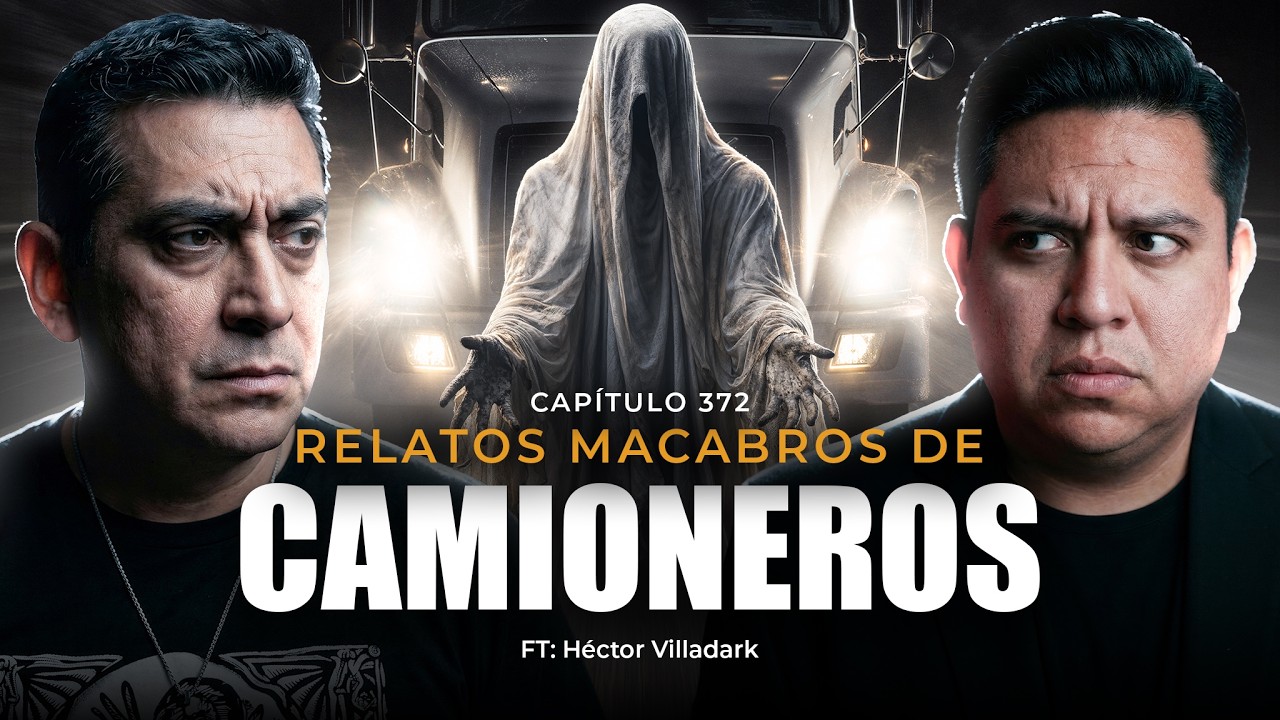
Nunca MANEJES a las 3 AM | Relatos Macabros de CAMIONEROS
"Truck drivers recount terrifying encounters with phantom families, time-looping accidents, a Wendigo-like creature, and cartel rituals involving a fish-faced deity on Mexico's most dangerous roads."