
LIVE | Arrested, Sued, and Silenced? Bricks and Minifigs v. Reckless Ben. What is this TRO.
YouTube · MPD8UXEqMgg
Quick Read
Summary
Takeaways
- ❖The dispute originated from a consignment agreement for a $200,000 Star Wars Lego collection at an Oregon Bricks and Minifigs franchise.
- ❖When the Oregon franchise changed hands, the new owners (Josh Johnson and Brandon Best, connected to corporate) refused to return the consigned Legos to the Manel family.
- ❖YouTuber Reckless Ben (Benjamin Paul Schneider) became involved after being contacted by a friend of the Lego owner, launching a campaign to retrieve the Legos.
- ❖Reckless Ben's actions led to his arrest, two misdemeanor criminal prosecutions, and a 333-page civil RICO lawsuit filed by BAM Franchising Inc. (corporate Bricks and Minifigs), its owners, and the new franchise owners.
- ❖Emily D. Baker clarifies that Reckless Ben's public claims of winning small claims court default judgments were inaccurate; those cases were dismissed due to improper filing and service.
- ❖The civil RICO lawsuit alleges a 'criminal enterprise' involving Reckless Ben, the Manel family, and the prior franchise owners, aiming to defraud, manipulate, threaten, and extort the plaintiffs.
- ❖Corporate Bricks and Minifigs' handling of the situation and inconsistent statements have caused substantial harm to the brand, potentially leading to lawsuits from other franchisees.
- ❖The host expresses skepticism about the RICO allegations, noting that 'public nuisance and trespass' are weak predicate acts for such a claim, which typically involves serious criminal activity.
- ❖Local police in American Fork, Utah, are also implicated for 'acting wild,' with allegations of Fourth Amendment violations, questionable search warrants, and 'crazy behavior on body cam.'
- ❖The lawsuit names Brian Mancel (the Lego consignor) as a defendant, which Emily D. Baker views as a 'bad look' for corporate.
Insights
1The Consignment Agreement Dispute and Franchise Changeover
The core of the conflict stems from a $200,000 Star Wars Lego collection consigned to an Oregon Bricks and Minifigs franchise. When the franchise was repossessed/changed hands, the new owners, Josh Johnson and Brandon Best, refused to return the Legos to the Manel family, claiming they were unaware of or not bound by the consignment agreement. This is heavily disputed, as the original agreement included clauses for future assigns, and corporate itself had advertised the collection.
Host details the consignment agreement, the change of hands from Crystal Law and Benjamin Gorman to Josh Johnson and Brandon Best, and the new owners' refusal to honor the agreement. She questions the new owners' claim of being 'bonafide purchasers' given the repossession context. [] - [], [] - []
2Reckless Ben's Legal Missteps and Inaccurate Claims
YouTuber Reckless Ben became involved to help retrieve the Legos, but his legal strategy was flawed. He publicly claimed to have won default judgments in small claims court, which Emily D. Baker debunks. His initial small claims cases were dismissed because he sued the wrong LLC and failed to properly serve the parties, not because the store closed or due to a 'legal loophole.' This highlights a significant disconnect between his public narrative and the actual legal outcomes.
Emily directly addresses chat comments about Reckless Ben's legal wins, stating, 'He did not win. I pulled the documents on it. All of those small claims cases were dismissed.' She explains he sued the wrong LLC and failed to serve them. [] - [], [] - []
3Corporate's Brand Damage and Questionable RICO Allegations
BAM Franchising Inc. (Bricks and Minifigs corporate) and the new franchise owners filed a 333-page civil RICO lawsuit against Reckless Ben, Brian Mancel (the Lego consignor), and others. The lawsuit alleges a 'criminal enterprise' engaged in 'deception, disinformation, and destruction.' However, Emily D. Baker expresses strong skepticism about the RICO claim, noting that predicate acts like 'public nuisance and trespass' are typically insufficient for RICO, which usually involves more serious crimes. She also points out that corporate's actions and inconsistent statements have severely damaged the entire Bricks and Minifigs brand, potentially opening them up to lawsuits from other franchisees.
Host introduces the 333-page civil RICO lawsuit, questioning its basis and the use of 'enterprise.' She states, 'Civil RICO is a big stretch.' She also notes, 'The bricks and mini figs brand I think has been damaged by yes the actions of the owners in Oregon, yes by the videos exposing those actions and yes by the actions of corporate as well.' [] - [], [] - [], [] - []
4Questionable RICO Predicates and Credibility
The plaintiffs' civil RICO complaint includes 'deceptively staged events' like a 'disingenuous coronation' and 'staging protests' as predicate acts. Emily D. Baker argues these are absurd and undermine the lawsuit's credibility, as they are unlikely to qualify under Utah's specific list of predicate offenses for civil RICO, which typically involve more serious crimes like extortion, assault, or various frauds.
Host's reaction to 'disingenuous coronation' (), review of Utah's civil RICO statute (-), and skepticism regarding trespass or public nuisance as predicates (-, -).
5Hyperbole vs. Literal Interpretation in Litigation
Reckless Ben's video content, including statements like 'we have to do something illegal' and 'our goal is to ruin their lives,' is being presented by the plaintiffs as literal admissions of criminal intent. Emily D. Baker notes that while Ben's team might argue these are hyperbolic, a jury will ultimately decide, and such statements can be severely damaging in a civil lawsuit.
Discussion of 'we have to do something illegal' at YouTube video minute 3, , and (-). Analysis of 'our goal is to ruin their lives' (-).
6Defamation Risks from False Claims of Legal Victory
Reckless Ben's public statements and signage claiming Bricks and Minifigs 'was sued, lost, and closed to avoid paying' are factually incorrect. Emily D. Baker confirms no default judgment was ever granted in Ben's favor, and the prior case was dismissed. This false claim could constitute defamation per se, especially if the plaintiffs are not deemed public figures, potentially exposing Ben to significant liability.
Host's fact-checking of Ben's claims about winning by default judgment (-) and discussion of defamation per se (-).
7Trademark Infringement in Satirical Merchandise
The use of the 'Bricks and Minifigs' registered trademark on merchandise, even if intended as satire (e.g., 'we steal from old people' tagline), constitutes improper use of a registered mark. This could lead to a successful trademark infringement claim against Reckless Ben, potentially requiring him to disgorge all proceeds from such sales, drawing parallels to the *Jack Daniels v. VIP Products* case.
Discussion of using registered trademark on merch (-) and comparison to *Jack Daniels Bad Spaniels* case (-).
8Plaintiffs' Inconsistent Framing and Jurisdictional Issues
The host notes the lawsuit's internal inconsistencies, particularly in framing Reckless Ben as the 'lynchpin' while complaining about behavior predating his involvement (e.g., in 2025 vs. Ben's 2026 involvement). The complaint also attempts to combine actions from Oregon and Utah in a local Utah court, raising questions about jurisdiction and the court's control over out-of-state conduct.
Emily D. Baker states, "They are complaining of behavior happening in 2025 before Ben ever gets involved. But then they are framing this as Ben's ongoing scheme even though they're saying that this is happening well before. So, the framing of it is internally inconsistent..." She also notes, "they chose to file it locally in Utah, not in federal court... they are trying to combine actions in Oregon that I don't know if the court in Utah has control over..."
9Questionable Legal Characterization of Claims
The host expresses skepticism about several of the plaintiffs' claims fitting their legal definitions. For example, 'counterfeit merchandise' is argued to be more of a trademark violation if items don't purport to be from the source. Claims of 'criminal simulation' for parody signs or 'communications fraud' for defamatory statements are also questioned, as they appear to misapply the legal standards.
Emily D. Baker explains, "I don't think it's counterfeit because it the counterfeit merchandise doesn't seem to actually purport to be from the source. It's it might be an improper use of trademark, but I don't think it actually falls under counterfeit." She further questions, "I have some questions about whether or not an argument over whether statements are defamatory is going to actually fall under communications fraud." Regarding criminal simulation, she clarifies, "A criminal simulation means that you are selling like a shiny a fake shiny Charizard card... that does not exist when they are putting up a sign that may be trespassing and may be um defamatory, but it's also not a criminal simulation promoting itself to be a thing of value."
10Allegations of Extortion and Criminal Charges
The lawsuit alleges Reckless Ben demanded $200,000, threatening reputational harm, and later mentions a $300,000 demand from Crystal and Benjamin with threats of 'damaging and doctored videos.' The host notes that Ben faces misdemeanor charges in Provo for disorderly conduct, criminal trespassing, stalking, and targeted picketing, but emphasizes that he is not facing any felony charges for extortion as of the broadcast.
The complaint (read by Emily D. Baker) states, "Reckless Ben demanded $200,000, stating a failure to pay would result in reputational harm and that matters would become very bad." Emily D. Baker also details, "The criminal cases involve misdemeanor only. One case is one count of disorderly conduct, one count of criminal trespassing after notice. The other case is... one count of misdemeanor stalking, one count of targeted picketing." She later quotes the complaint regarding Crystal and Benjamin: "threatened that if Bricks and Mortars did not pay their demand for $300,000, quote, they would not be able to control the documentarian Schneider from releasing damaging and doctorred videos harming the company."
11Broad and Potentially Unenforceable Temporary Restraining Order Request
The plaintiffs are seeking an extremely broad Temporary Restraining Order (TRO) that would prohibit the defendants and 'anyone acting in concert with them' from making threats, publishing personal information, approaching within 1000 yards of any company or employee location, and even from 'creating, posting, publishing, or disseminating... any false, misleading, harassing, interfering, defamatory or unlawful images or content respecting plaintiffs.' The host emphasizes the overbreadth and potential unenforceability of such a request, especially regarding controlling general internet activity or third-party actions.
Emily D. Baker highlights the TRO's scope: "prohibiting them or anyone acting in concert with them directly or indirectly... from making, transmitting, soliciting, encouraging, or facilitating death, bomb, or other threats of physical harm." She notes other prohibitions: "Publishing or encouraging others to publish home addresses, personal phone numbers, personal email addresses, family information, or other doxing information" and "approaching within a defined distance not less than a thousand yards. That's large." She concludes, "They are asking for a TTRO that is so broad... I don't think you can get injunctions on all of these things that they're asking for..."
12Overbroad Civil Temporary Restraining Order (TTRO)
The civil TTRO against Reckless Ben is deemed 'horrifically overbroad' by the host, Emily D. Baker. It attempts to restrain speech, demand the removal of all existing videos, and apply to unnamed 'dough parties,' affiliates, co-conspirators, employees, and anyone acting 'directly or indirectly' in concert. This scope is considered an unlawful prior restraint on speech and is unlikely to legally stand.
The TTRO prohibits 'creating, posting, publishing, disseminating any false, misleading, harassing, interfering, defamatory, or unlawful images or content' and requires immediate removal of 'current publications' (videos, audio, etc.). It also includes a 1,000-yard no-approach zone from various plaintiff-related locations, which is an 'insane' distance compared to standard protective orders. The host states, 'I don't think you can restrain all of these individuals. I think this is horrifically over broad and I think it can be appealed.'
13Distinction Between Civil TTRO and Criminal Protective Order
Reckless Ben is subject to two separate legal orders: a civil Temporary Restraining Order (TTRO) from Bricks and Minifigs and a criminal protective order related to Joshua Johnson. Ben's public statements conflated the two, leading to misconceptions about immediate jail time or lawsuit loss. The criminal order, filed May 20th, specifically prohibits contact or communication with Joshua Johnson and carries more direct criminal consequences for violation.
Emily D. Baker clarifies, 'This is not the only restraining order against Reckless Ben. There is also a criminal restraining order that is more of a problem, I think.' She details the criminal order: 'You cannot contact... or otherwise communicate with the protected person directly or indirectly. That includes social media. So, he cannot talk about Joshua Johnson at all while this is pending.' She adds that violating this criminal order 'can have court criminal jail consequences.'
14Challenges and Success with Service of Process
The plaintiffs faced significant difficulties in personally serving Reckless Ben and other codefendants, encountering 'locked and impenetrable gates or doors' and 'evasion of service.' Due to these challenges and the defendants' public acknowledgment of the lawsuit, the court granted the plaintiffs' motion for alternative service, allowing service via email.
The lawsuit was filed May 27th, 2026, and the TTRO granted June 2nd. Plaintiffs 'diligently and variously attempted to serve' but were 'unsuccessful... based on locked and impenetrable gates or doors, evasion of service, unanswered contacts, unconfirmed addresses.' Reckless Ben's public statements on podcasts and YouTube acknowledging the lawsuit and TTRO were cited as evidence of awareness. The court ultimately allowed service by email, which Emily D. Baker deemed 'a proper means of service' given the outlined attempts.
15Platforms Not Obligated to Comply with TTRO Content Takedown
Despite the TTRO's demand for the immediate removal of all existing content, platforms like Patreon are not legally obligated to comply with such an order directed at the parties involved in the lawsuit. Platforms have their own legal teams and policies, often requiring a direct court order against the platform itself, not just the content creator.
Patreon's CEO issued a statement confirming receipt of a takedown request from Bricks and Minifigs but, after review, decided to keep Ben's page up. Emily D. Baker comments, 'Patreon's like, 'You can't make us take down this content.'... platforms have lots of lawyers and they're not going to deal with it. So platforms aren't taking people down... based on this type of request.'
16Frustration with Legal Language and 'Deceptive Coronations'
Emily D. Baker articulated her frustration with specific legal phrasing, referring to them as 'deceptive and disingenuous coronations'. This highlights how legal documents can employ language that, while technically correct, may be perceived as manipulative or overly formal, even by those well-versed in law.
Emily D. Baker stated, 'I'm reading the legal documents to y'all and losing my mind about deceptive in disingenuous coronations because apparently you can't just dub someone the Lego queen.'
Bottom Line
The naming of the original Lego consignor (Brian Mancel) as a defendant in the corporate RICO lawsuit, rather than suing the previous franchise owners directly, is a strategically questionable move that makes corporate appear to be 'punching down' on the victim.
This legal tactic, while potentially aimed at isolating Reckless Ben or pressuring Mancel, backfires in the court of public opinion, further eroding trust in the corporate entity and fueling the narrative of corporate greed against an 'old man's life savings.'
Companies facing public scrutiny in disputes should carefully consider the optics and public relations impact of their legal strategies, prioritizing resolution and ethical conduct over aggressive litigation that may alienate stakeholders and damage brand equity.
The corporate plaintiffs' lawsuit attempts to frame legal demand letters and public complaints (e.g., negative reviews, contacting podcasts) as acts of 'extortion' and 'criminal enterprise' predicate acts for a RICO claim.
This is an aggressive and likely unsuccessful legal strategy that mischaracterizes legitimate forms of dispute resolution and public expression. It suggests a misunderstanding of legal boundaries and an attempt to silence critics through overwhelming legal force.
Individuals and content creators facing legal threats for publicizing disputes should be aware that while some actions can cross legal lines (e.g., harassment, defamation), legitimate legal demands and truthful negative reviews are protected. Understanding the distinction is crucial for navigating such conflicts without inadvertently strengthening an opponent's case.
Key Concepts
Morality vs. Legality
The case highlights that what seems morally right (returning consigned property) is not always legally straightforward, as lawyers can complicate seemingly 'cut and dry' situations with nuanced arguments and procedural requirements. This often creates a disparity where the 'right thing to do' is financially prohibitive to pursue legally.
The Hammer and the Nail (RICO Overreach)
When the only tool you have is a hammer, everything looks like a nail. This applies to the use of civil RICO lawsuits, which carry severe penalties like treble damages and attorney's fees. Plaintiffs may overreach by applying RICO to cases that don't fit the criteria, hoping to leverage its 'big scary' potential, even if the underlying acts (like trespass or public nuisance) are not typical RICO predicates.
Court of Law vs. Court of Public Opinion
Litigation can be won in a court of law but lost in the court of public opinion, with the latter often costing more in terms of brand reputation and public trust. Corporate Bricks and Minifigs' actions, even if legally defensible, have severely damaged their brand due to public perception and online scrutiny.
Lessons
- For businesses: Ensure clear, comprehensive, and legally sound consignment agreements. When acquiring a business, conduct thorough due diligence on all existing contracts and liabilities, including consignment, to avoid inheriting disputes.
- For franchisees: Understand the terms of your franchise agreement regarding consignment, inventory ownership, and dispute resolution. Be aware of the potential for corporate repossession and its implications for third-party property.
- For content creators/activists: Consult legal counsel before engaging in campaigns that involve direct confrontation or claims of legal victories. Verify all legal facts and understand the nuances of proper legal procedure (e.g., serving lawsuits) to avoid misrepresentation and case dismissal.
- When drafting legal complaints, ensure internal consistency in timelines and the roles of parties, especially when attributing actions to specific individuals, to avoid undermining credibility.
- Carefully align alleged misconduct with precise legal definitions (e.g., trademark violation vs. counterfeiting, criminal simulation) to avoid overreach and strengthen claims.
- Be wary of requesting overly broad injunctive relief, as courts may view such requests as attempts to suppress legitimate speech or control third-party actions, potentially weakening the overall case.
- If involved in a lawsuit, especially as a defendant, immediately consult and hire legal counsel, particularly attorneys specializing in defamation, civil-criminal interplay, and civil rights if police are involved.
- Avoid direct communication with opposing counsel or parties; route all correspondence through your lawyer to maintain a clear, documented record and prevent misinterpretations.
- Do not assume public statements or videos about a lawsuit equate to proper legal service; understand that formal service of process is required for a court order to be binding.
- Utilize services like Incogn to protect personal data online, especially in light of recent breaches like Shiny Hunters, to prevent your information from being exposed.
- Download the Lard app for free on iOS and Android to receive timely updates on significant legal cases and live streams, ensuring you stay informed on developments.
- Be aware that legal proceedings, such as the Bricks and Minifigs v. Reckless Ben case, can be protracted and involve complex, sometimes frustrating, legal language.
Notable Moments
Emily D. Baker corrects the record on Reckless Ben's small claims court 'wins,' revealing they were dismissed due to improper procedure.
This moment directly addresses and debunks a key piece of misinformation circulating around the case, providing clarity on the actual legal standing and highlighting the difference between online narrative and legal reality.
The host expresses deep skepticism about the civil RICO allegations, questioning the 'enterprise' definition and the suitability of alleged predicate acts like 'public nuisance' and 'trespass.'
This highlights the potential for legal overreach and the strategic (though often flawed) use of powerful legal tools like RICO, which carry significant penalties, to intimidate opponents in disputes that may not genuinely fit the criteria.
Emily's incredulous reaction to 'disingenuous coronation' being listed as a 'deceptively staged event' in the lawsuit.
This highlights the perceived absurdity and overreach of the plaintiffs' claims, which Emily believes undermines the seriousness of their legitimate grievances and damages their overall credibility in court.
Emily live-fact-checks the lawsuit's claims against Reckless Ben's video, specifically looking for the 'we have to do something illegal' quote at specified timestamps.
This demonstrates the analytical rigor applied to the legal documents and video evidence, revealing discrepancies or confirming allegations directly from the source material, and illustrating how online content becomes evidence.
The host observes that the plaintiffs included Reddit comments, some of which were 'completely reasonable' or even critical of Ben, in their exhibit K to demonstrate harassment, highlighting a potential misjudgment in evidence presentation.
This suggests a lack of discernment in what constitutes actionable harassment and could weaken the plaintiffs' argument by including evidence that doesn't support their claims.
The host interjects to her audience, 'Don't go spam reviews on the other franchises. It is not their fault that this is how the corporation is choosing to respond,' demonstrating a clear ethical stance on online behavior amidst a contentious legal battle.
This provides a crucial ethical guideline for viewers, emphasizing that collective action should not target innocent parties, and highlights the host's commitment to responsible engagement.
The host discovers track changes visible in the court documents, indicating they might have been drafted in Google Docs and not properly finalized before filing.
This reveals a basic professional oversight in legal document preparation, which can reflect poorly on the legal team's attention to detail, even if it doesn't impact the substance of the claims.
Quotes
"Lawyers, on the other hand, can make anything that seems cut and dry, very gray and muddy."
"Civil RICO comes with treble damages, meaning damages are automatically tripled by function of law and you get all your attorney's fees."
"When your only tool is a hammer, everything looks like a nail, even if it's not. Sometimes that's nail that nail is a screw for you to screw yourself with."
"You're saying that the beginning of the criminal enterprise is that they sent a demand letter to go to court."
"It's a uh it's a tactic unknown to me before the law at this point."
"Your honor, they're making money. If they weren't making money, would you have any interest in suing them? No. That's what I thought. Oh, the horror."
"I don't think it's counterfeit because it the counterfeit merchandise doesn't seem to actually purport to be from the source. It's it might be an improper use of trademark, but I don't think it actually falls under counterfeit."
"They are trying to combine actions in Oregon that I don't know if the court in Utah has control over..."
"Reckless Ben demanded $200,000, stating a failure to pay would result in reputational harm and that matters would become very bad."
"Unless you are going to make us whole on the whole LEGO collection, I don't see where we have anything to discuss."
"I don't think that that is a I think that's a really big reach because there's legitimate legal reasons why a partial settlement wouldn't be taken. It's it's really a reach."
"No one impersonated a federal employee. Stop trying to make fetch happen."
"They are asking for a TTRO that is so broad..."
"At the end of the day, I think what we have is a very gussied up uh a very a very trust up defamation lawsuit with allegations of civil trespass and civil harassment."
"If I say anything, I immediately go to jail. That is not correct. If I say anything, I immediately lose my lawsuit. That is not correct. If I say anything, I immediately um lose the GoFundMe. That is also not accurate. However, violating a TTRO is going to make the journey significantly more difficult in court. That is true."
"I don't think you can restrain all of these individuals. I think this is horrifically over broad and I think it can be appealed."
"I don't think you can do that. I don't think the court has the authority to do that. I don't think you can do that. I don't think that you I don't think that the court has the authority to do that. And I think that unfortunately it is going to take attorneys um on behalf of the defendants going into court and appealing this takedown or requested takedown because these are restraints on speech that you can't do. I don't know how this got signed."
"I hate this order so much because again when you are looking at complaints that are overly hyperbolic and are stretching to the point of breaking to try to make fetch happen. It is annoying but there is room to push back on it. But when we are looking at a massively over broad TTRO like this, the court has an obligation in my opinion... to protect against some of these prior restraints."
"I will say that I have never seen cartels be told to take down YouTube videos though."
"The way that criminal cases have to fight in court to get victims of domestic violence, victims of stalking, a protective order that is for 100 ft and a fight for 100 ft. For this [expletive] to come in here at a,000 yards fundamentally pisses me off."
"I'm reading the legal documents to y'all and losing my mind about deceptive in disingenuous coronations because apparently you can't just dub someone the Lego queen."
Q&A
Recent Questions
Related Episodes

Michael McKee updates. Tik Tok Defamation Trial, Delayed? Ron Ron Ruling...
"This episode dissects the bizarre legal battles of a TikTok psychic facing a defamation trial for falsely accusing a professor of murder and an attorney sanctioned for courtroom misconduct and evading service by using an office occupied by a magician."

LIVE: Trump faces LEGAL MASSACRE as WALLS CLOSE IN!! | Legal AF
"Federal judges are actively pushing back against the Trump administration's legal maneuvers, from the removal of Trump's name at the Kennedy Center to blocking a 'super pardon' in a collusive $10 billion IRS lawsuit, signaling a systemic rejection of perceived legal abuses."
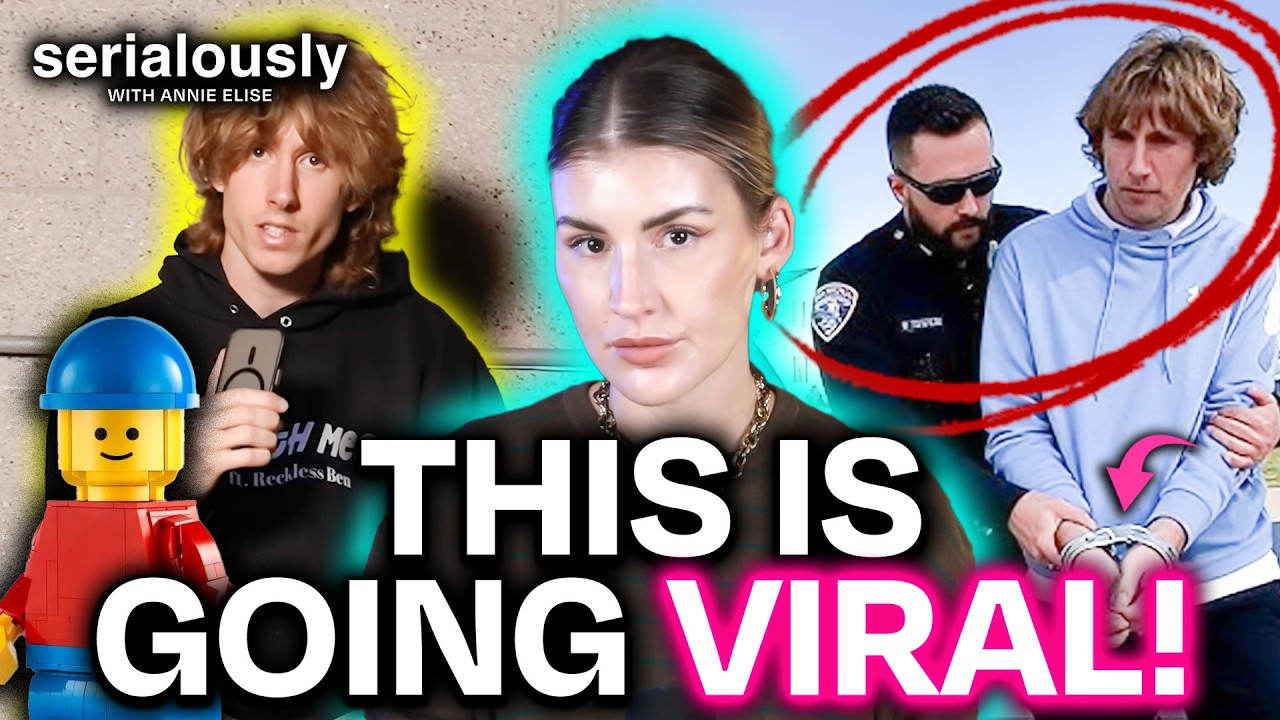
Going Viral Right Now: Missing Legos and Police Corruption | Reckless Ben vs. Bricks and Minifigs
"A YouTuber's quest to recover a $200,000 Lego collection for a dying man escalates into multiple arrests, allegations of police corruption, and a legal battle with a major Lego franchise."

LIVE COURT | O'Keefe v. Karen Read - Proctors' Procrastination Emergency Hearing Afternoon - Part 2
"A chaotic civil court hearing sees a judge's unusual 'timeout' for attorneys, a denied deposition delay that still grants more time, and petty discovery disputes, all while the host dissects judicial temperament and legal gamesmanship."