
16 Wild Police Pursuits That Went In Reverse
YouTube · MQypT_tOUIc
Quick Read
Summary
Takeaways
- ❖Police pursuits often involve suspects driving at high speeds in reverse or against oncoming traffic, creating extreme hazards.
- ❖Officers utilize various tactics like PIT maneuvers, spike strips, and strategic roadblocks to terminate dangerous chases.
- ❖The decision to continue a pursuit involves a critical 'balancing test' to assess the risk to the public versus the necessity of apprehension.
- ❖Many suspects in these wild chases are found to be under the influence, have outstanding warrants, or possess illegal substances and weapons.
- ❖Officers frequently put themselves in harm's way, sometimes intentionally colliding with suspect vehicles, to protect other motorists.
Insights
1Intentional Reverse Driving as an Evasion Tactic
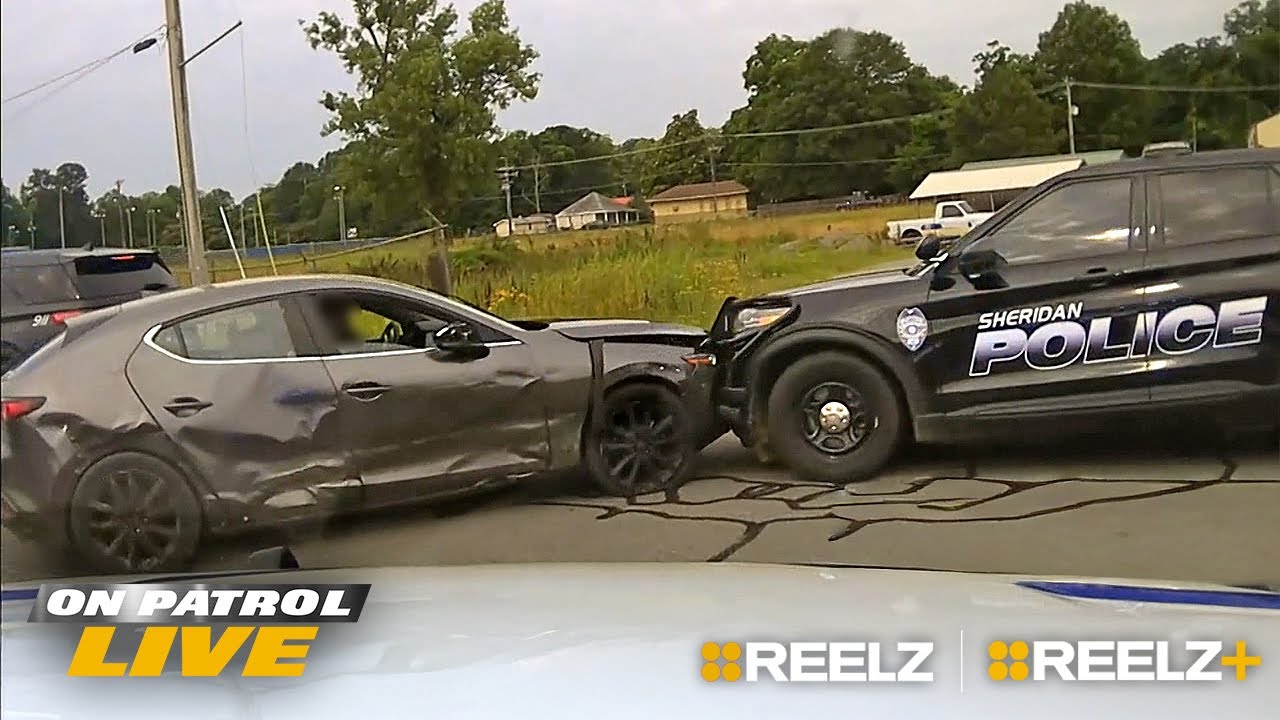
In multiple instances, suspects deliberately drove their vehicles in reverse for extended distances on busy roads, including highways and through construction zones, to evade police. This highly unusual and dangerous tactic was observed with a stolen Hyundai Santa Fe and a Tesla.
Jonathan Araj drove a stolen Hyundai Santa Fe in reverse for a prolonged period on Ford Road and through a construction zone (, ). Jeremy Zeers, driving a Tesla, initially went the wrong way, then reversed at nearly 40 mph on a highway (, ).
2Officer Sacrifice for Public Safety
Officers frequently make split-second decisions to put their own lives and vehicles at risk to prevent greater harm to the public. This includes intentionally positioning their patrol cars for head-on collisions or using older vehicles for PIT maneuvers.
Corporal Fitz Simmons, during a pursuit of James Coward, requested to take the lead with his older vehicle to perform a PIT maneuver, stating, 'I have the older vehicle. Let me up front.' (). Deputy Michael Hutton intentionally positioned his vehicle to take a direct head-on hit from a wrong-way driver at 70+ mph to protect other motorists ().
3Bizarre Suspect Behavior Under Influence
Several pursuits involved drivers exhibiting highly erratic and nonsensical behavior, often linked to substance intoxication. This included waving hands out windows, attempting to eat during arrest, or making delusional statements.
Abel Sullivan, wanted for domestic violence, repeatedly waved his hand out the window during a high-speed chase (, ). Jeremy Zeers, found with nitrous oxide and Jack Daniels, claimed to have 'jumped timelines' and that 'all the roads look completely different' (). Tyler Fe Consolo, after being apprehended by a K9, claimed he was 'high as F' and had fled because 'somebody tried to rob me' ().
4The 'Balancing Test' in Pursuit Policy
Police departments operate under policies requiring officers to weigh the immediate danger posed by a fleeing suspect against the risks of continuing a high-speed pursuit. If the suspect's actions are deemed to be an imminent threat to life, the pursuit is often authorized to continue.
Sergeant Wood explains, 'officers have to use the balancing test at this point to figure out is the risk that you're putting the public in worth getting the arrest and in this situation it was because this person was out of control and he without a doubt was going to hurt someone.' ().
Lessons
- Law enforcement agencies must continuously train officers on high-risk pursuit tactics, including PIT maneuvers and strategic roadblocks, emphasizing public and officer safety.
- Police departments should review and update pursuit policies regularly, ensuring they provide clear guidelines for officers balancing apprehension with public risk.
- Public awareness campaigns can educate citizens on how to react safely when encountering police pursuits, especially those involving wrong-way drivers.
- Implement technology like remote vehicle disabling systems to reduce the need for high-speed, high-contact pursuit tactics in certain scenarios.
Standard Police Pursuit Interdiction Tactics
**Initial Containment & Pursuit Authorization:** Officers attempt to block suspect vehicles (e.g., at gas stations) or initiate pursuit with lights and sirens, seeking authorization based on threat assessment.
**Spike Strip Deployment:** Secondary units attempt to deploy spike strips ahead of the suspect to deflate tires and slow the vehicle.
**PIT Maneuver (Precision Immobilization Technique):** Officers attempt to make controlled contact with the suspect vehicle's rear quarter panel to cause it to spin out and stop.
**Roadblocks & Traffic Control:** Other units establish roadblocks or divert traffic ahead of the pursuit to create clear zones and prevent public exposure to danger.
**Vehicle-to-Vehicle Contact (Controlled Crash):** In extreme cases, officers may intentionally collide with a suspect vehicle, often using an older patrol car, to prevent a more catastrophic incident.
**Apprehension:** Once the vehicle is stopped, officers surround the suspect at gunpoint, issuing commands for surrender, sometimes deploying K9 units or tasers if resistance continues.
Notable Moments
A stolen Hyundai Santa Fe driver, Jonathan Araj, evaded police by driving exclusively in reverse for several miles on a main road and through a construction zone, colliding with patrol cars along the way.
This showcases an extremely unusual and dangerous evasion tactic, highlighting the unpredictable nature of pursuits and the driver's desperate attempt to escape despite severe vehicle damage.
Deputy Michael Hutton intentionally positioned his patrol car to take a head-on collision from a wrong-way driver traveling at 70+ mph to shield other motorists, sustaining injuries but preventing a larger catastrophe.
This exemplifies the highest level of officer self-sacrifice and strategic decision-making to protect public safety, illustrating the life-or-death stakes involved in these situations.
A Tesla driver, Jeremy Zeers, after driving wrong-way, then in reverse at high speed, was apprehended and claimed to have 'jumped timelines' due to intoxication from nitrous oxide and alcohol.
This highlights the severe cognitive impairment and delusional states that can result from substance abuse, leading to extremely dangerous and irrational behavior during police encounters.
A suspect, Casey Beck, driving wrong-way on a freeway, swerved towards a police motorcycle officer, was eventually pitted, and his car caught fire. He then refused to exit the burning vehicle, requiring officers to extract him.
This incident demonstrates the extreme hostility and resistance officers can face, even when a suspect's life is in immediate danger, forcing officers to act decisively under immense pressure.
Quotes
"What can I do to not get as hurt as bad as I could be? And if I remember right, as soon as I did make impact, I actually let go of the steering wheel so my arms weren't jerking around. So, I let go of the steering wheel and kind of put him up. So, try to save myself a little bit of trauma."
"Officers have to use the balancing test at this point to figure out is the risk that you're putting the public in worth getting the arrest and in this situation it was because this person was out of control and he without a doubt was going to hurt someone."
"I positioned my vehicle in a way that I could take that direct head-on hit, so to speak, in more of a controlled crash fashion, if you will, in an effort to protect all the other motorists that were behind me as well as that driver."
"I was just speeding, you know, and uh I saw you guys and I kind of got alarmed, you know, cuz I thought we were as a team."
"I know that sounds crazy, but all the roads look completely different. Honestly, at this point, I know I'm going to wake up and do the same thing again."
Q&A
Recent Questions
Related Episodes
7 High Speed Police Chases That End the Hard Way
"This episode compiles seven intense police pursuits, showcasing varied tactics from spike strips and PIT maneuvers to K9 deployments, and the often-absurd or defiant reactions of suspects facing serious charges."

8 Wild Police Pursuits and Street Arrests Caught On Camera
"Witness the raw intensity of police pursuits and street arrests, showcasing diverse tactics from spike strips to K9 units, and the unpredictable nature of suspects."

12 Absolutely Wild Police Encounters Caught On Camera
"Witness a raw compilation of twelve intense police encounters, showcasing everything from public intoxication and high-speed chases to drug busts and weapon seizures, all captured on bodycam."

Brian Hooker’s ex claims he threatened she would have an ‘accident’ in new report- where is Lynette?
"New court documents reveal Brian Hooker's ex-wife accused him of threatening her with an 'accident' and physical abuse years before his current wife, Lynette, mysteriously vanished at sea, drawing chilling parallels to Lynette's daughter's claims."