
Low vs. High Heat (Taste Test)
YouTube · MYrYnyzOGjI
Quick Read
Summary
Takeaways
- ❖Scrambled eggs are superior when cooked low and slow for a soft, even consistency.
- ❖Grilled cheese benefits from lower heat, achieving a perfect crispiness and 'sustained cheese' without burning.
- ❖Thick burgers gain flavor and a desirable crispy edge from high heat cooking.
- ❖Chocolate chip cookies, even from pre-made dough, can be surprisingly dynamic and better with high heat for a gooey interior and crisp exterior.
- ❖For deep-fried donuts, low oil temperature prevents excessive chewiness and greasiness, resulting in a better texture.
Insights
1Scrambled Eggs: Low Heat for Superior Texture
Cooking scrambled eggs at a low temperature (220°F for 6 minutes) produces a soft, evenly cooked scramble with a consistent texture. In contrast, high heat (500°F for 1 minute) results in a drier egg with some browned, crispy edges, which the hosts found less desirable.
Rhett preferred the low-heat egg, noting its 'even experience' and 'soft scramble' quality, while Link found the high-heat version dry with 'whiteness' and 'brownness'.
2Grilled Cheese: Patience with Low Heat Pays Off
A grilled cheese cooked at a lower temperature (250°F for 15 minutes) achieves a perfect crispiness and 'sustained cheese' without the burnt taste. High heat (475°F for 5 minutes) leads to a more pronounced Maillard reaction and a slightly burnt flavor, which was less favored.
Both hosts agreed the low-heat grilled cheese was superior, with Rhett stating he'd 'willing to wait an additional 10 minutes for this'. They noted the high-heat version had a 'burnt taste' they didn't like as much.
3Thick Burgers: High Heat for Flavor and Crust
For thick burgers, high heat (425°F for 7 minutes on a cast iron skillet) creates a crispy, 'blackened' outside due to the Maillard reaction, which adds significant flavor. Low heat (200°F for 15 minutes) results in a burger without the desirable crispy edge.
Rhett and Link both concluded that high heat was the winner for thick burgers, with Link stating the 'crispy outside, the reaction that has happened there, is adding some flavor'.
4Chocolate Chip Cookies: High Heat for Dynamic Texture
Surprisingly, chocolate chip cookies (from pre-made dough) cooked at high heat (450°F for 7 minutes) were preferred. This method yielded a more 'dynamic' cookie with a gooey inside and a desirable crispness. Low heat (250°F for 40 minutes) produced a 'soft and wet' cookie that was 'one note'.
Link found the high-heat cookie 'dynamic' with a 'nice and gooey' inside and 'a little crispness', preferring it over the 'one note' low-heat version. Rhett was initially torn but also leaned towards the high-heat cookie.
5Sous Vide Ribeye Steaks: Minimal Difference Between Extremes
When comparing sous vide ribeye steaks finished under a broiler, the hosts found no discernible difference between a lower temperature cook (120°F for 2.5 hours) and a higher temperature cook (160°F for 1 hour). This suggests that for sous vide, the specific temperature within a reasonable range, when followed by a sear, might not be as critical for the final taste experience.
Rhett and Link concluded there was 'not a discernible enough difference to really come to a strong conclusion', opting for the shorter cook time (high heat) due to efficiency.
6Deep-Fried Donuts: Low Oil Temperature Prevents Chewiness
Deep-frying donuts at a low oil temperature (200°F for 15 minutes) results in a less greasy, chewy texture that is more desirable. High oil temperature (425°F for 7 minutes) makes the donuts excessively chewy, likened to a 'pretzel in a bad way'.
Both hosts strongly preferred the low-heat donut, with Link noting the high-heat version was 'a lot chewier' and 'ain't no coming back from that level of chewy'.
Lessons
- For soft, consistent scrambled eggs, cook them at a lower temperature for a longer duration.
- Achieve perfectly crispy grilled cheese with 'sustained cheese' by cooking it slowly at a lower heat.
- When making thick burgers, opt for high heat on a cast iron skillet to develop a flavorful, crispy crust.
- Experiment with high heat for chocolate chip cookies to get a desirable gooey interior and crisp exterior.
- Deep-fry donuts at a lower oil temperature to avoid an overly chewy and dense texture.
Quotes
"If Gordon Ramsey was cooking a scrambled egg for you, he would come real soft at you."
"It's pretty much just proteins plus sugar plus heat equals caramelized browning deliciousness."
"It's soft and wet, but you can't touch this until you're married. And if you do, that's why you pray."
Q&A
Recent Questions
Related Episodes

Comfort Food Taste Test (Marathon)
"Rhett and Link embark on a 'comfort food marathon' featuring past episodes, from identifying mom's cooking to bathing in chicken noodle soup and dissecting pumpkin spice snacks."
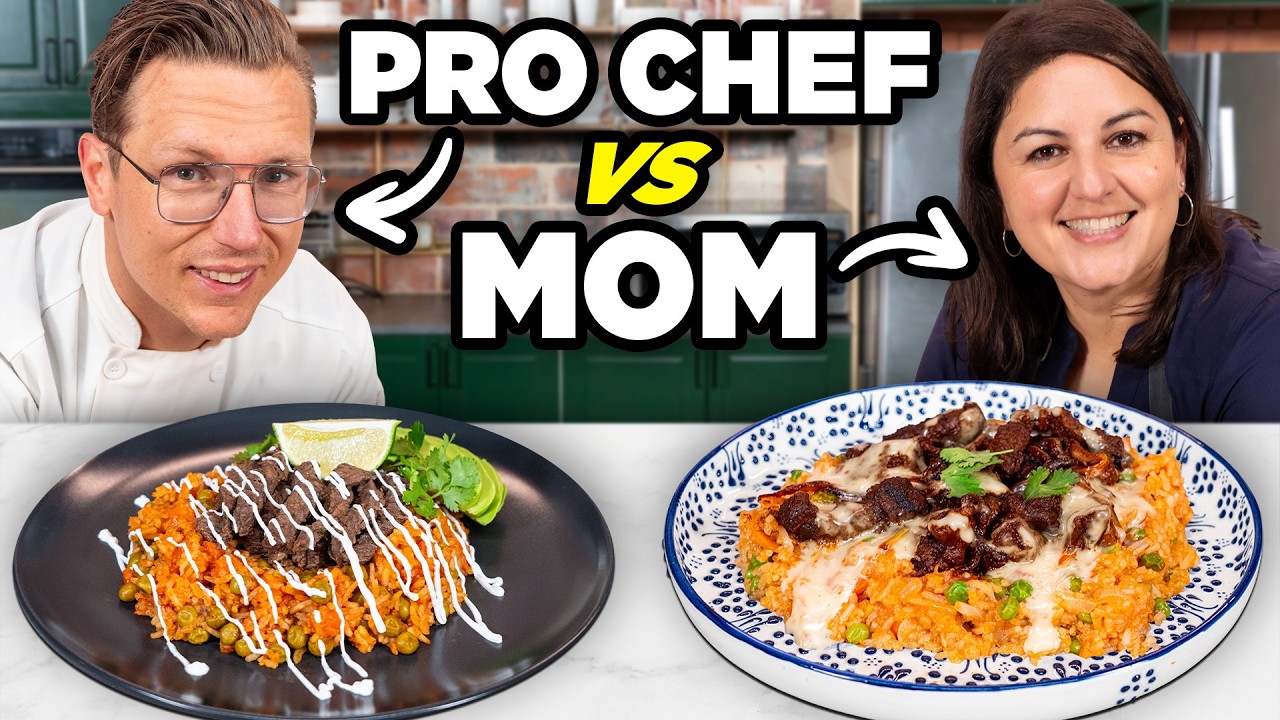
Pro Chef vs. Mom: Who Makes Better Comfort Food?
"A professional chef challenges a mother to a comfort food cook-off, revealing how love and convenience shape beloved recipes."

Being Dragged By A Boat | The Basement Yard #560
"Hosts Joe and Frank dive into a chaotic and hilarious discussion ranging from embarrassing childhood tubing incidents and nipple insecurities to the absurdity of political filibusters and the evolving nature of online communities."

Mom Says Dinner's Ready! | Culinary Crimes
"Smosh hosts hilariously 'investigate' culinary crimes committed against cherished family recipes, from Portuguese quahogs with shrimp cocktail to butter chicken with habanero salsa, and guess secret ingredients in a dad's tri-tip."