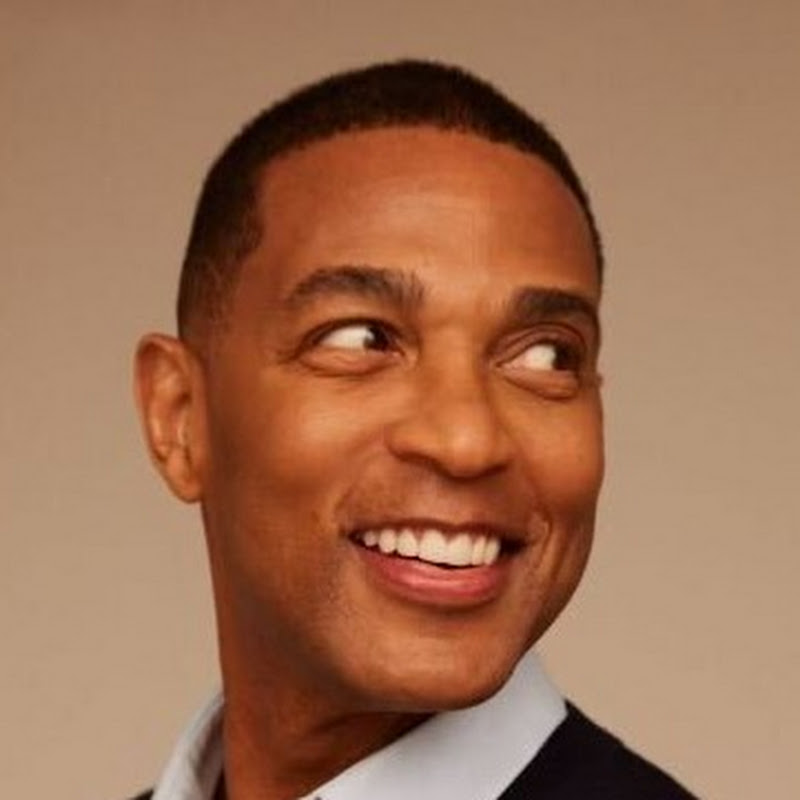
HOT TOPICS | What Happens When MAGA Is Confronted By Facts?!
YouTube · NMCe5jf21UY
Quick Read
Summary
Takeaways
- ❖MAGA figures often lack factual basis for their claims, as demonstrated by Dave Rubin's inability to cite positive economic metrics under Trump.
- ❖Donald Trump's appeal to the 'poorly educated' is framed as a strategy to cultivate an uncritical base that trusts him over facts.
- ❖The MAGA ecosystem creates an 'information desert' where anything contradicting the leader is automatically dismissed as a lie.
- ❖Pundits and politicians, including former 'never Trumpers' like Kellyanne Conway and Kayleigh McEnany, have shifted their stances for career and financial incentives.
- ❖The Iran war discussion reveals a significant disconnect between MAGA narratives and verifiable facts regarding the conflict's origins, progress, and consequences.
- ❖Confronting misinformation with facts often exposes the 'fragility' and lack of genuine understanding among those who propagate it.
Insights
1The 'Poorly Educated' and the Closed Information Loop
Donald Trump's 2016 statement, 'I love the poorly educated,' is interpreted as a strategic embrace of a voter base that is uncritical and more likely to trust the leader than objective facts. This creates a 'closed loop' information ecosystem where any information contradicting the leader is automatically deemed a lie, fostering an 'information desert' for supporters.
Trump's 2016 Nevada primary victory rally speech where he stated, 'I love the poorly educated.' () Don Lemon's explanation of 'poorly educated' as 'uncritical' and 'unequipped to evaluate competing claims,' leading to trust in the leader over one's own eyes. ()
2MAGA Pundits' Factual Fragility: The Dave Rubin Example
Prominent MAGA commentators often lack the factual knowledge to defend their positions when challenged. Dave Rubin, a high-profile commentator, was unable to name a single economic metric that improved under Donald Trump during a Jubilee debate, despite being pressed for specific data like GDP, unemployment, or inflation.
During a Jubilee debate, Parker Sedgwick asked Dave Rubin to name one main metric Donald Trump improved. Rubin pivoted, tried to change the subject, and ultimately failed to provide any specific economic data, while Sedgwick rattled off multiple metrics (GDP growth, real median wage growth, inflation, unemployment) that were better under Biden or worse under Trump. (, , )
3The Iran War Narrative vs. Reality
MAGA narratives surrounding the Iran war often diverge significantly from facts. Claims about the war's success, its duration, and Iran's nuclear program are contradicted by intelligence reports and real-world outcomes. The war is presented as a 'disastrous' choice that has weakened US global standing and exacerbated suffering in Iran.
Dave Rubin claimed the Iran war was a '40-day military operation' that stopped an 'apocalyptic regime' from getting a nuclear bomb. This was fact-checked, showing the war was 96 days in at the time of the Jubilee film's release, and IAEA reports and US intelligence indicated Iran did not enrich uranium beyond allowed levels under the previous deal. The war also led to the use of significant US interceptor stockpiles, making the US more vulnerable. (, , , , )
4Political Opportunism and the 'Grift Demption Arc'
Many public figures, including former 'never Trumpers,' have adopted pro-Trump stances for career advancement and financial gain. This 'grift demption arc' involves abandoning previous principles to align with the dominant political narrative that offers more engagement and monetization opportunities, even if it means contradicting their past beliefs.
Don Lemon details how Kellyanne Conway, initially anti-Trump, became his campaign manager once he was the nominee. Similarly, Kayleigh McEnany, a 'never Trumper,' became a Trump supporter and White House press secretary after realizing it generated more social media engagement and TV appearances. Dave Rubin's shift from a progressive liberal to a right-wing commentator is also cited as an example of following the money. (, , , )
Bottom Line
The monetization of political division incentivizes pundits to maintain and amplify extreme positions, regardless of factual accuracy, creating a 'distortionary incentive' structure in media.
This dynamic actively undermines informed public discourse by rewarding sensationalism and ideological purity over truth, making it harder for the public to discern facts and for political figures to engage in good-faith debates.
Develop and promote media platforms that rigorously fact-check and penalize misinformation, creating alternative economic incentives for accurate and nuanced reporting, potentially through subscription models or non-profit structures that are less reliant on engagement metrics.
The 'fragility' of some political figures when confronted with facts is not necessarily due to a lack of intelligence, but an 'uncritical' mindset fostered by a closed information loop, making them 'unequipped to evaluate competing claims.'
This suggests that effective counter-messaging needs to focus less on shaming and more on introducing diverse, verifiable information in a way that bypasses or challenges the existing 'closed loop' without triggering immediate rejection, potentially through community-based initiatives or trusted local sources.
Invest in local journalism and community-based fact-checking initiatives that can provide trusted, localized information, helping individuals evaluate claims without feeling directly attacked by national media figures.
Key Concepts
Information Desert
A concept describing an environment where individuals, particularly political supporters, are deprived of diverse and factual information, leading to a reliance on a single, often biased, source. This makes them 'unequipped to evaluate competing claims' and more susceptible to misinformation.
Whack-a-Mole of Conspiracies
A metaphor used to describe the challenge of debating individuals who hold numerous, often contradictory, conspiracy theories. When one conspiracy is debunked, another quickly emerges, making a coherent, fact-based discussion difficult.
Lessons
- Actively seek out diverse news sources and fact-checking organizations to avoid falling into an 'information desert' or 'closed loop' echo chamber.
- When engaging in political discussions, prioritize presenting specific, verifiable facts and data rather than broad generalizations, as this can expose factual fragility.
- Be aware of the 'grift demption arc' in media, recognizing that some pundits' political shifts may be driven by financial incentives rather than genuine ideological change.
Notable Moments
Don Lemon's direct question: 'Why is MAGA so dumb?' and his subsequent explanation of 'poorly educated' as 'uncritical' and 'unequipped to evaluate competing claims.'
This sets the provocative tone for the episode and frames the central argument about the intellectual vulnerability of the MAGA movement, shifting the definition of 'dumb' from intelligence to a lack of critical thinking and factual engagement.
The Jubilee debate clip where Dave Rubin fails to name a single economic metric improved under Trump, despite specific prompts, while Parker Sedgwick provides detailed counter-arguments.
This clip serves as concrete evidence for the episode's central thesis, visually demonstrating the factual fragility of a prominent MAGA pundit when confronted with objective data.
Congressman Al Green's unfiltered and unafraid confrontation with Markwayne Mullin on Capitol Hill, where Green asserts his liberation as an 'unelected, liberated Democrat' and warns of Mullin's temperament.
This moment exemplifies the direct, no-holds-barred approach advocated by the hosts for confronting political figures who operate outside factual and decorum norms, particularly when they feel they have 'nothing to lose.'
Quotes
"Poorly educated does not mean stupid. It means uncritical. Unequipped to evaluate competing claims. More likely to trust the leader than their own eyes. And that is exactly the voter a cult needs."
"This is just about every MAGA talking head in media. Dave is a complete imbecile. This was embarrassing."
"You just have to present them with facts and then they just start melting like the Wicked Witch of the of the West. It's It's kind of crazy."
"It's pure fragility and a lot of these people have never been pushed back on in their lives."
"I think we have an information and a fact desert and Donald Trump exploits that in his supporters."
"Everything has has aged poorly here. Things happen in wartime. Yeah, but when it's a war of choice that's made zero progress. Like if if Nazi Germany is invading a country and like we're trying to fight back. Or if things happen versus Russia and Ukraine, that's one thing. But this is a war of choice from Donald Trump and Benjamin Netanyahu in which the opening salvo of this war killed hundreds of school girls. Things don't just happen in this. This is like a huge [ __ ] disaster."
Q&A
Recent Questions
Related Episodes

What happens to Trump voters when Trump is gone?
"The David Pakman Show explores the contentious path forward for Trump voters after his political era, exposing alleged corruption, economic misrepresentation, and the necessity of media literacy."

HOT TOPICS | WARNING: Donald Trump's Iran War Chaos Has Hit the Point of No Return!
"Don Lemon delivers a scathing critique of Donald Trump's recent actions, framing them as desperate, unconstitutional attempts to consolidate power, undermine democracy, and distract from economic and foreign policy failures, all while questioning his mental stability."

🚨 THEY… F*CKING... FOUND… OUT… 😂😂😂
"The host delivers a fiery, unfiltered commentary on global and domestic political events, framing them as a battle between a 'collapsing globalist order' and a 'resurgent new right' that prioritizes national sovereignty and traditional Western values."

🚨 TOTAL F*CKING CHECKMATE 😂😂😂
"The host argues that Trump's 'ceasefire' with Iran was a calculated '5D chess' move to orchestrate a global energy market reshuffle, while simultaneously lambasting 'woke' domestic policies and the 'freefall' of anti-Trump conservative figures."