
Debunking MAGA Myths about the Economy (w/ Catherine Rampell) | Mona Charen Show
YouTube · NdR5_K3_eIs
Quick Read
Summary
Takeaways
- ❖Manufacturing job losses are primarily driven by technological advancements and automation, not solely trade deals.
- ❖US trade policies, despite creating some 'losers,' have generally improved living standards, with the key failure being inadequate worker transition support.
- ❖Tariffs increase input costs for domestic manufacturers and farmers, reducing their competitiveness and market access.
- ❖Erratic trade policies and the erosion of the rule of law diminish the US's reliability as a trading partner and deter foreign investment.
- ❖Political interference in the Federal Reserve's independence can lead to long-term inflation and economic instability, as demonstrated by the 1970s stagflation.
- ❖Deflation (overall price level decline) is a symptom of a sick economy; the goal should be slower price increases or faster wage growth.
- ❖Populist promises of direct stimulus checks offer short-term political gains but often fuel inflation and are quickly forgotten by voters.
Insights
1Technological Advancement Drives Manufacturing Job Decline, Not Just Trade
The long-term structural decline in US manufacturing jobs is primarily due to technological gains and automation, not solely 'bad trade deals.' While trade plays a role, robots now perform many tasks, leading to higher output with fewer workers. New manufacturing jobs require significantly higher skills than in past decades.
The US produces as much steel as 30 years ago with half the workers, largely due to automation. This parallels the farming sector, which now employs only 1% of the country but produces more than ever due to mechanization.
2Tariffs Harm Domestic Industries and Undermine US Trade Reliability
Tariffs, intended to protect domestic industries, actually raise costs for US manufacturers (due to imported inputs like steel and machinery) and farmers, while shrinking their export markets. This erratic policy approach also damages the US's reputation as a stable and reliable trading partner, pushing allies towards other nations.
Tariffs have raised costs for manufacturers by 1-2 percentage points, squeezing thin margins. US soybean sales to China plummeted to zero. The ICE raid on the Hyundai EV battery plant in Georgia, which detained Korean engineers, created a major scandal in Korea and deterred future investment.
3Erosion of Rule of Law Deters Business Investment and Economic Growth
A stable business environment relies on the rule of law and predictable policy. Erratic government behavior, selective law enforcement, and political interference in contracts or regulations create uncertainty, making the US a less attractive place for investment and long-term business planning.
The administration's pardoning of fraudsters and unpredictable tariff applications (e.g., on Christmas tree ornaments) signal a lack of consistent legal enforcement. The Hyundai plant ICE raid directly impacted a foreign investment project, demonstrating regulatory uncertainty.
4Political Interference in the Federal Reserve Risks Inflation and Instability
Central bank independence is crucial for maintaining price stability. Politicians, driven by short-term electoral incentives, often pressure the Fed to lower interest rates, which can lead to overheating the economy and fueling inflation, causing long-term damage.
The 1970s stagflation was fueled by Presidents Nixon and LBJ pressuring the Federal Reserve to cut rates. It took painful rate hikes by Paul Volcker to crush inflation, causing a recession. Trump's threats to fire Jerome Powell and his desire for a 'loyal' Fed chair reflect this dangerous political interference.
5Populist Economic Promises Often Backfire and Fail to Deliver Lasting Solutions
Promises of 'deflation' or universal checks, while politically appealing in the short term, are either economically unhealthy (deflation) or inflationary and quickly forgotten by voters (checks). Sustainable affordability requires policies that encourage supply, manage inflation, and increase real wages, which are harder to implement.
Deflation is associated with severe economic downturns like the Great Depression. Stimulus checks from previous administrations (Bush, Obama, Biden) provided temporary relief but were not remembered by voters as significant financial help and contributed to inflation.
Bottom Line
The US's traditional advantage of being a stable, reliable trading and diplomatic partner is being actively squandered, leading to geopolitical realignments that benefit rivals.
This loss of 'iron stability' makes the US a less attractive long-term partner, potentially reducing its economic and diplomatic leverage globally.
A future administration could rebuild this trust by restoring predictable trade policies and upholding international agreements, positioning the US as the preferred partner for global commerce and security.
Companies are currently absorbing tariff costs, betting on the Supreme Court striking them down, which masks the true inflationary impact of these policies.
If the Supreme Court upholds the tariffs, a significant and sudden surge in consumer prices is likely, as companies will no longer be able to absorb the costs.
Policymakers should prepare for potential economic shockwaves if the Supreme Court's decision on tariffs goes against current market expectations, and consider pre-emptive measures to mitigate inflationary pressures.
Lessons
- Recognize that manufacturing job growth is unlikely to return to past levels due to automation; focus policy on upskilling workers for new, higher-skill roles and improving conditions in the growing service sector.
- Advocate for predictable, rules-based trade policies that avoid arbitrary tariffs, as these destabilize supply chains, raise consumer costs, and damage international relationships.
- Support the independence of the Federal Reserve and other economic institutions from political pressure to ensure long-term price stability and prevent inflationary cycles.
- Be skeptical of populist promises for 'deflation' or universal checks, understanding that these are often economically unsound or have short-lived benefits, potentially fueling inflation.
- Focus on policies that genuinely improve affordability by increasing supply (e.g., housing), managing inflation, and fostering real wage growth, rather than temporary relief measures.
Quotes
"We produce about as much steel as we did 30 years ago, but with half as many workers. It's almost all done by robots at this point."
"The main takeaway from our trade policies of the last couple of decades is not that we had too much trade. It's that we didn't adequately prepare people for the transition, the inevitable transition that would come."
"If the thing that you miss about manufacturing jobs of old is that they paid reasonably well, they were more stable or what have you. Like look at the jobs that we are creating and try to improve those."
"Part of the reason why the United States has been a good place to do business over the decades is that we have had rule of law. There's a lot more to capitalism than low taxes."
"There's a reason why central banks are supposed to be politically independent and are most successful when they are politically independent here in the United States and around the world. It's that politicians cannot be trusted to be in charge of the money supply."
"Deflation in an economy that is the overall price level outright declining generally only happens when an economy is very very sick."
Q&A
Recent Questions
Related Episodes
PBS News Hour full episode, Feb. 20, 2026
"The Supreme Court struck down President Trump's sweeping global tariffs, prompting an immediate presidential counter-move with new tariffs and escalating tensions with Iran, while the EPA rolled back critical environmental protections."
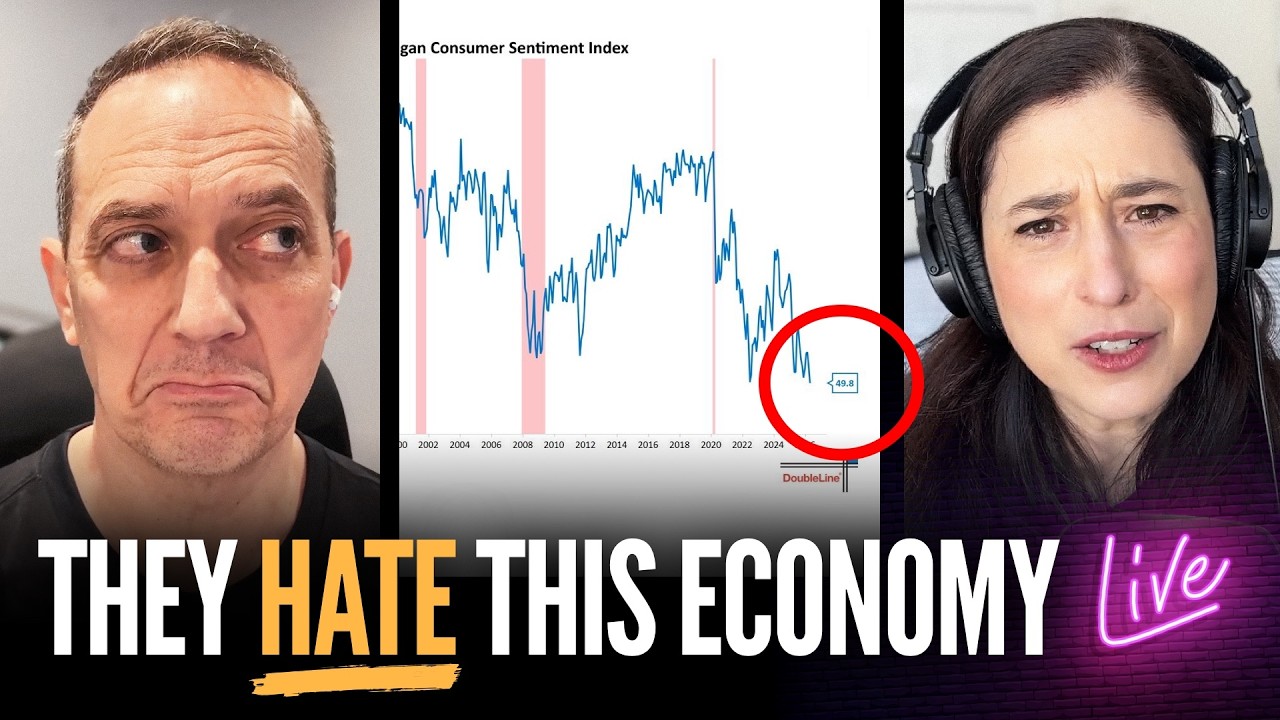
BREAKING: Worst Consumer Sentiment in History; DOJ Drops Criminal Probe of Chair Powell | Receipts
"This episode dissects the political weaponization of the Department of Justice against the Federal Reserve Chair and the partisan distortion of consumer confidence data, highlighting the erosion of independent institutions and free markets."

Trump's Trade War Derailed By SCOTUS w/ Mark Joseph Stern | MR Live
"The Supreme Court significantly curtailed former President Trump's sweeping tariff authority, ruling his use of an emergency statute for broad taxation was unlawful, yet the financial benefits of these illegal tariffs are unlikely to reach the public."

Trump Has NEVER Faced a Mess Like Iran | The Next Level
"The hosts dissect recent political appointments, media shakeups, and international incidents, framing them as symptoms of a broader erosion of institutional norms and the rise of unqualified, politically motivated actors."