Profiler calls Nancy Guthrie note ‘poetic’ — thinks woman wrote it — also latest on bitcoin search
YouTube · Nfr0ZuFaiTM
Quick Read
Summary
Takeaways
- ❖Criminal profiler Dr. Gary Brucato believes the second Nancy Guthrie ransom note, which stated she was dead, was likely written by a female due to its 'poetic' and sensitive language.
- ❖Dr. Brucato suggests the 'Hello Savannah' salutation in the first ransom note indicates a personal motive or animosity towards Savannah Guthrie.
- ❖The lack of 'proof of life' in the first ransom note implies Nancy Guthrie may have already been deceased when it was written.
- ❖Cybersecurity executive Sean O'Connor explains that the FBI's $152 Bitcoin transfer was a 'dusting attack' to create a traceable transaction, but the funds have not moved, making them untraceable.
- ❖Bitcoin is pseudonymous, not anonymous, meaning transactions are public but linked to addresses, not identities, unless funds are moved to a KYC-compliant exchange.
- ❖The use of a 'burner wallet' with no prior or subsequent transactions makes it nearly impossible for law enforcement to trace the Bitcoin address.
- ❖The sophistication of using Bitcoin for ransom does not necessarily indicate a younger perpetrator, as even older individuals can learn these techniques.
- ❖Dr. Brucato believes 'Porch Guy' was a 'goon' hired by individuals who had intimate knowledge of Nancy Guthrie.
- ❖The investigation is likely a group effort, and the pressure of the ongoing case could lead one of the involved parties to 'crack' and reveal information.
- ❖Physical 'wrench attacks,' where criminals physically coerce victims to transfer cryptocurrency, are an increasing trend in cybercrime.
Insights
1Second Ransom Note's 'Poetic' Language Suggests Female Author
Criminal profiler Dr. Gary Brucato analyzed the language of the second ransom note, which claimed Nancy Guthrie was dead, describing it as 'poetic,' 'stilted,' and sensitive. He concluded that these linguistic characteristics are suggestive of a female writer, drawing parallels to forensic linguistic analysis in other high-profile cases like the JonBenét Ramsey case. This implies a potential rupture in the group of perpetrators, with one more emotionally inclined.
Dr. Brucato states, "The language is almost poetic. It's peculiar... the sensitivity and passivity in the language can be a giveaway... I am inclined to think that the first note doesn't necessarily sound like it was written by a female and what I'm sensing is a rupture between the people involved." He later adds, "The language was also very peculiar, stilted... like you would see in somebody who was kind of poetically inclined, a writer, that kind of person."
2Bitcoin Ransom Untraceable Due to Lack of Fund Movement
Sean O'Connor, a cybersecurity executive, clarified that while Bitcoin transactions are public and pseudonymous, the FBI's attempt to trace the ransom failed because the initial $152 sent (a 'dusting attack') was never moved from the recipient's 'burner wallet.' Without any subsequent transactions, there is no digital trail for law enforcement to follow, rendering advanced tracing tools ineffective in this specific scenario.
O'Connor explains, "Tracing follows movement... that $152 that they that they sent initially hasn't moved anywhere... in this case, the trail hasn't gone cold. It just never started." He adds that the perpetrator likely used a 'burner wallet' with no transaction history.
3Perpetrators Likely Local and Known to Nancy Guthrie
Dr. Brucato maintains his long-held belief that the perpetrators are local and had some degree of knowledge about Nancy Guthrie. He suggests that the 'Porch Guy' seen on video was likely a 'goon' hired to create the impression of an outsider, while the individuals 'behind the curtain' knew Nancy intimately. He bases this on the common pattern in crimes where insiders attempt to stage an outsider attack but do a 'bad job' of it, lacking the imagination to fully conceal their connection.
Dr. Brucato states, "My guess is that whoever is behind this has some degree of knowledge of her. They've worked with her, they've been around her, they know her intimately... you have to go out and get someone to give the impression of an outsider." He also mentions, "I do think that it's locals."
4Ransom Notes' Apology May Be Selfish, Not Empathetic
Regarding the second note's apology for Nancy's death, Dr. Brucato posits that it's unlikely to be a genuine expression of remorse from an abductor. Instead, he suggests it could be a pragmatic attempt to preempt legal consequences ('covering one's butt') or a false narrative to conceal an intentional homicide. He notes that if true remorse were the motive, the note would have provided information for closure, such as Nancy's location.
Dr. Brucato states, "I don't think that the type of person who would be responsible for abducting an 84-year-old woman would write an apology note without it having a selfish motive." He later adds, "Why are you not leading people to where she is? ...I lean in the direction of it being a pragmatic and selfish deed."
Bottom Line
The increasing trend of 'wrench attacks' where digital criminals resort to physical coercion to obtain cryptocurrency highlights a dangerous convergence of cybercrime and real-world violence.
This shift means that digital assets are no longer solely vulnerable to remote hacking but also to physical threats, complicating security strategies for individuals and requiring law enforcement to adapt to hybrid crime methods.
Develop integrated security solutions that combine digital protection with physical safety protocols, and train law enforcement agencies in de-escalation and recovery techniques for physical crypto-related threats.
The use of 'burner wallets' and lack of fund movement in cryptocurrency ransoms can create 'cold trails' that completely bypass even the most advanced blockchain tracing capabilities, making resolution dependent on human intelligence or other forensic evidence.
This reveals a critical vulnerability in digital investigations where perfect digital anonymity can be achieved by simply not interacting with the funds, forcing investigators back to traditional methods or relying on internal conflicts among perpetrators.
Invest in advanced behavioral profiling and human intelligence gathering for cybercrime cases, recognizing that purely technical solutions have limitations when criminals avoid transactional activity. Develop public awareness campaigns on the risks of 'cold trails' to encourage reporting or internal pressure.
Lessons
- Law enforcement should continue to leverage psychological pressure and media attention to exploit potential rifts within perpetrator groups, as suggested by Dr. Brucato, to encourage one party to 'crack' and provide information.
- Investigators must prioritize human intelligence (HUMINT) alongside digital forensics (SIGINT) in complex cases involving cryptocurrency, as digital trails can be intentionally severed, making witness testimony or internal conflicts crucial for breakthroughs.
- Individuals and organizations should be aware of the rising threat of 'wrench attacks' and the convergence of cyber and physical crime, implementing security measures that address both digital asset protection and personal physical safety.
Quotes
"I don't think that the type of person who would be responsible for abducting an 84-year-old woman would write an apology note without it having a selfish motive."
"The language is almost poetic. It's peculiar and that is not how people write notes."
"Tracing follows movement... that $152 that they that they sent initially hasn't moved anywhere... in this case, the trail hasn't gone cold. It just never started."
"It's not going to be either or, it's going to be a combination of both [human and digital intelligence]."
Q&A
Recent Questions
Related Episodes
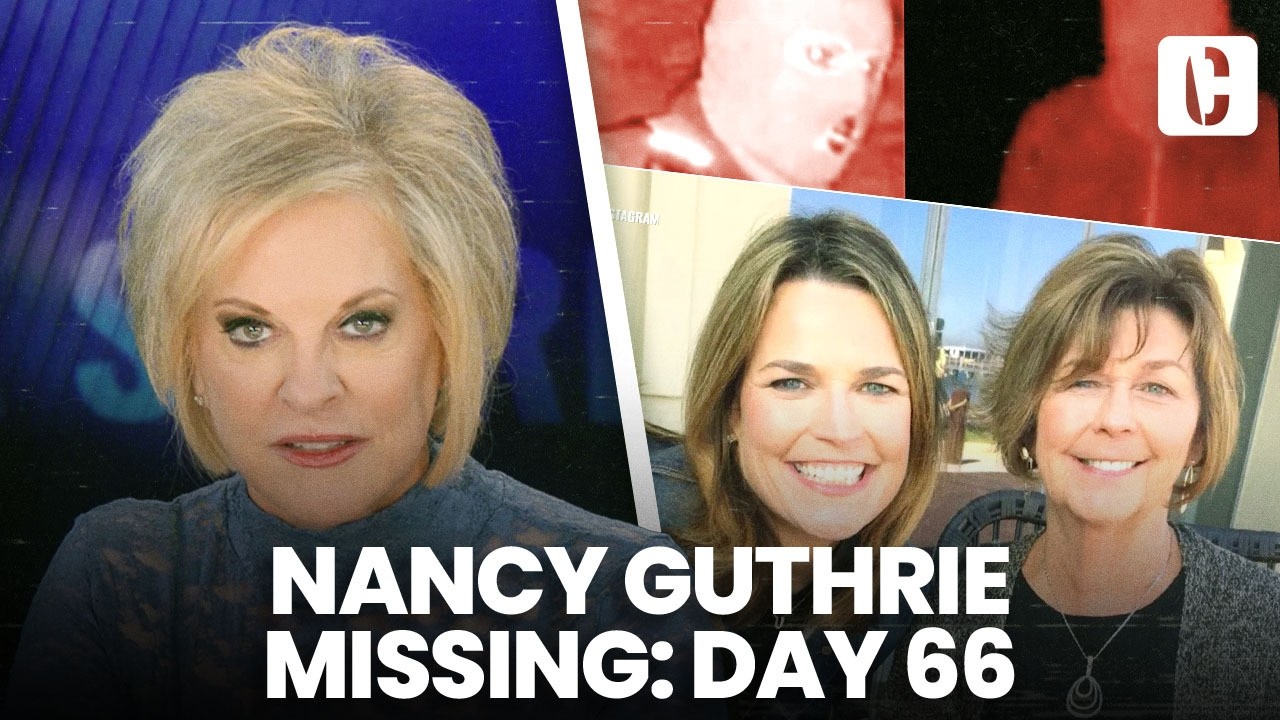
SAVANNAH GUTHRIE'S MOM MISSING: DAY 66
"On day 66 of Nancy Guthrie's disappearance, investigators grapple with two distinct sets of Bitcoin ransom notes, digital tracing challenges, and potential physical evidence like shoe coverings, as new, dubious claims emerge from a 'hyena' seeking payment for information."

Widow Realizes Cops Know She Poisoned Her Husband
"A seemingly routine burglary unexpectedly unravels a year-old murder, exposing a mother-daughter poisoning plot and a chilling pattern of suspicious deaths."

Student Murders Her Ex-Teacher After Graduation
"A welfare check for a missing retired teacher escalates into a murder investigation when his car is found with a former student, revealing a brutal robbery-homicide driven by drug-induced rage."

Hell On Wheels: Mackenzie Shirilla's Double Murder Crash
"A seemingly accidental car crash that killed two young men in Strongsville, Ohio, was meticulously uncovered by investigators to be a deliberate act of double murder by the 17-year-old driver, Mackenzie Shirilla, amidst a tumultuous relationship and a shocking lack of remorse."